Customer 360 Enterprise Data Platform — Denodo on Azure
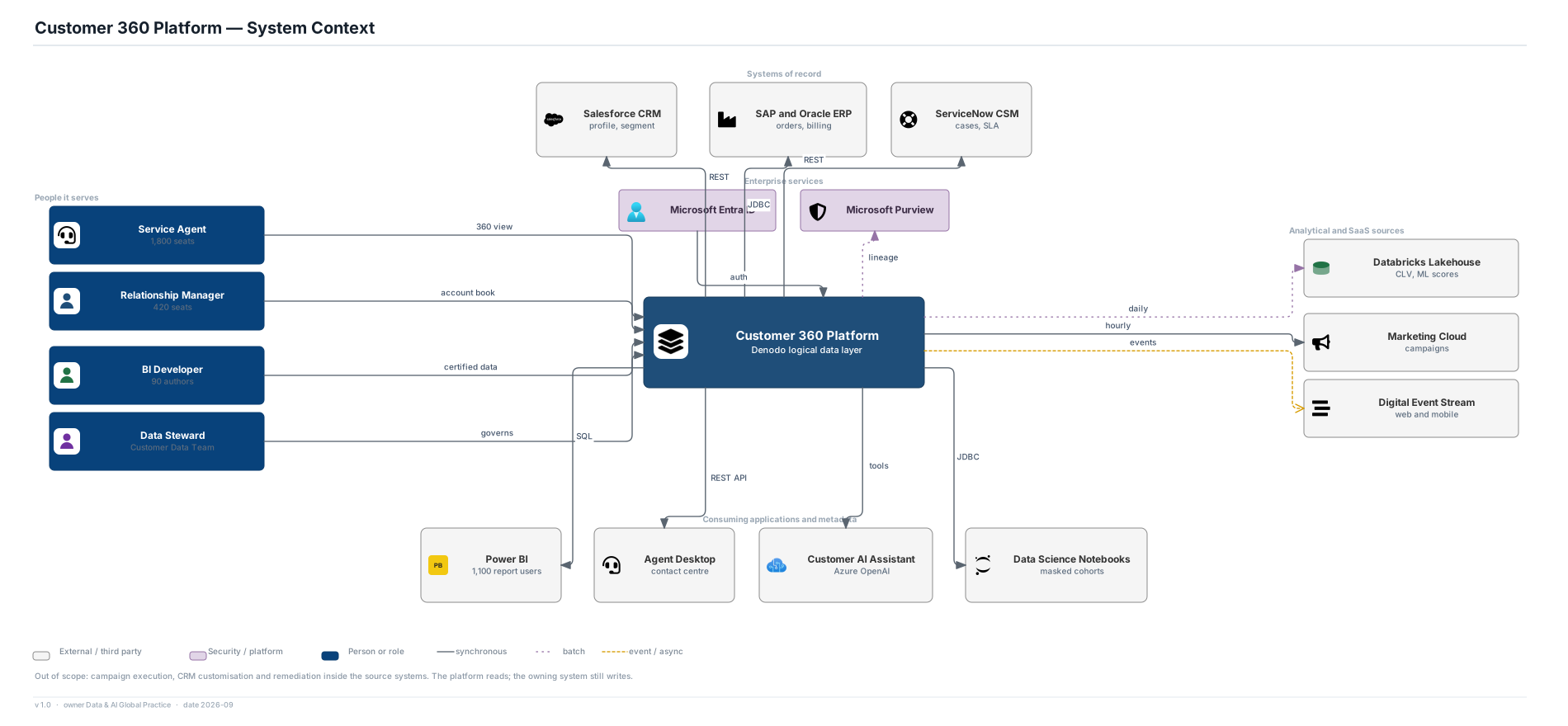
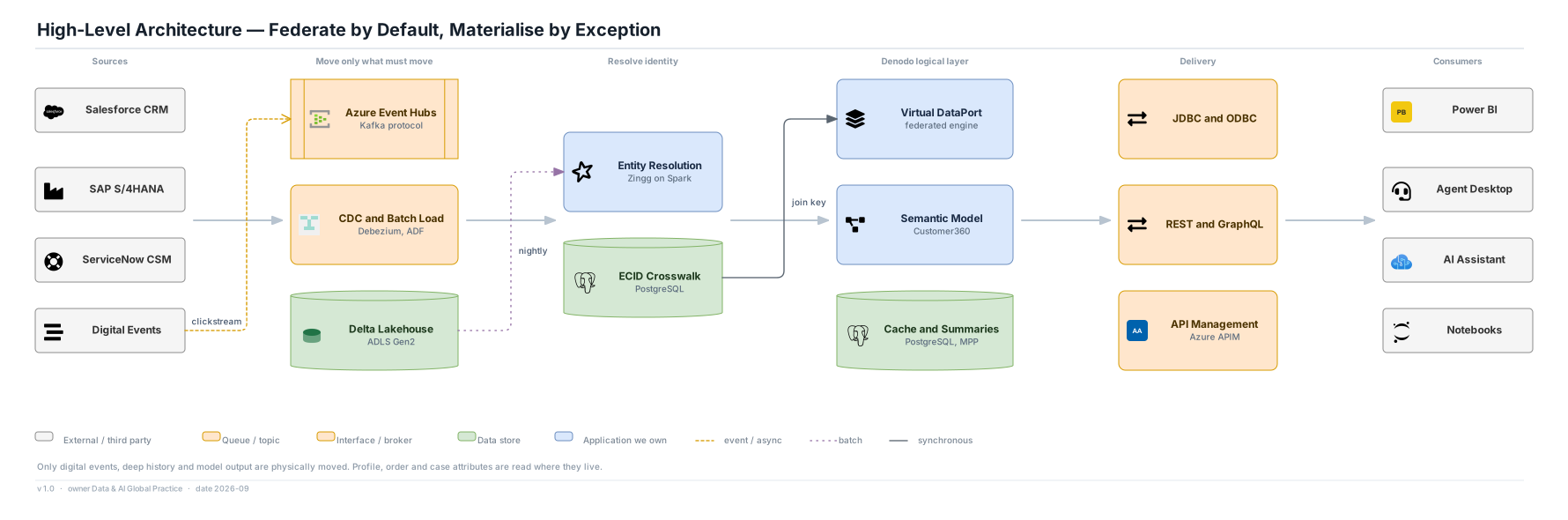
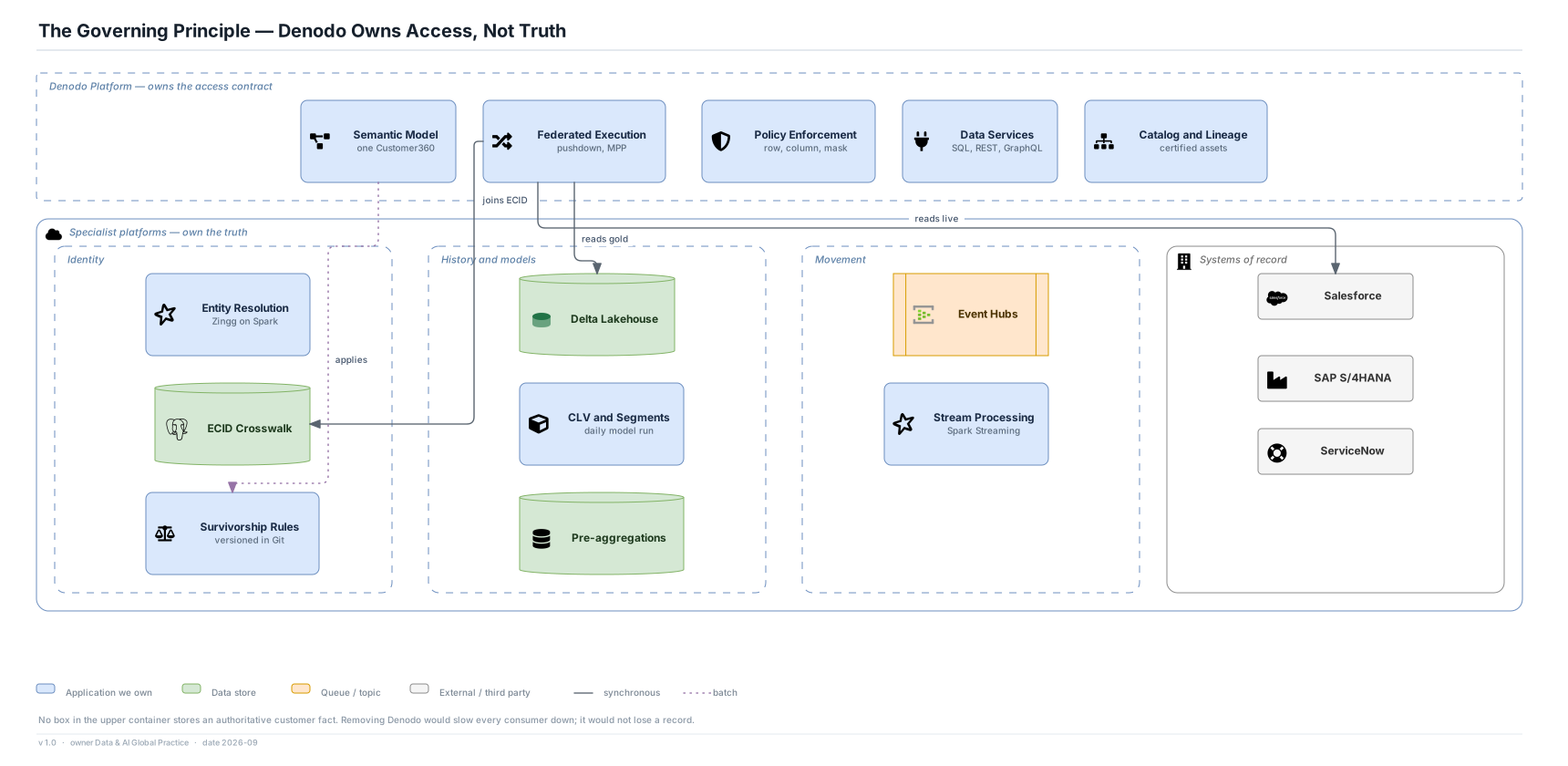
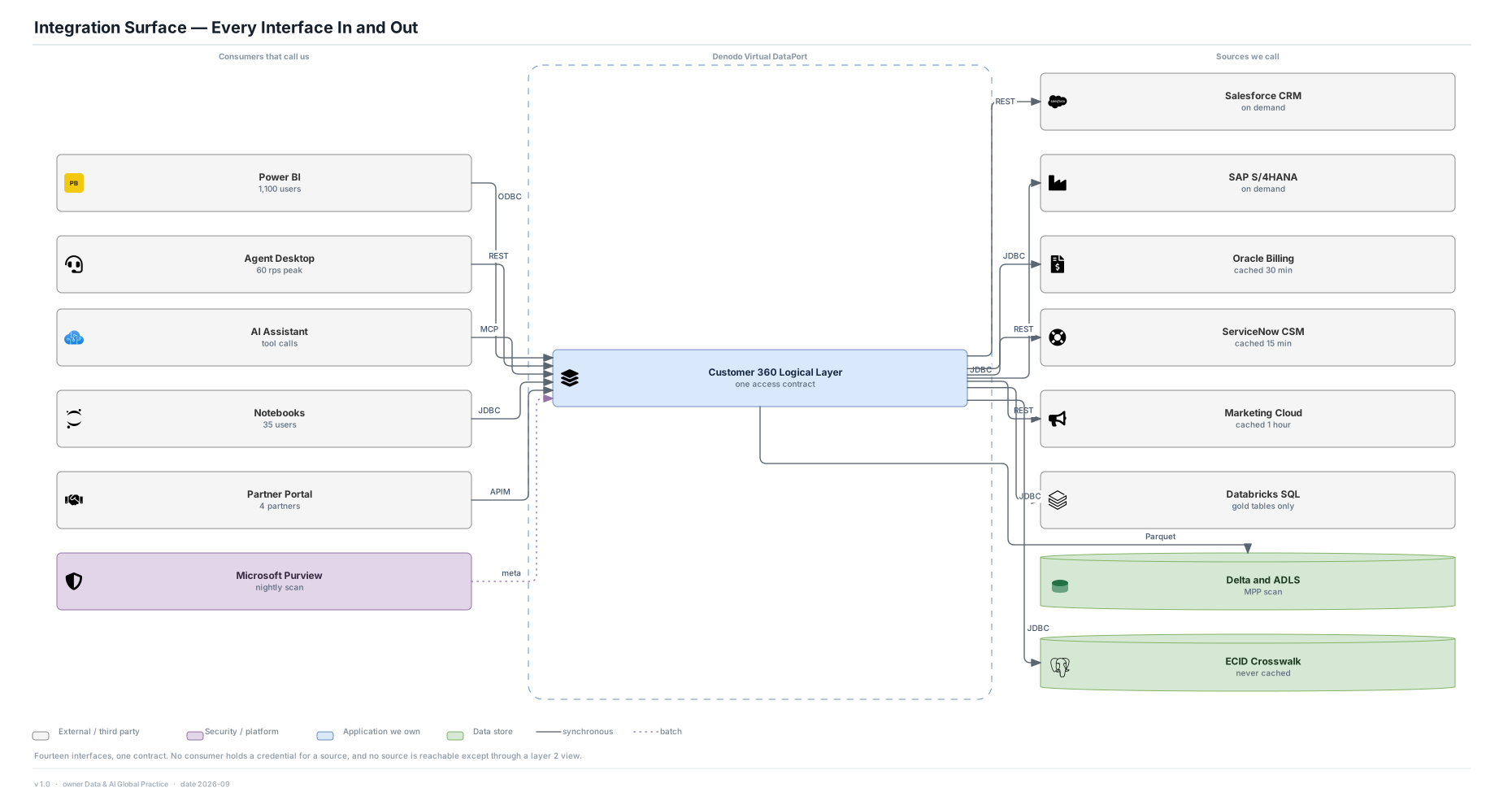
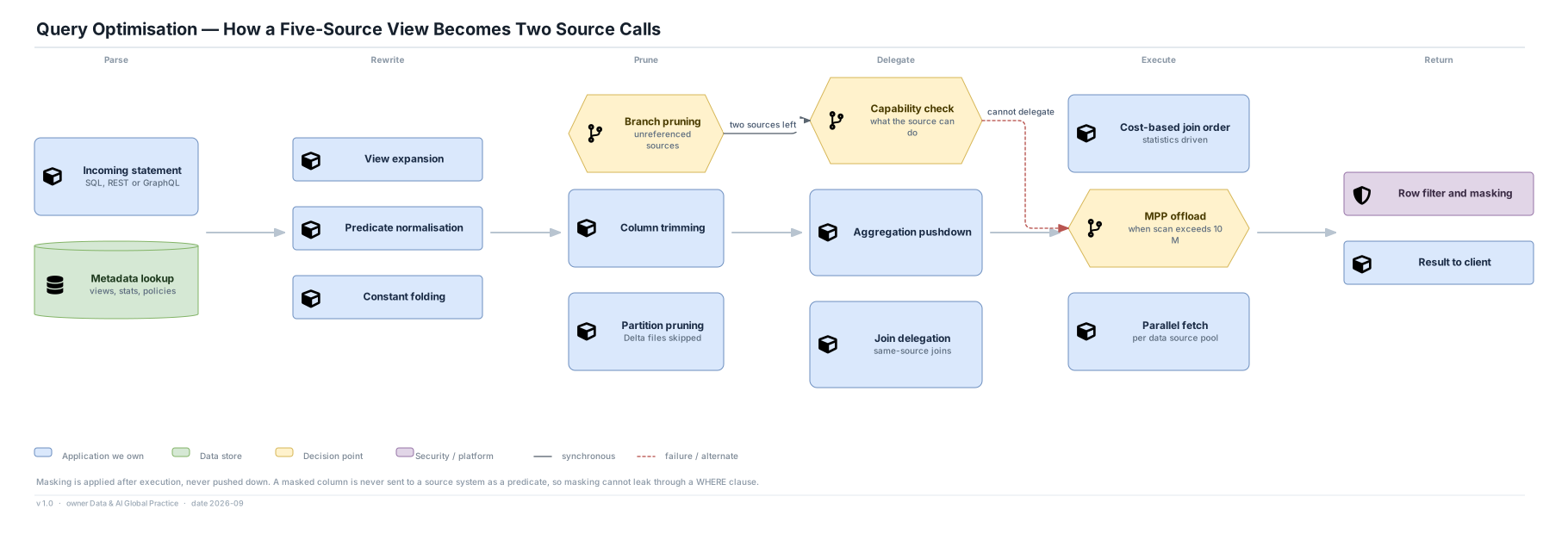
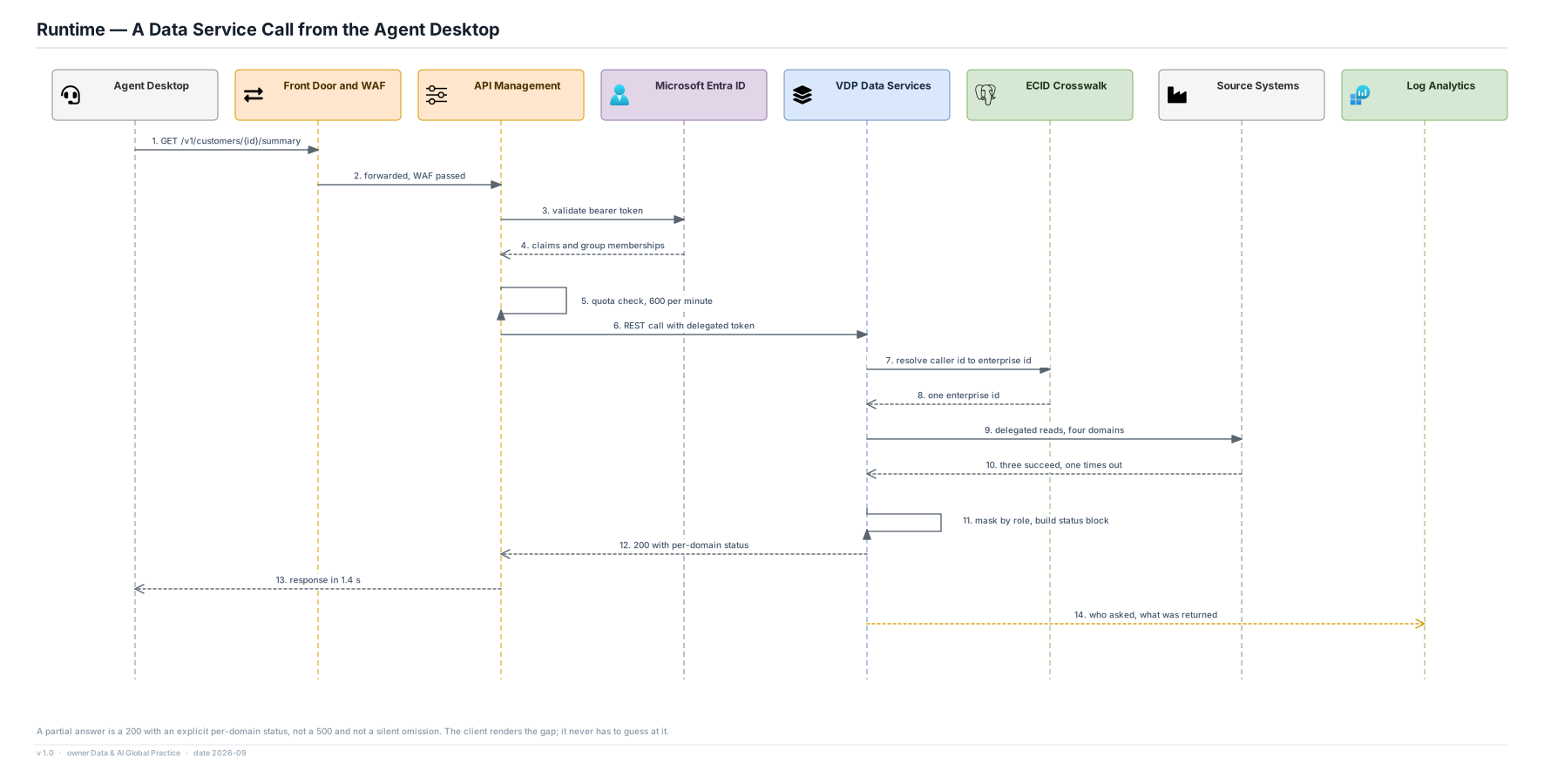
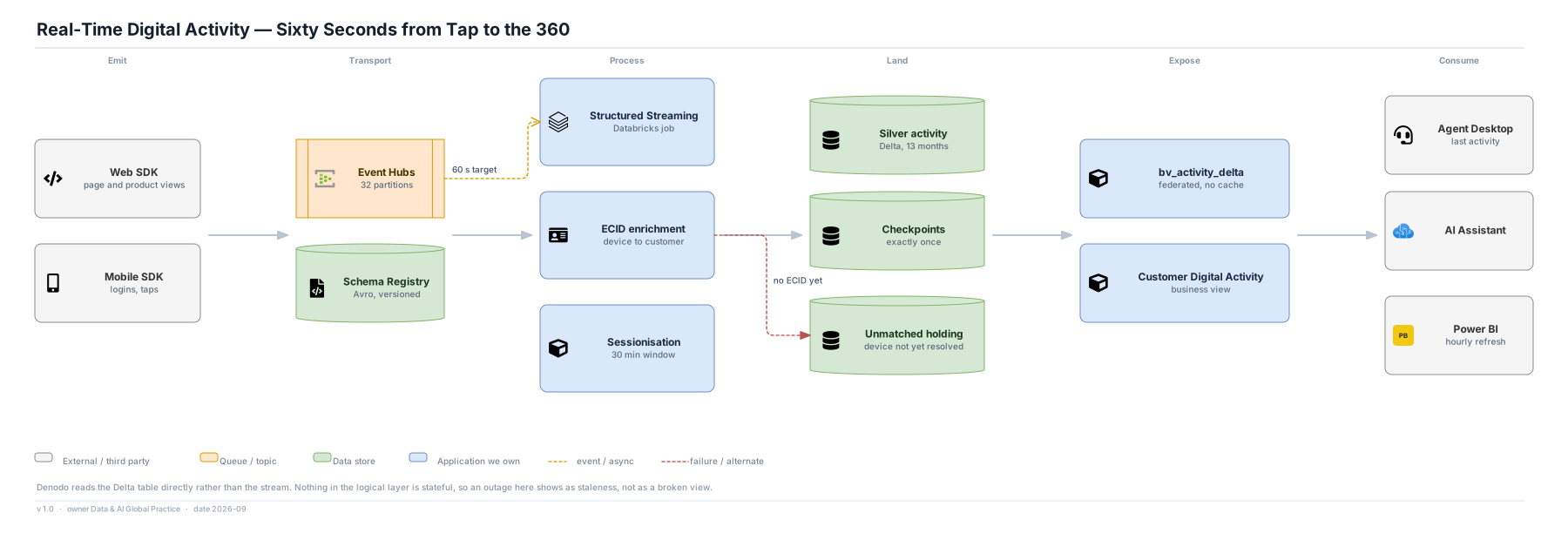
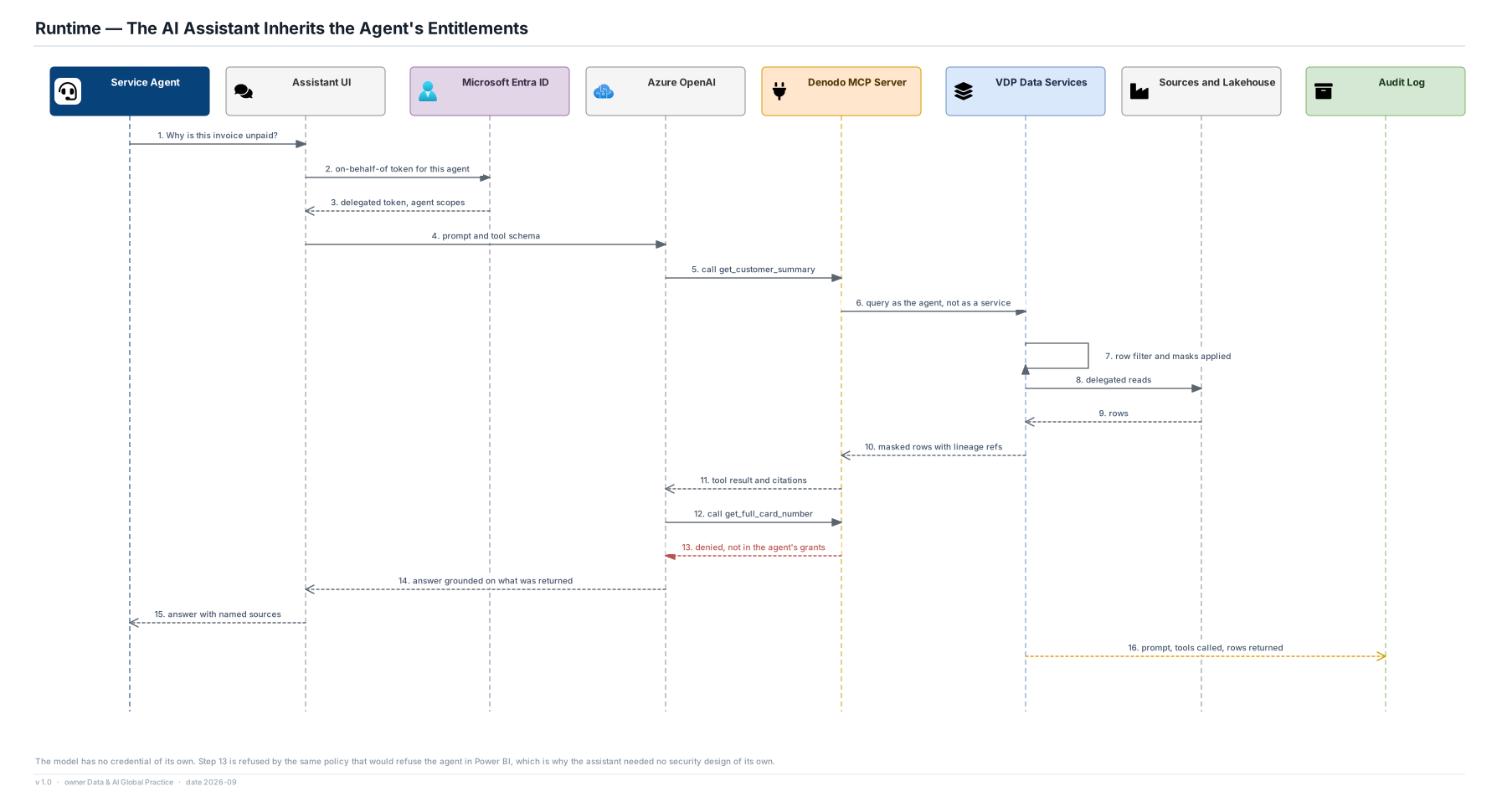
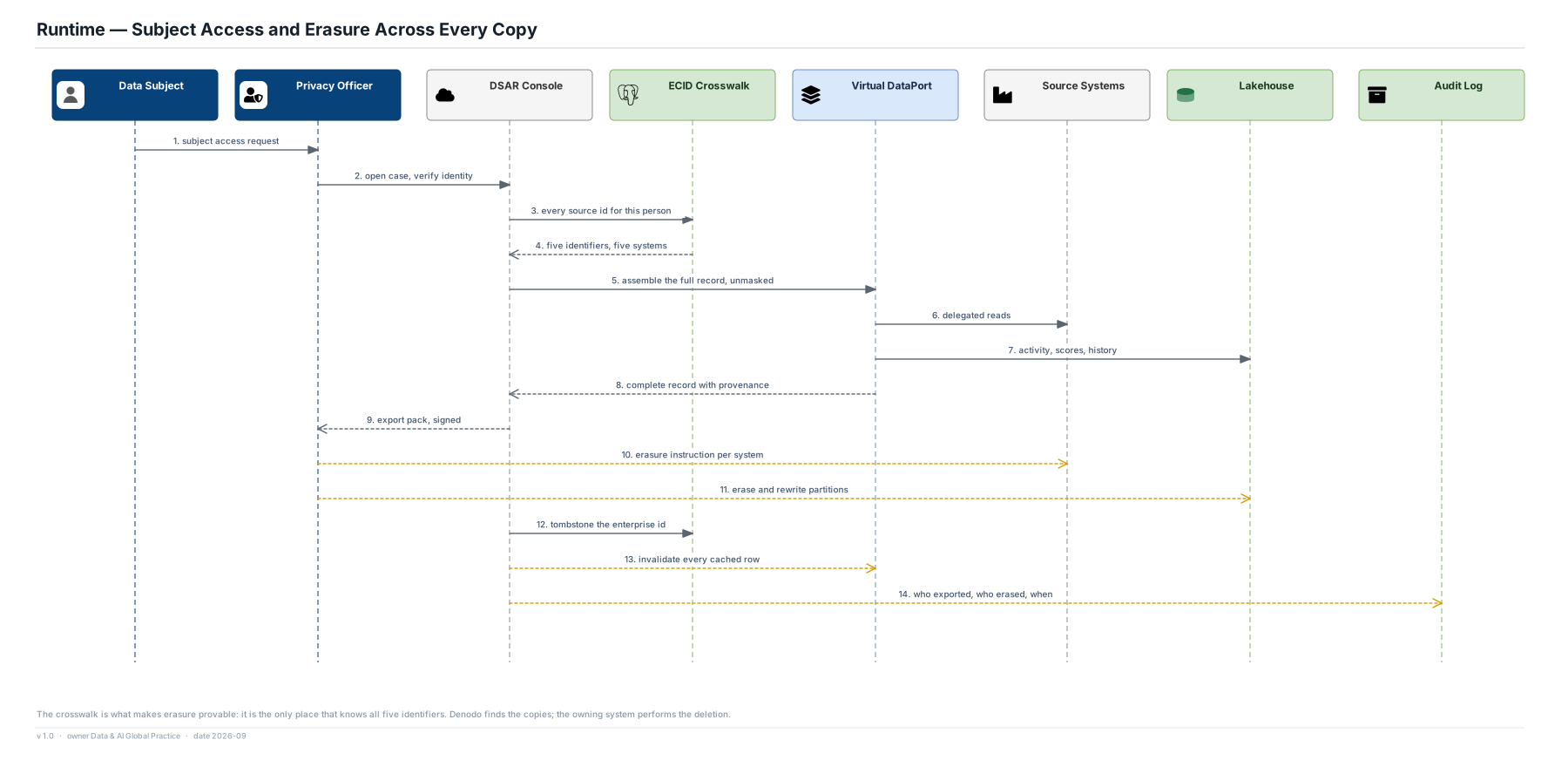
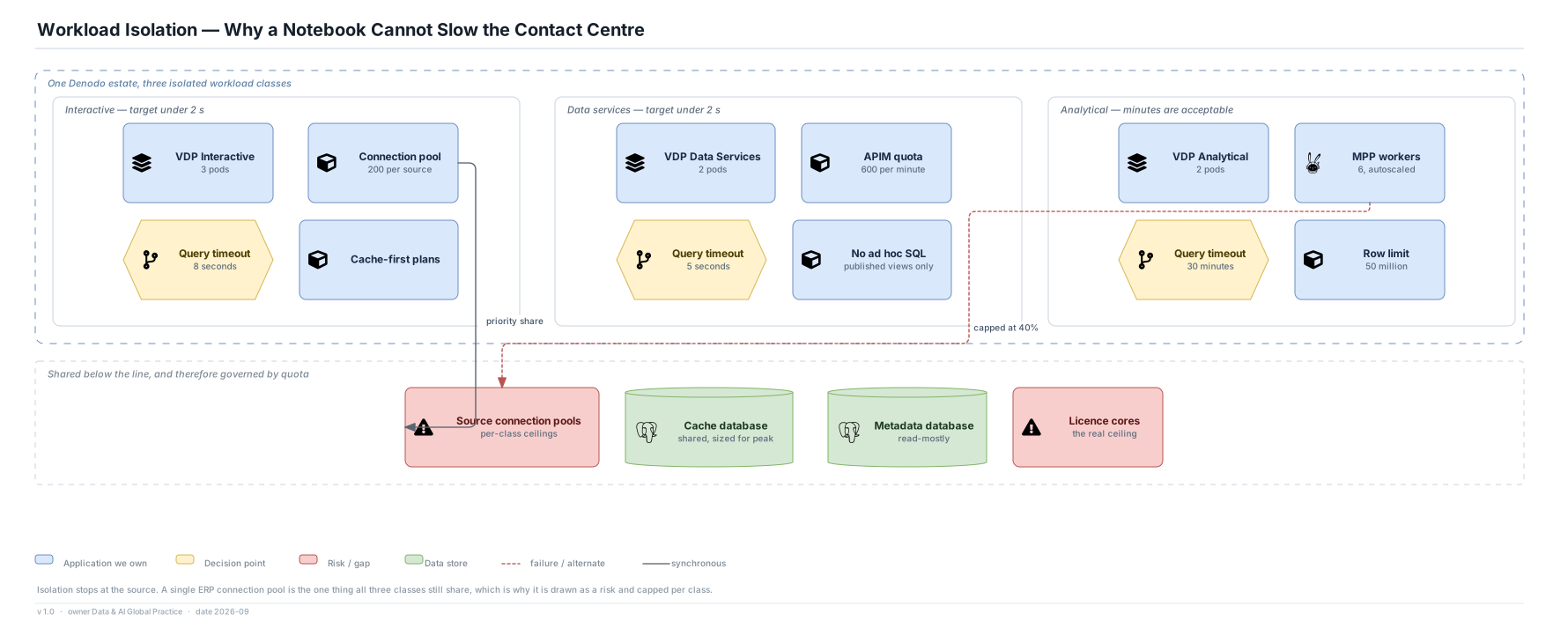
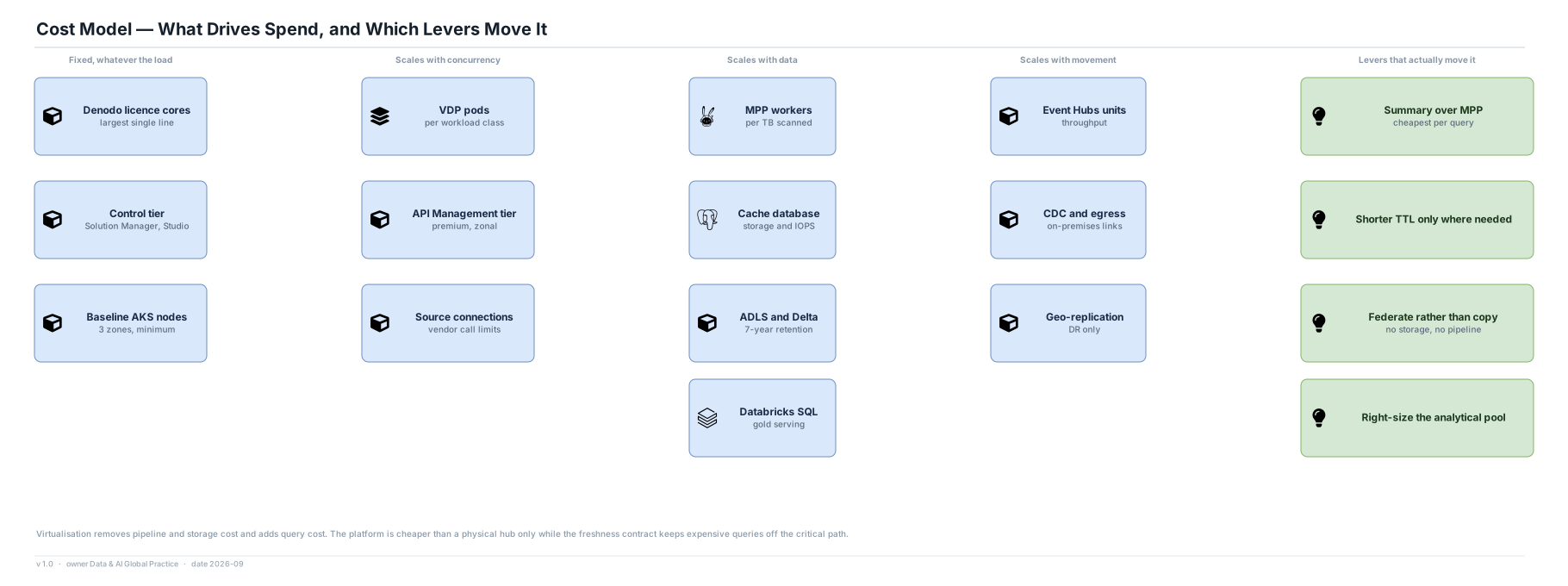
Denodo is the enterprise logical data layer: one governed, semantic, secured view of a customer assembled at query time from Salesforce, SAP, Oracle, ServiceNow, Marketing Cloud, an Azure lakehouse and a digital event stream. Read the set in order — the boundary and the governing principle first, then who it is for and what they get to do, and only then the structure that has to justify itself against them. One decision carries the whole design: Denodo owns access, never truth. Identity is mastered outside it, history lives in the lakehouse, streaming stays in Event Hubs, and every source system keeps writing its own records. That boundary is why the identity crosswalk is the one join the platform is forbidden to cache, why the freshness contract in view 17 is architecture rather than tuning, and why the AI assistant in view 24 needed no security design of its own.
Context and scope What sits inside the boundary, what the platform only reads, and the principle that decides everything after it.
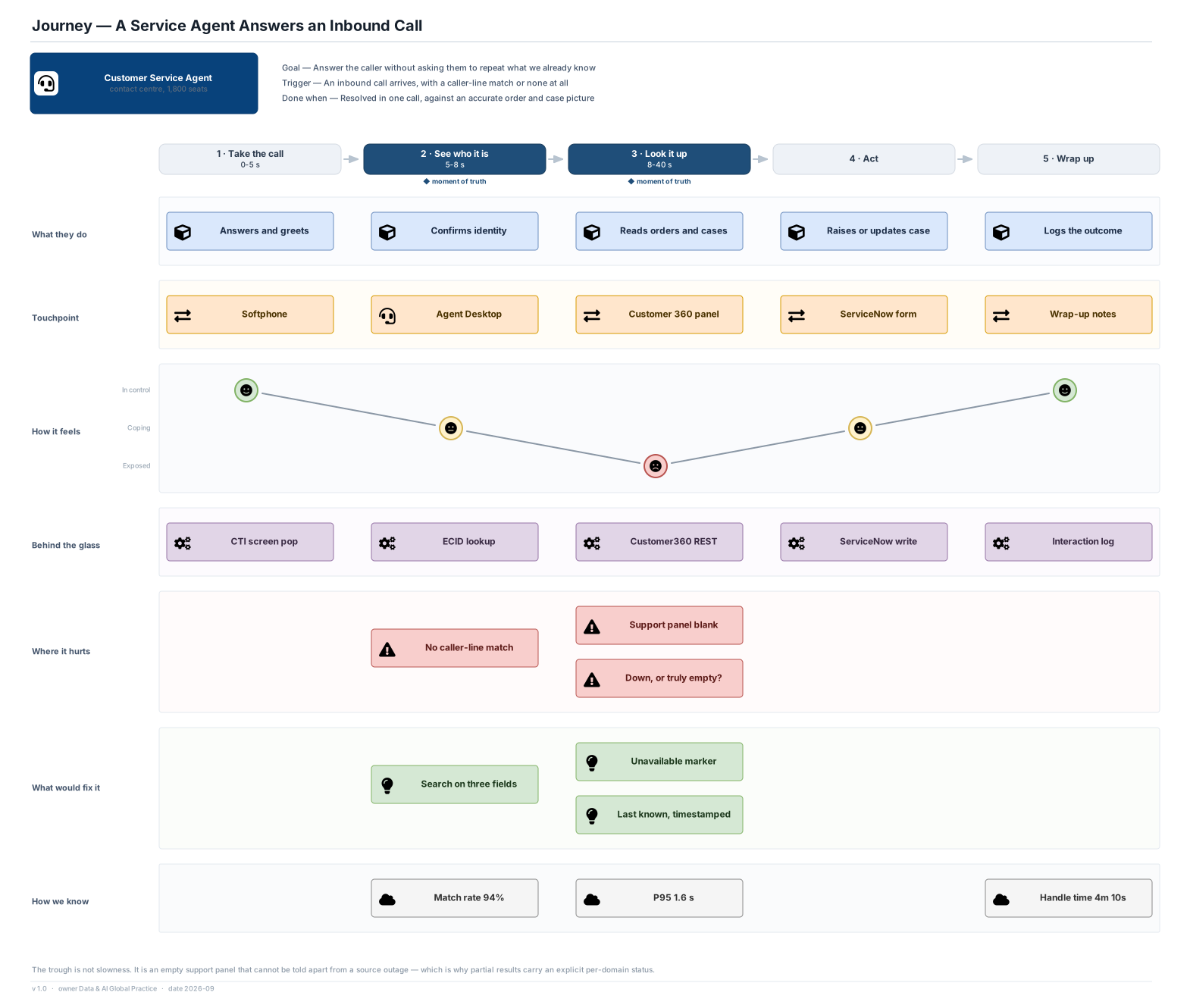
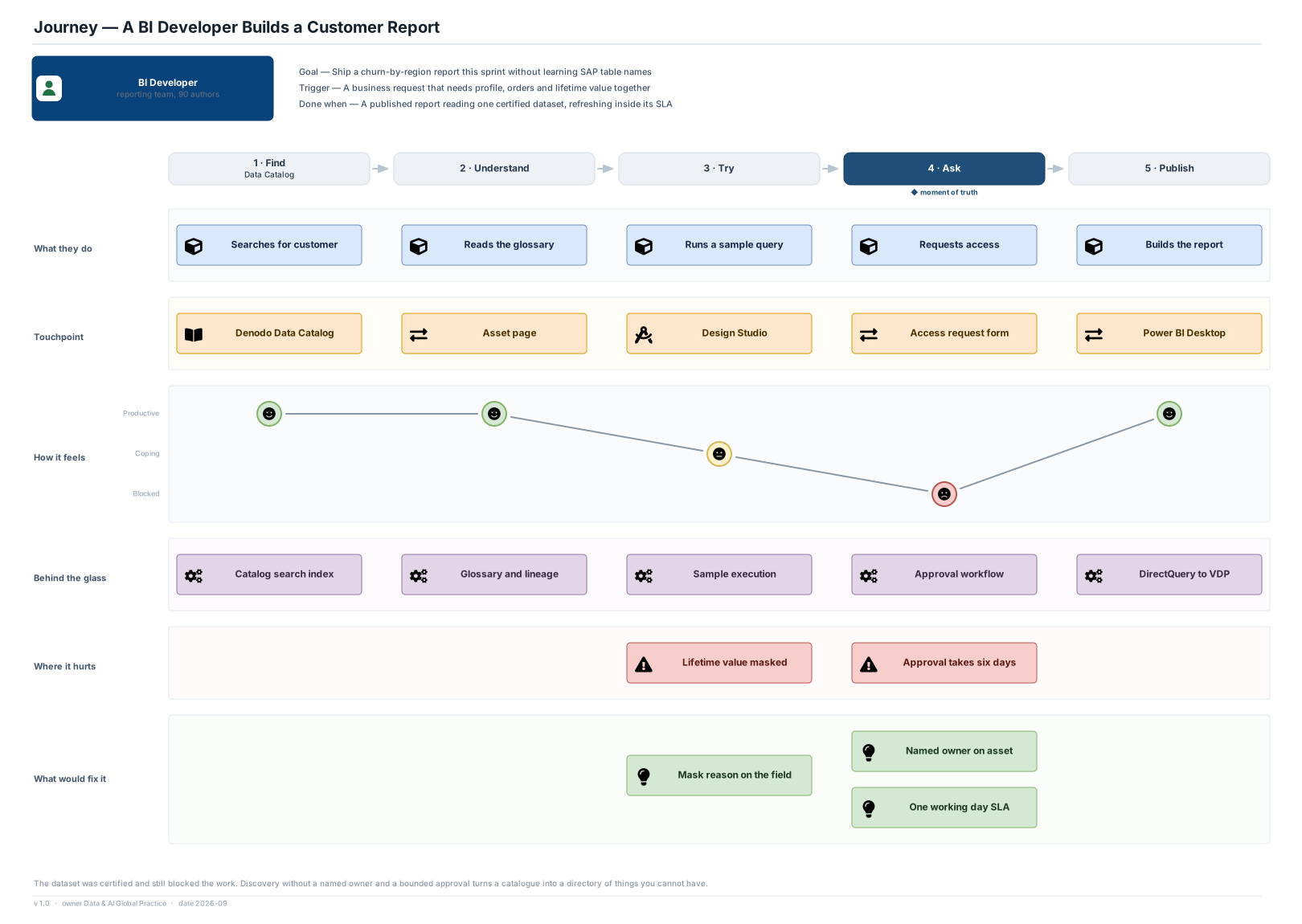
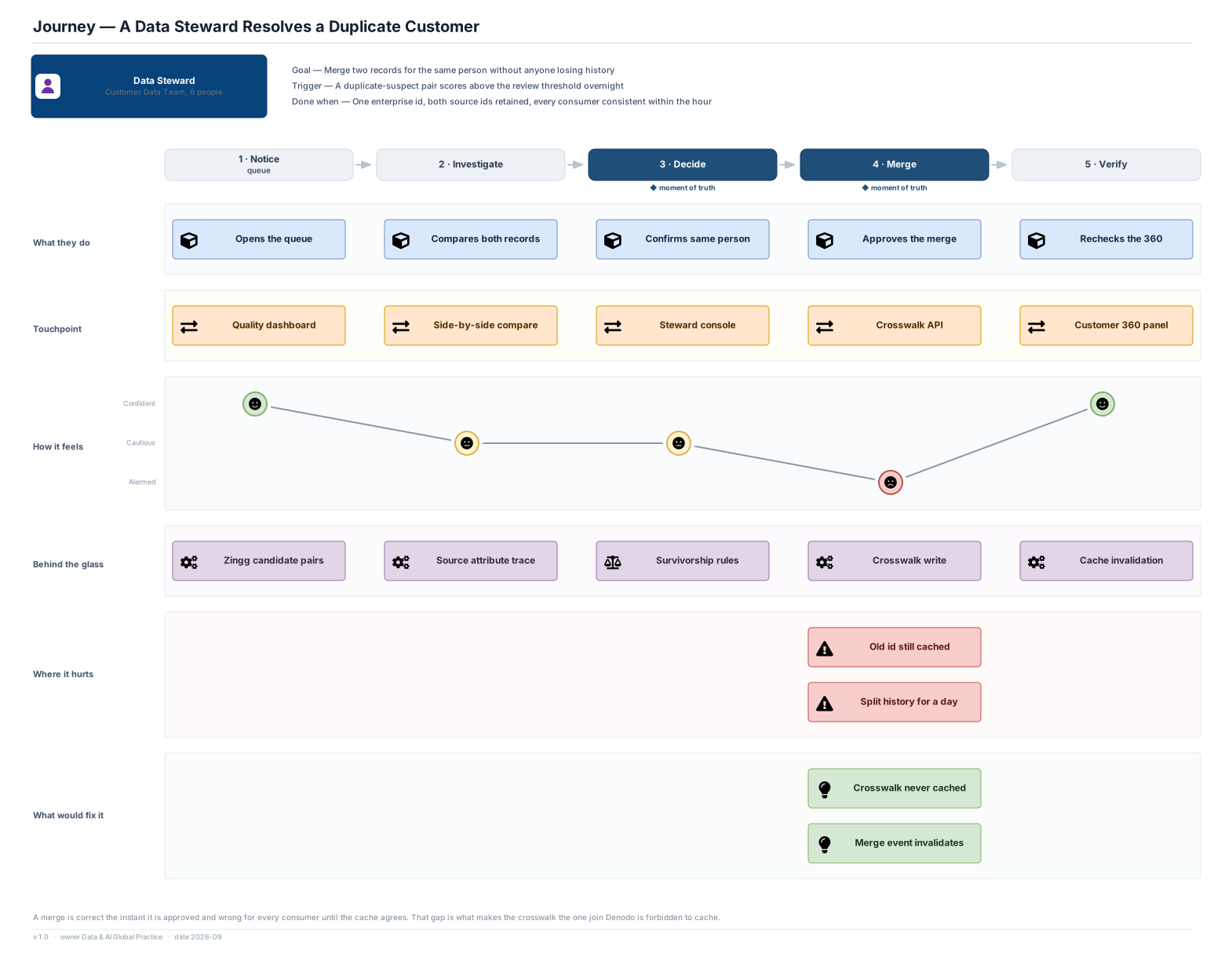
People and journeys Who the 360 is for, and the three journeys whose worst moments the rest of the set has to answer.
04
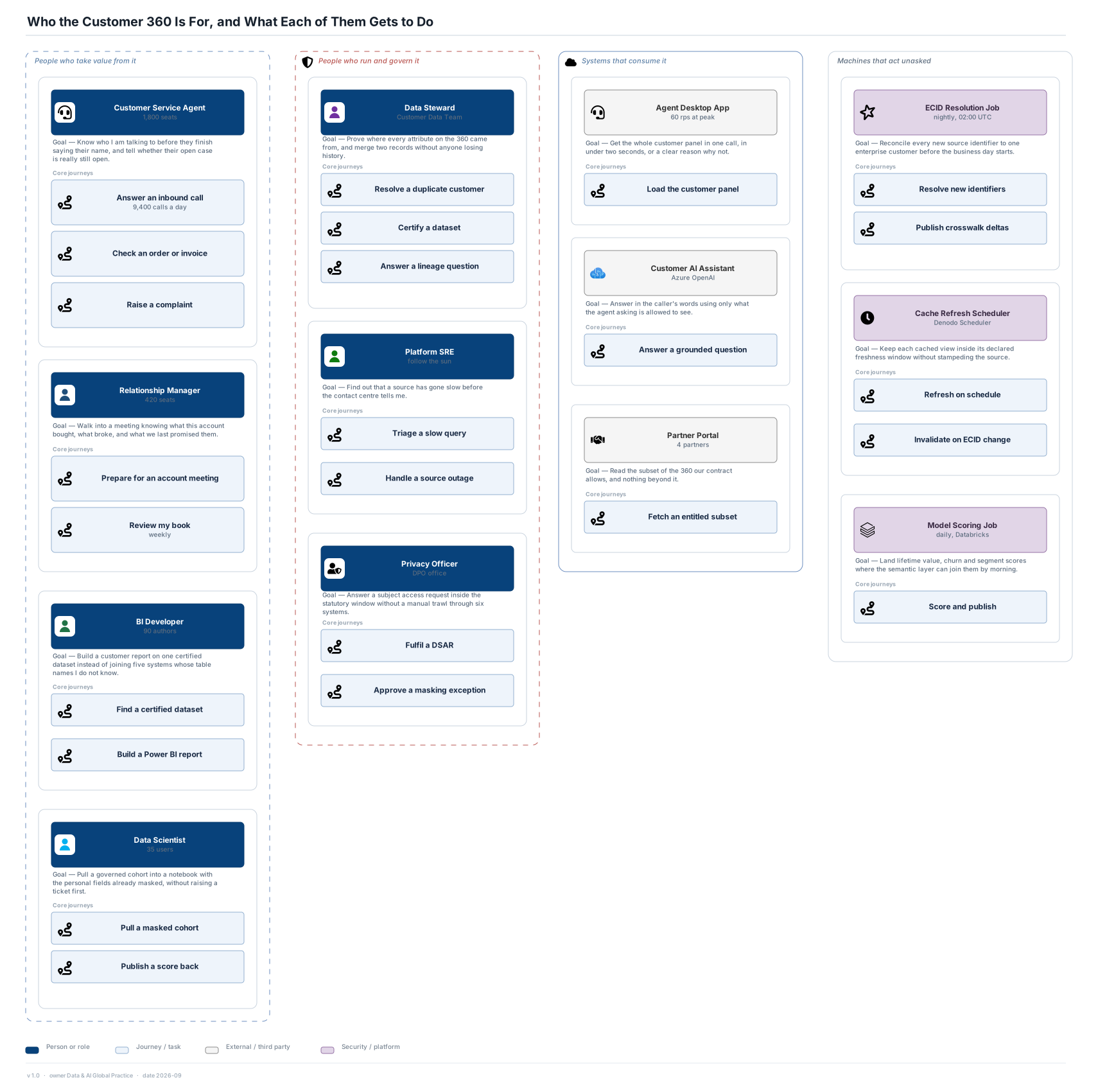
People who take value from it Customer Service Agent 1,800 seats Goal — Know who I am talking to before they finish saying their name, and tell whether their open case is really still open. Core journeys Answer an inbound call 9,400 calls a day Check an order or invoice Raise a complaint Relationship Manager 420 seats Goal — Walk into a meeting knowing what this account bought, what broke, and what we last promised them. Core journeys Prepare for an account meeting Review my book weekly BI Developer 90 authors Goal — Build a customer report on one certified dataset instead of joining five systems whose table names I do not know. Core journeys Find a certified dataset Build a Power BI report Data Scientist 35 users Goal — Pull a governed cohort into a notebook with the personal fields already masked, without raising a ticket first. Core journeys Pull a masked cohort Publish a score back People who run and govern it Data Steward Customer Data Team Goal — Prove where every attribute on the 360 came from, and merge two records without anyone losing history. Core journeys Resolve a duplicate customer Certify a dataset Answer a lineage question Platform SRE follow the sun Goal — Find out that a source has gone slow before the contact centre tells me. Core journeys Triage a slow query Handle a source outage Privacy Officer DPO office Goal — Answer a subject access request inside the statutory window without a manual trawl through six systems. Core journeys Fulfil a DSAR Approve a masking exception Systems that consume it Agent Desktop App 60 rps at peak Goal — Get the whole customer panel in one call, in under two seconds, or a clear reason why not. Core journeys Load the customer panel Customer AI Assistant Azure OpenAI Goal — Answer in the caller's words using only what the agent asking is allowed to see. Core journeys Answer a grounded question Partner Portal 4 partners Goal — Read the subset of the 360 our contract allows, and nothing beyond it. Core journeys Fetch an entitled subset Machines that act unasked ECID Resolution Job nightly, 02:00 UTC Goal — Reconcile every new source identifier to one enterprise customer before the business day starts. Core journeys Resolve new identifiers Publish crosswalk deltas Cache Refresh Scheduler Denodo Scheduler Goal — Keep each cached view inside its declared freshness window without stampeding the source. Core journeys Refresh on schedule Invalidate on ECID change Model Scoring Job daily, Databricks Goal — Land lifetime value, churn and segment scores where the semantic layer can join them by morning. Core journeys Score and publish Who the Customer 360 Is For, and What Each of Them Gets to Do Person or role Journey / task External / third party Security / platform v 1.0 · owner Data & AI Global Practice · date 2026-09
Actors and Their Core Journeys
Who the platform is for, in their own words, and what each of them gets to do with it.
HTML page
SVG
draw.io
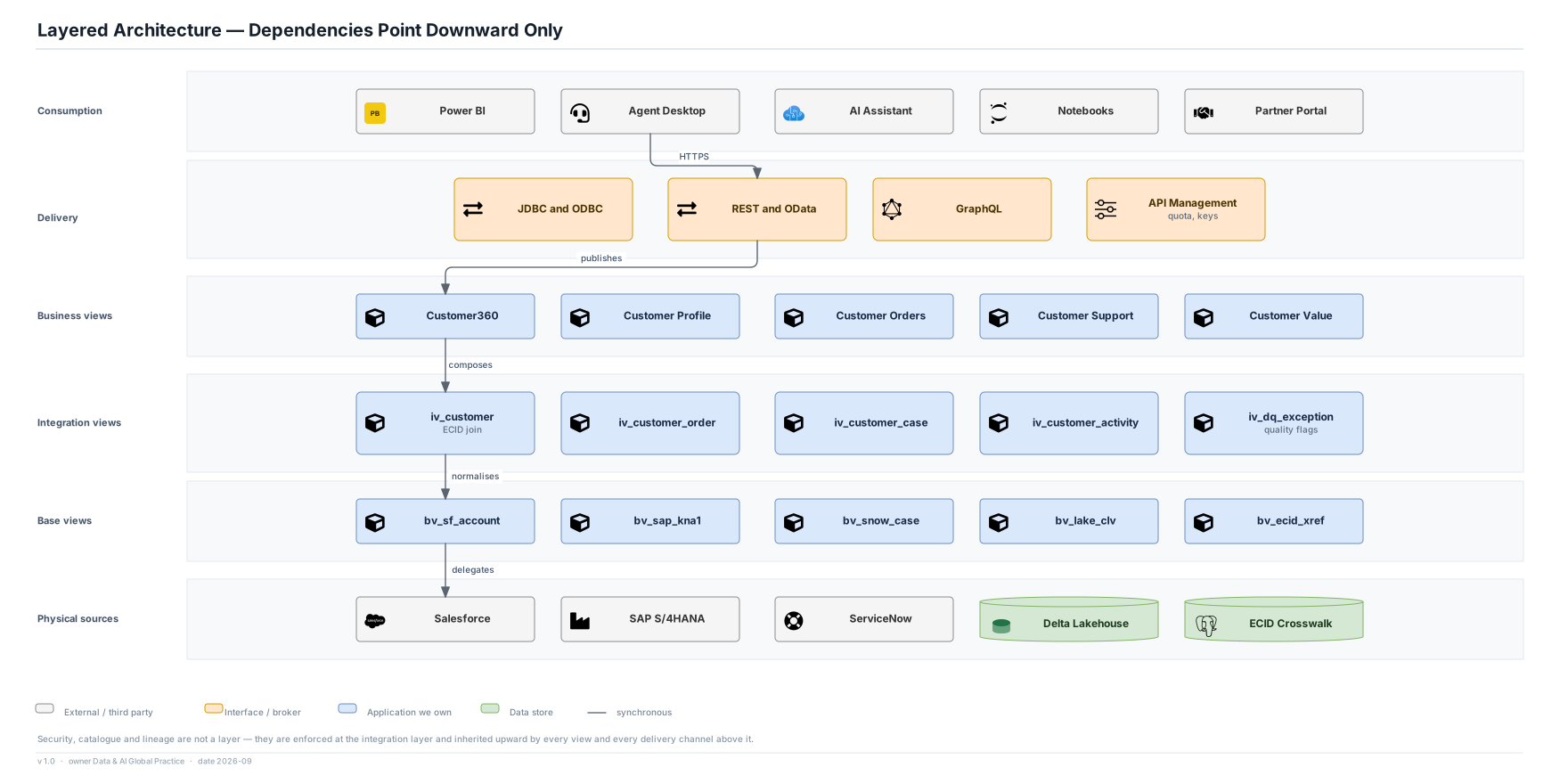
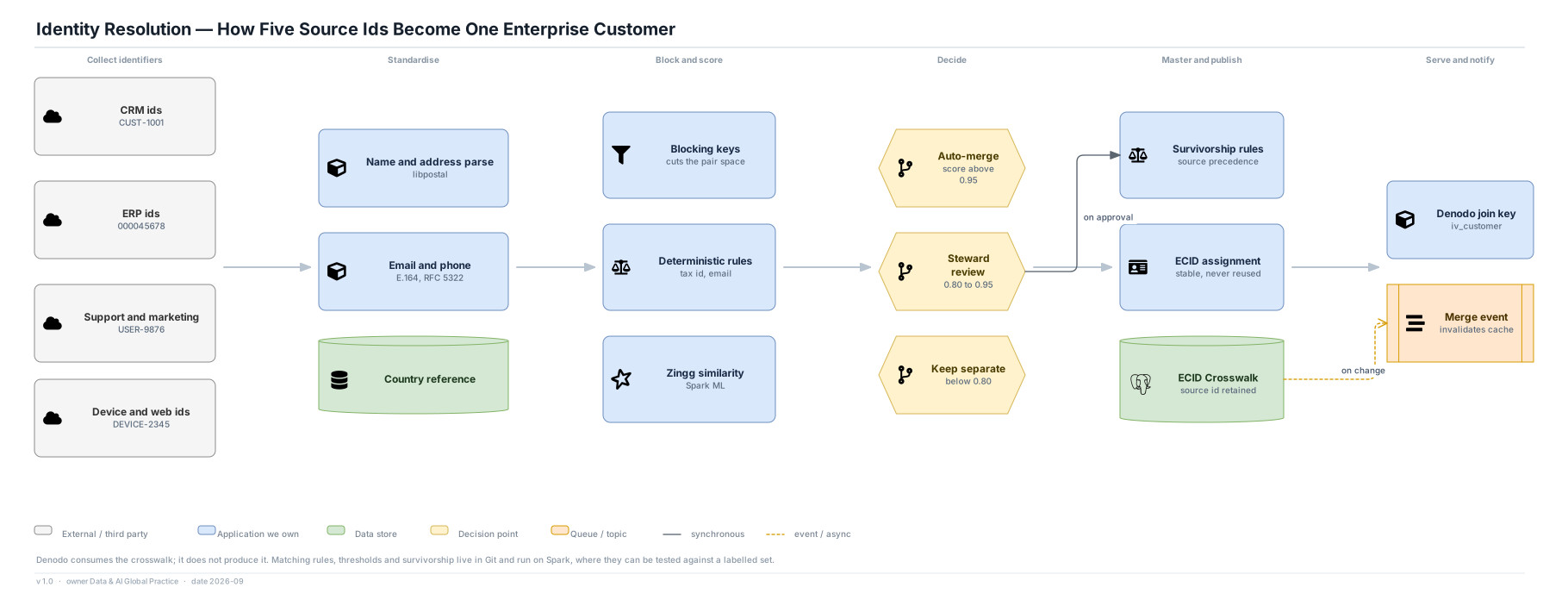
Structure The layering rule, the deployable units, every interface, and how five source identifiers become one customer.
09
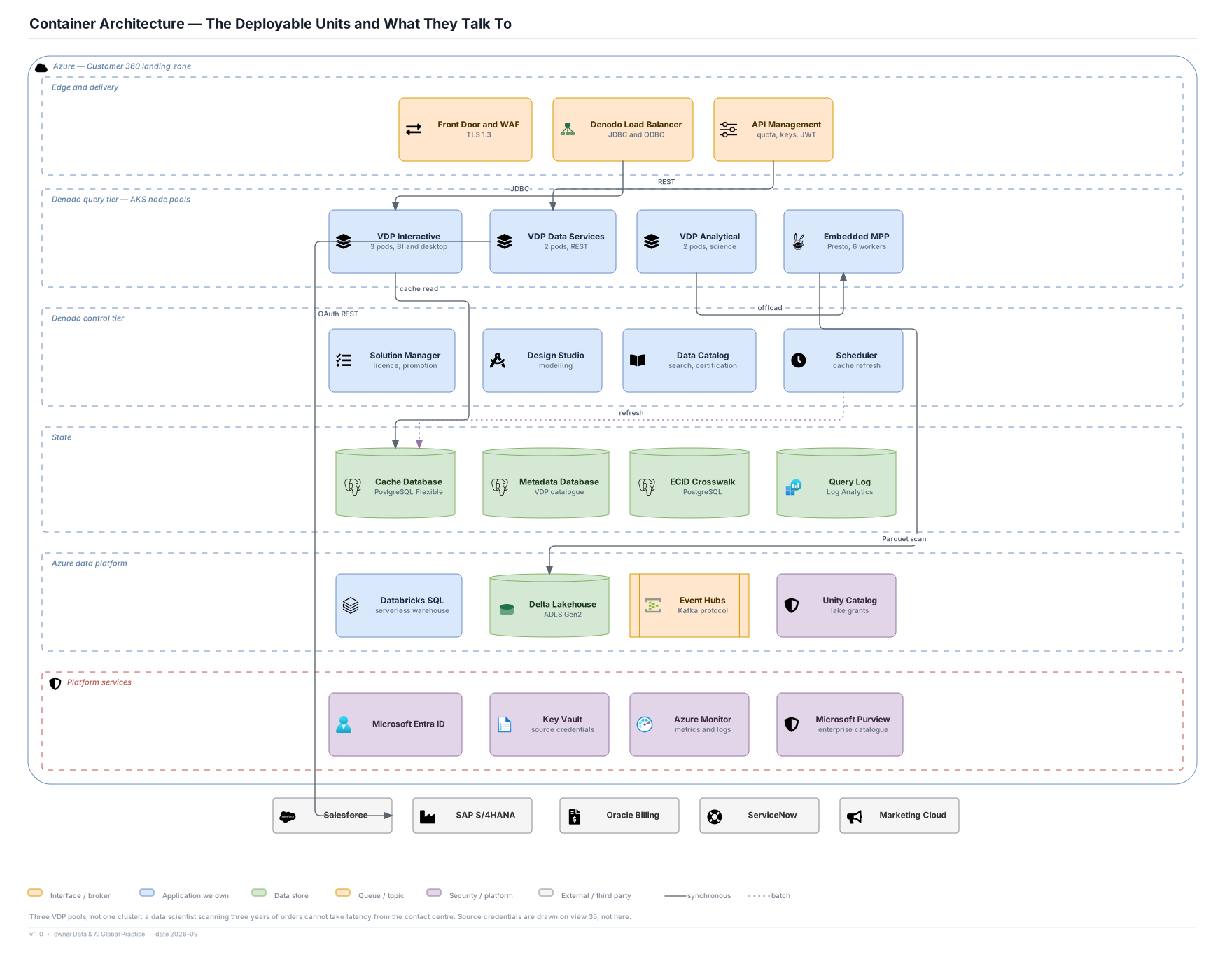
Azure — Customer 360 landing zone Edge and delivery Front Door and WAF TLS 1.3 Denodo Load Balancer JDBC and ODBC API Management quota, keys, JWT Denodo query tier — AKS node pools VDP Interactive 3 pods, BI and desktop VDP Data Services 2 pods, REST VDP Analytical 2 pods, science Embedded MPP Presto, 6 workers Denodo control tier Solution Manager licence, promotion Design Studio modelling Data Catalog search, certification Scheduler cache refresh State Cache Database PostgreSQL Flexible Metadata Database VDP catalogue ECID Crosswalk PostgreSQL Query Log Log Analytics Azure data platform Databricks SQL serverless warehouse Delta Lakehouse ADLS Gen2 Event Hubs Kafka protocol Unity Catalog lake grants Platform services Microsoft Entra ID Key Vault source credentials Azure Monitor metrics and logs Microsoft Purview enterprise catalogue Salesforce SAP S/4HANA Oracle Billing ServiceNow Marketing Cloud REST JDBC cache read offload Parquet scan OAuth REST refresh Container Architecture — The Deployable Units and What They Talk To Interface / broker Application we own Data store Queue / topic Security / platform External / third party synchronous batch Three VDP pools, not one cluster: a data scientist scanning three years of orders cannot take latency from the contact centre. Source credentials are drawn on view 35, not here. v 1.0 · owner Data & AI Global Practice · date 2026-09
Container Architecture
The deployable units, the technology in each, and what talks to what.
HTML page
SVG
draw.io
12
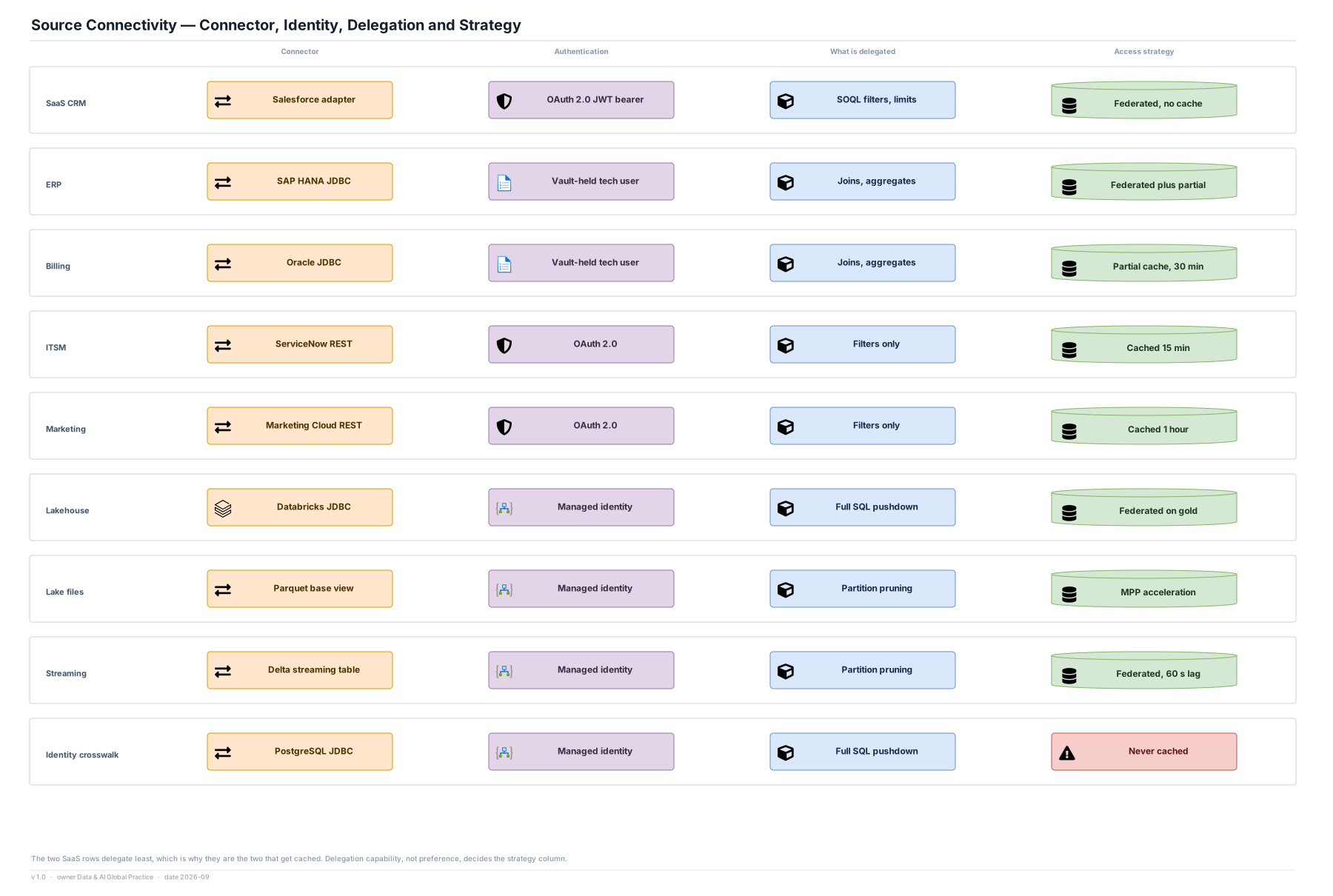
Connector Authentication What is delegated Access strategy SaaS CRM Salesforce adapter OAuth 2.0 JWT bearer SOQL filters, limits Federated, no cache ERP SAP HANA JDBC Vault-held tech user Joins, aggregates Federated plus partial Billing Oracle JDBC Vault-held tech user Joins, aggregates Partial cache, 30 min ITSM ServiceNow REST OAuth 2.0 Filters only Cached 15 min Marketing Marketing Cloud REST OAuth 2.0 Filters only Cached 1 hour Lakehouse Databricks JDBC Managed identity Full SQL pushdown Federated on gold Lake files Parquet base view Managed identity Partition pruning MPP acceleration Streaming Delta streaming table Managed identity Partition pruning Federated, 60 s lag Identity crosswalk PostgreSQL JDBC Managed identity Full SQL pushdown Never cached Source Connectivity — Connector, Identity, Delegation and Strategy The two SaaS rows delegate least, which is why they are the two that get cached. Delegation capability, not preference, decides the strategy column. v 1.0 · owner Data & AI Global Practice · date 2026-09
Source Connectivity
For each class of source: the connector, how it authenticates, what it can be asked to do, and what follows from that.
HTML page
SVG
draw.io
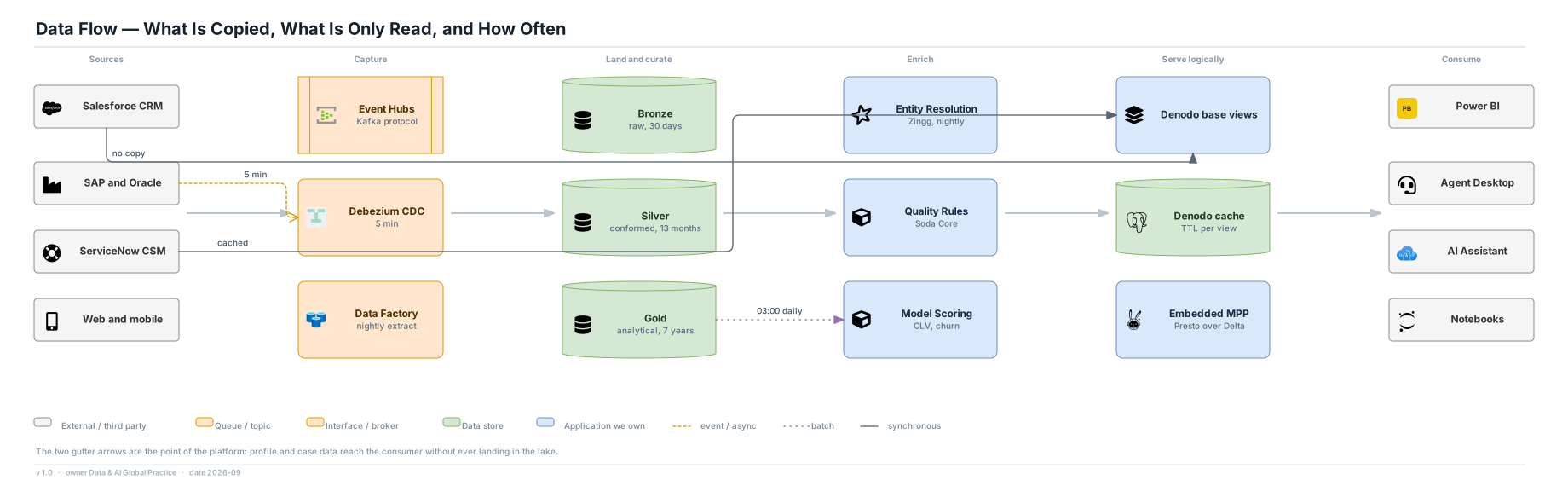
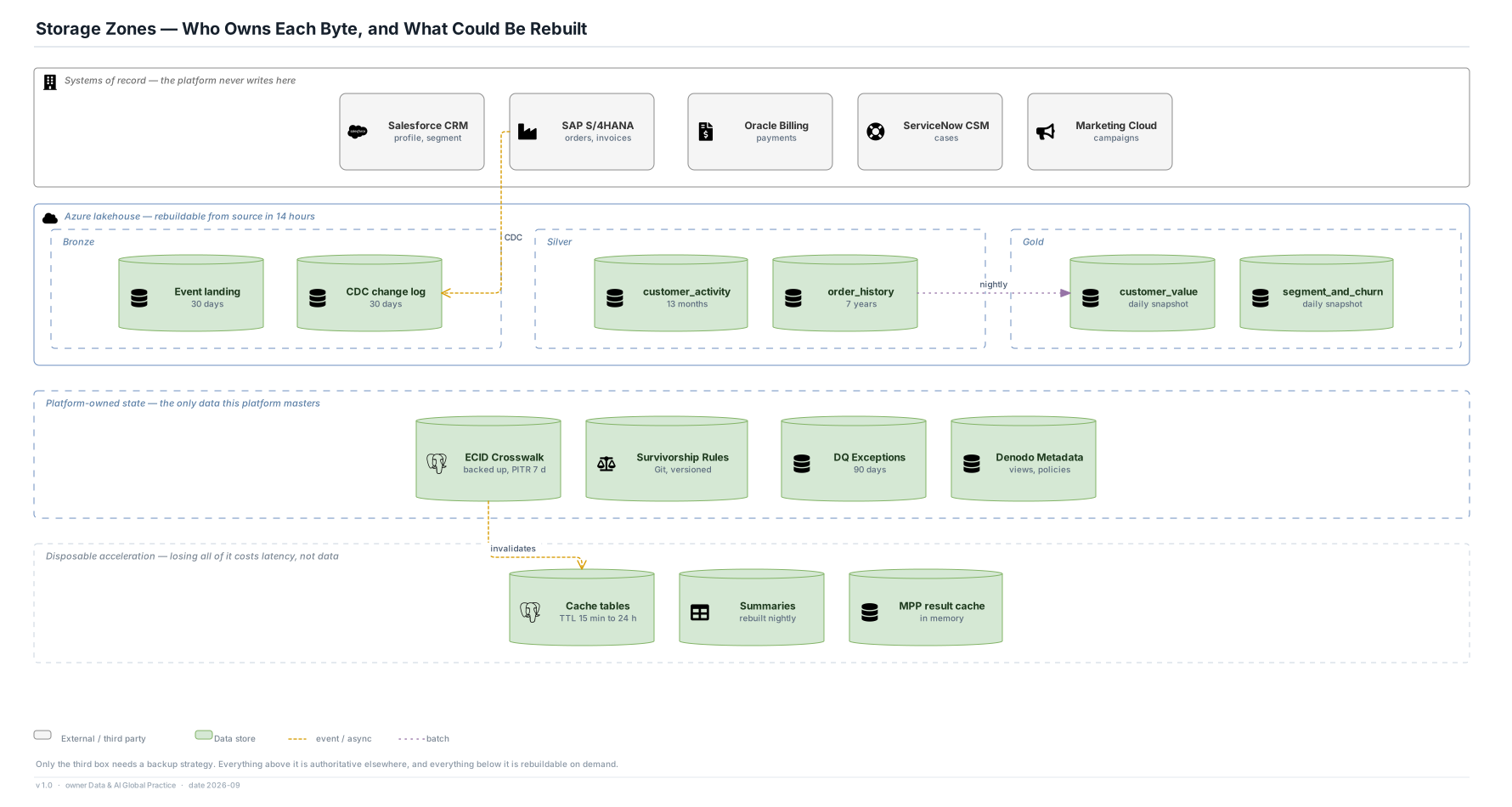
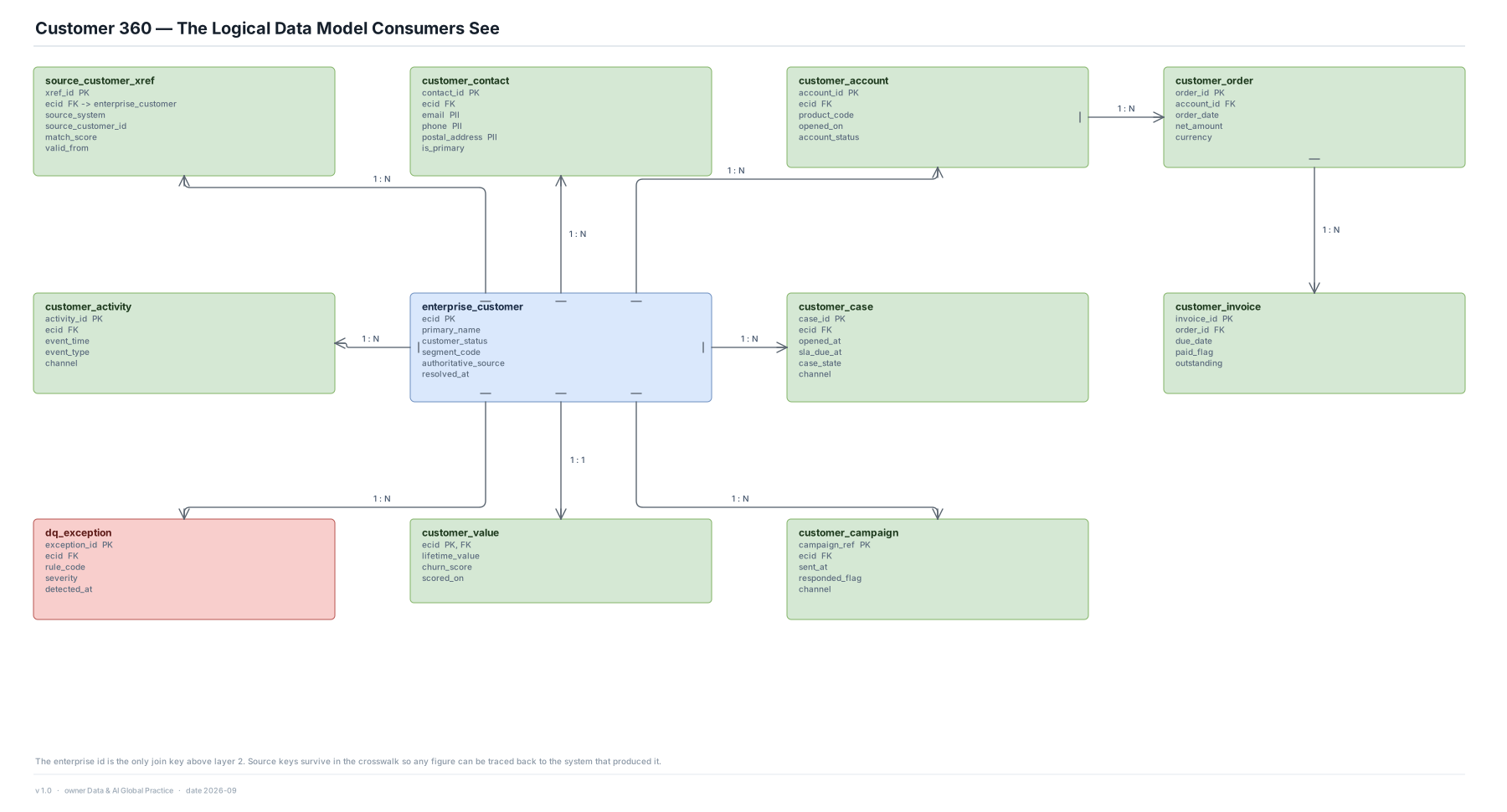
Data What is copied and what is only read, who owns each byte, the model consumers see, and the freshness contract that decides between them.
15
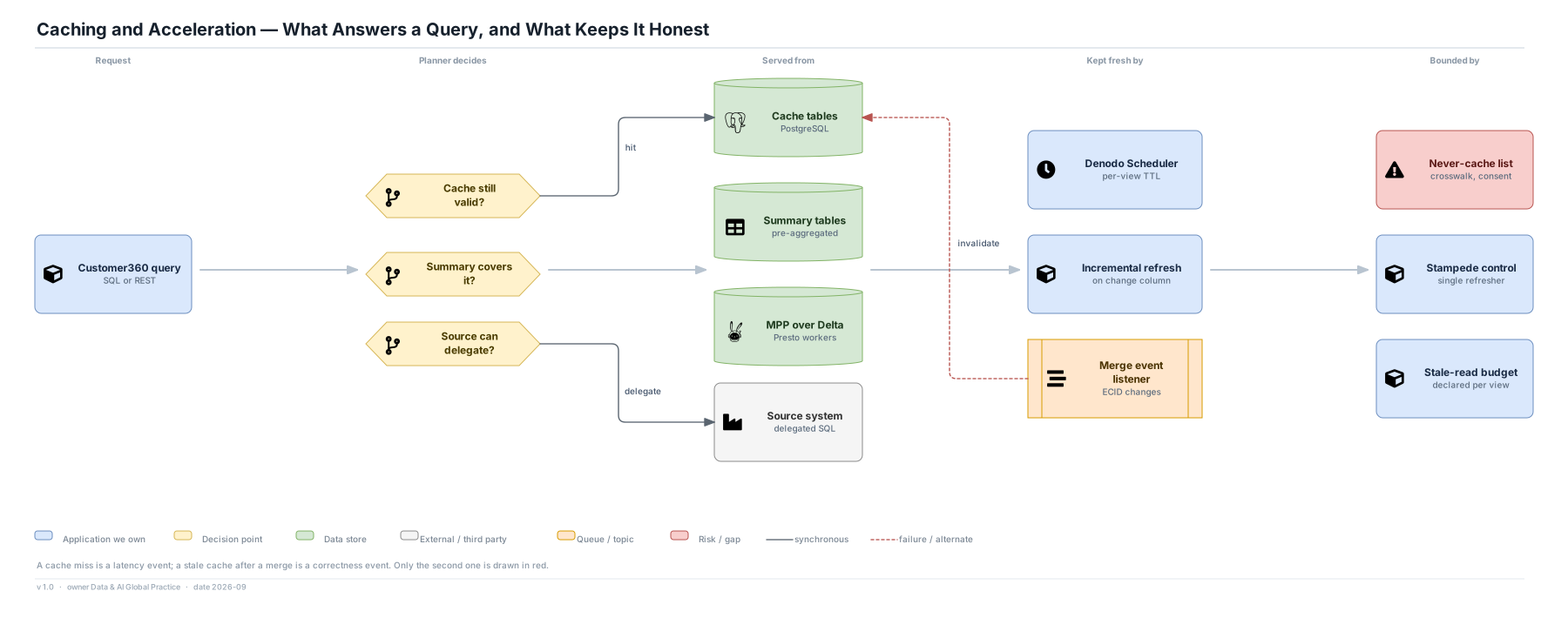
Systems of record — the platform never writes here Salesforce CRM profile, segment SAP S/4HANA orders, invoices Oracle Billing payments ServiceNow CSM cases Marketing Cloud campaigns Azure lakehouse — rebuildable from source in 14 hours Bronze Event landing 30 days CDC change log 30 days Silver customer_activity 13 months order_history 7 years Gold customer_value daily snapshot segment_and_churn daily snapshot Platform-owned state — the only data this platform masters ECID Crosswalk backed up, PITR 7 d Survivorship Rules Git, versioned DQ Exceptions 90 days Denodo Metadata views, policies Disposable acceleration — losing all of it costs latency, not data Cache tables TTL 15 min to 24 h Summaries rebuilt nightly MPP result cache in memory CDC nightly invalidates Storage Zones — Who Owns Each Byte, and What Could Be Rebuilt External / third party Data store event / async batch Only the third box needs a backup strategy. Everything above it is authoritative elsewhere, and everything below it is rebuildable on demand. v 1.0 · owner Data & AI Global Practice · date 2026-09
Storage Zones
Who owns each byte, what would have to be restored, and what could simply be rebuilt.
HTML page
SVG
draw.io
17
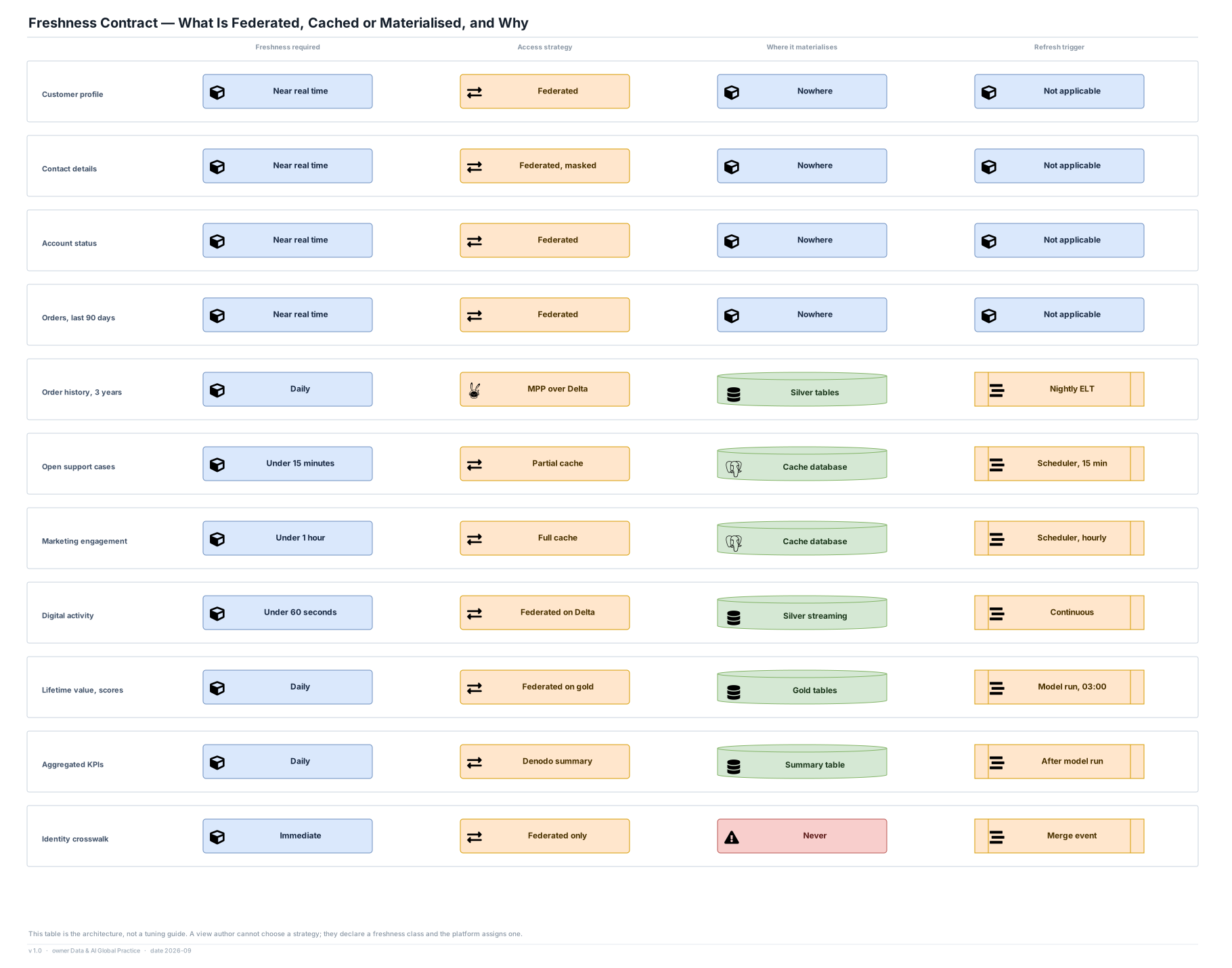
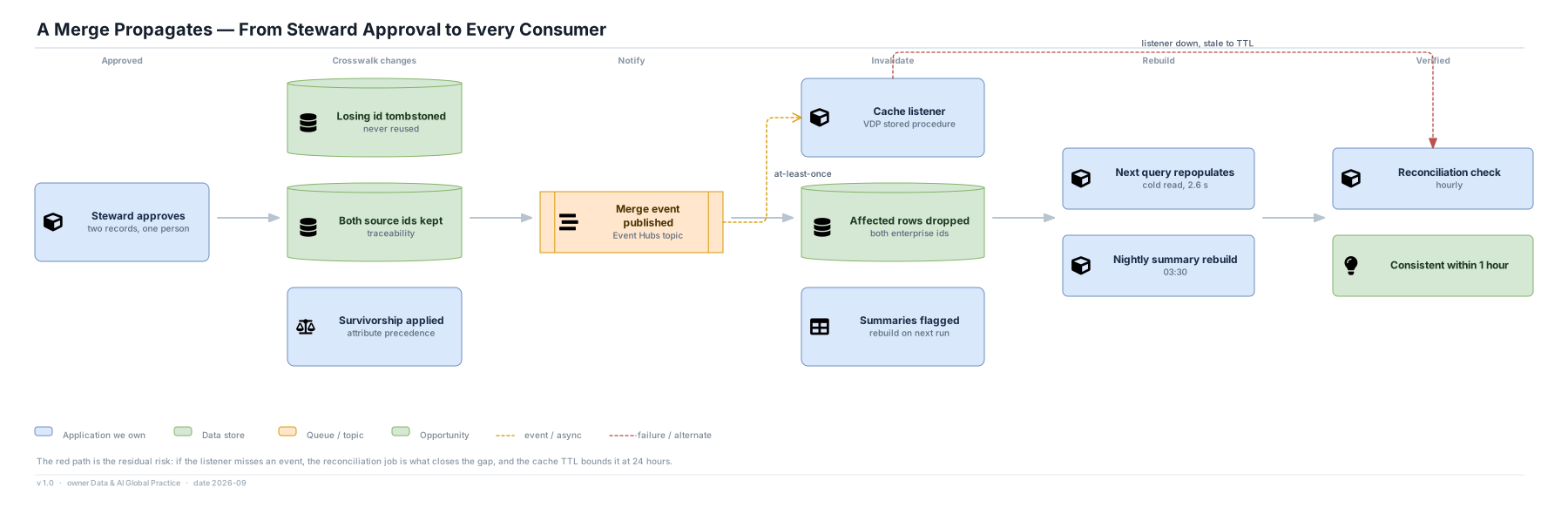
Freshness required Access strategy Where it materialises Refresh trigger Customer profile Near real time Federated Nowhere Not applicable Contact details Near real time Federated, masked Nowhere Not applicable Account status Near real time Federated Nowhere Not applicable Orders, last 90 days Near real time Federated Nowhere Not applicable Order history, 3 years Daily MPP over Delta Silver tables Nightly ELT Open support cases Under 15 minutes Partial cache Cache database Scheduler, 15 min Marketing engagement Under 1 hour Full cache Cache database Scheduler, hourly Digital activity Under 60 seconds Federated on Delta Silver streaming Continuous Lifetime value, scores Daily Federated on gold Gold tables Model run, 03:00 Aggregated KPIs Daily Denodo summary Summary table After model run Identity crosswalk Immediate Federated only Never Merge event Freshness Contract — What Is Federated, Cached or Materialised, and Why This table is the architecture, not a tuning guide. A view author cannot choose a strategy; they declare a freshness class and the platform assigns one. v 1.0 · owner Data & AI Global Practice · date 2026-09
The Freshness Contract
Which attribute groups are federated, cached or materialised — and the rule that decides, rather than the author.
HTML page
SVG
draw.io
Runtime A query, an API call, a stream, an AI answer, a source outage, a subject access request and a merge — each followed end to end.
20
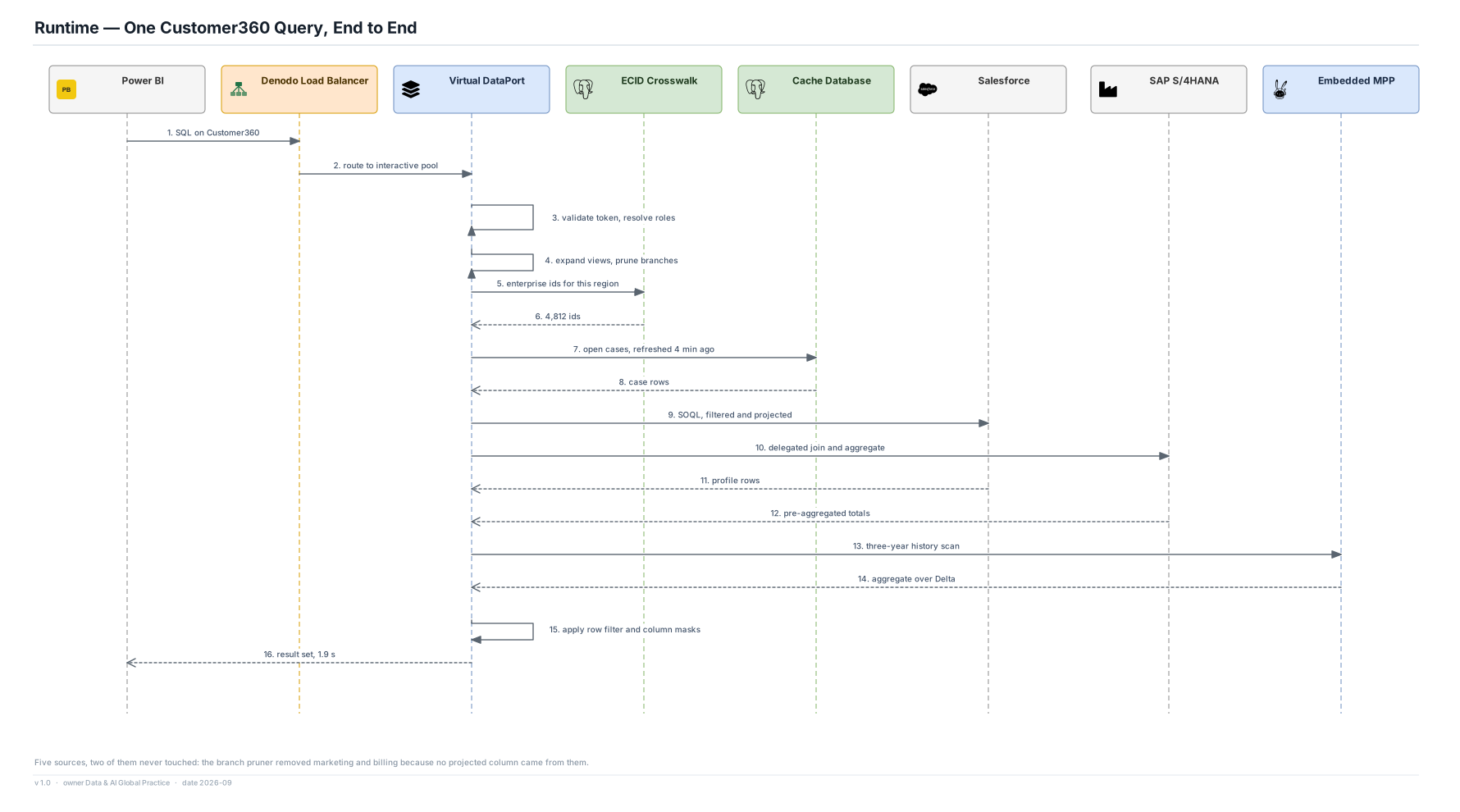
Power BI Denodo Load Balancer Virtual DataPort ECID Crosswalk Cache Database Salesforce SAP S/4HANA Embedded MPP 1. SQL on Customer360 2. route to interactive pool 3. validate token, resolve roles 4. expand views, prune branches 5. enterprise ids for this region 6. 4,812 ids 7. open cases, refreshed 4 min ago 8. case rows 9. SOQL, filtered and projected 10. delegated join and aggregate 11. profile rows 12. pre-aggregated totals 13. three-year history scan 14. aggregate over Delta 15. apply row filter and column masks 16. result set, 1.9 s Runtime — One Customer360 Query, End to End Five sources, two of them never touched: the branch pruner removed marketing and billing because no projected column came from them. v 1.0 · owner Data & AI Global Practice · date 2026-09
A Customer360 Query, End to End
What actually happens between a report refreshing and rows arriving, across five systems.
HTML page
SVG
draw.io
Operations Where it runs, how it survives a zone and a region, how a view reaches production, what is watched, and what it costs.
28
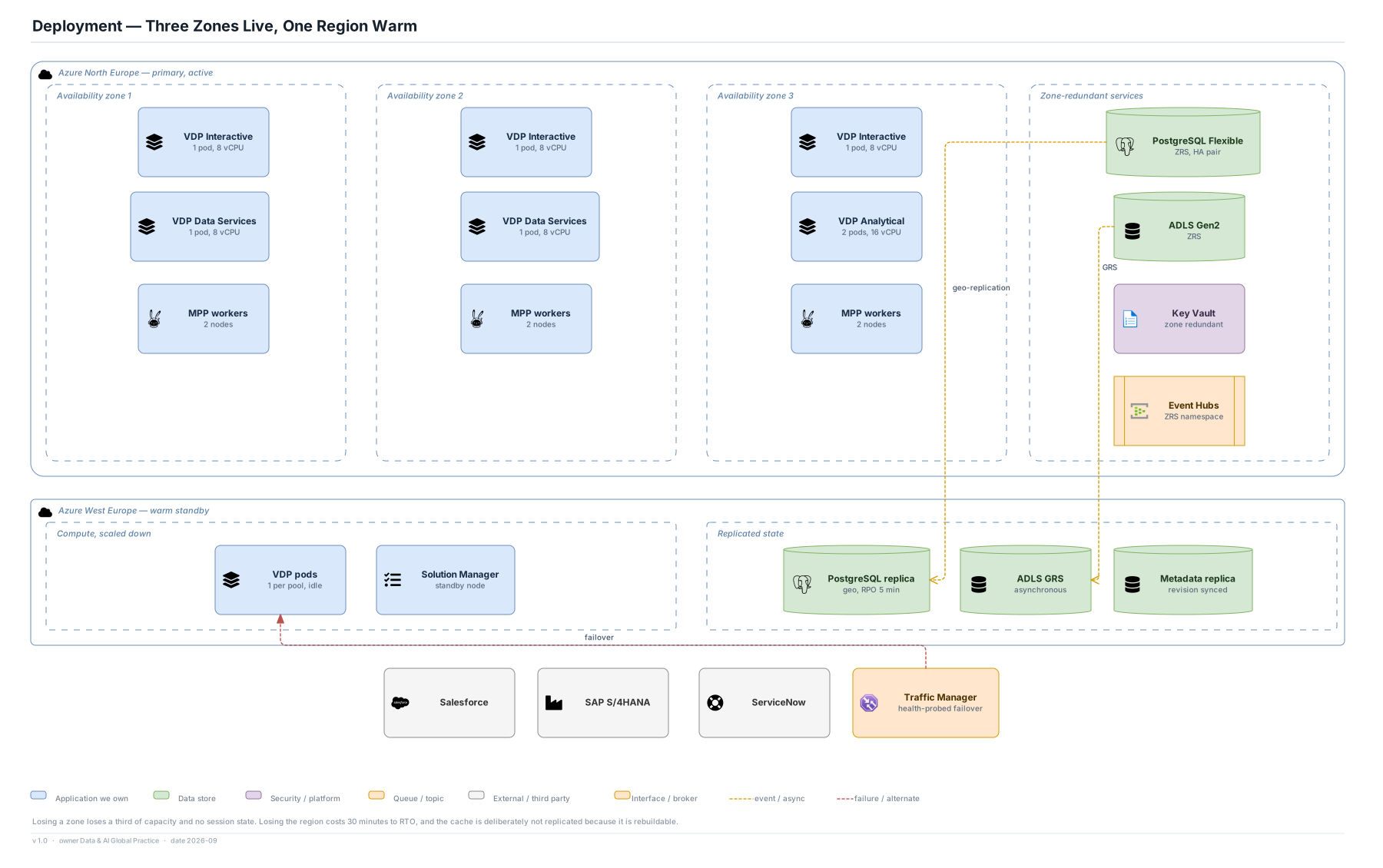
Azure North Europe — primary, active Availability zone 1 VDP Interactive 1 pod, 8 vCPU VDP Data Services 1 pod, 8 vCPU MPP workers 2 nodes Availability zone 2 VDP Interactive 1 pod, 8 vCPU VDP Data Services 1 pod, 8 vCPU MPP workers 2 nodes Availability zone 3 VDP Interactive 1 pod, 8 vCPU VDP Analytical 2 pods, 16 vCPU MPP workers 2 nodes Zone-redundant services PostgreSQL Flexible ZRS, HA pair ADLS Gen2 ZRS Key Vault zone redundant Event Hubs ZRS namespace Azure West Europe — warm standby Compute, scaled down VDP pods 1 per pool, idle Solution Manager standby node Replicated state PostgreSQL replica geo, RPO 5 min ADLS GRS asynchronous Metadata replica revision synced Salesforce SAP S/4HANA ServiceNow Traffic Manager health-probed failover geo-replication GRS failover Deployment — Three Zones Live, One Region Warm Application we own Data store Security / platform Queue / topic External / third party Interface / broker event / async failure / alternate Losing a zone loses a third of capacity and no session state. Losing the region costs 30 minutes to RTO, and the cache is deliberately not replicated because it is rebuildable. v 1.0 · owner Data & AI Global Practice · date 2026-09
Deployment
What runs where, what survives a zone, and what a region failure actually costs.
HTML page
SVG
draw.io
Assurance Trust boundaries, identity, the single policy set every channel inherits, sensitive data, governance, and every failure mode named.
34
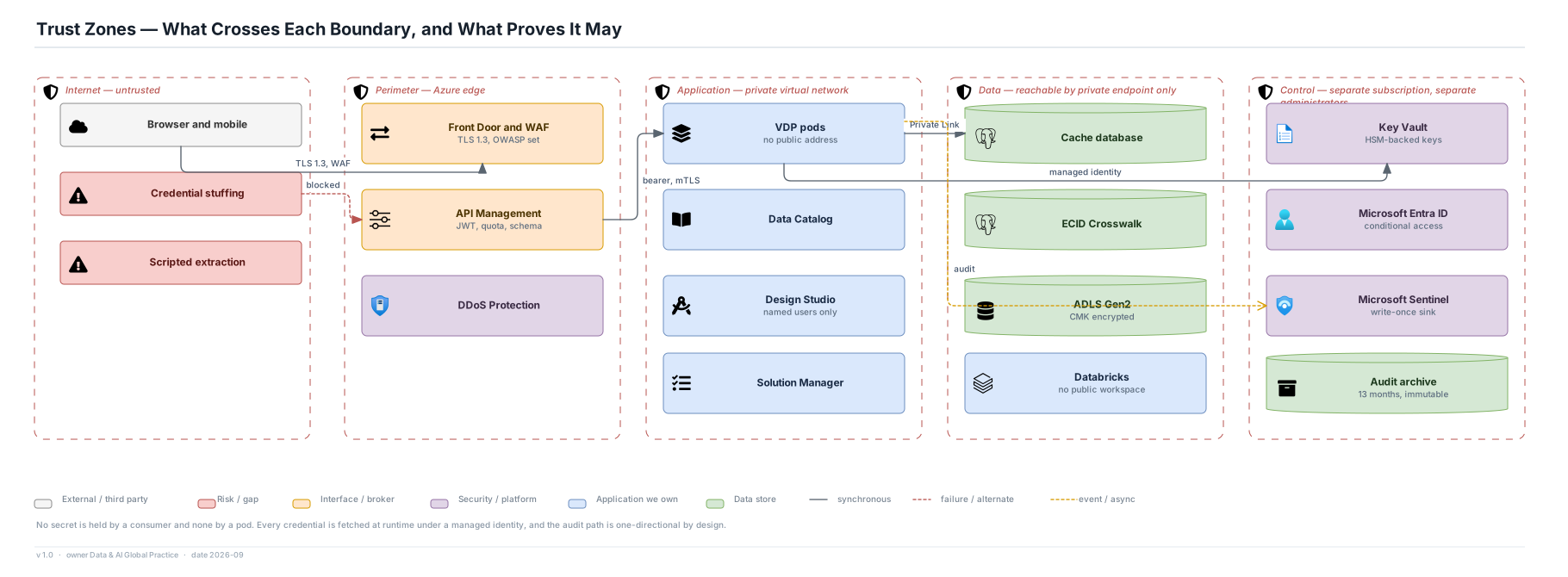
Internet — untrusted Browser and mobile Credential stuffing Scripted extraction Perimeter — Azure edge Front Door and WAF TLS 1.3, OWASP set API Management JWT, quota, schema DDoS Protection Application — private virtual network VDP pods no public address Data Catalog Design Studio named users only Solution Manager Data — reachable by private endpoint only Cache database ECID Crosswalk ADLS Gen2 CMK encrypted Databricks no public workspace Control — separate subscription, separate administrators Key Vault HSM-backed keys Microsoft Entra ID conditional access Microsoft Sentinel write-once sink Audit archive 13 months, immutable TLS 1.3, WAF blocked bearer, mTLS Private Link managed identity audit Trust Zones — What Crosses Each Boundary, and What Proves It May External / third party Risk / gap Interface / broker Security / platform Application we own Data store synchronous failure / alternate event / async No secret is held by a consumer and none by a pod. Every credential is fetched at runtime under a managed identity, and the audit path is one-directional by design. v 1.0 · owner Data & AI Global Practice · date 2026-09
Trust Zones
Where the boundaries are, what crosses each one, and where an attacker actually arrives.
HTML page
SVG
draw.io
35
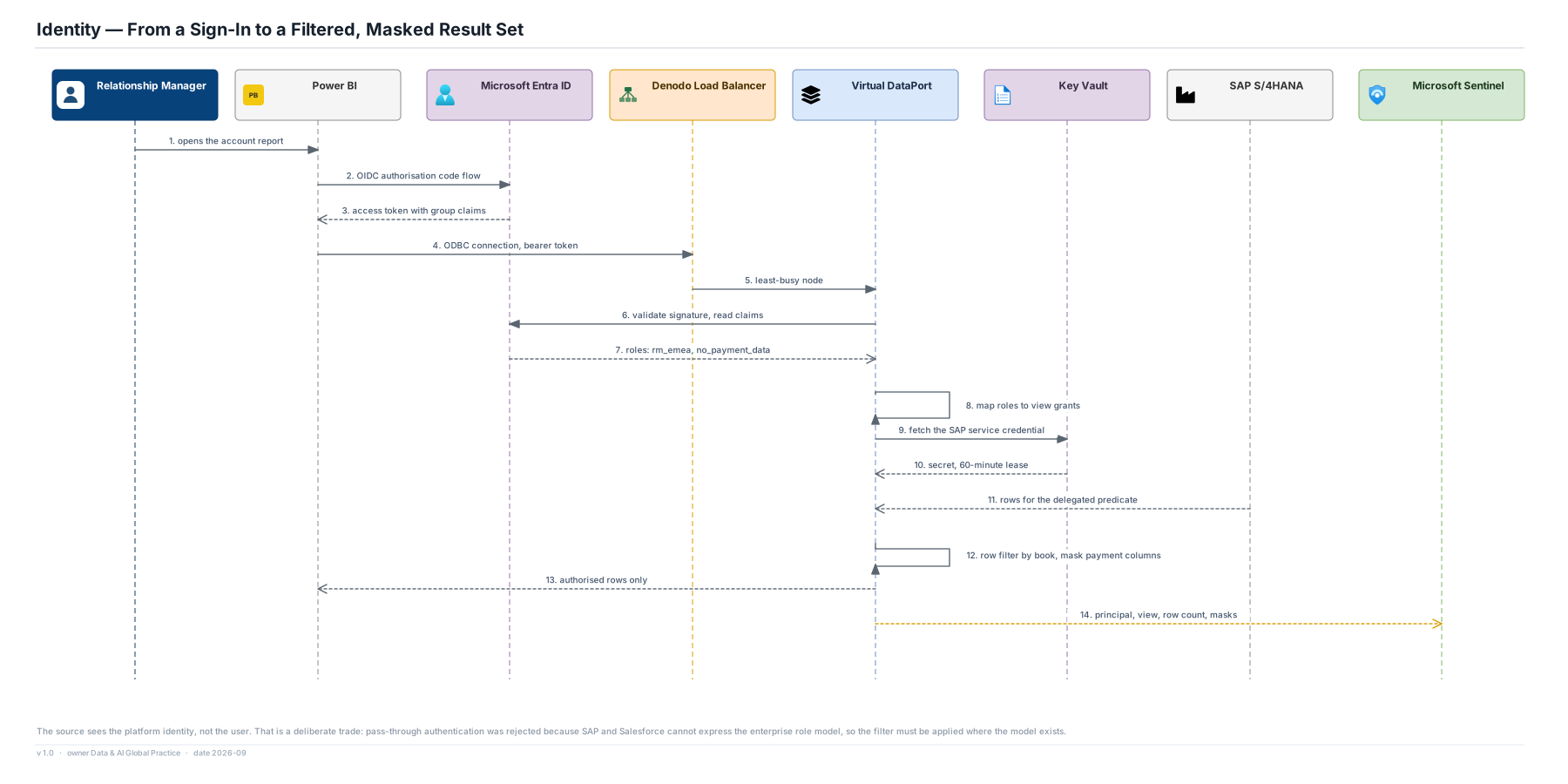
Relationship Manager Power BI Microsoft Entra ID Denodo Load Balancer Virtual DataPort Key Vault SAP S/4HANA Microsoft Sentinel 1. opens the account report 2. OIDC authorisation code flow 3. access token with group claims 4. ODBC connection, bearer token 5. least-busy node 6. validate signature, read claims 7. roles: rm_emea, no_payment_data 8. map roles to view grants 9. fetch the SAP service credential 10. secret, 60-minute lease 11. rows for the delegated predicate 12. row filter by book, mask payment columns 13. authorised rows only 14. principal, view, row count, masks Identity — From a Sign-In to a Filtered, Masked Result Set The source sees the platform identity, not the user. That is a deliberate trade: pass-through authentication was rejected because SAP and Salesforce cannot express the enterprise role model, so the filter must be applied where the model exists. v 1.0 · owner Data & AI Global Practice · date 2026-09
Identity and Access
From a sign-in to a filtered, masked result set — and the one trade-off in the chain.
HTML page
SVG
draw.io
36
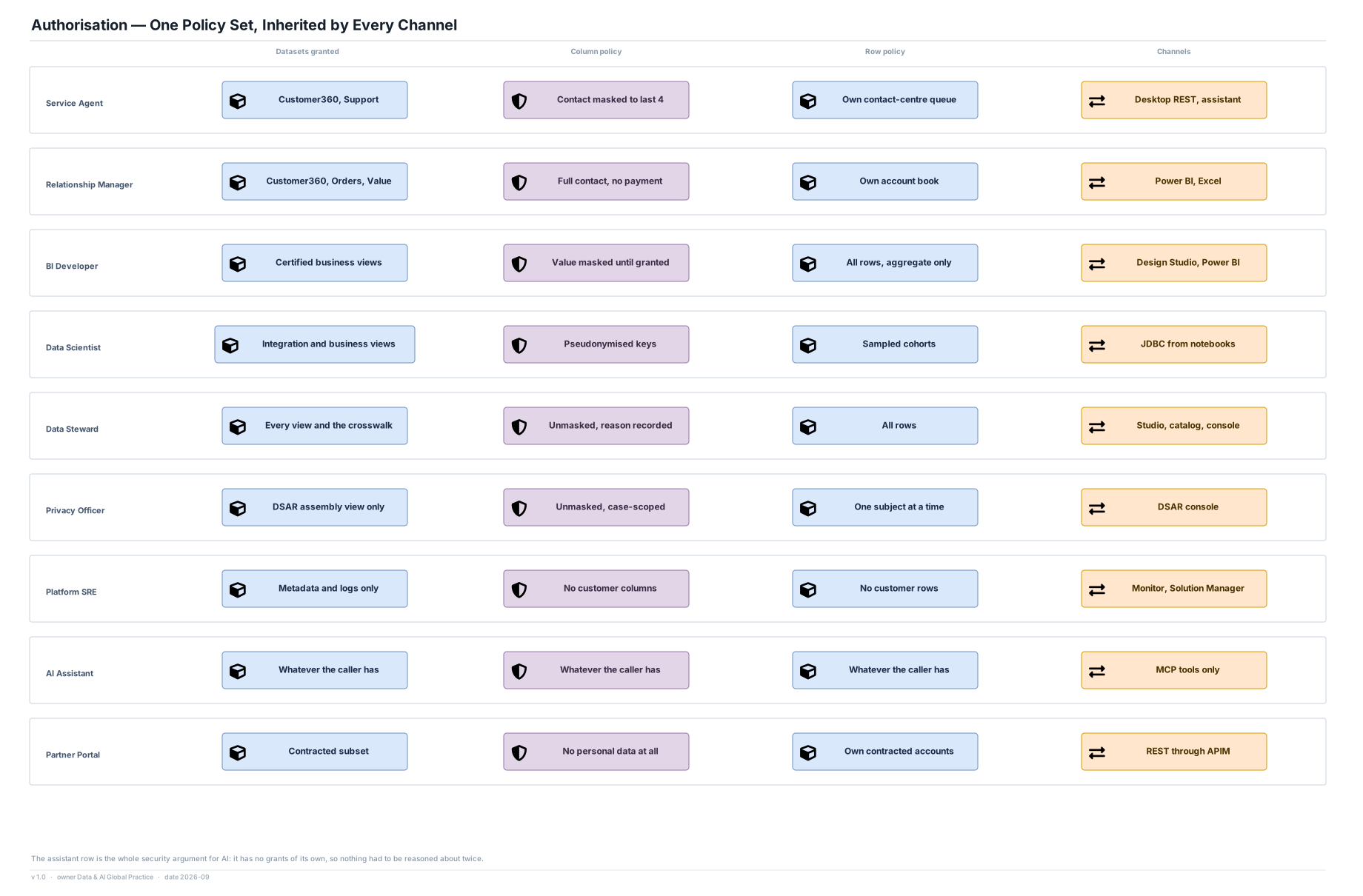
Datasets granted Column policy Row policy Channels Service Agent Customer360, Support Contact masked to last 4 Own contact-centre queue Desktop REST, assistant Relationship Manager Customer360, Orders, Value Full contact, no payment Own account book Power BI, Excel BI Developer Certified business views Value masked until granted All rows, aggregate only Design Studio, Power BI Data Scientist Integration and business views Pseudonymised keys Sampled cohorts JDBC from notebooks Data Steward Every view and the crosswalk Unmasked, reason recorded All rows Studio, catalog, console Privacy Officer DSAR assembly view only Unmasked, case-scoped One subject at a time DSAR console Platform SRE Metadata and logs only No customer columns No customer rows Monitor, Solution Manager AI Assistant Whatever the caller has Whatever the caller has Whatever the caller has MCP tools only Partner Portal Contracted subset No personal data at all Own contracted accounts REST through APIM Authorisation — One Policy Set, Inherited by Every Channel The assistant row is the whole security argument for AI: it has no grants of its own, so nothing had to be reasoned about twice. v 1.0 · owner Data & AI Global Practice · date 2026-09
Authorisation Model
One policy set per role, and every channel inheriting it without restating it.
HTML page
SVG
draw.io
37
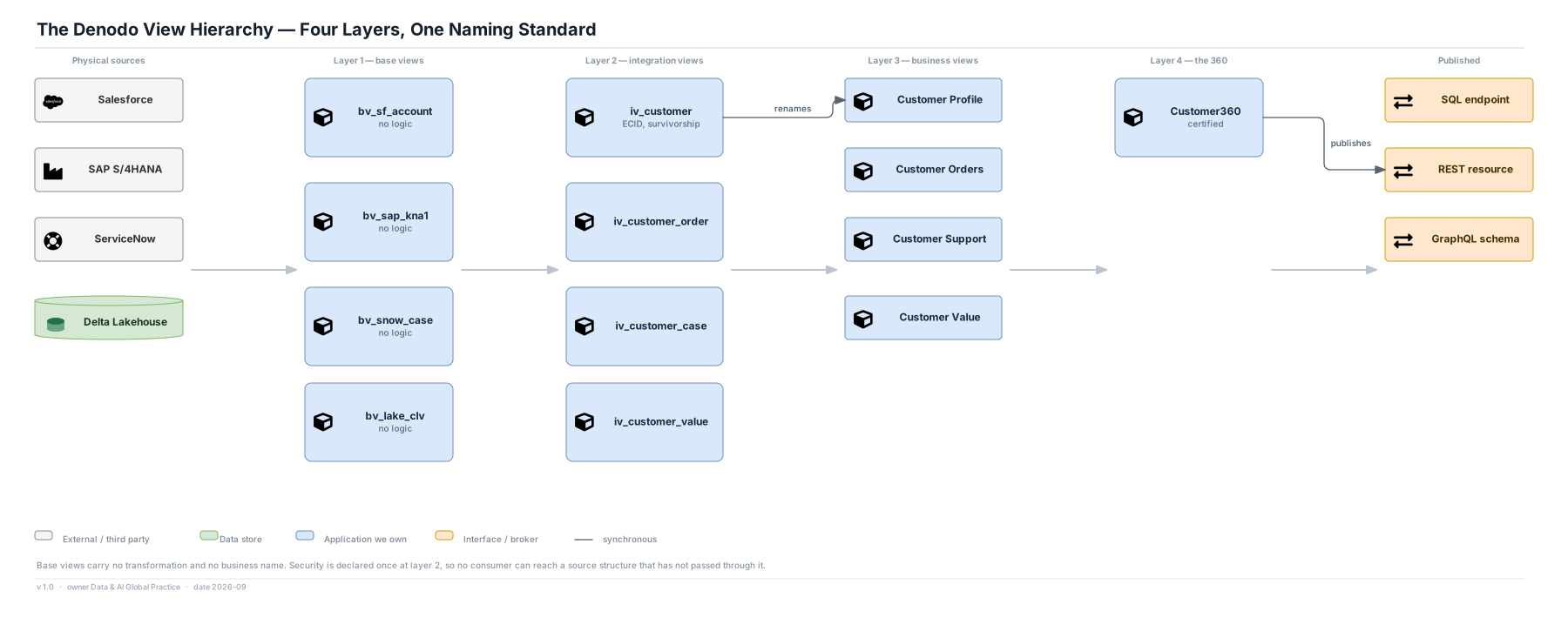
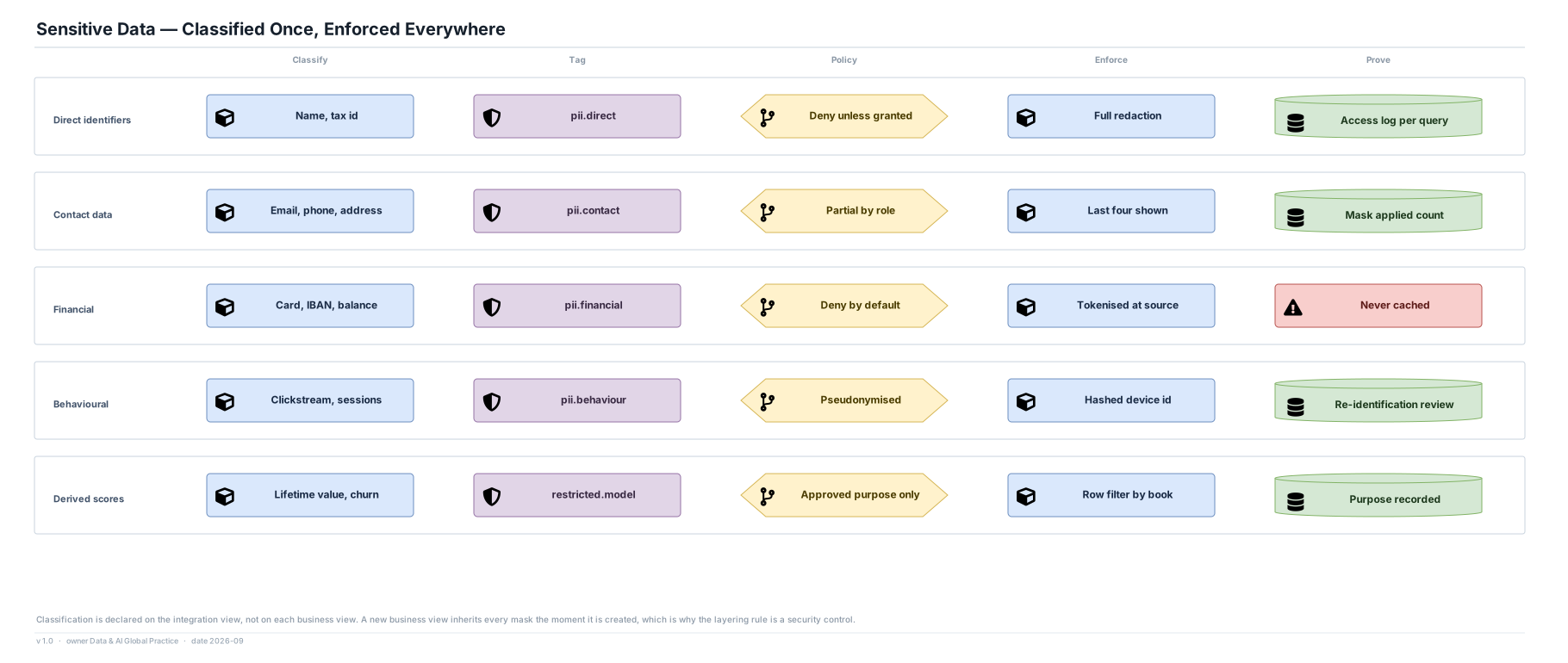
Classify Tag Policy Enforce Prove Direct identifiers Name, tax id pii.direct Deny unless granted Full redaction Access log per query Contact data Email, phone, address pii.contact Partial by role Last four shown Mask applied count Financial Card, IBAN, balance pii.financial Deny by default Tokenised at source Never cached Behavioural Clickstream, sessions pii.behaviour Pseudonymised Hashed device id Re-identification review Derived scores Lifetime value, churn restricted.model Approved purpose only Row filter by book Purpose recorded Sensitive Data — Classified Once, Enforced Everywhere Classification is declared on the integration view, not on each business view. A new business view inherits every mask the moment it is created, which is why the layering rule is a security control. v 1.0 · owner Data & AI Global Practice · date 2026-09
Sensitive Data
Five classes of sensitive data, classified once and enforced everywhere above it.
HTML page
SVG
draw.io
39
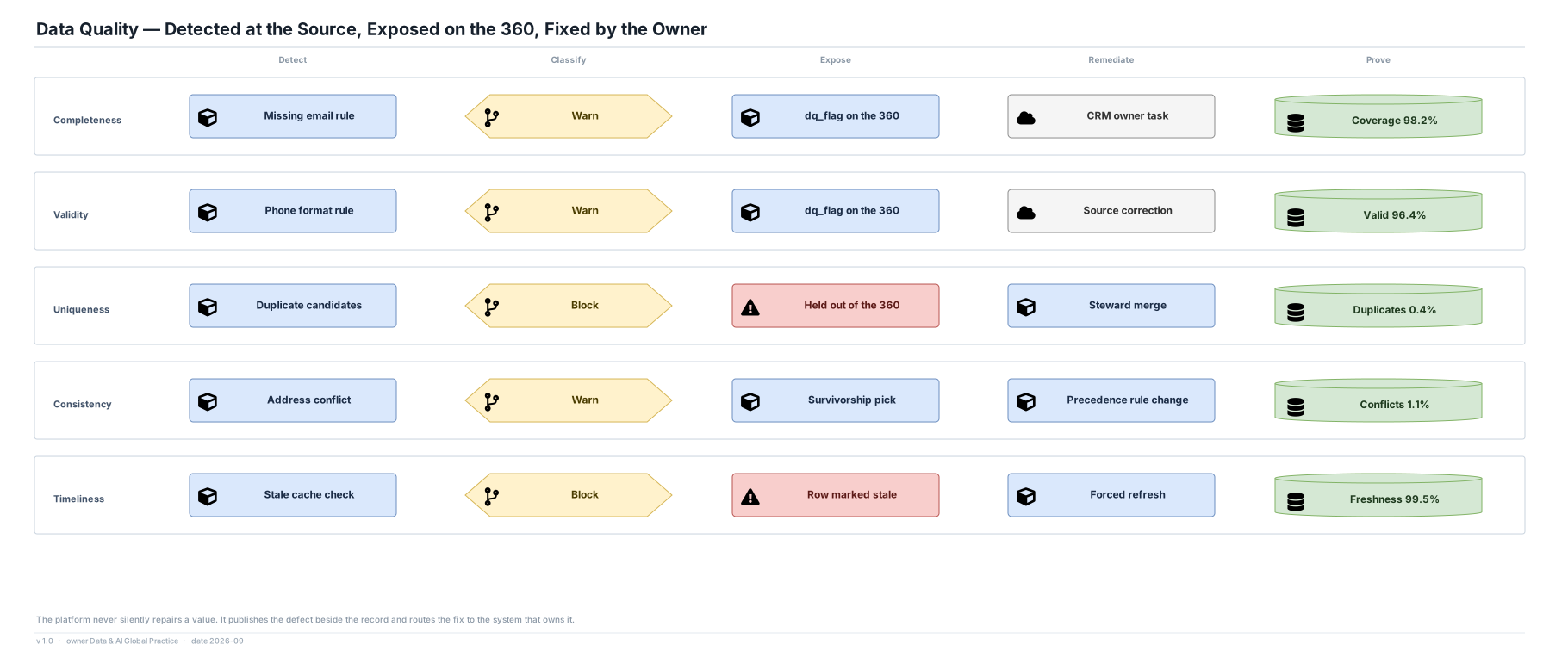
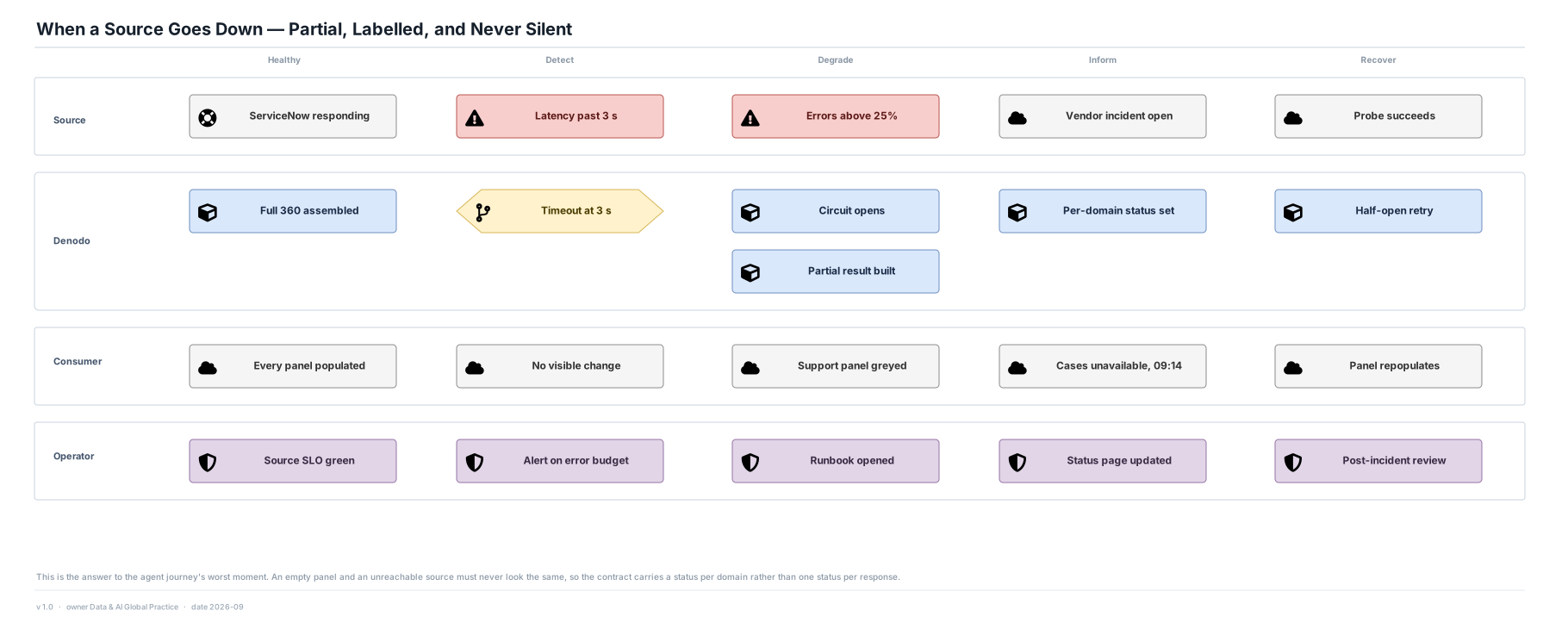
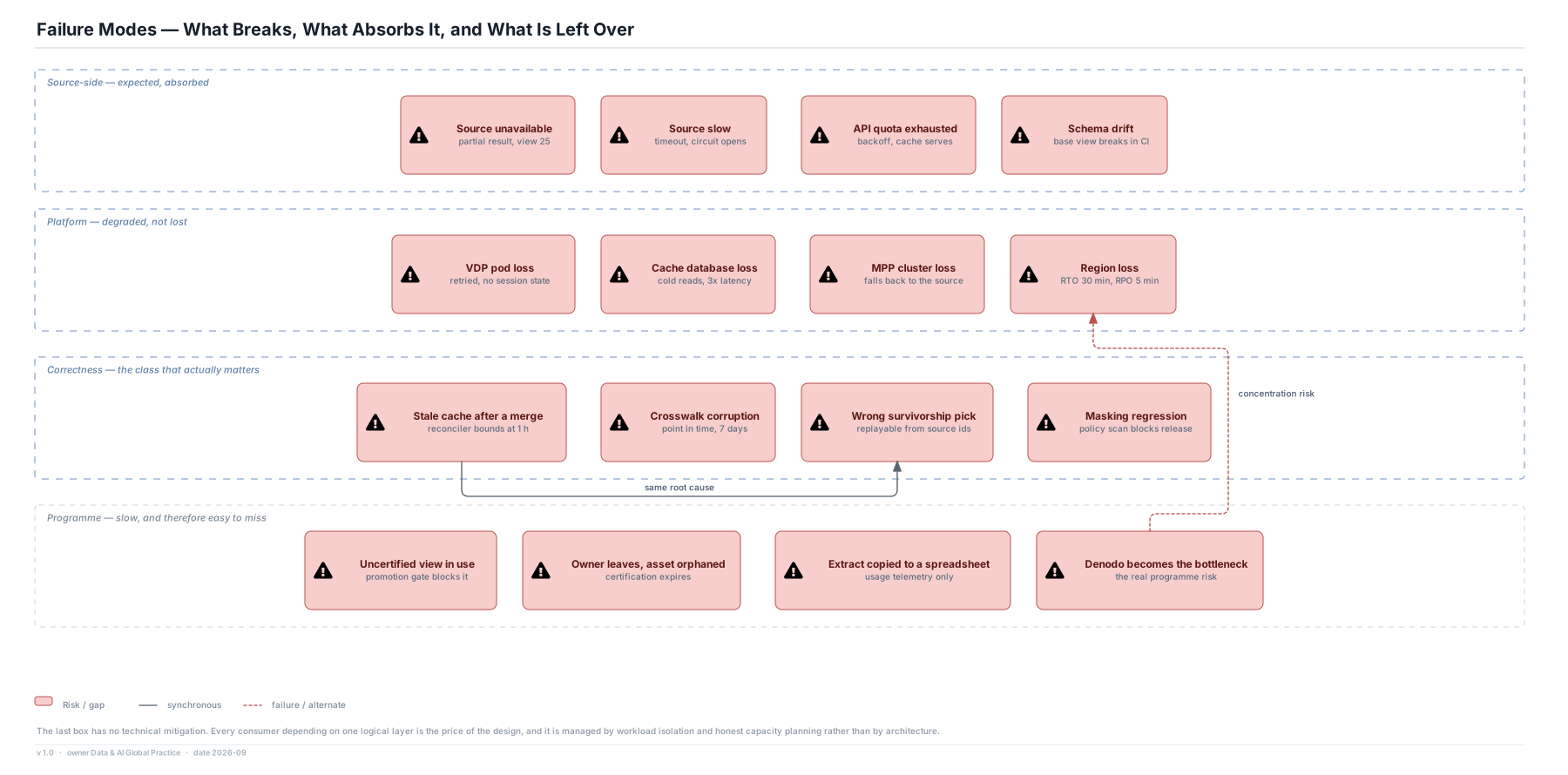
Source-side — expected, absorbed Source unavailable partial result, view 25 Source slow timeout, circuit opens API quota exhausted backoff, cache serves Schema drift base view breaks in CI Platform — degraded, not lost VDP pod loss retried, no session state Cache database loss cold reads, 3x latency MPP cluster loss falls back to the source Region loss RTO 30 min, RPO 5 min Correctness — the class that actually matters Stale cache after a merge reconciler bounds at 1 h Crosswalk corruption point in time, 7 days Wrong survivorship pick replayable from source ids Masking regression policy scan blocks release Programme — slow, and therefore easy to miss Uncertified view in use promotion gate blocks it Owner leaves, asset orphaned certification expires Extract copied to a spreadsheet usage telemetry only Denodo becomes the bottleneck the real programme risk same root cause concentration risk Failure Modes — What Breaks, What Absorbs It, and What Is Left Over Risk / gap synchronous failure / alternate The last box has no technical mitigation. Every consumer depending on one logical layer is the price of the design, and it is managed by workload isolation and honest capacity planning rather than by architecture. v 1.0 · owner Data & AI Global Practice · date 2026-09
Failure Modes
Every named way this breaks, what absorbs it, and the one class with no technical answer.
HTML page
SVG
draw.io
Open svg/<view>.svg or drawio/<view>.drawio in draw.io Desktop or at app.diagrams.net to edit. The SVG carries the diagram inside it, so it is both the picture and the source. This folder is self-contained — copy it whole and every link still resolves.