Customer 360 Enterprise Data Platform — Denodo on Azure  ·  View 08 of 39  ·  Structure

Layered Architecture

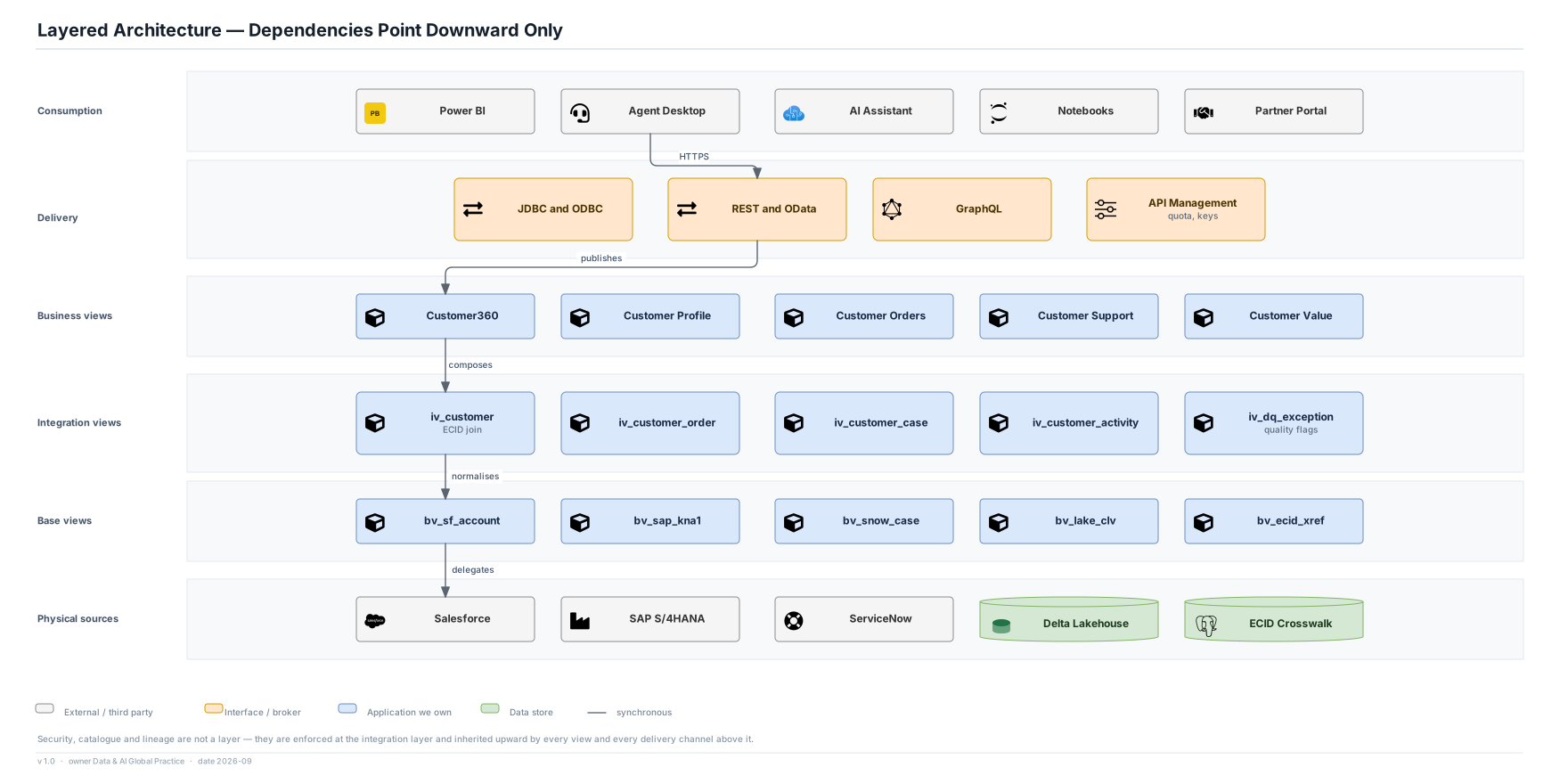
What depends on what, and why no consumer can reach a source structure directly.

Editable source SVG draw.io All views
Consumption Power BI Agent Desktop AI Assistant Notebooks Partner Portal Delivery JDBC and ODBC REST and OData GraphQL API Management quota, keys Business views Customer360 Customer Profile Customer Orders Customer Support Customer Value Integration views iv_customer ECID join iv_customer_order iv_customer_case iv_customer_activity iv_dq_exception quality flags Base views bv_sf_account bv_sap_kna1 bv_snow_case bv_lake_clv bv_ecid_xref Physical sources Salesforce SAP S/4HANA ServiceNow Delta Lakehouse ECID Crosswalk HTTPS publishes composes normalises delegates Layered Architecture — Dependencies Point Downward Only External / third party Interface / broker Application we own Data store synchronous Security, catalogue and lineage are not a layer — they are enforced at the integration layer and inherited upward by every view and every delivery channel above it. v 1.0 · owner Data & AI Global Practice · date 2026-09

The layering rule

  • Dependencies point downward only. A base view never references another base view, and a business view never references a source.
  • Security, classification and quality flags are declared once at the integration layer. Every business view created above it inherits them on the day it is created, which turns the layering rule into a security control rather than a style guide.
  • The rule is enforced by the VQL lint in the promotion pipeline, not by review discipline.

Why security is not a layer

  • Drawing governance as a vertical band beside the stack is the common form and it is misleading: it suggests a component that intercepts calls. Here it is a property of layer 2 that propagates upward with the views themselves.

Deliberate omissions

  • One representative arrow per boundary rather than the full call graph; a layered view is about the direction of dependency.
  • Roughly 40 base views and 18 integration views exist; five of each are shown.