Customer 360 Enterprise Data Platform — Denodo on Azure  ·  View 38 of 39  ·  Assurance

Governance and Lineage

From a business definition to a column-level trace, and the loop that keeps ownership honest.

Editable source SVG draw.io All views
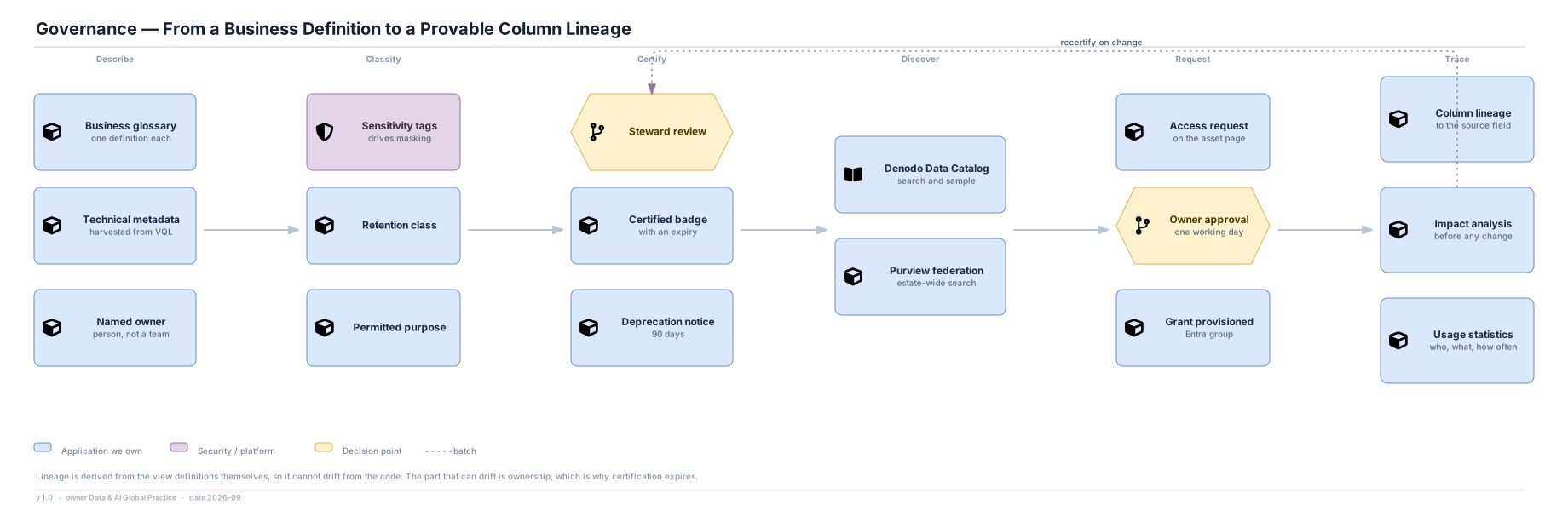
Describe Business glossary one definition each Technical metadata harvested from VQL Named owner person, not a team Classify Sensitivity tags drives masking Retention class Permitted purpose Certify Steward review Certified badge with an expiry Deprecation notice 90 days Discover Denodo Data Catalog search and sample Purview federation estate-wide search Request Access request on the asset page Owner approval one working day Grant provisioned Entra group Trace Column lineage to the source field Impact analysis before any change Usage statistics who, what, how often recertify on change Governance — From a Business Definition to a Provable Column Lineage Application we own Security / platform Decision point batch Lineage is derived from the view definitions themselves, so it cannot drift from the code. The part that can drift is ownership, which is why certification expires. v 1.0 · owner Data & AI Global Practice · date 2026-09

Decisions

  • Lineage is derived from the view definitions themselves, so it cannot drift from the code. This is the strongest argument for putting the semantic layer in Denodo rather than in each BI tool.
  • An owner is a named person, not a team. Certification carries an expiry, because the thing that decays is not the definition but whether anyone still stands behind it.
  • Access requests live on the asset page with a one working day target — the direct answer to the BI developer journey's trough on view 06.

Two catalogues, one definition

  • Denodo Data Catalog is where a consumer of the 360 searches, samples and requests. Microsoft Purview federates it so estate-wide search works without a second definition of Customer360 that could disagree with the first.
  • Impact analysis runs before any change and forces recertification of anything it touches.

Risks

  • Certification becomes a rubber stamp if the review has no teeth. Expiry plus quarterly ownership attestation is the mechanism; nothing else in the design prevents it.