Customer 360 Enterprise Data Platform — Denodo on Azure · View 10 of 39 · Structure
The standard
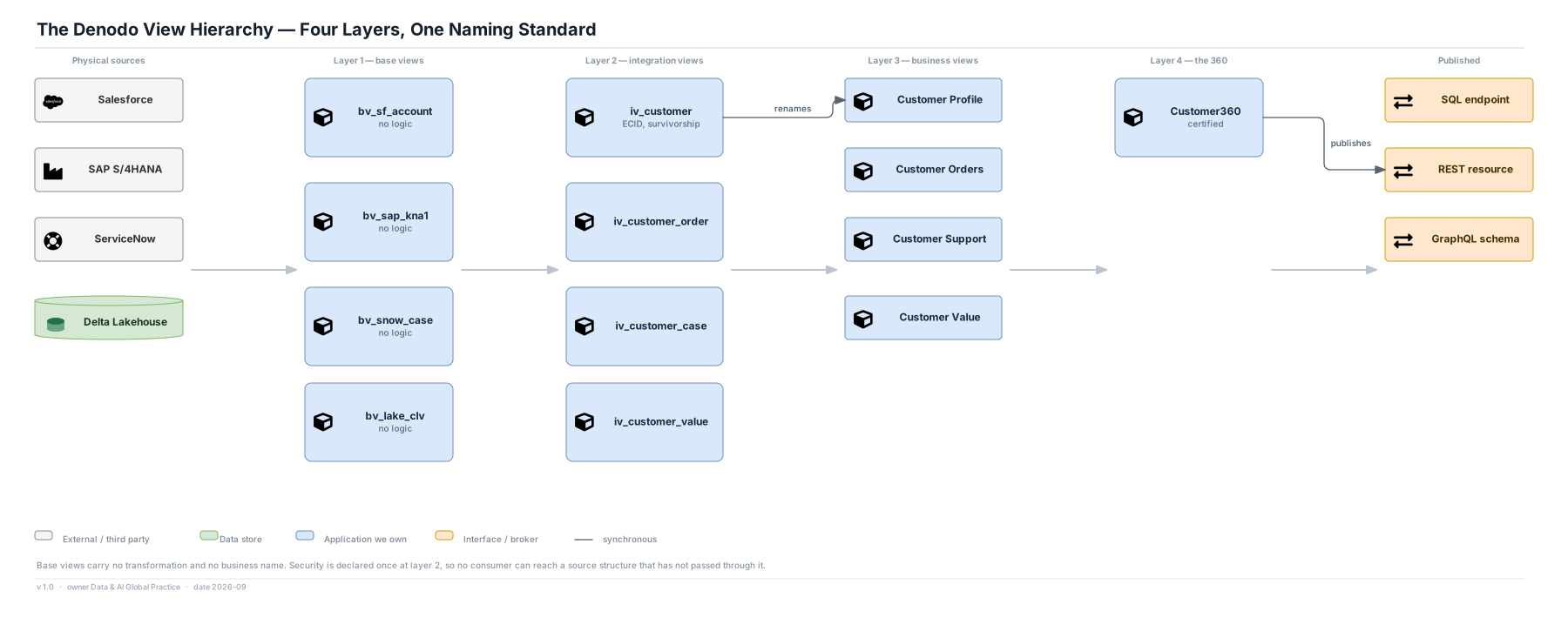
- bv_ base views carry no transformation, no business naming and no filtering. They are a one-to-one projection of the source structure and nothing more.
- iv_ integration views own normalisation, the enterprise id join, survivorship and the quality flags. This is the only layer where a source name may appear in a join.
- Business views own naming and nothing else. Customer360 composes business views and adds no logic of its own — it is a contract, not a query.
Why the discipline is worth the extra layer
- The alternative, letting business views read base views directly when it is quicker, works until a source changes. Then the impact analysis returns forty views instead of four, and the policy declared at layer 2 has been bypassed by whoever took the shortcut.
Numbers
- Roughly 40 base views, 18 integration views, 9 business views, one Customer360, three published endpoints.
- A new source is expected to add base views and at most one integration view — never a business view.