Customer 360 Enterprise Data Platform — Denodo on Azure · View 19 of 39 · Data
Decisions
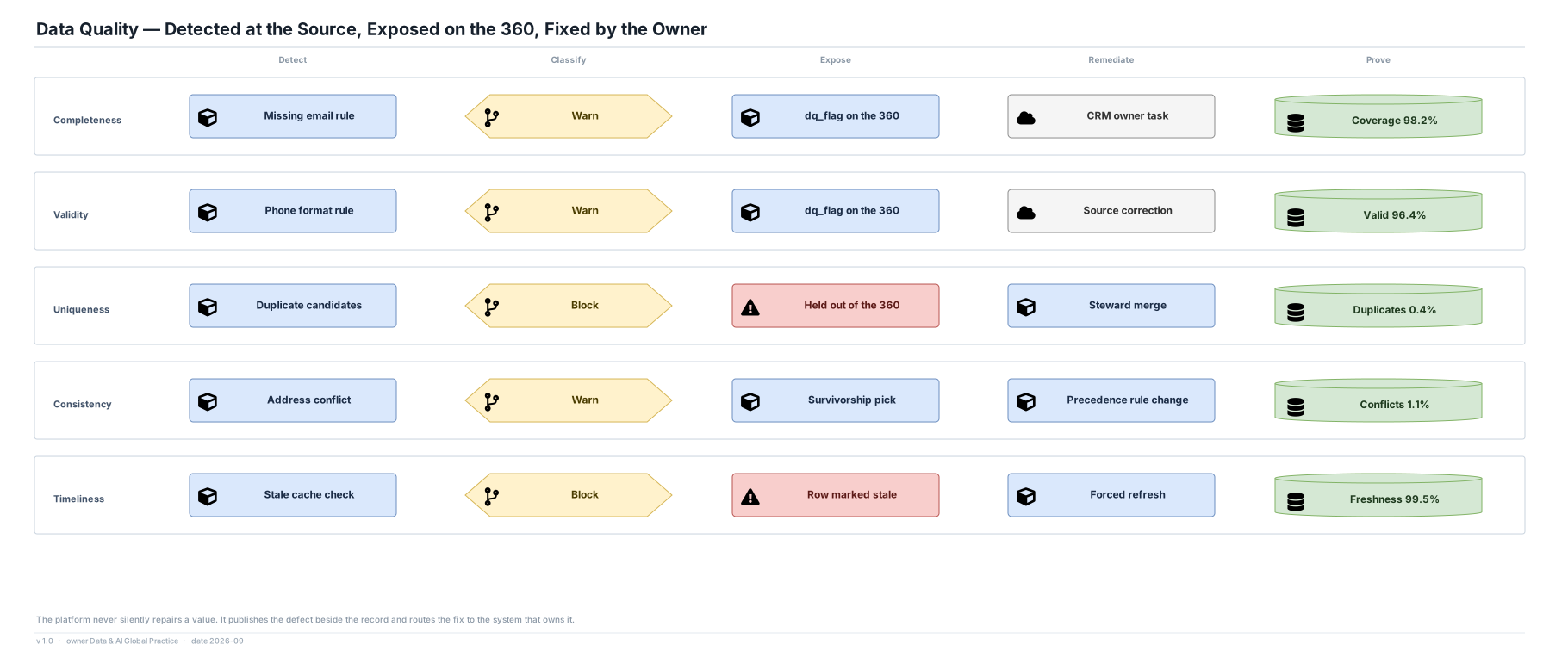
- The platform never silently repairs a value. It publishes the defect beside the record and routes the fix to the system that owns it.
- Two severities with different consequences: a warning flags the row and lets it through; a block holds it out of the 360 entirely. Only uniqueness and timeliness can block.
- Rules run in Databricks with Soda Core against landed data and against federated samples, so a rule is testable outside the query path.
Why quality is not fixed in the view
- Cleansing inside an integration view produces a customer record that exists nowhere else, cannot be reconciled with the source, and quietly becomes a second system of record. Flagging keeps the source authoritative and makes the defect somebody's work item.
Numbers
- Current baselines: email coverage 98.2%, phone validity 96.4%, duplicate rate 0.4%, address conflicts 1.1%, freshness SLA met 99.5%.
- Exceptions retained 90 days; anything unresolved after 30 days escalates to the data owner.