Customer 360 Enterprise Data Platform — Denodo on Azure  ·  View 33 of 39  ·  Operations

Cost Model

What drives spend, what it scales with, and the four levers that actually move it.

Editable source SVG draw.io All views
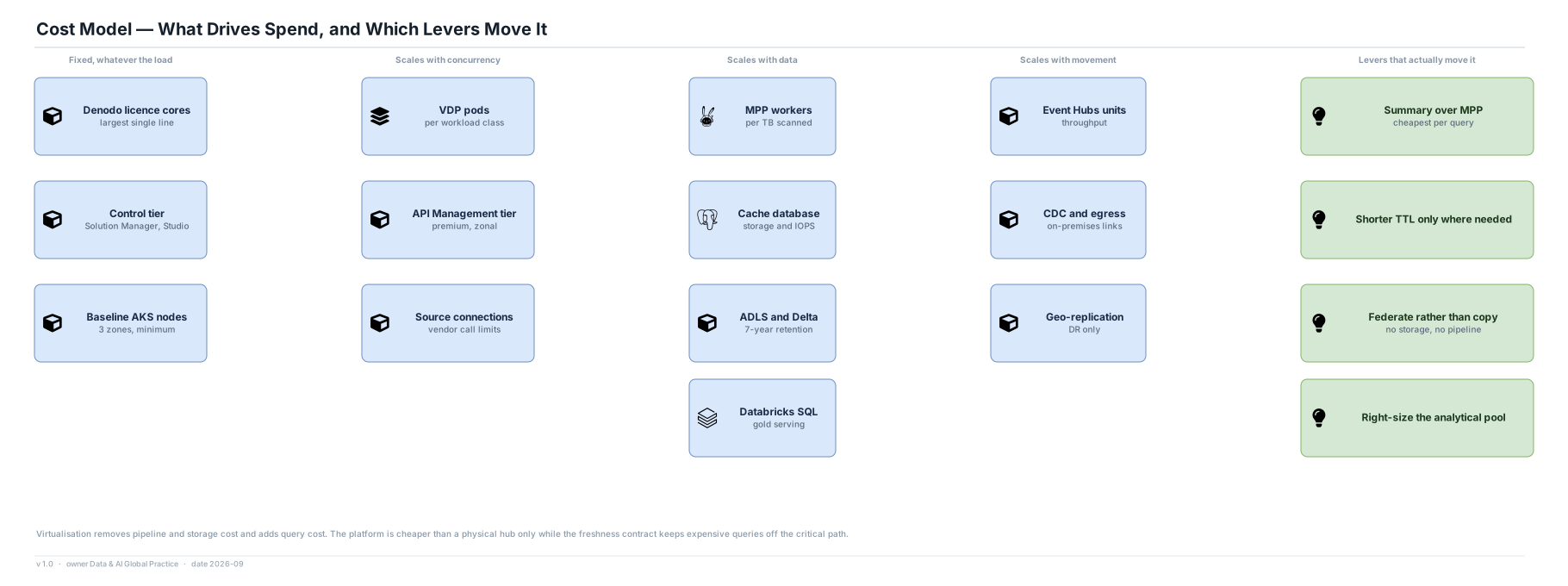
Fixed, whatever the load Denodo licence cores largest single line Control tier Solution Manager, Studio Baseline AKS nodes 3 zones, minimum Scales with concurrency VDP pods per workload class API Management tier premium, zonal Source connections vendor call limits Scales with data MPP workers per TB scanned Cache database storage and IOPS ADLS and Delta 7-year retention Databricks SQL gold serving Scales with movement Event Hubs units throughput CDC and egress on-premises links Geo-replication DR only Levers that actually move it Summary over MPP cheapest per query Shorter TTL only where needed Federate rather than copy no storage, no pipeline Right-size the analytical pool Cost Model — What Drives Spend, and Which Levers Move It Virtualisation removes pipeline and storage cost and adds query cost. The platform is cheaper than a physical hub only while the freshness contract keeps expensive queries off the critical path. v 1.0 · owner Data & AI Global Practice · date 2026-09

The honest position

  • Virtualisation removes pipeline and storage cost and adds query cost. The platform is cheaper than a physical hub only while the freshness contract keeps expensive queries off the critical path.
  • The Denodo licence is core-based and is the largest fixed line. Pool sizing on view 29 is therefore a commercial decision as much as a performance one.
  • MPP compute is the most volatile line, because it scales with bytes scanned rather than with users.

Levers, in order of effect

  • Replace a repeated MPP aggregate with a summary — the largest single saving available, and the reason the loop on view 32 exists.
  • Federate rather than copy: every attribute not landed removes a pipeline, a storage line and a reconciliation obligation.
  • Right-size the analytical pool, which is idle for most of the working day.

Assumptions to confirm

  • SaaS API call volumes stay within contracted limits under federated load. Exceeding a Salesforce limit converts a design decision into an unplanned licence negotiation.
  • On-premises egress for the ERP path is charged at committed-bandwidth rates, not on demand.