Customer 360 Enterprise Data Platform — Denodo on Azure  ·  View 12 of 39  ·  Structure

Source Connectivity

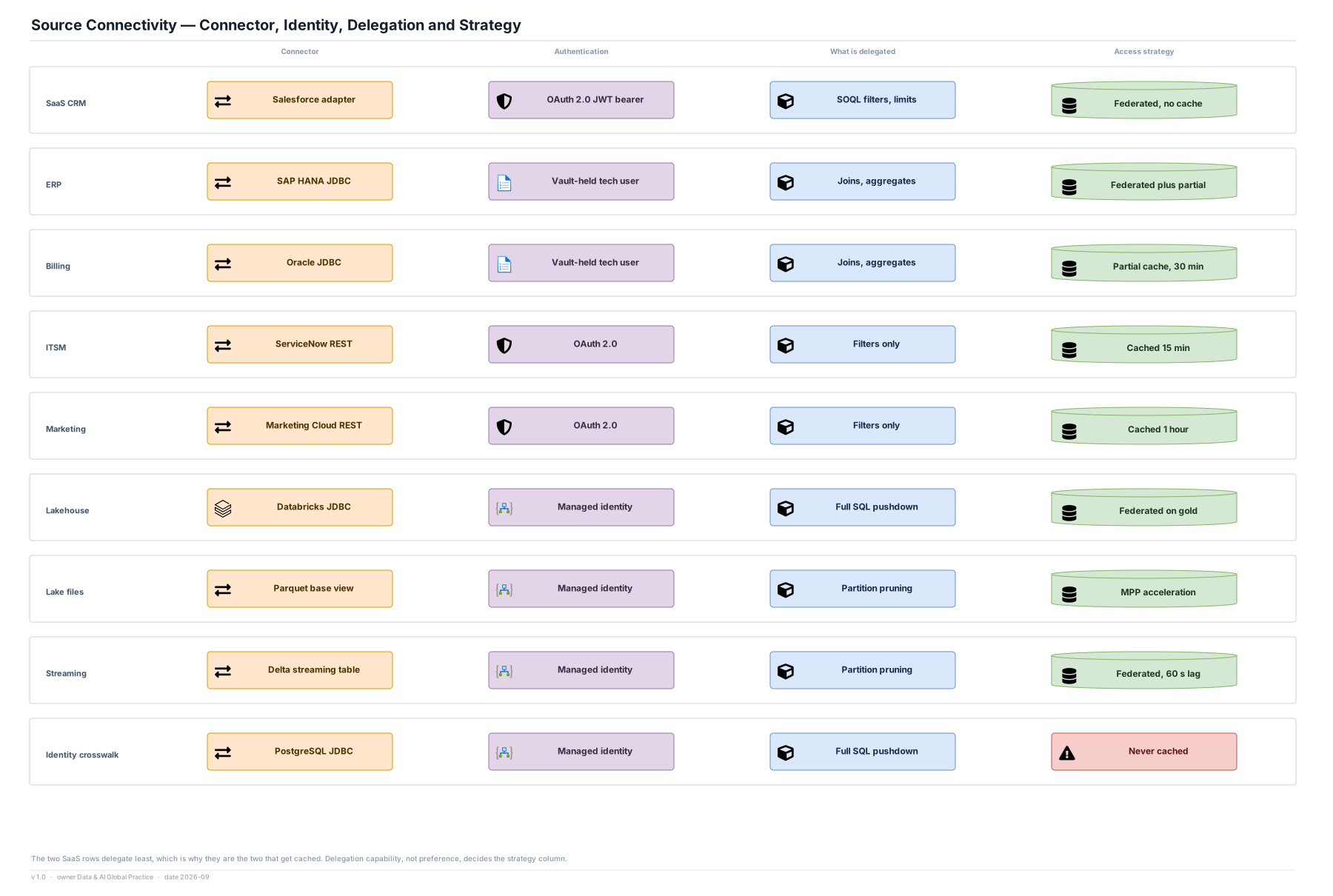
For each class of source: the connector, how it authenticates, what it can be asked to do, and what follows from that.

Editable source SVG draw.io All views
Connector Authentication What is delegated Access strategy SaaS CRM Salesforce adapter OAuth 2.0 JWT bearer SOQL filters, limits Federated, no cache ERP SAP HANA JDBC Vault-held tech user Joins, aggregates Federated plus partial Billing Oracle JDBC Vault-held tech user Joins, aggregates Partial cache, 30 min ITSM ServiceNow REST OAuth 2.0 Filters only Cached 15 min Marketing Marketing Cloud REST OAuth 2.0 Filters only Cached 1 hour Lakehouse Databricks JDBC Managed identity Full SQL pushdown Federated on gold Lake files Parquet base view Managed identity Partition pruning MPP acceleration Streaming Delta streaming table Managed identity Partition pruning Federated, 60 s lag Identity crosswalk PostgreSQL JDBC Managed identity Full SQL pushdown Never cached Source Connectivity — Connector, Identity, Delegation and Strategy The two SaaS rows delegate least, which is why they are the two that get cached. Delegation capability, not preference, decides the strategy column. v 1.0 · owner Data & AI Global Practice · date 2026-09

The point of the matrix

  • The third column decides the fourth. A source that can only accept filters cannot be joined efficiently at scale, so it is cached; a source that accepts full SQL is federated and left alone.
  • The two SaaS rows delegate least and are therefore the two that get cached. This is a capability decision, not a preference.

Assumptions to validate

  • SAP HANA and Databricks accept delegated joins and aggregations over the relevant tables; this is the single biggest performance assumption in the design and Phase 3 exists to test it.
  • Salesforce SOQL filter pushdown covers the predicates the Customer360 actually uses — chiefly enterprise id, region and status.

Gaps this view makes visible

  • Marketing Cloud and ServiceNow have no aggregation capability at all. Any report that aggregates over them is a full extract in disguise, which is why both are cached and why their freshness is measured in minutes, not seconds.