Customer 360 Enterprise Data Platform — Denodo on Azure · View 17 of 39 · Data
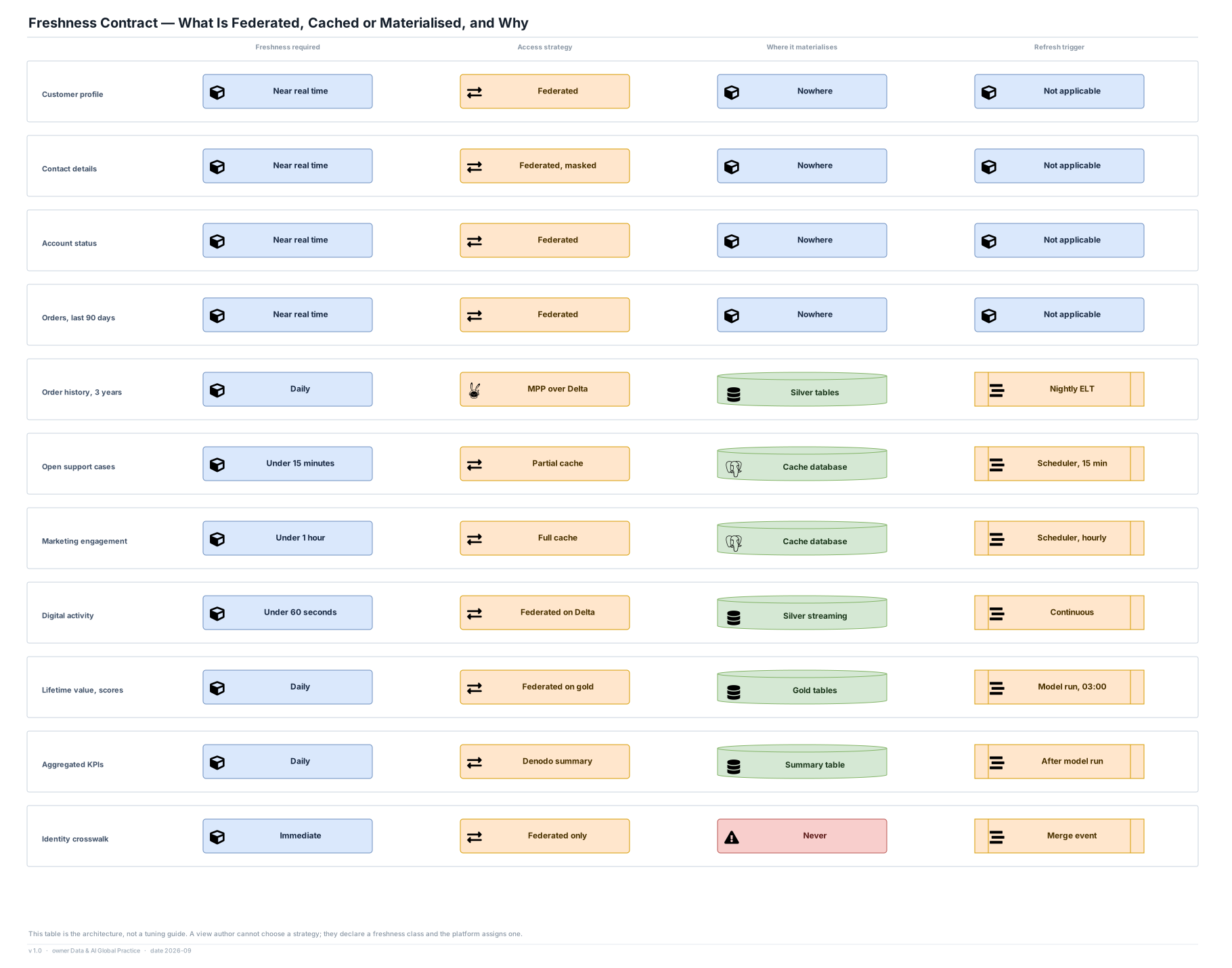
This table is the architecture
- A view author cannot choose an access strategy. They declare the freshness their consumer needs and the platform assigns federation, cache, summary or lakehouse materialisation.
- Removing that choice is what stops the estate drifting into either everything cached, which is a stale hub, or everything federated, which is a distributed join on every dashboard refresh.
- Changing a row is a governed change with the data owner in the room — view 32 is the loop that does it.
The two rows that matter most
- Customer profile is federated with no cache anywhere. An agent correcting an address must see it on the next call, and no TTL short enough to guarantee that is cheap enough to run.
- The identity crosswalk is never cached at all. Caching it would make a merge invisible for up to a day, which is exactly the failure the steward journey found.
Assumptions
- Freshness numbers were agreed with the contact centre and the reporting community, not derived from what the sources happen to support.
- Where a source cannot meet its declared freshness, the answer is a cache with a published staleness, never a quietly slower view.