Customer 360 Enterprise Data Platform — Denodo on Azure · View 25 of 39 · Runtime
The design rule
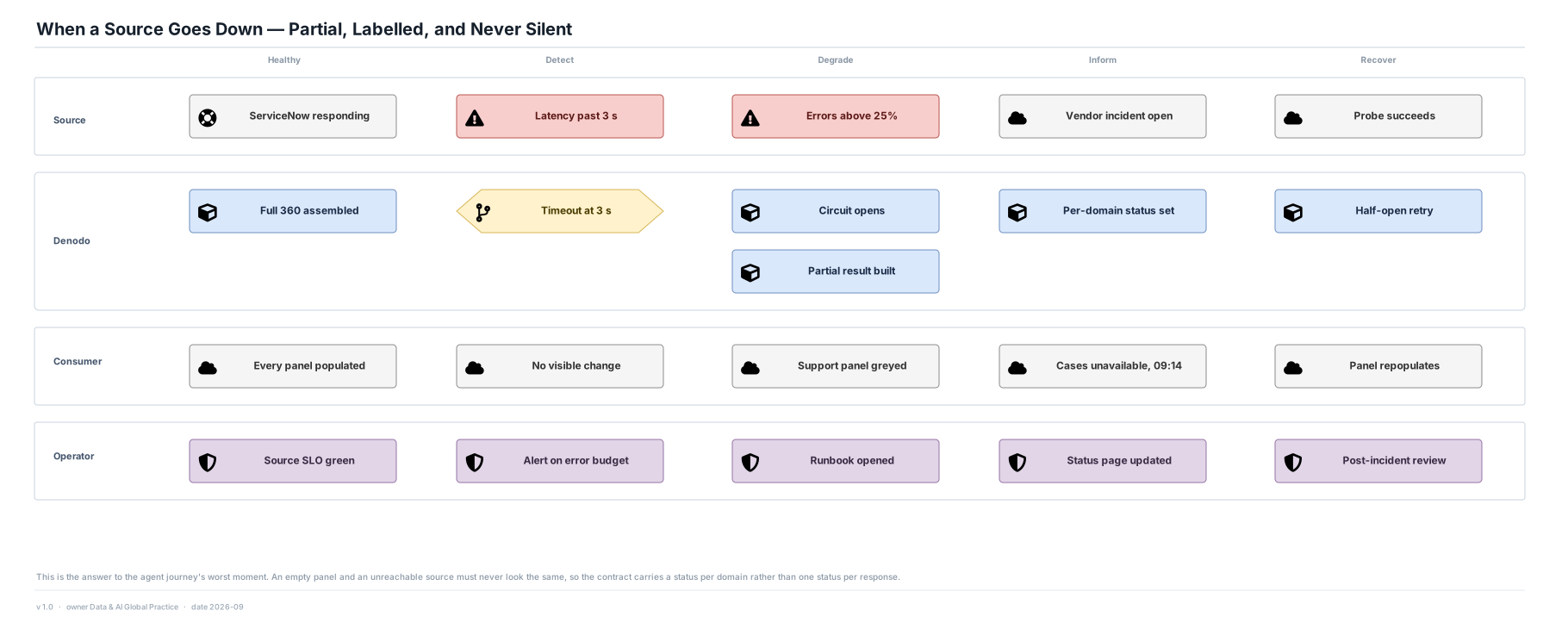
- An empty panel and an unreachable source must never look the same. Everything else on this page follows from that one sentence.
- The circuit opens on error rate rather than on a single timeout, so a slow query does not remove a working source from the 360.
- Graceful degradation is per domain. Losing ServiceNow costs the support panel and nothing else; the profile, orders and value panels are unaffected.
Numbers
- Source timeout 3 s; circuit opens above 25% errors in a 60-second window; half-open retry after 30 seconds.
- The consumer sees a timestamped notice, so an agent can tell a customer how current the information they do have is.
Assumptions
- Every source has a health probe that is independent of the query path; a source that only looks healthy because queries are succeeding cannot be trusted during an incident.
- Vendor status pages are not on the critical path of detection.