Customer 360 Enterprise Data Platform — Denodo on Azure · View 22 of 39 · Runtime
The contract
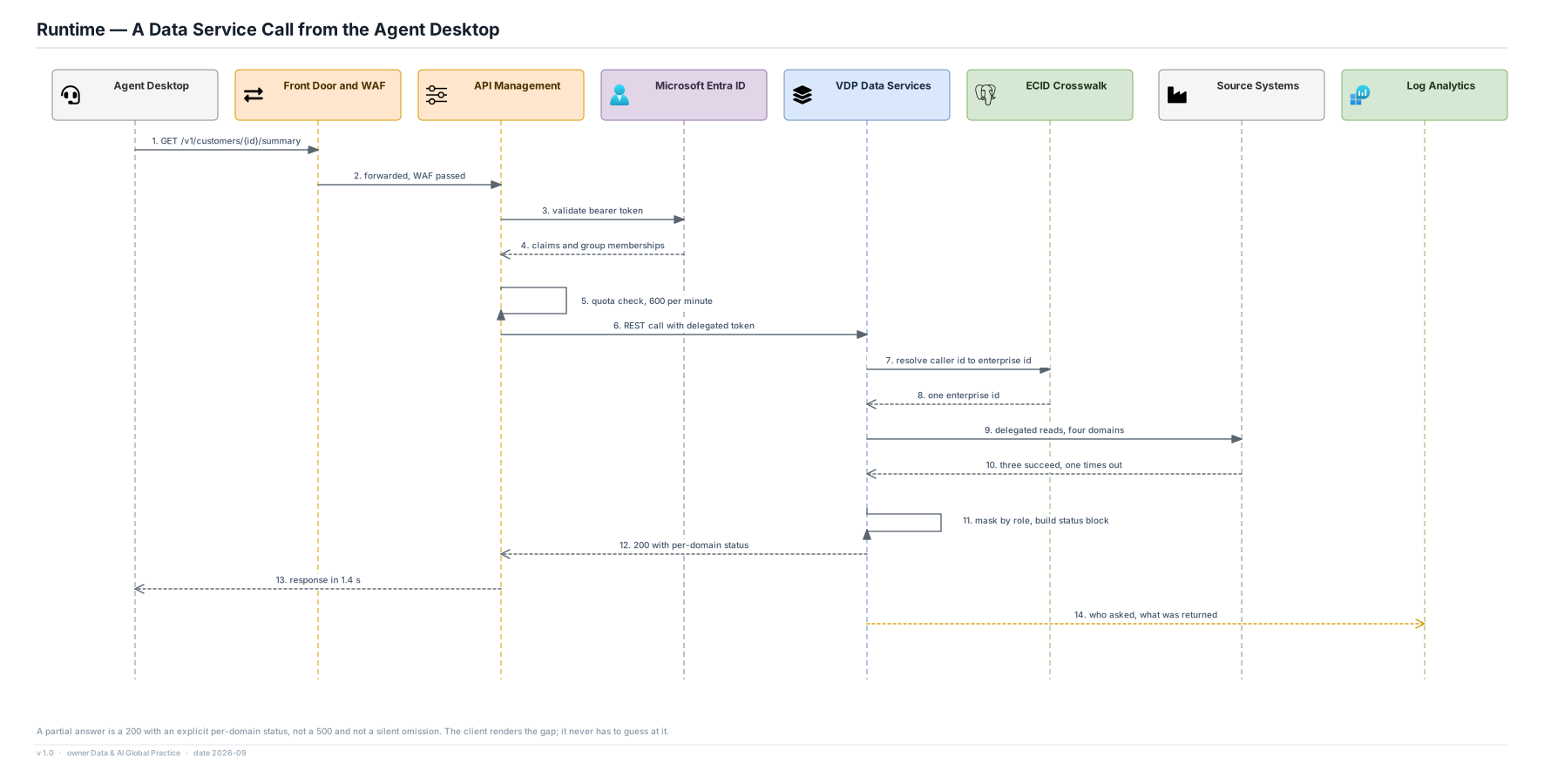
- A partial answer is a 200 with an explicit per-domain status, not a 500 and not a silent omission. The client renders the gap; it never has to guess at it.
- This is the direct answer to the agent journey's worst moment on view 05, and it is a contract decision rather than an error-handling detail.
- The token is validated at API Management and again at Denodo. The gateway enforces quota and shape; only Denodo enforces entitlement.
Numbers
- 1.4 s against a 2 s target with one source timing out at 3 s — the timeout budget is set so that a single slow source cannot spend the whole response budget.
- 600 requests per minute per consumer at the gateway; 60 requests per second aggregate at peak.
Assumptions
- The desktop application renders per-domain status. If it does not, the architecture has solved a problem the user still experiences — this is a client-side acceptance criterion, not a platform one.