Customer 360 Enterprise Data Platform — Denodo on Azure  ·  View 05 of 39  ·  People and journeys

Journey — Answering an Inbound Call

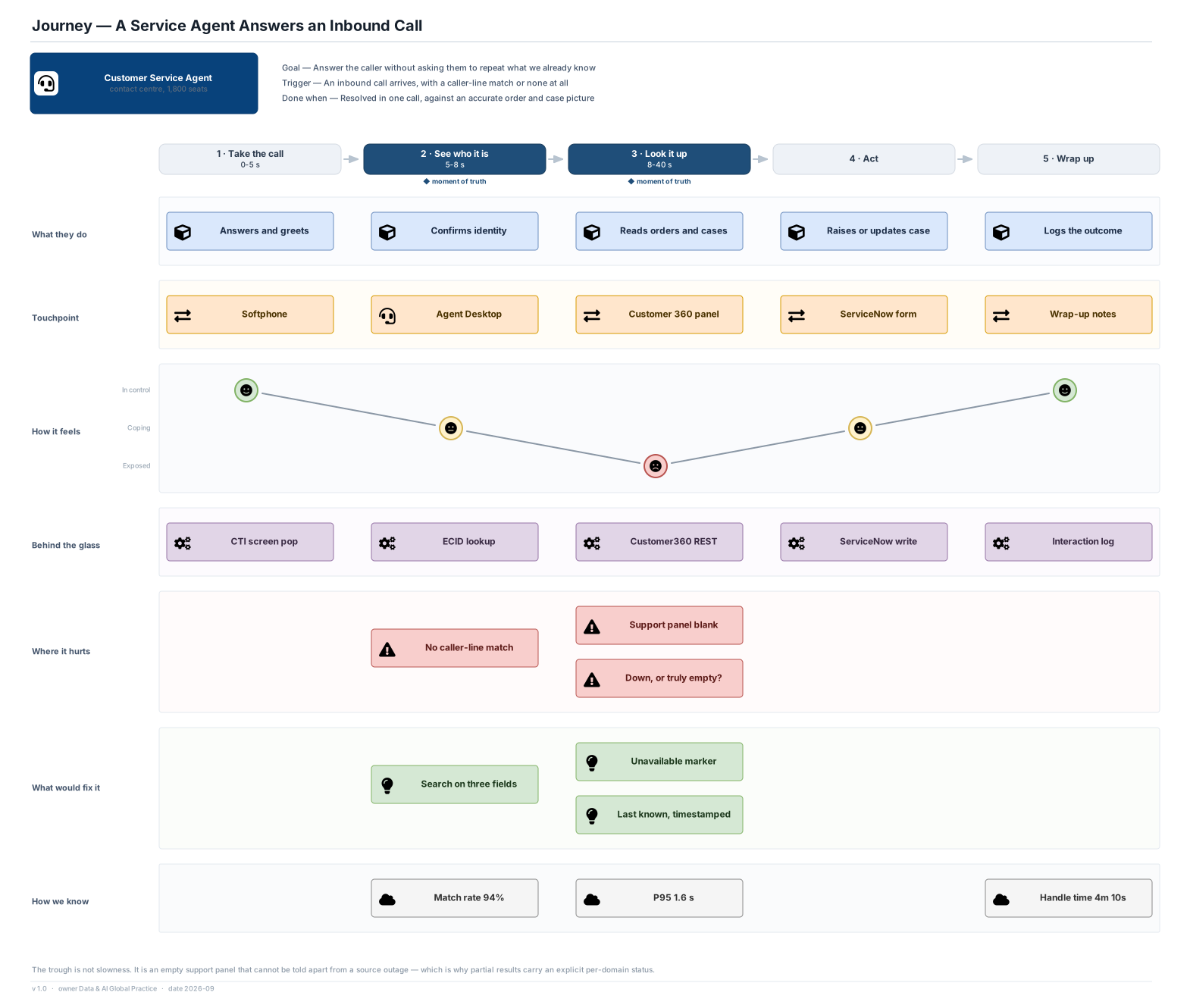
What happens to an agent in the first forty seconds, and the moment where the platform lets them down.

Editable source SVG draw.io All views
Customer Service Agent contact centre, 1,800 seats Goal — Answer the caller without asking them to repeat what we already know Trigger — An inbound call arrives, with a caller-line match or none at all Done when — Resolved in one call, against an accurate order and case picture 1 · Take the call 0-5 s 2 · See who it is 5-8 s ◆ moment of truth 3 · Look it up 8-40 s ◆ moment of truth 4 · Act 5 · Wrap up What they do Answers and greets Confirms identity Reads orders and cases Raises or updates case Logs the outcome Touchpoint Softphone Agent Desktop Customer 360 panel ServiceNow form Wrap-up notes How it feels In control Coping Exposed Behind the glass CTI screen pop ECID lookup Customer360 REST ServiceNow write Interaction log Where it hurts No caller-line match Support panel blank Down, or truly empty? What would fix it Search on three fields Unavailable marker Last known, timestamped How we know Match rate 94% P95 1.6 s Handle time 4m 10s Journey — A Service Agent Answers an Inbound Call The trough is not slowness. It is an empty support panel that cannot be told apart from a source outage — which is why partial results carry an explicit per-domain status. v 1.0 · owner Data & AI Global Practice · date 2026-09

The trough, and what it demands

  • The worst moment is not latency. It is an empty support panel that could equally mean no open cases or ServiceNow being unreachable — and an agent who tells a complaining customer they have no open case is worse than one who says the system is down.
  • That single ambiguity is why the API contract carries a status per domain rather than one status per response, and why partial results are a designed outcome. View 25 draws it; view 22 shows the response shape.

What the phases demand of the architecture

  • See who it is — caller-line matching against the crosswalk, so identity resolution is on the critical path of the highest-volume journey. Its availability target is therefore the platform's.
  • Look it up — one call assembling four domains, which is what makes the data services pool separate from the BI pool on view 29.

Numbers

  • Caller-line match rate 94%; the remaining 6% fall back to a three-field search that must return inside the same 2 s budget.
  • P95 for the assembled panel 1.6 s against a 2 s target. Average handle time 4 minutes 10 seconds is the business measure this exists to move.