Customer 360 Enterprise Data Platform — Denodo on Azure · View 32 of 39 · Operations
Decisions
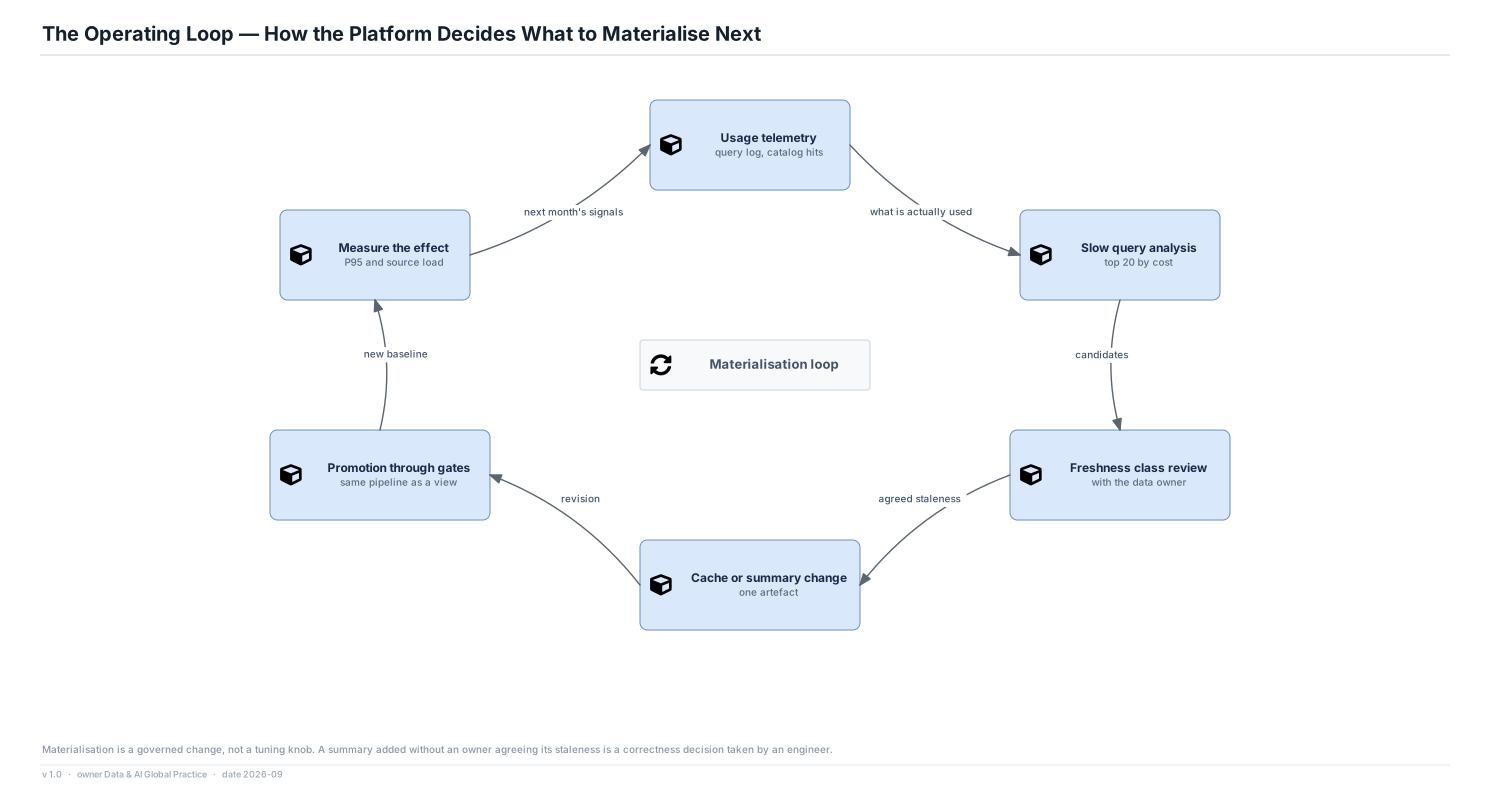
- Materialisation is a governed change, not a tuning knob. A summary added without the data owner agreeing its staleness is a correctness decision taken quietly by an engineer.
- The loop starts from what is actually used, not from what is slow. A slow query nobody runs is not a problem worth a cache and a refresh job.
- Every change to the freshness contract goes through the same promotion pipeline as a view change, so it is reviewable and reversible.
Cadence
- Monthly, with the top twenty queries by total cost and the top twenty datasets by access count as the standing inputs.
- The measurement step is mandatory: a materialisation that did not move P95 or source load is removed at the next cycle.
Risks
- Materialisation accretes. Without the removal step the estate slowly becomes a cached hub with a virtualisation licence on top, which is the failure mode this architecture is most likely to reach by accident.