Customer 360 Enterprise Data Platform — Denodo on Azure · View 03 of 39 · Context and scope
The decision the rest of the set follows from
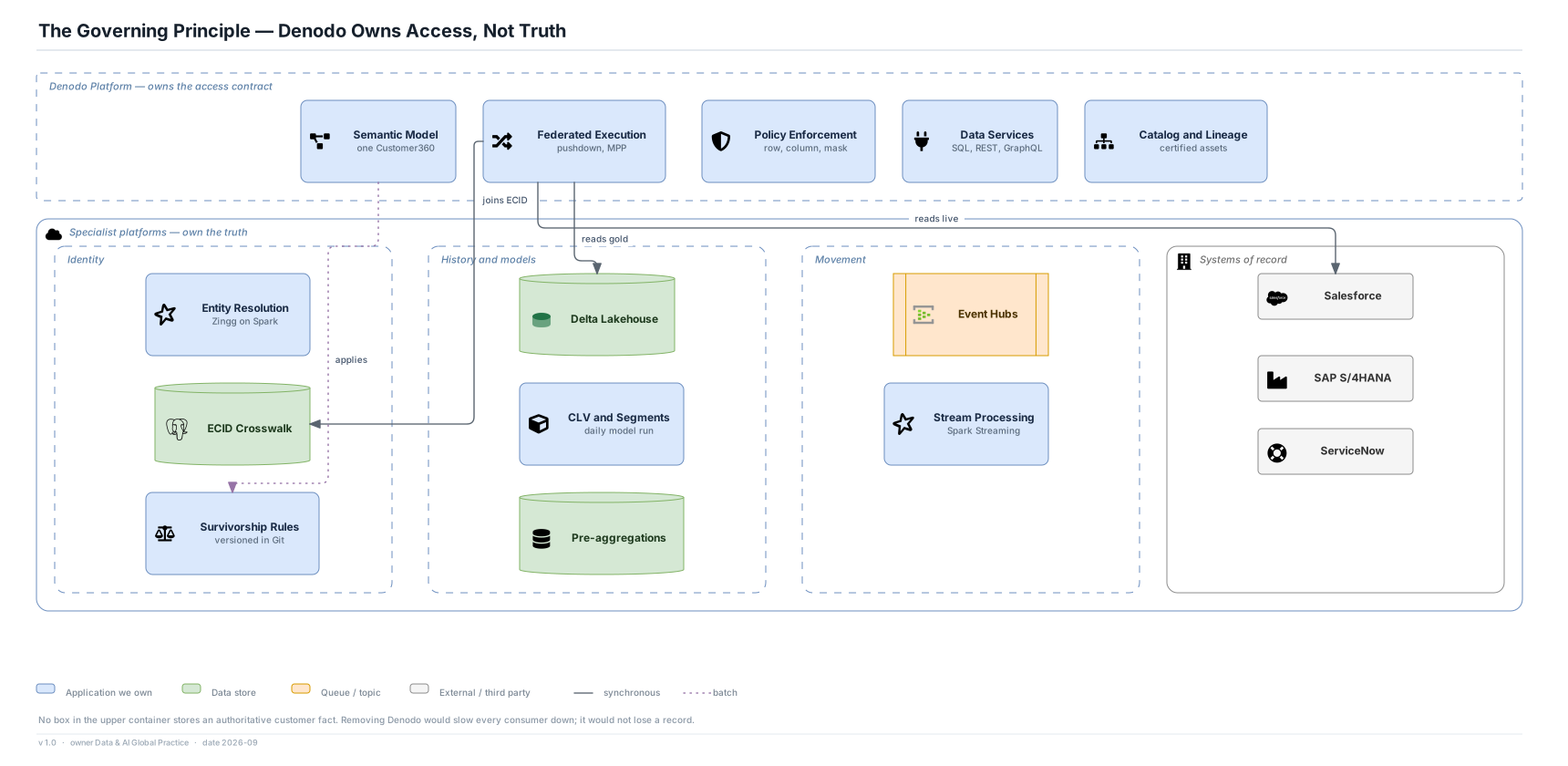
- Denodo owns the access contract: the semantic model, federated execution, policy enforcement, data services and lineage. It owns no authoritative fact.
- Identity mastering, large-scale history, streaming and the systems of record each keep the job they are best at. Denodo joins their output; it does not absorb it.
- Test of the principle: deleting the whole Denodo estate would slow every consumer down and lose no record. If that ever stops being true, something has been built in the wrong place.
Why identity resolution is not done in views
- Deterministic matching in a virtual view is possible and tempting. Probabilistic matching, survivorship, duplicate review and a stable enterprise id are not — they need state, a training set, a review queue and an audit trail.
- Attempting it in VQL produces rules nobody can test and a customer id that changes when the view changes.
Risks
- The principle erodes quietly. A cached view with business logic in it becomes a system of record by accident; the CI policy scan on view 30 exists to catch that.
- One logical layer in front of every consumer is a concentration risk with no technical mitigation. It is managed by workload isolation, not designed away.