Distributed Lock Service

Architecture Views

26 views, in reading order. Every view ships three ways: an HTML page, an SVG that re-opens in diagrams.net fully editable, and draw.io source.

A coordination service that issues expiring, ordered grants on named resources, built on dedicated etcd quorums on hardware the operator owns. Read the set in order. Acts 1 and 2 fix the boundary and the people it serves; act 3 shows the parts and how a key finds its cluster; act 4 says which store is the truth and why the token can never go backwards; act 5 walks the paths that matter, including the one where a paused holder wakes up and tries to write; acts 6 and 7 cover running it, growing it and why it is safe. One decision governs every page: the service mints the fencing token, and the guarded resource is where two writers are actually kept apart.

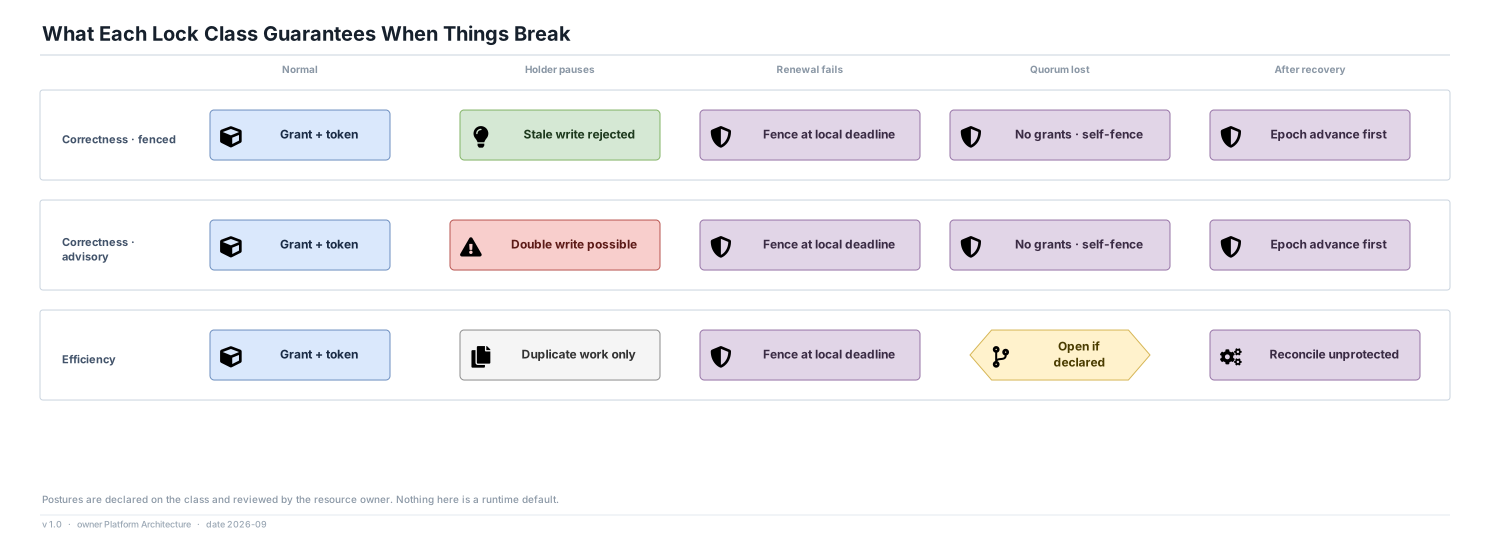
1 · Context and scope

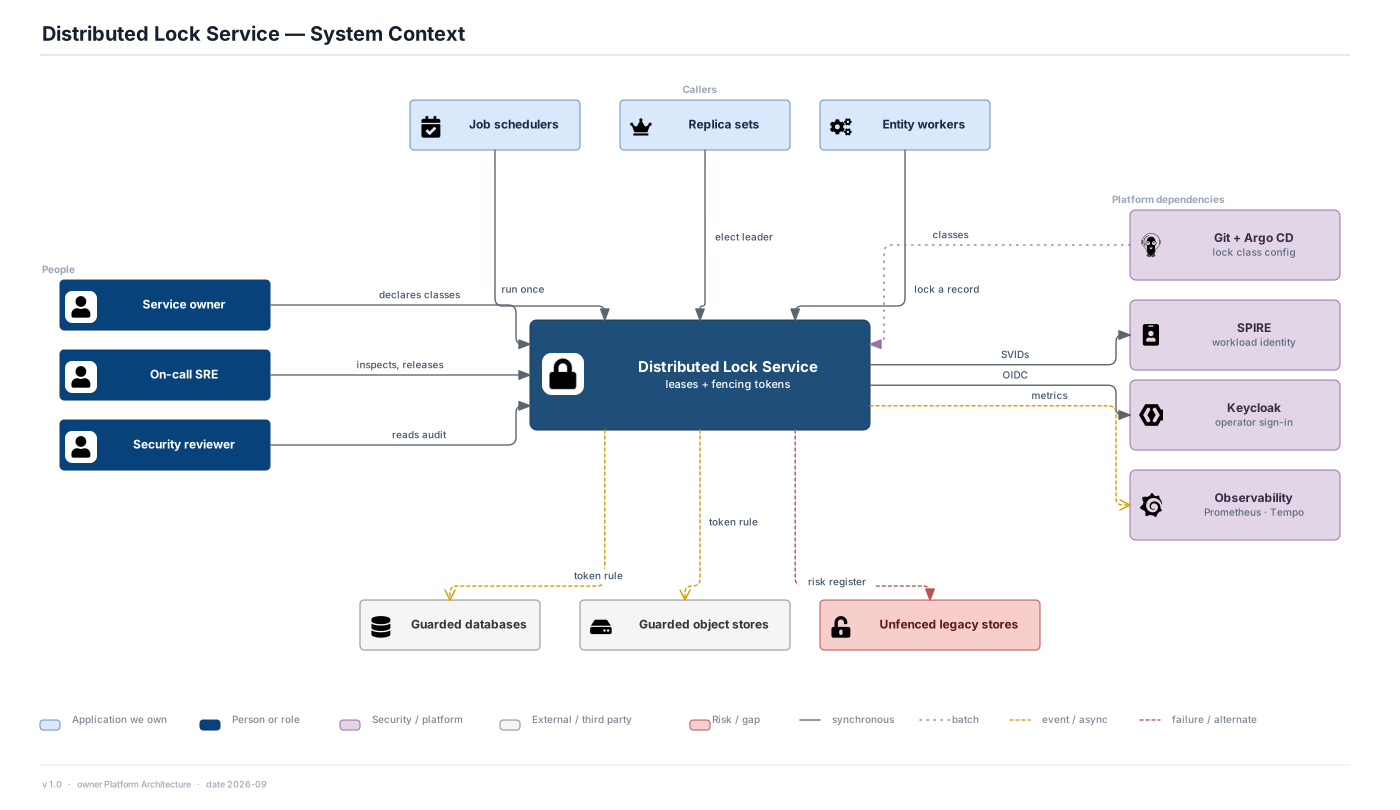
What the service decides, what it deliberately does not, and where exclusion is really enforced.

2 · People and journeys

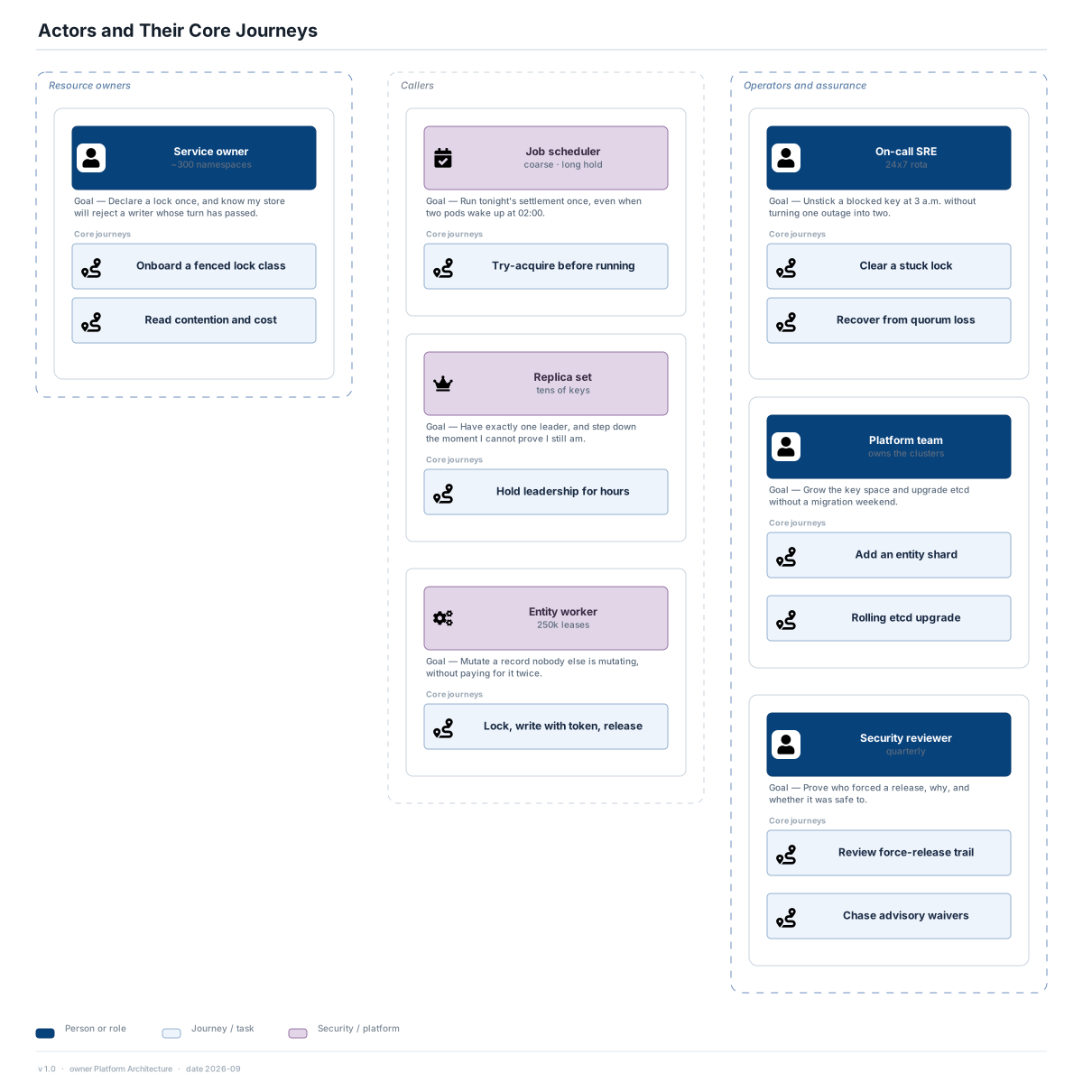
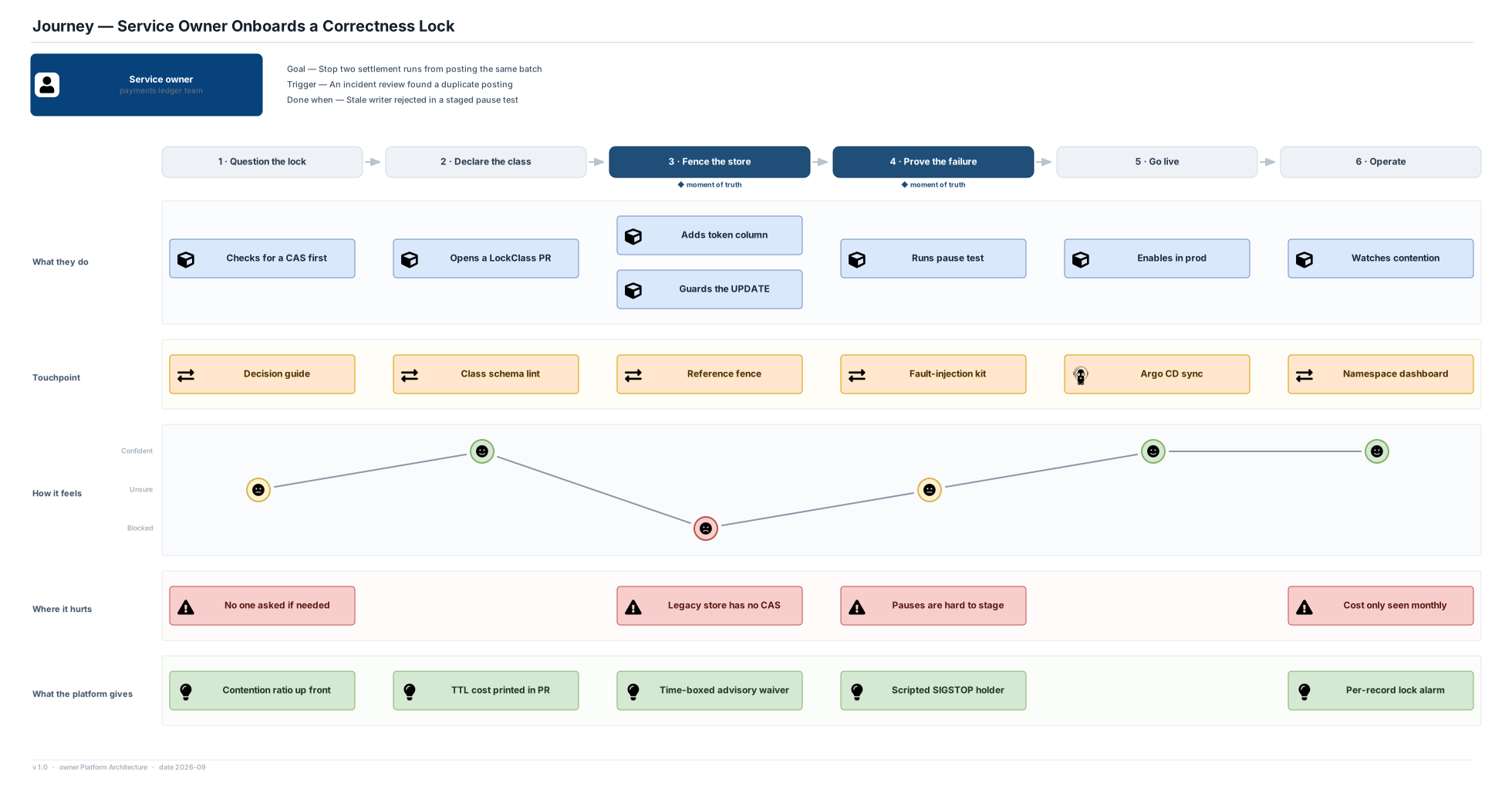
Who depends on a grant, what each of them needs from it, and the two moments where a lock service earns or loses trust.

3 · Structure

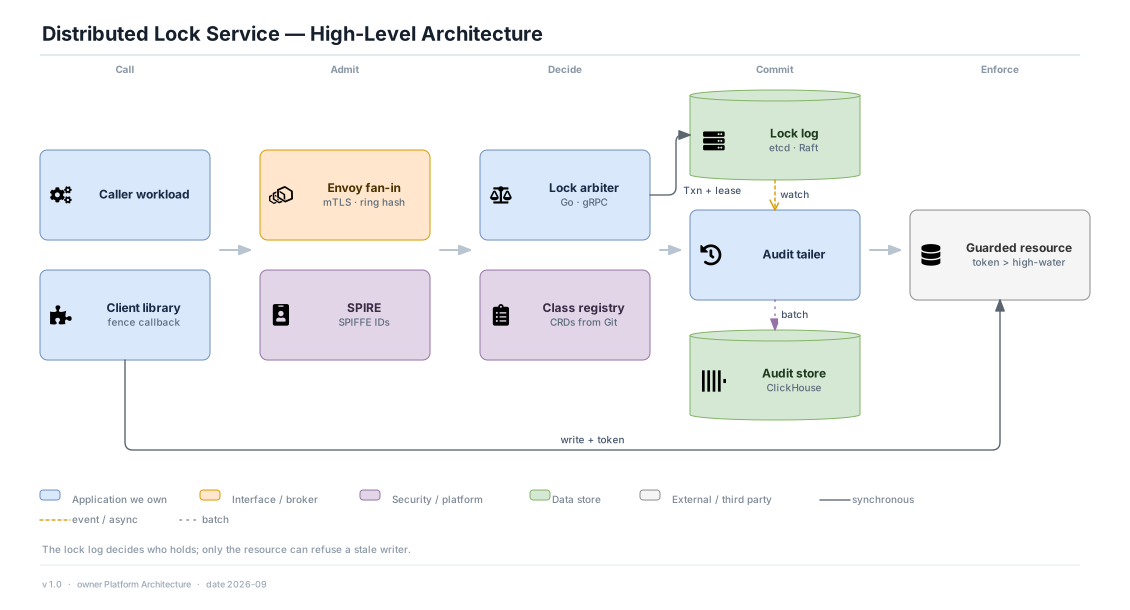
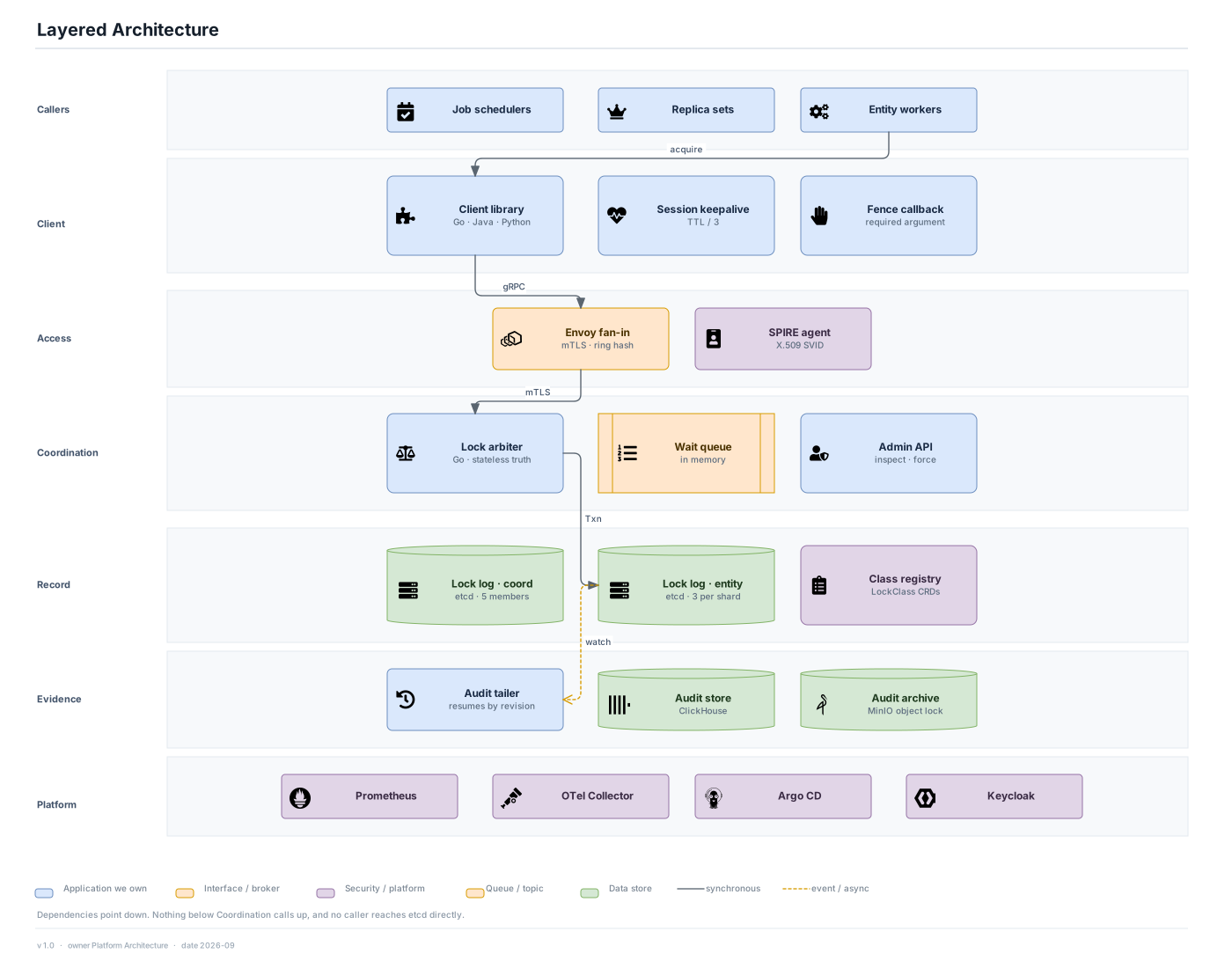
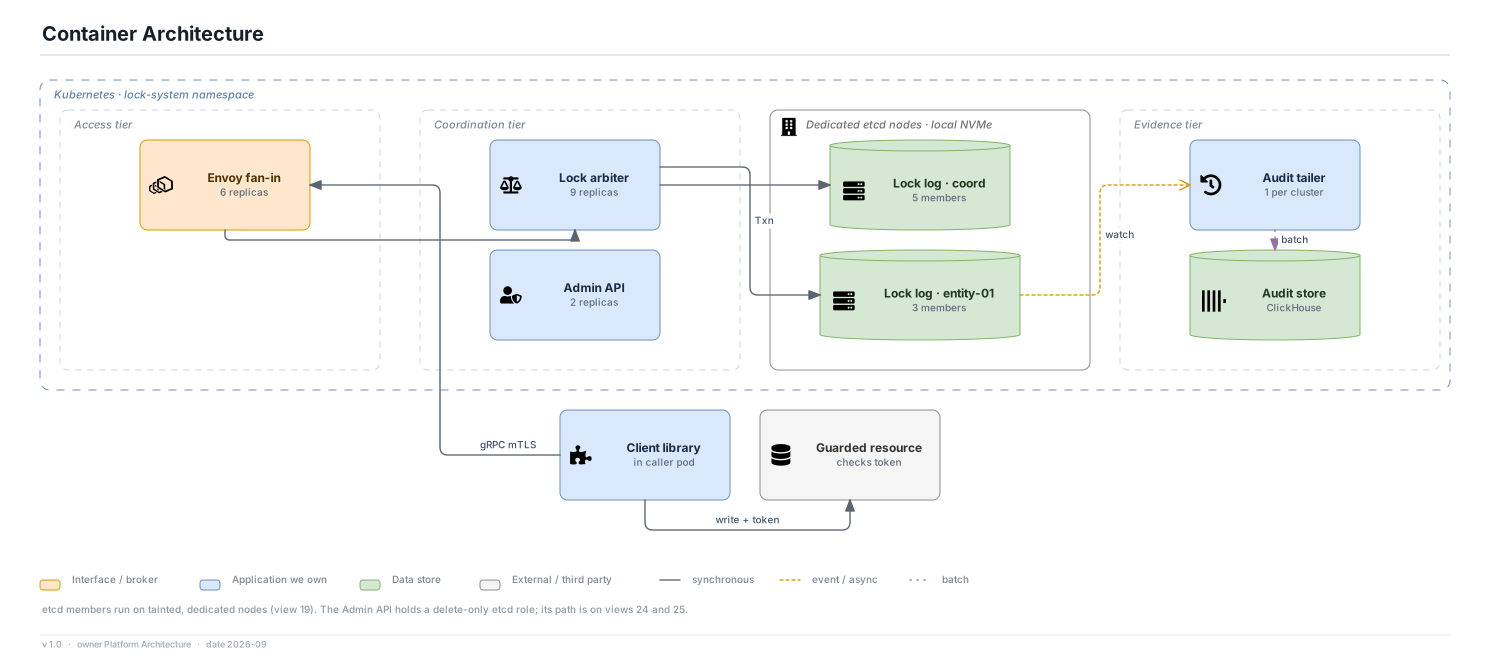
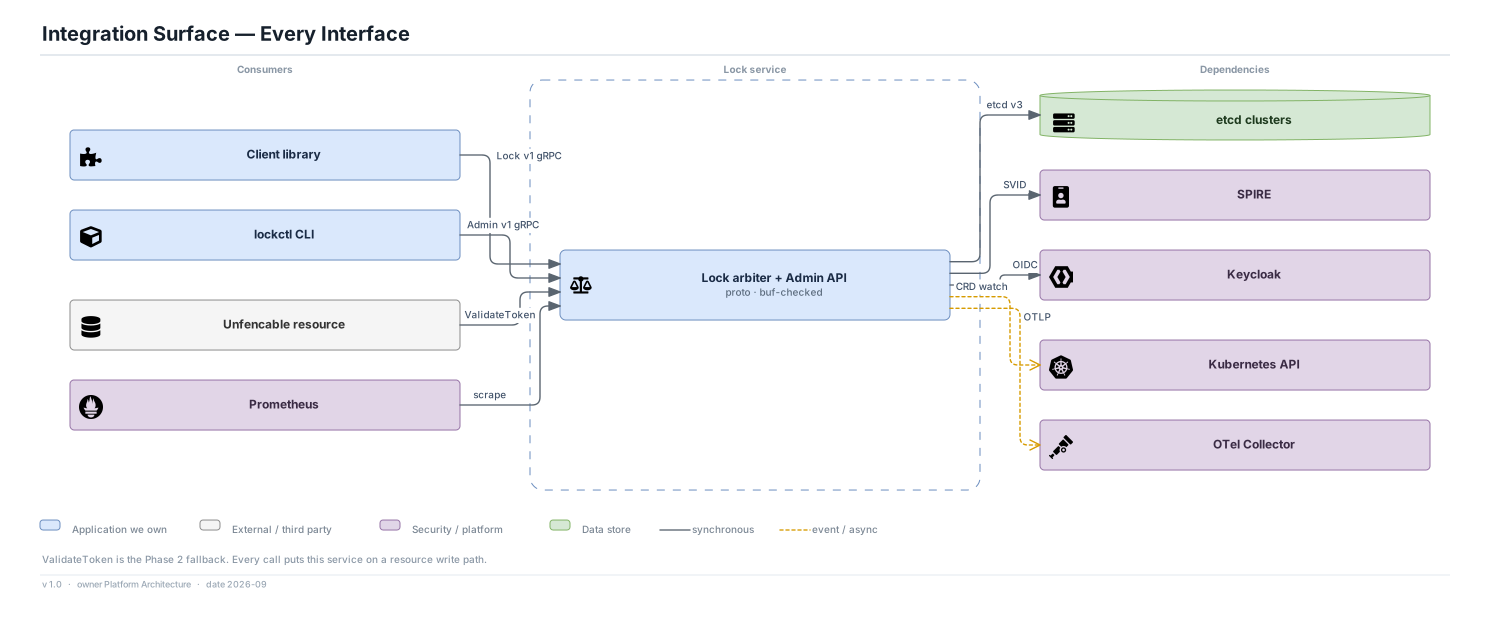
The layers, the deployable units, every interface, and how the class of a key decides the cluster that holds it.

4 · Data

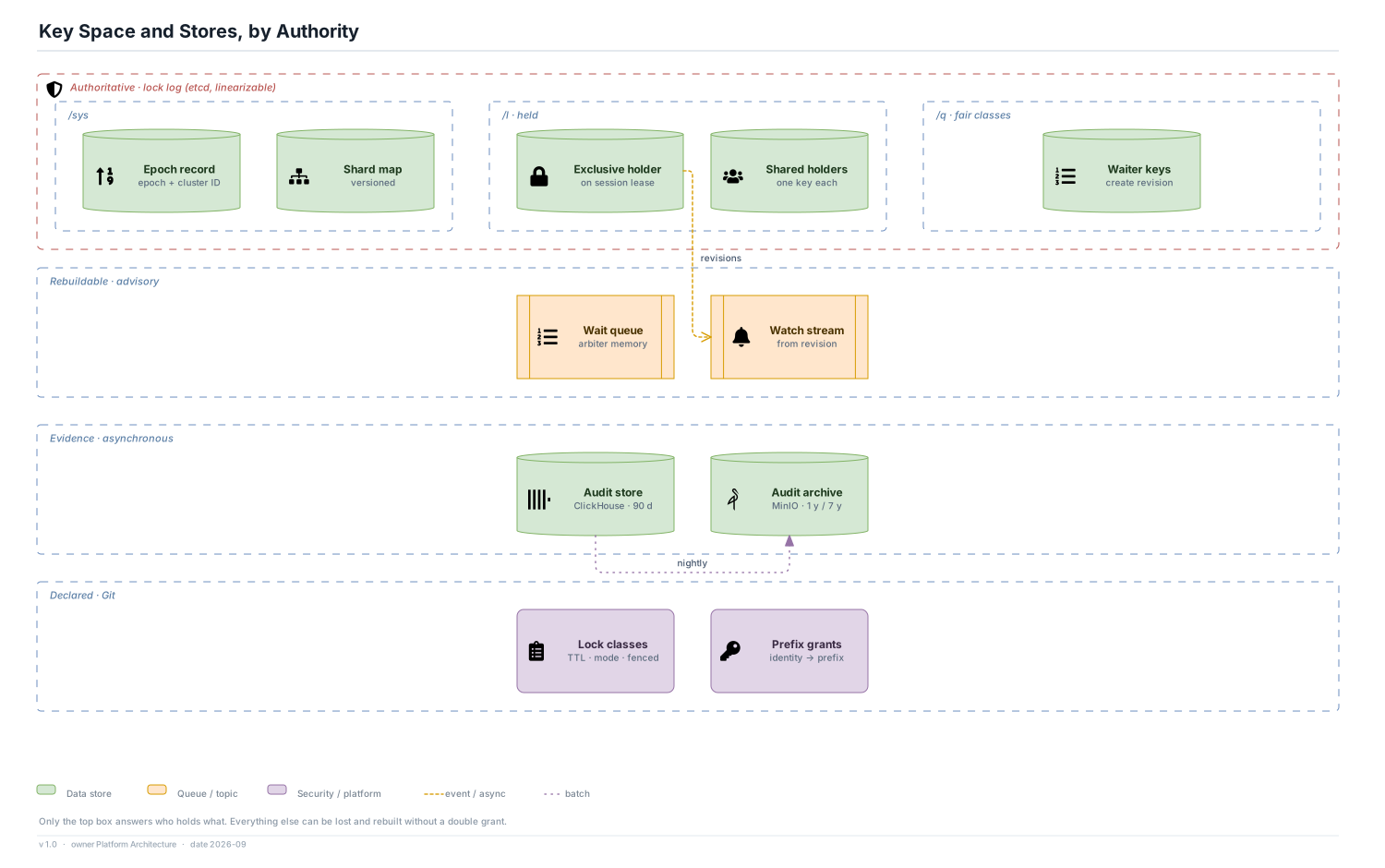
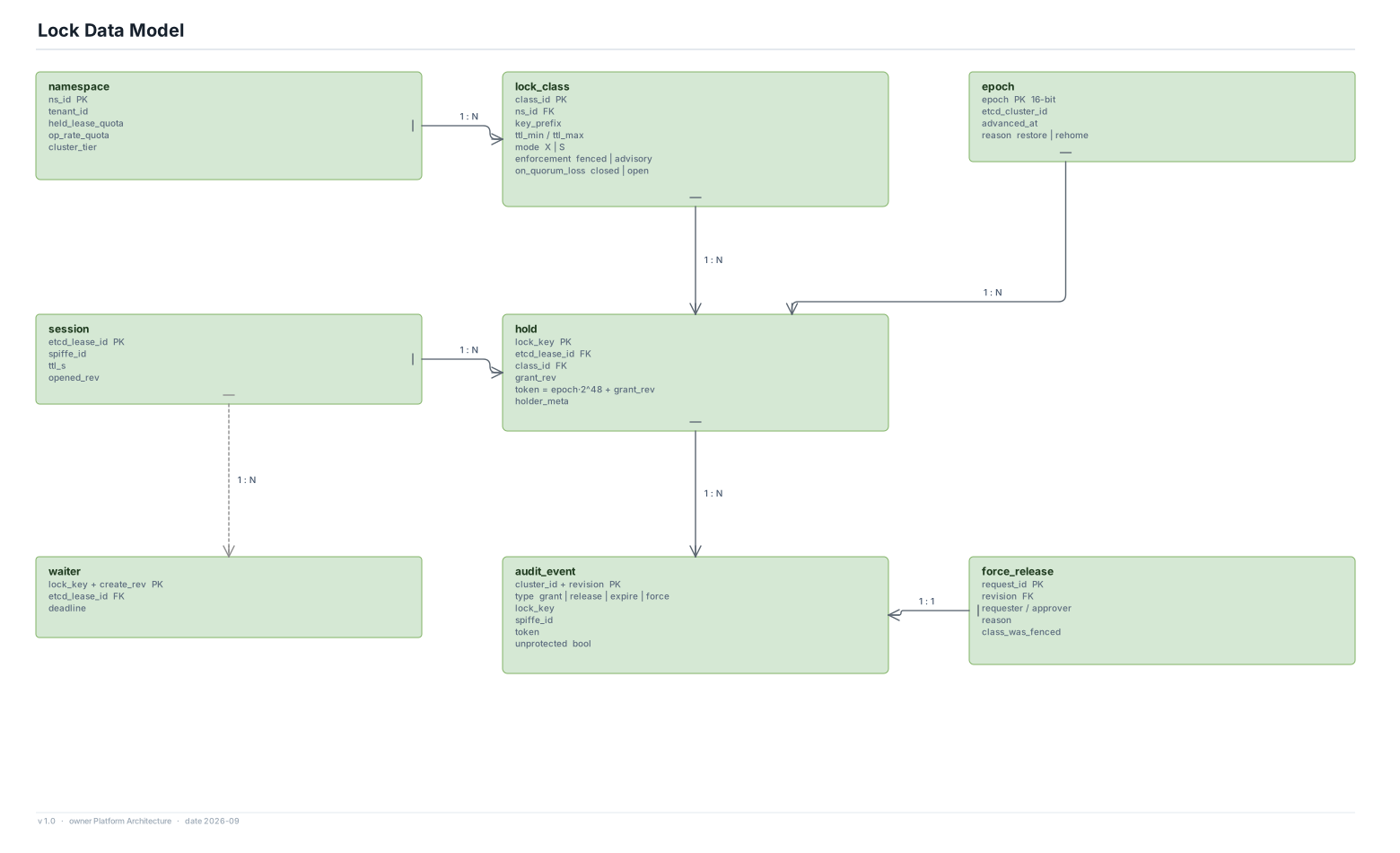
The one authoritative store, what can be rebuilt, the model behind a grant, the audit trail, and why the token space survives a restore.

5 · Runtime

The grant path, the pause that makes fencing necessary, contention, per-class posture under failure, and what a holder does when it cannot confirm its lease.

6 · Operations

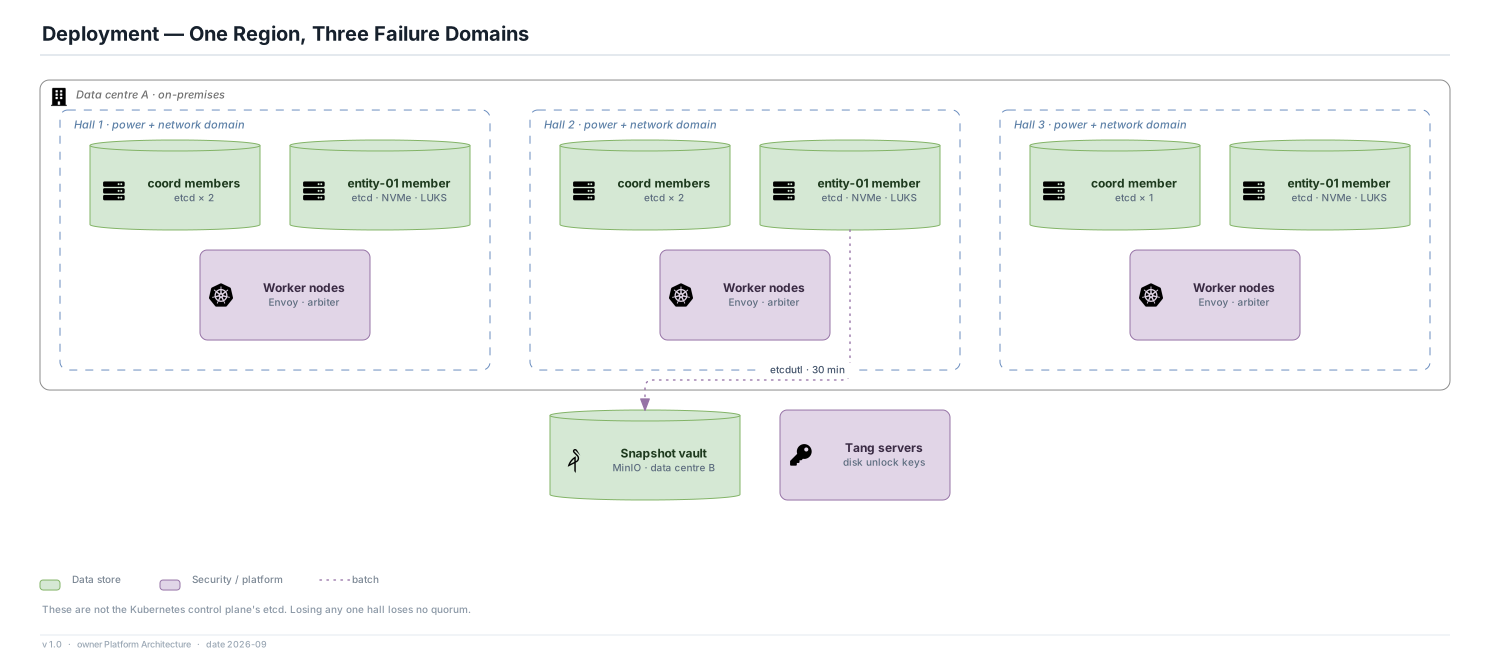
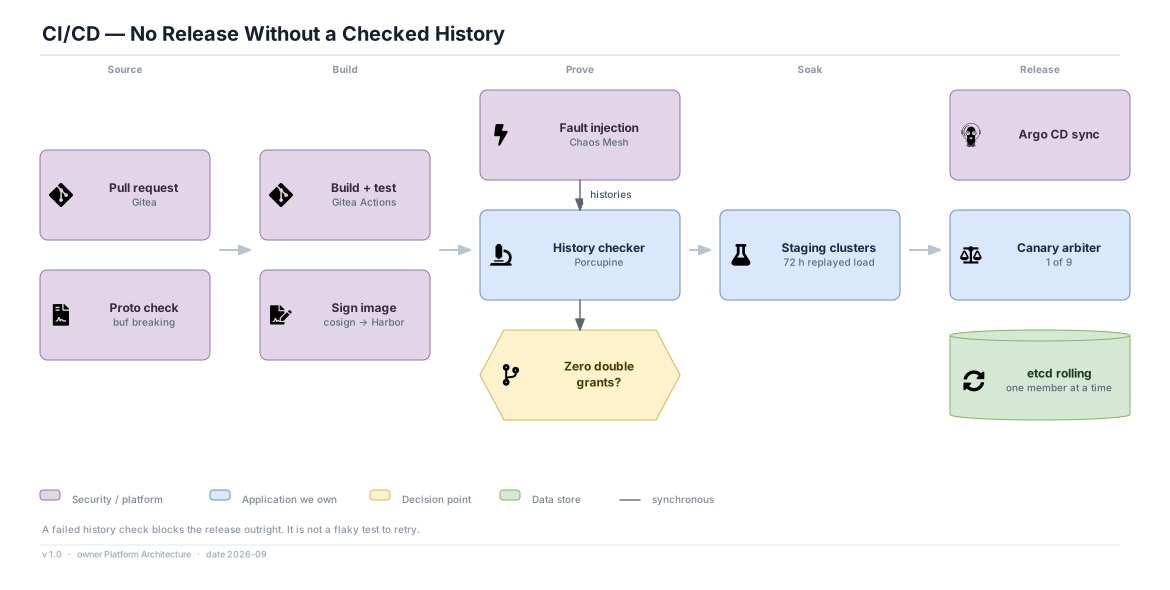
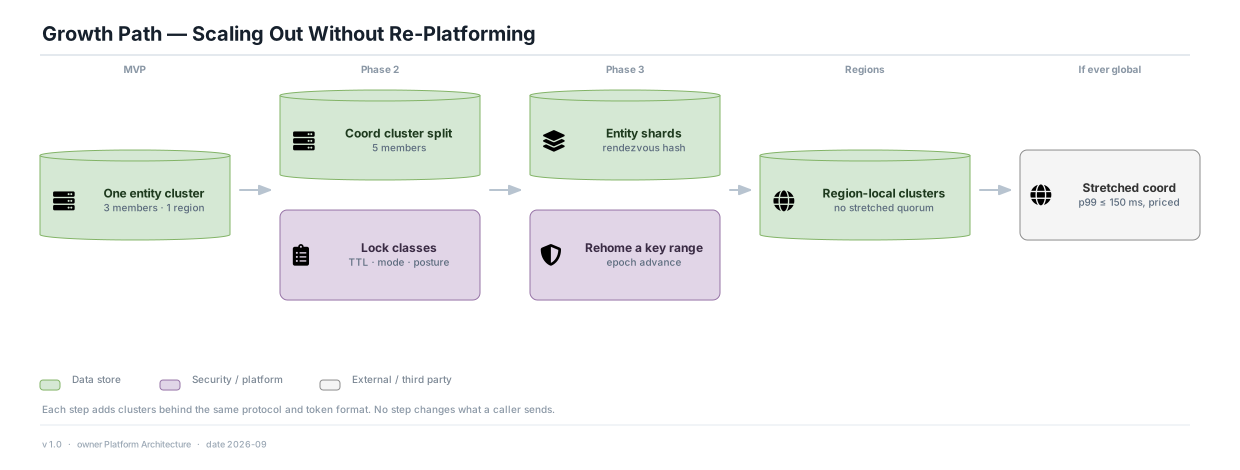
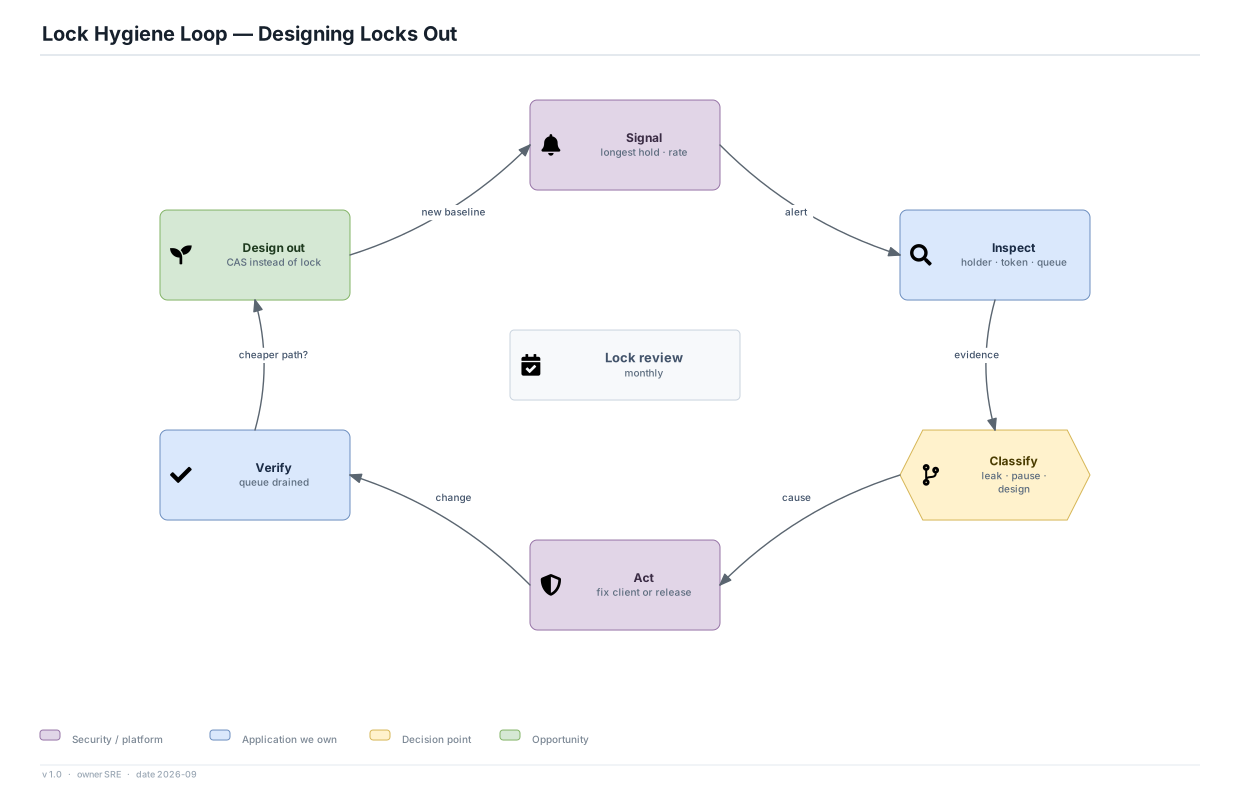
Where it runs, how releases are proven, what is watched, how it grows, and the loop that designs unnecessary locks out.

7 · Assurance

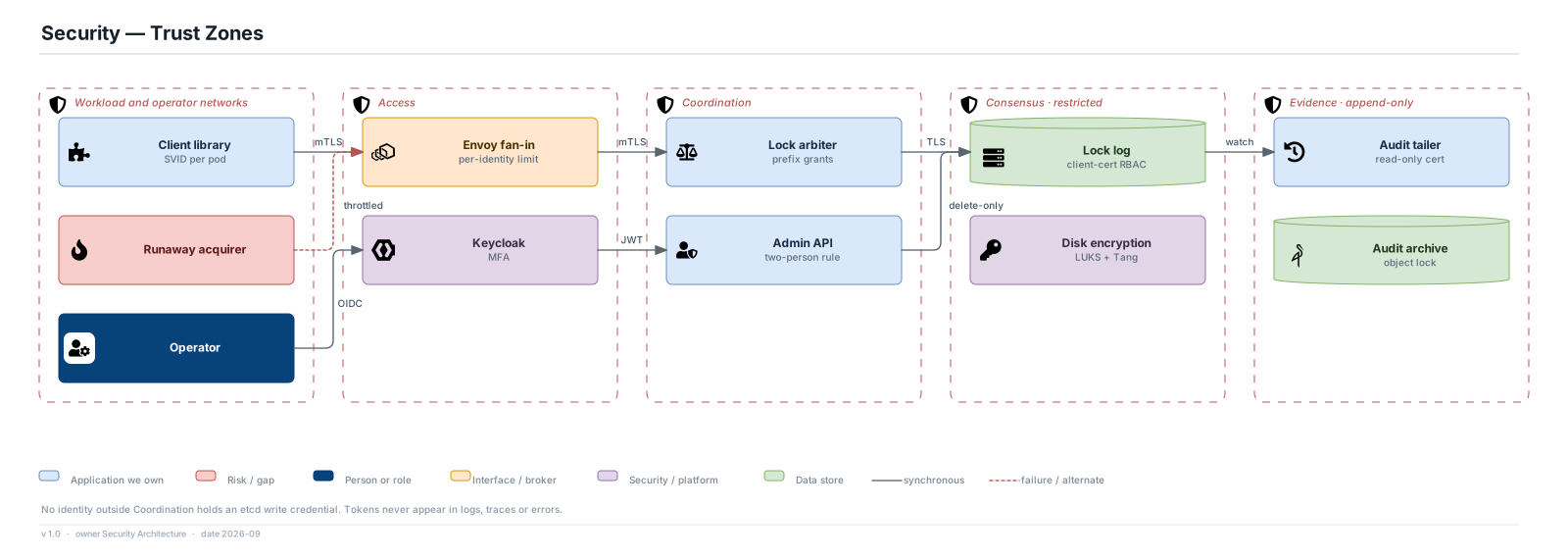
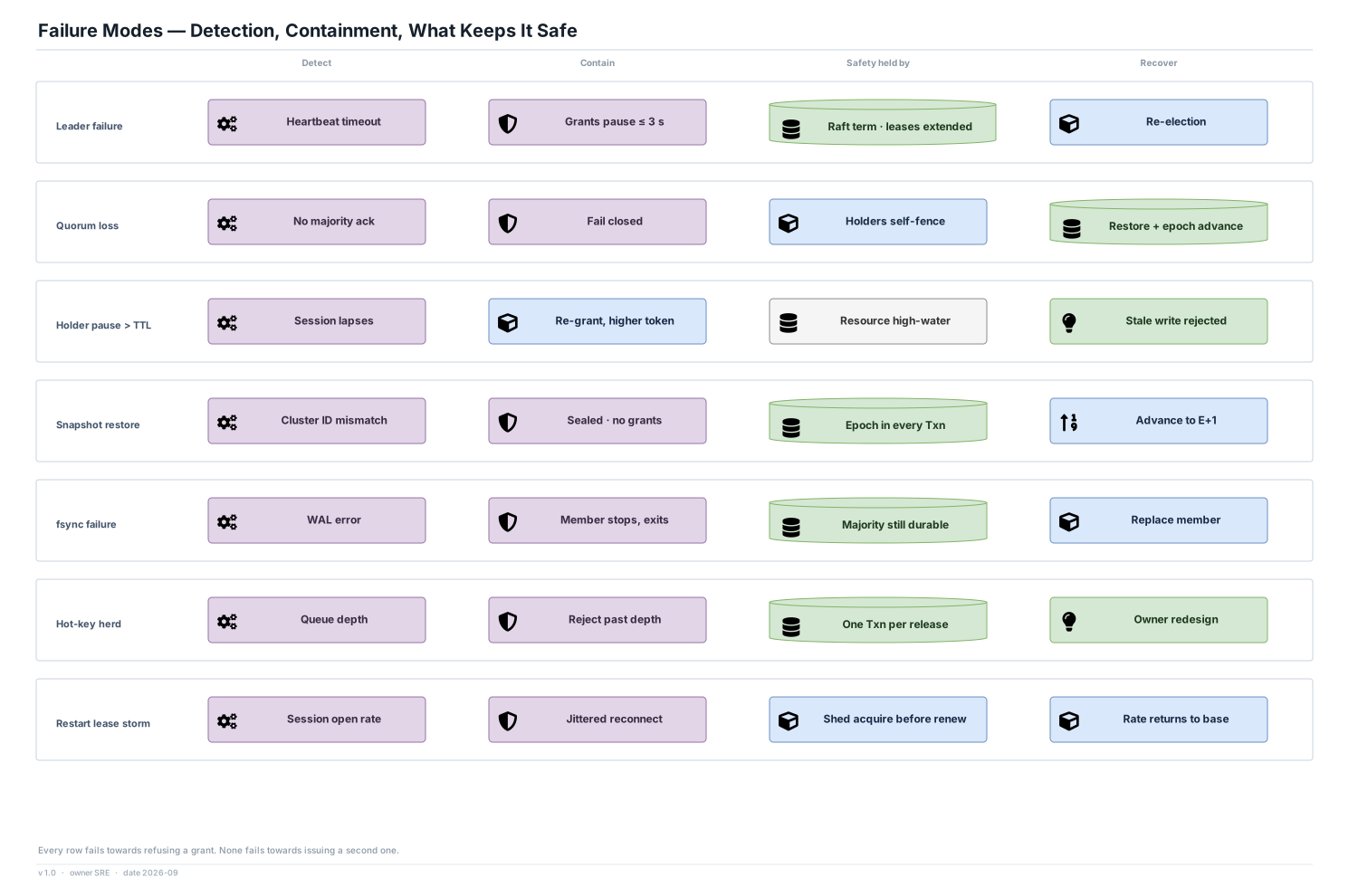
Trust zones, the force-release path, and every named failure mode with the mechanism that keeps it safe.

Architecture One-Pager

The problem, the shape of the answer, the decisions that carry it, and why it will still be the right shape in ten years.

A lock service cannot stop a process from writing. It can only make the second write rejectable. This architecture is built around that sentence.

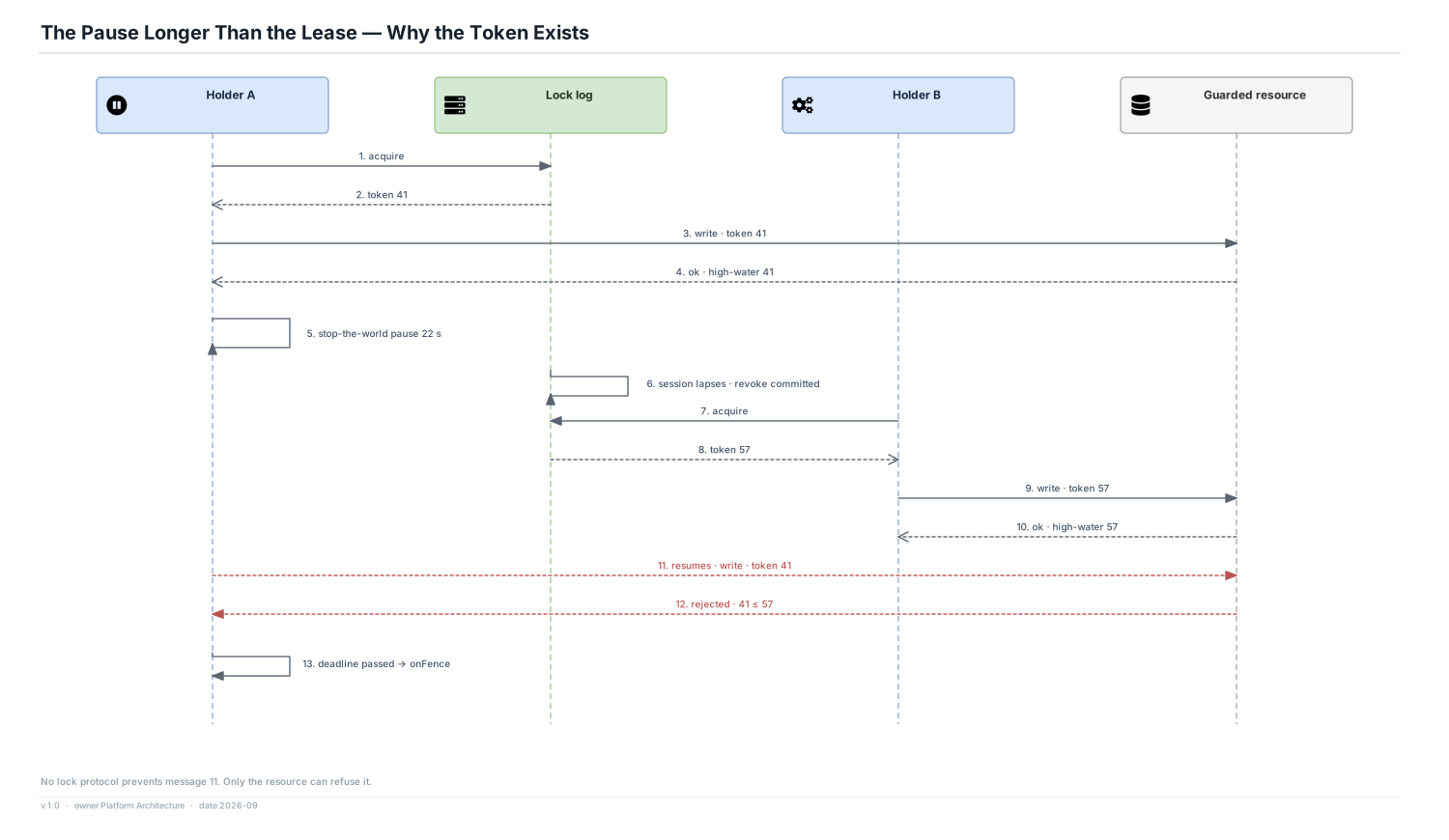
Schedulers run jobs that must not run twice, replica sets need exactly one leader, and workers mutate records no two workers may touch at once. Each team solves this alone today, usually with a database row, a Redis key with an expiry, or nothing, and each solution fails the same way: a holder pauses for longer than its lock lives, another process is granted the lock, and the first one wakes up and writes anyway. The failure is rare, silent and expensive, and it cannot be closed by a cleverer lock protocol, because a pause long enough to outlive the lease is indistinguishable from a crash.

The service issues leases, time-bounded grants that expire unless renewed, on dedicated etcd Raft quorums. Every exclusive grant returns a fencing token built from the cluster epoch and the revision of the transaction that granted it, so tokens are strictly increasing per key across expiry, leader change and restore. Holders present the token on every write, and a fenced resource refuses any token not higher than the last one it accepted. A stateless Go arbiter behind Envoy owns class rules, authorisation, quotas and wait queues; the client library owns renewal and tells the application to stop before its lease can have expired. Audit history is read off the log's own revision stream into ClickHouse. Every lock class declares whether its resource is fenced and what happens when the quorum is gone, and nothing about safety is left to a default.

What it is, and what it is not

A service that issues ordered, expiring grantsa guarantee that two processes never act at once. That guarantee lives at the fenced resource.
A coordination primitive for correctness and efficiency locksa transaction manager. No cross-key atomicity, no sagas.
Dedicated etcd clusters sized for lock trafficthe Kubernetes control plane's etcd, and not a general key-value store for teams.
A place to see who holds what and why it is stucka way to make force-release safe on a resource that does not check tokens.
Regional, with shards added behind one protocola globally consistent lock by default. A stretched quorum is priced and deferred.
Something the platform wants teams to use lessa free resource. Every grant is a consensus round trip, and the report says so.

The decisions that are the architecture

01Promise ordered grants; claim exclusion only where the resource is fenced

The service never claims to prevent a second writer. Each class is declared fenced or advisory, and advisory correctness classes sit on a risk register with a named owner and an expiry date.

ADR-01

02The token is the epoch plus the commit revision

No per-key counter to keep forever. The revision of the granting transaction is strictly increasing and never reused within a cluster; the epoch covers everything a revision cannot.

ADR-02

03A restored cluster cannot serve until it advances the epoch

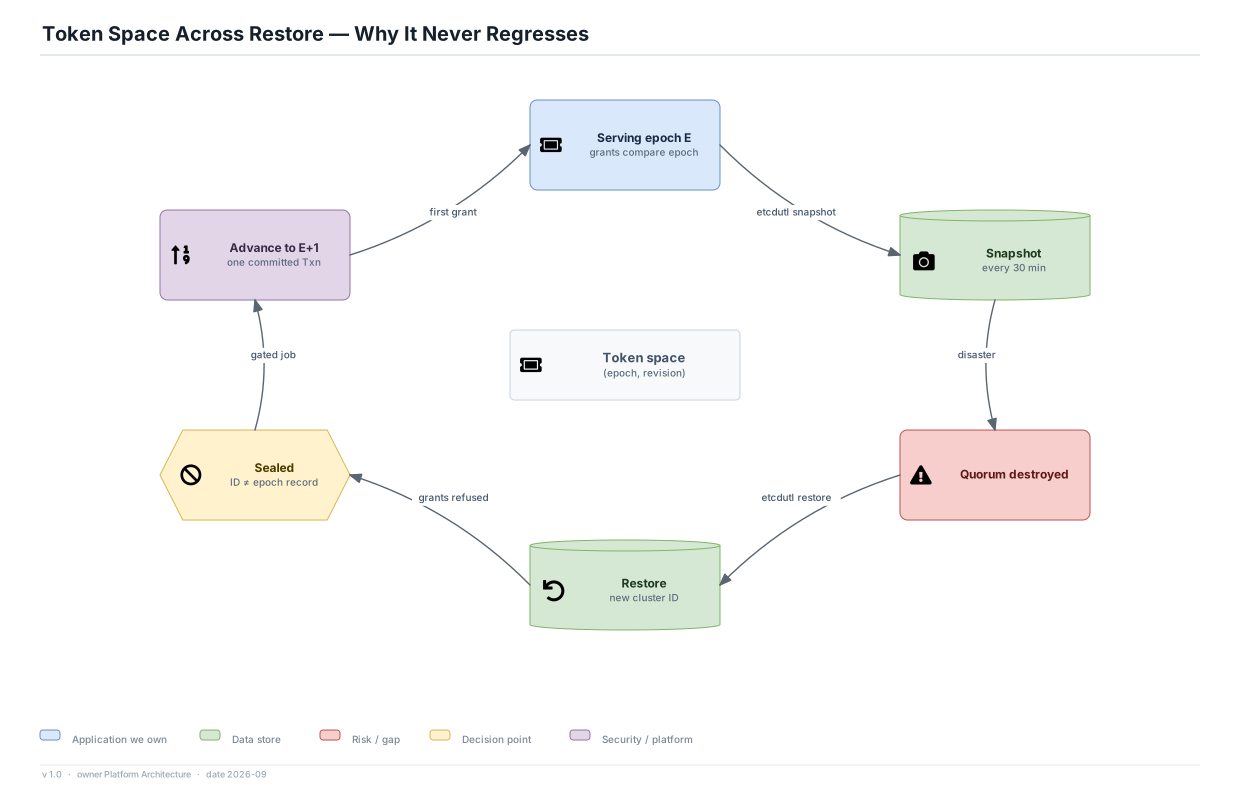
The epoch record is bound to the etcd cluster ID, and a restore always changes it. Token regression is prevented by construction, not by a runbook step someone has to remember.

ADR-03

04etcd on dedicated nodes, never the cluster's own

A mature, widely operated Raft implementation with leases, transactions and watches, on local NVMe in three failure domains, separate from the Kubernetes control plane.

ADR-05

05Renewal costs one keepalive per session, not per lock

Holds attach to a session's etcd lease, so batching is structural. 250,000 held leases cost 8,000 leader-served keepalives a second, not 50,000 consensus writes.

ADR-10

06The holder stops before the log says it has lost

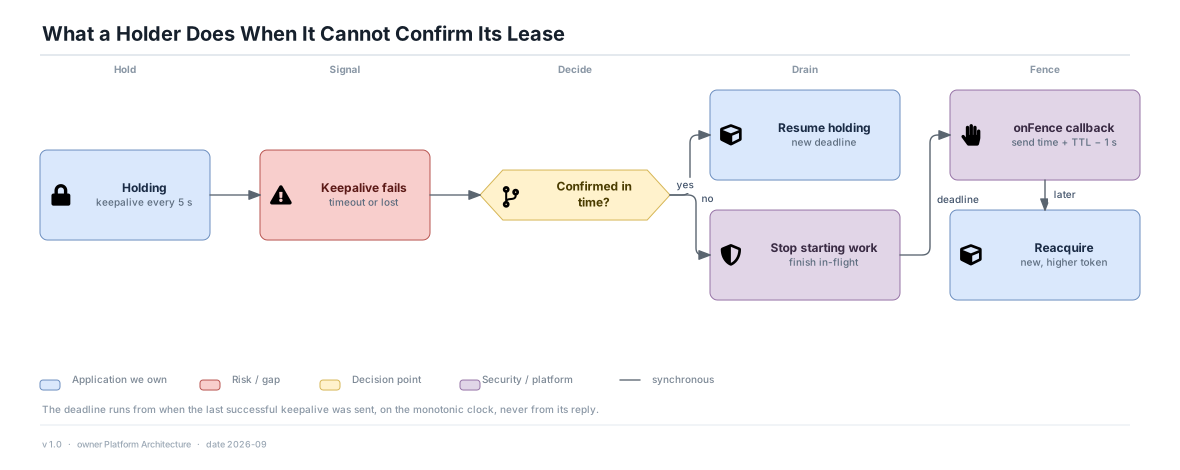
Stop starting work at the first failed keepalive; fence at a deadline computed from the last keepalive's send time. The token handles the pause the library cannot see.

ADR-12

07The resource's own conditional write is the fence

A compare-and-set, a guarded UPDATE or an etag condition holds the high-water mark. A validation call back into the lock service is the fallback, not the pattern.

ADR-16

08Two tiers of cluster, chosen by the class

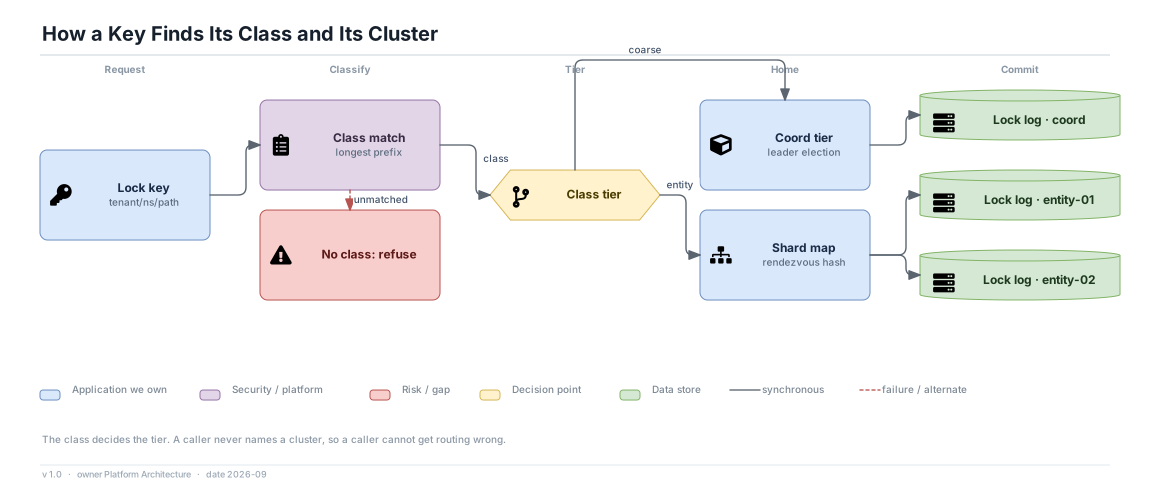
Leader-election locks on a small five-member coord cluster that entity churn cannot touch; entity locks on three-member shards. The caller never names a cluster.

ADR-07

09Audit is read from the log, never dual-written

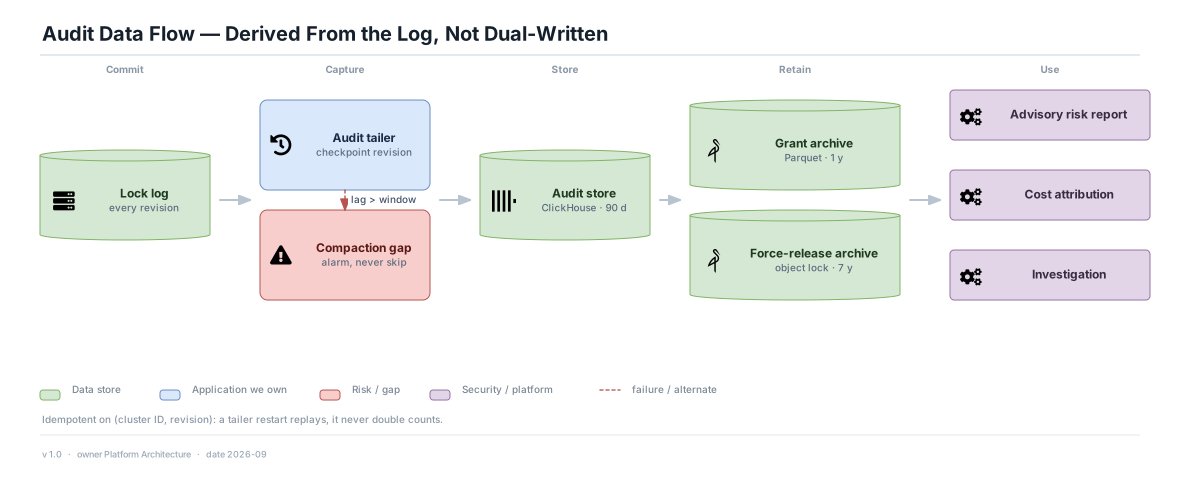
The tailer follows etcd revisions into ClickHouse, so expiries, which no application sees, are recorded, and replays are idempotent on revision.

ADR-21

10No release without a checked history

Fault injection and a linearizability checker gate every arbiter release and every etcd upgrade. A single double grant in a recorded history blocks the release.

ADR-23

Why this holds up over time

Lock services age badly in two ways: the store underneath stops being maintained, or the guarantees were tied so tightly to one implementation that replacing it means re-teaching every caller. This design is arranged so that the parts most likely to change are the cheapest to change, and the parts callers depend on are the least likely to.

The guarantee does not depend on the technology

Fencing at the resource is a property of the write path, not of etcd. It was the right answer before Raft was published and will be the right answer after whatever replaces it. Every resource owner who implements the fence has made an investment no store migration can invalidate.

The token format has room for centuries

48 bits of revision last about 297 years at the burst rate per epoch, and 15 bits of epoch allow 32,767 restores or rehomes. The format is fixed in the proto contract, so no migration will ever ask resources to widen a column.

The store sits behind a four-operation contract

The arbiter needs a conditional multi-key transaction, a lease that expires by committed entry, a revision that only goes up, and a watch from a revision. etcd provides them today; FoundationDB, a purpose-built Raft log or a future store could provide them tomorrow, and callers would not notice.

Growth is additive, never a re-platform

Coord split, entity shards and regional clusters are all more clusters behind the same protocol. Each step is triggered by a measured threshold and fenced by an epoch advance. No growth step changes what a caller sends or what a token means.

Correctness is re-proven, not remembered

The fault-injection and history-checking gate runs on every change, including every etcd upgrade. Engineers who were not present for the design still cannot ship a regression in the one property that matters.

Every component is replaceable and none is exotic

etcd, Envoy, SPIRE, Keycloak, ClickHouse, MinIO and Prometheus are each widely operated, CNCF-graduated or foundation-governed, and replaceable by a peer without touching the lock contract. The in-house code is small: an arbiter, a tailer and client libraries.

The declared posture survives staff turnover

Fenced or advisory, closed or open, TTL and tier are written in reviewed class files with the cost printed beside them. The reasoning survives the people who made it, which is the usual way safety properties decay.

Non-functional targets

Targets from the requirement, with the mechanism that meets each one. Latency figures assume a three-member quorum across three halls with sub-millisecond round trips and enterprise NVMe, and are to be confirmed by benchmark at burst load before build.

QualityTargetHow it is metView
Simultaneous exclusive grants Zero, not a budget Grant is one Raft transaction comparing key absence and epoch; release deletes only on the holder's lease; release gate checks recorded histories under faults 14
Token regression Zero, including restore and rebuild Token = epoch · 2^48 + revision; epoch bound to cluster ID; restored cluster sealed until a committed epoch advance 13
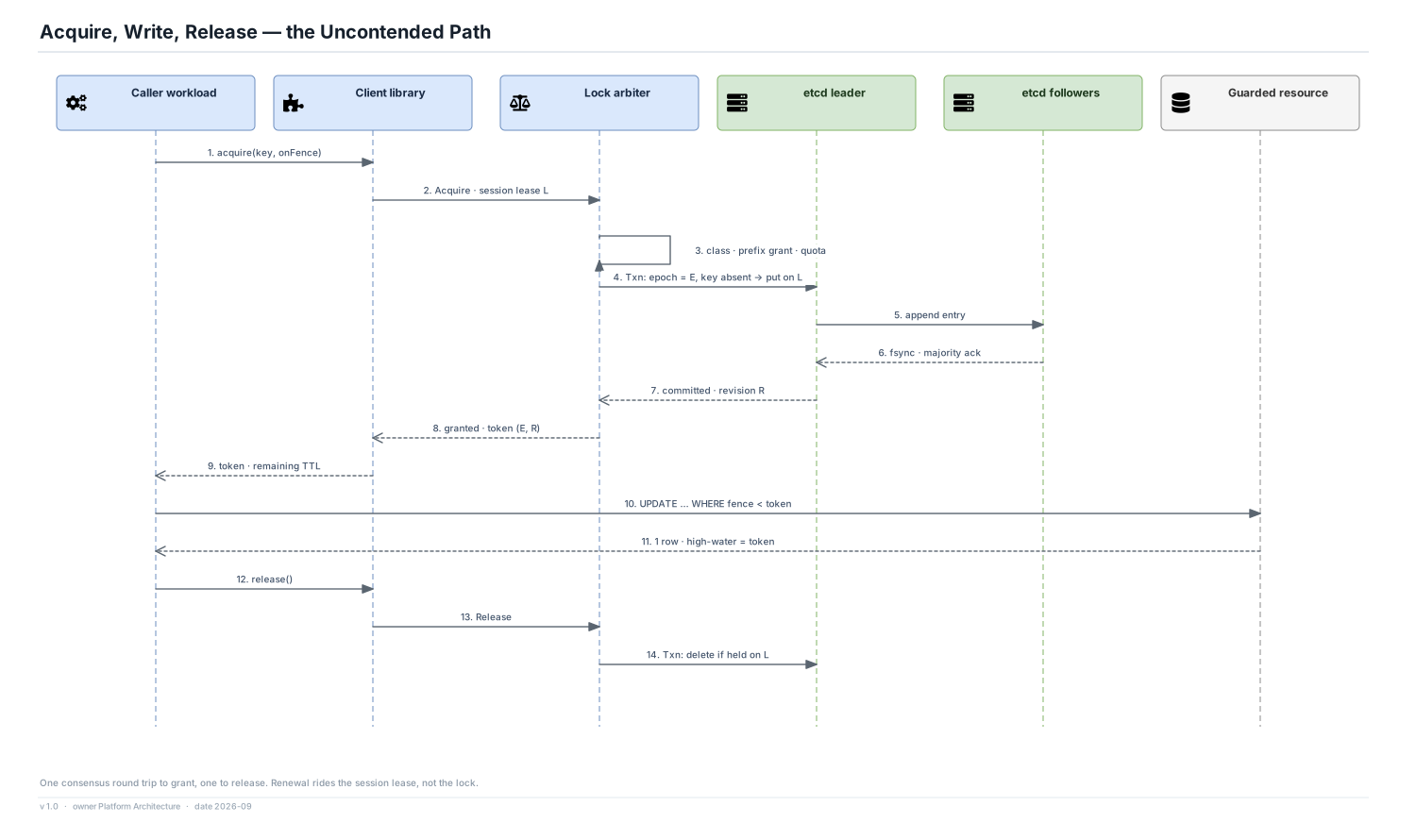
Uncontended acquire p50 ≤ 8 ms, p99 ≤ 40 ms Warm mTLS connections through Envoy; one Raft commit with majority fsync on local NVMe; no extra key write for the token 14
Session renewal p99 ≤ 25 ms; 500 holds in one call One etcd LeaseKeepAlive per session renews every hold attached to it; served by the leader without a log entry 11
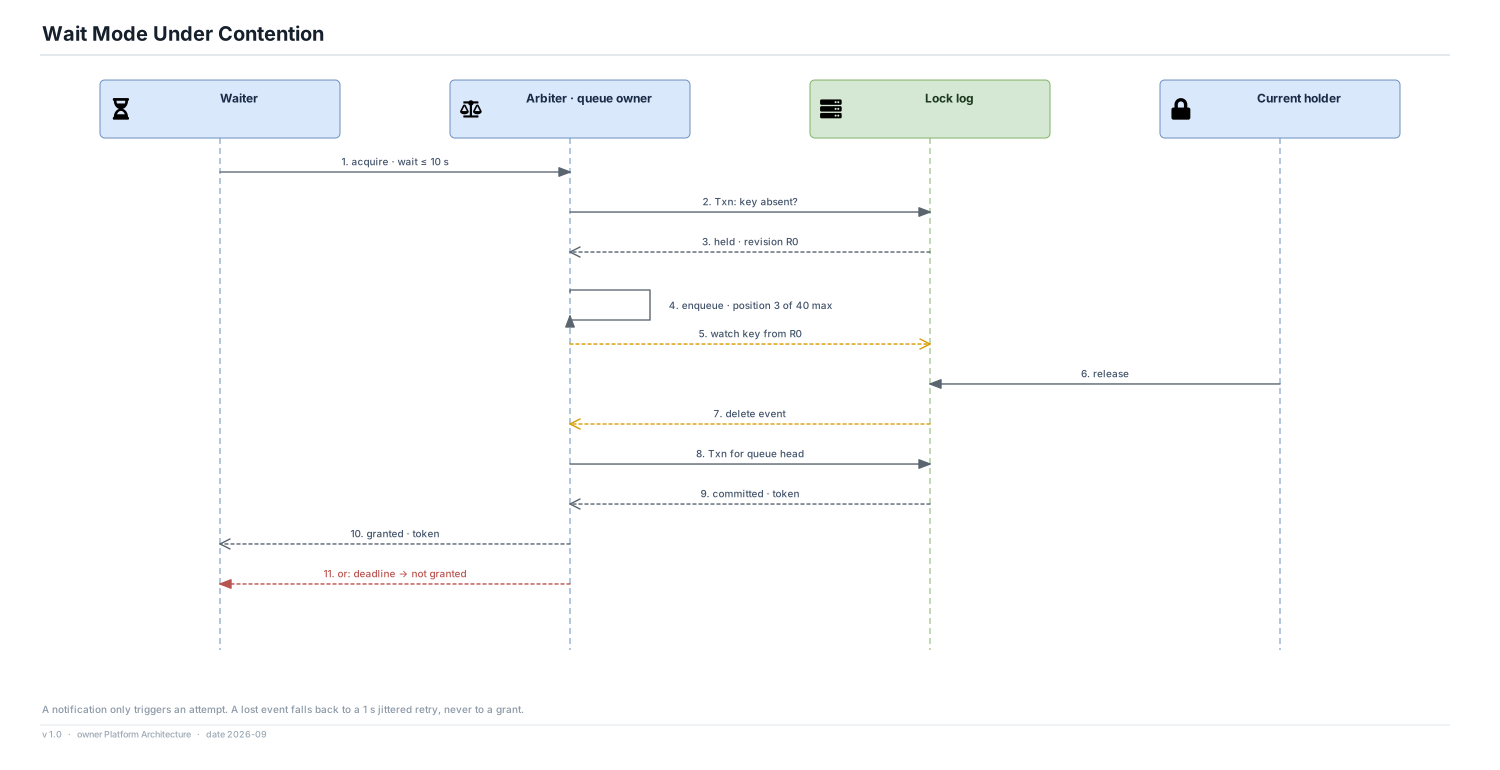
Watch notification p99 ≤ 50 ms after release commits Arbiter watches from the observed revision and grants the queue head; lost events fall back to jittered 1 s polling 16
Leader failover RTO ≤ 3 s, no lease expires during it etcd election timeout tuned for sub-millisecond halls; a new leader extends lease deadlines; lease checkpointing keeps remaining TTL honest 26
Full cluster rebuild RTO ≤ 15 min 30-minute snapshots in a second data centre; scripted etcdutl restore; epoch advance releases every hold and callers reacquire with jitter 13
Crashed-holder liveness Re-grantable within TTL + 3 s Session TTL 15 s at three missed 5 s keepalives; revocation is a committed entry; figure printed on every class PR 18
Acquisition availability ≥ 99.95% monthly per cluster Majority survives one hall; arbiter and Envoy stateless across halls; shed acquisitions before renewals under storm 19
Throughput 12,000 writes/s steady, 30,000 burst Renewals removed from the write path; queue head granted once per release; shards added past 60% of benchmarked ceiling 22
Audit durability RPO ≤ 60 s, RTO ≤ 4 h Tailer checkpoints revision every few seconds; replays idempotent on (cluster ID, revision); archive in MinIO 12

Scope

In scope

  • Hierarchical keys by tenant and namespace; exclusive leases with fencing tokens in the MVP, shared mode in Phase 2
  • Session model on etcd leases with keepalive, and expiry of every hold on session loss
  • Try, bounded wait and watch acquisition modes; in-memory FIFO per key, durable queue as a class option
  • Client libraries with a mandatory fence callback, local deadline and transparent reconnect
  • Lock classes as reviewed configuration: TTL range, mode, enforcement, quorum-loss posture and tier
  • Inspection API, two-person force-release, per-namespace quotas, audit trail and the advisory-lock risk register
  • A reference fence for PostgreSQL and for S3-compatible object stores, with a pause test kit

Explicitly out of scope

  • Enforcing exclusion inside guarded resources; the platform supplies the rule and the reference, owners implement it
  • Distributed transactions, cross-key atomicity, sagas
  • Leader election for the Kubernetes control plane itself
  • Cross-region locks in the MVP; a stretched quorum only when a genuinely global resource is named and priced
  • Use as a general configuration or service-discovery store

The three-week proof

Not a slice of every feature. The proof shows the one property everything rests on: that a paused holder's write is rejected, and that no recorded history under injected faults contains two overlapping exclusive grants. If that cannot be shown on the operator's own hardware in three weeks, nothing else in this document matters.

  1. One three-member etcd cluster on the target NVMe nodes across three halls, benchmarked at 30,000 transactions a second of mixed grant and release
  2. The arbiter with Acquire, Release, session keepalive and the epoch check, behind one Envoy
  3. The Go client library with the local deadline and onFence
  4. The PostgreSQL reference fence on a real table
  5. A Chaos Mesh schedule and a Porcupine model of the exclusive lock
  • SIGSTOP a holder for 30 s with a 15 s TTL: the resumed write is rejected and onFence fires
  • Partition the leader mid-grant: no history contains two holders, and grants resume within 3 s
  • Destroy the cluster, restore a 30-minute-old snapshot: no grant is served until the epoch advances, and the first new token exceeds every token issued before the disaster
  • Kill 2,000 clients at once and restart them: the reacquisition storm settles without a renewal being shed

Open risks, carried rather than hidden

RiskIf it landsResponse
Guarded resources that cannot be fenced Correctness locks in front of them promise ordered grants and nothing more. A long pause can produce a duplicate write, and the business may believe it is protected Advisory waivers with a named owner and expiry date, reported quarterly to security; the reference fence and pause kit lower the cost of fixing the resource (ADR-17)
Teams lock per record instead of per batch Write load grows with business volume rather than with coordination need; the platform scales a design mistake Per-record lock alarm and the monthly contention report; the platform publishes the cost and declines to shard for a namespace until the owner has reviewed it (ADR-11)
etcd behaviour changes across a release Lease or keepalive semantics shift subtly and a safety property silently weakens Every etcd upgrade passes the same fault-injection and history-checking gate as an arbiter change; versions are pinned, never floated (ADR-23)
Failure domains that are not independent One switch pair or power feed takes down two halls and both quorums with them Map shared infrastructure before build; hall-down game day before go-live; coord cluster can be moved to a second building if the map shows it is needed (ADR-06)
Operator skill with Raft under pressure A well-meaning manual intervention during quorum loss, such as force-new-cluster on the wrong member, creates the duplicate grant the design otherwise prevents Scripted recovery only, epoch seal enforced by the arbiter, and a quarterly restore drill on a staging cluster (ADR-03)

Architecture Decision Record

Why every component and every technology on these 26 views is what it is, and what each choice costs.

Twenty-four decisions make this architecture. Everything else on the twenty-six views is convention, and convention needs no defending. Each record opens with the question that forced a decision and the context that makes it hard, states the decision so it can be checked, then shows how it is realised on hardware the operator owns: which package, configured how. It weighs the credible alternatives, including the ones that are right for a different organisation, says what the choice buys and what it costs, names the conditions that would flip it, and closes with two things that outlast this system: why the decision should still hold in ten years, and the lesson that transfers. Decisions are grouped into seven areas; use the filter to read one at a time.

Status of this document. This is a design, not a report on a running system. Latency and throughput figures are targets and stated assumptions drawn from the requirement, to be replaced by benchmark numbers from the operator's own hardware before build. Every component is open source and runs on-premises; nothing depends on a public cloud service or a vendor-hosted endpoint. Where a record relies on a behaviour of a specific etcd release, the release gate on view 20 is what verifies it, and the record says so rather than trusting a changelog. The seven open questions in the requirement are each answered by a record here: Q1 by ADR-01, Q2 by ADR-16, Q3 by ADR-11, Q4 by ADR-12, Q5 by ADR-08, Q6 by ADR-14 and Q7 by ADR-07.

How to read a record

QuestionThe forcing question: why a decision was needed at all.
ContextThe requirement, the scale and the constraint that make it hard.
DecisionWhat this architecture does, stated so it can be checked.
How it works on-premiseThe concrete mechanism: which package, configured how, on whose hardware.
Options weighedChosen, rejected, deferred, or right elsewhere, with the reason for each.
ConsequencesWhat the choice buys and what it costs, both kept visible.
Choose differently whenThe conditions that would flip the decision for your system.
Why it holds up over timeWhat keeps the decision right as scale, staff and technology change.
LessonThe principle that transfers beyond this platform.

Decision map

The guarantee 4

What the service promises, what it refuses to promise, and how the token keeps that promise across disasters.

ADR-01Promise ordered grants everywhere; claim mutual exclusion only for fenced classes ADR-02The fencing token is the epoch plus the etcd revision of the granting transaction ADR-03Bind the epoch to the etcd cluster ID and seal a restored cluster until the epoch advances ADR-04Fail closed on quorum loss; fail open only for declared efficiency classes, marked unprotected

Consensus and topology 5

The store, where it runs, how many of it there are, and why none of it spans regions.

ADR-05etcd as the lock log ADR-06Dedicated etcd clusters on dedicated nodes, never the Kubernetes control plane's ADR-07Two cluster tiers, coord and entity, chosen by the lock class ADR-08Regional quorums only; no stretched quorum until a global resource is named and priced ADR-09Home entity keys by rendezvous hashing, and fence every move with an epoch advance

Leases and holders 4

Sessions, TTLs and what a holder does in the dark.

ADR-10A session is one etcd lease per identity and TTL; every hold attaches to it ADR-11TTL is chosen per class within a platform range, with its renewal cost printed in review ADR-12Stop starting work at the first failed keepalive; fence at a deadline measured from send time ADR-13Re-entrancy is counted in the client library; the log sees only the outermost acquire and release

Contention 2

Queues, fairness and why a notification never grants anything.

ADR-14In-memory FIFO on a key-affine arbiter by default; durable waiter keys as a class option ADR-15A watch notification triggers an attempt, never a grant

Enforcement at the resource 2

Where two writers are actually kept apart, and what happens where they are not.

ADR-16The resource's own conditional write holds the high-water mark; validation API is the fallback ADR-17Ship a reference fence and a pause test kit; declare fenced only on a passing test

Access and identity 3

Why there is a service at all, who may lock what, and who may break a lock.

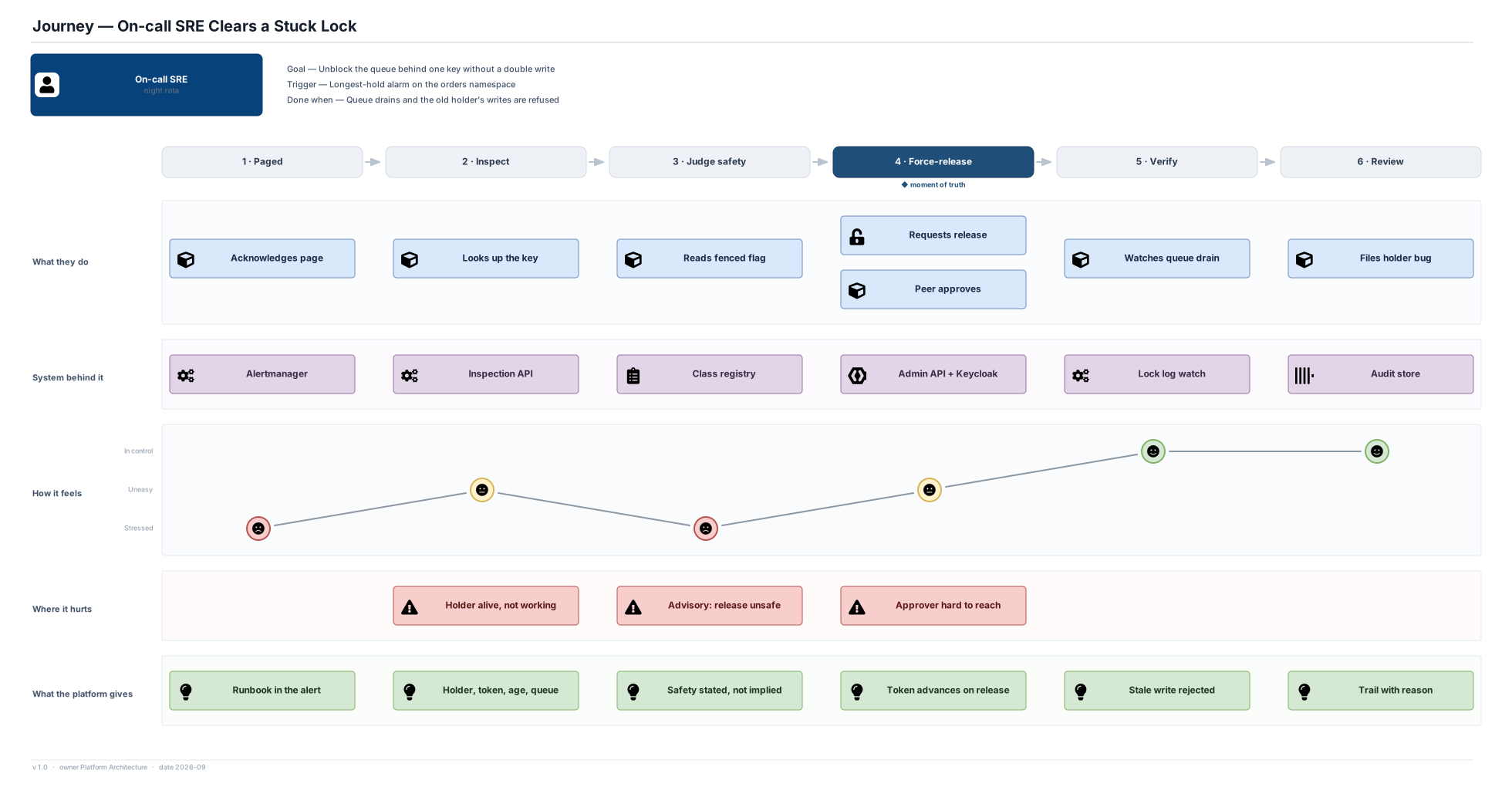
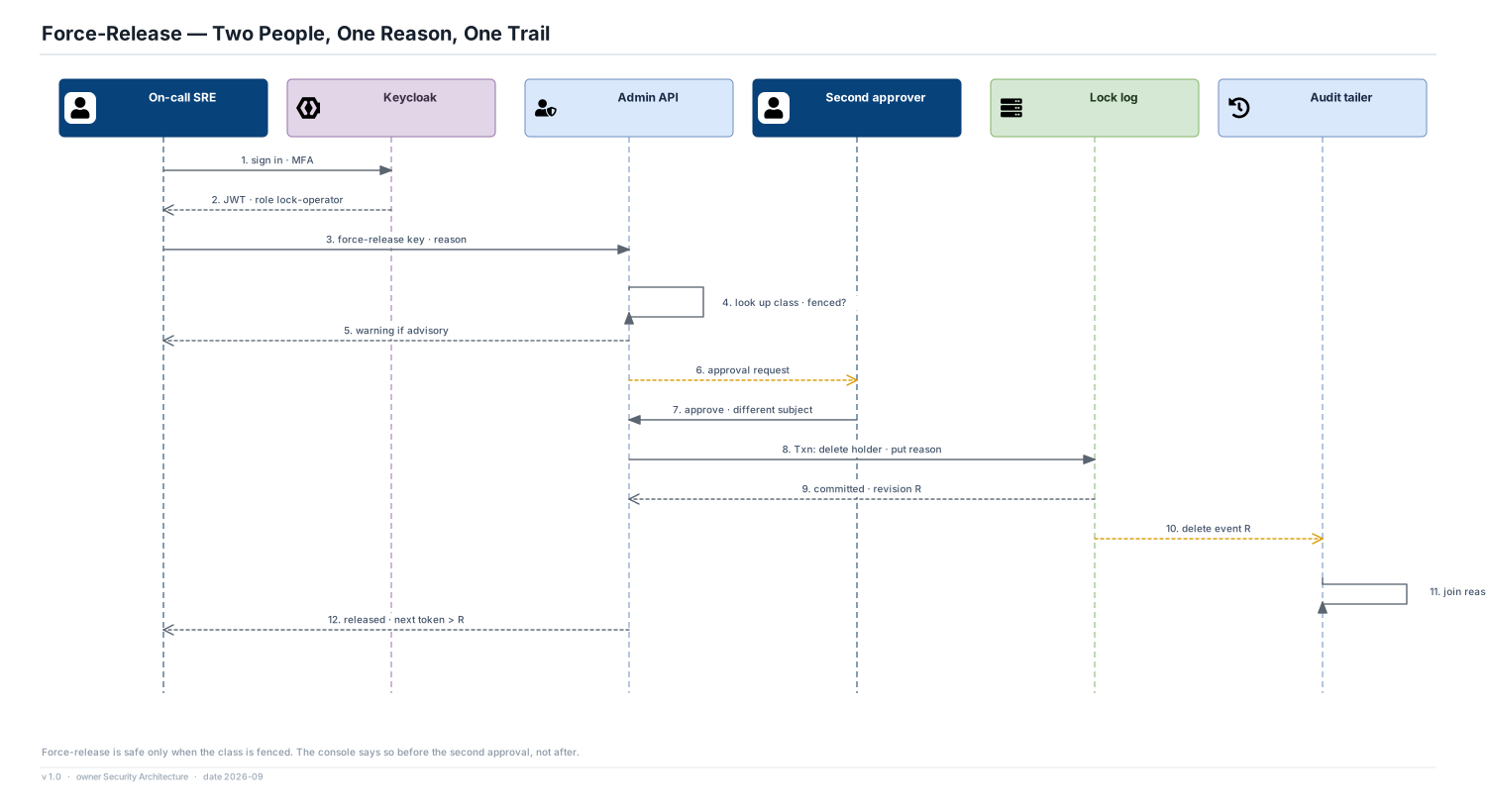
ADR-18A stateless Go arbiter behind Envoy, rather than a thick client straight to etcd ADR-19SPIFFE workload identity, and authorisation as prefix grants rather than a policy engine ADR-20Force-release requires two operators, a reason, and a delete-only etcd role

Evidence and operations 4

Audit, telemetry, release gating and configuration.

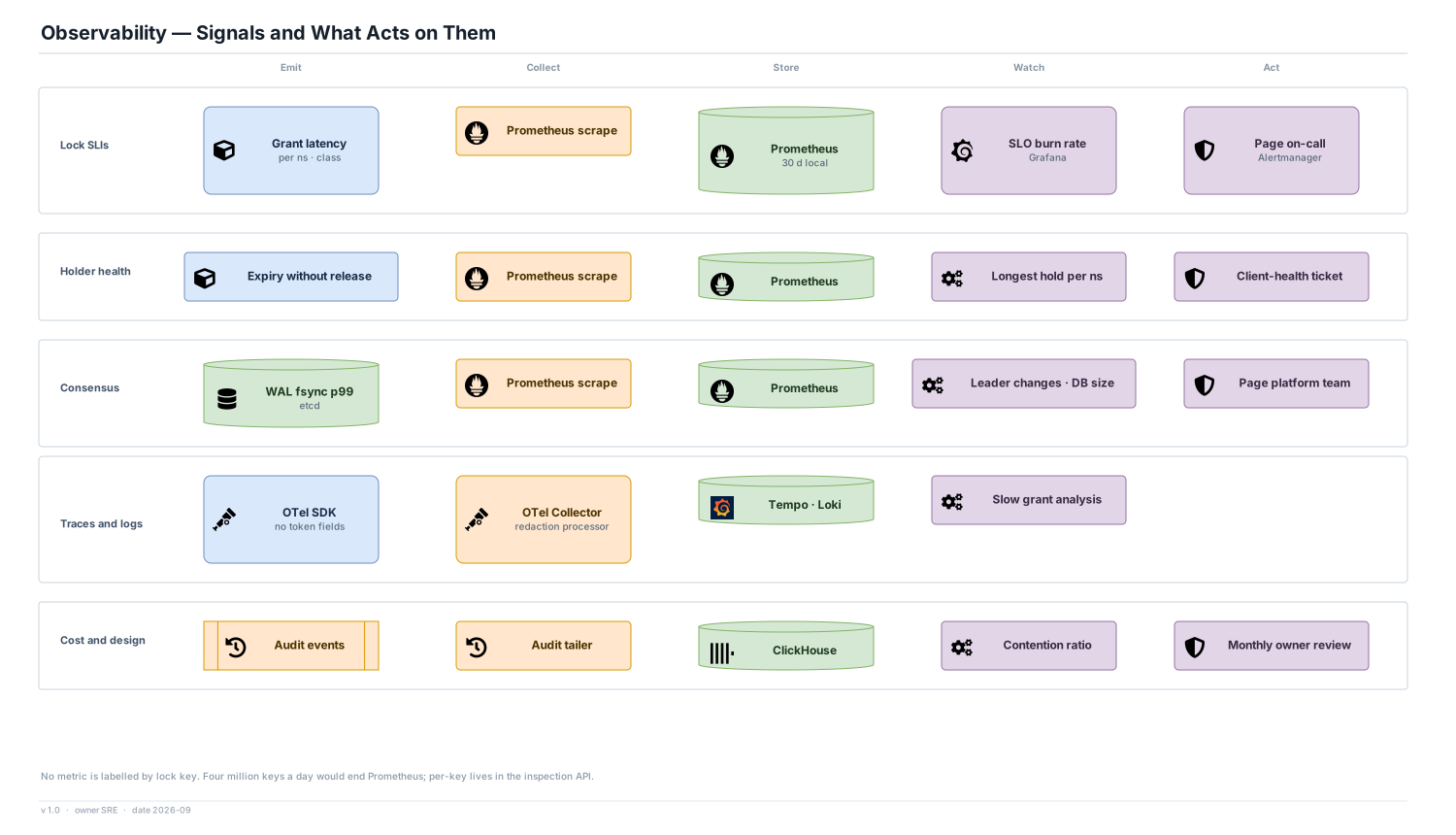
ADR-21Audit is tailed from etcd revisions into ClickHouse, never dual-written by the arbiter ADR-22Metrics by namespace and class only; tokens never in telemetry ADR-23No release without a fault-injected history checked for double grants ADR-24Lock classes and grants are reviewed CRDs delivered by Argo CD

Technology by capability

Every capability on the views, the package that provides it, the credible alternative, and the record that justifies the choice. Everything here runs on the operator's own hardware.

Open source This design
CapabilityChoiceOriginCredible alternativeWhy this oneRecord
Lock log (consensus store) etcd 3.6 line, dedicated clusters Open source Apache ZooKeeper; Consul; custom Raft on hashicorp/raft Leases revoked by committed entry, multi-key transactions, watch from revision, and the most heavily exercised Raft implementation in production ADR-05
Fencing token (epoch, etcd revision) packed in int64 This design Per-key counter key; etcd lease ID Minted by the grant commit itself, never reused, no extra state per key ADR-02
Restore safety Epoch record bound to etcd cluster ID This design Runbook step; wall-clock epoch A restore always changes the cluster ID, so the seal cannot be skipped ADR-03
Cluster topology Coord tier (5) + entity shards (3 each), per region This design One large cluster; stretched multi-region quorum Isolates leader-election locks from entity churn; writes scale by shards, not members ADR-07
Key homing Rendezvous hashing with versioned shard map This design Consistent-hash ring; manual range assignment Minimal key movement on shard add; each move fenced by epoch advance ADR-09
Session and renewal One etcd lease per identity and TTL Open source One etcd lease per lock; application-level heartbeat keys Renewal cost per session, batching by construction ADR-10
Lock arbiter Go service using etcd clientv3, gRPC This design Thick client straight to etcd; Java service Same client library etcd's own robustness tests use; small static binaries; one place for class rules and quotas ADR-18
Client protocol gRPC + protobuf, buf breaking checks Open source REST/JSON; raw etcd API Streaming keepalive and watch on one connection; contract enforced in CI ADR-18
Fan-in tier Envoy, ring-hash on lock key Open source HAProxy; NGINX; client-side load balancing gRPC-native, SPIFFE-aware mTLS, per-identity local rate limits, key-affine routing for queues ADR-18
Workload identity SPIRE issuing X.509 SVIDs Open source cert-manager with a private CA; Kubernetes service account tokens Attested identity, one-hour certificates, identity survives outside Kubernetes ADR-19
Operator identity Keycloak OIDC with MFA Open source Directory groups via LDAP bind; Dex Roles, MFA and a second-subject check without building an identity system ADR-20
Authorisation Prefix grants in the class registry, evaluated in-process This design Open Policy Agent; SpiceDB A longest-prefix match does not need a policy engine on a 40 ms path ADR-19
Wait queue In-memory FIFO on key-affine arbiter; durable /q keys per class This design Durable queue for all; client polling Free fairness for most classes, paid fairness where declared ADR-14
Resource fence Store's own conditional write; reference for PostgreSQL and S3 conditional put This design Token-validation call on every write Atomic with the write, no extra hop, no new dependency ADR-16
Audit capture Revision tailer on etcd watch This design Arbiter emits events to Kafka Captures expiries; no dual write; idempotent replay ADR-21
Audit store and archive ClickHouse; MinIO with object lock Open source PostgreSQL; OpenSearch; Kafka tiered storage Columnar scans over hundreds of millions of events; retention enforced by the store ADR-21
Metrics, traces, logs Prometheus, Grafana, Alertmanager, OTel Collector, Tempo, Loki Open source VictoriaMetrics; Jaeger; OpenSearch Already the platform standard; bounded label sets; redaction processor in the collector ADR-22
Release gate Chaos Mesh + Porcupine linearizability checker Open source Jepsen; unit and integration tests only Go-native, runs in the cluster, checks real histories on every change ADR-23
Configuration delivery LockClass CRDs in Gitea, synced by Argo CD Open source Admin API writes to etcd; ConfigMaps Reviewed by the resource owner; history, diff and rollback for free ADR-24
Build and supply chain Gitea Actions, cosign, Harbor Open source Jenkins; GitLab CE Signed images, admission-checked, on-premises end to end ADR-23
Disk encryption LUKS with Clevis and Tang Open source Self-encrypting drives; manual passphrase Unattended unlock inside the network, unreadable disk outside it ADR-06

The decisions, and the alternatives that lost

The guaranteeWhat the service promises, what it refuses to promise, and how the token keeps that promise across disasters.

ADR-01

Promise ordered grants everywhere; claim mutual exclusion only for fenced classes

Accepted

Does the service promise that two processes never act at once, or only that grants are ordered?

Context
The requirement asks for correctness locks where two holders cause damage. But a holder paused past its lease cannot be stopped by any protocol, so exclusion can only be enforced where the write lands. Requiring every guarded resource to be fenced before a correctness lock can be created is the honest guarantee and blocks adoption on legacy stores. Promising only ordered grants ships everywhere and quietly leaves the strongest claim unbacked.
Decision
The service promises ordered, expiring grants for every class. It claims mutual exclusion only for classes declared fenced, and a class may be declared fenced only after the pause test passes against the real resource. A correctness class may be created as advisory, but only with a named risk owner and an expiry date, and it appears on a standing risk register until fenced or renewed on the record.
How it works on-premise
The LockClass CRD has required fields enforcement: fenced | advisory and, for advisory, riskOwner and waiverExpires. A validating admission webhook rejects a class that omits them. The class controller refuses to mark a class fenced unless a pause-test result object referencing that class and resource exists. ClickHouse produces the advisory register nightly from the class list and grant counts.
Options weighed
  • ChosenOrdered grants everywhere, exclusion claimed only when fenced, advisory registered: Ships to every team on day one without letting any of them believe they are protected when they are not.
  • RejectedRefuse correctness locks on any unfenced resource: Honest, and it sends the teams with legacy stores back to a Redis key with an expiry, which is strictly worse.
  • RejectedPromise exclusion and document the pause caveat: A caveat nobody reads is the industry's current state. It is how duplicate postings happen in systems that have a lock.
  • Right elsewhereRefuse locks entirely and push conditional writes: Right for an estate where every store supports compare-and-set; many do, and ADR-16 pushes teams there first.
Consequences
What it buys
  • The platform's claim is exactly as strong as the evidence for it
  • Unfenced risk is visible to security and has a date on it
  • Adoption is not blocked on the slowest resource team
What it costs
  • A second concept for every owner to understand
  • Waiver administration and quarterly review
  • Some advisory classes will be renewed indefinitely, and the register makes that visible rather than preventing it
Choose differently when
Flip to refusing unfenced correctness locks when every guarded store in the estate supports a conditional write and the register has been empty for two quarters. At that point advisory correctness is only a way to skip work.
Why it holds up over time
The distinction between an ordered grant and enforced exclusion is a law of distributed systems, not a feature of this stack. It will be true of whatever store replaces etcd, and the register keeps the gap visible through every reorganisation.
LessonPromise what you can prove, register what you cannot, and put a date on the second list.
Shown on views01 15 17
ADR-02

The fencing token is the epoch plus the etcd revision of the granting transaction

Accepted

How is a 64-bit token minted that strictly increases per key, is never reused, and is committed with the grant?

Context
The obvious design is a counter key per lock, incremented in the grant transaction. It works, and the counter must then live forever, because deleting it lets the next grant restart at one. With four million distinct keys a day, the counter table becomes the largest thing in the store and a compaction problem nobody planned. The token must also stay monotonic across restores, where any stored value can go backwards.
Decision
The token is epoch × 2^48 + R, where R is the etcd revision at which the grant transaction committed and the epoch occupies the top bits, kept below 2^15 so the value is positive in a signed 64-bit column. Revisions are cluster-wide, strictly increasing and never reused within a cluster's life, which is stronger than per-key monotonicity. Gaps are expected and carry no meaning.
How it works on-premise
The arbiter reads header.revision from the successful TxnResponse and packs it with the epoch it compared in the same transaction. No additional key is written. The proto carries the token as a fixed64 plus the decoded (epoch, revision) pair for diagnostics only; resources compare the packed integer.
Options weighed
  • ChosenEpoch plus commit revision: Minted by the commit itself, zero extra state, and a restore is handled once by the epoch rather than per key.
  • RejectedPer-key counter key incremented in the grant transaction: Correct, but the counters can never be deleted and still need an epoch to survive a restore.
  • Rejectedetcd lease ID as the token: Lease IDs are not ordered with respect to grants on a key, and many holds share one session lease.
  • RejectedHybrid logical clock timestamp: Adds clock assumptions to the one property that must hold without them.
Consequences
What it buys
  • No token state to compact or migrate
  • Tokens from different keys are comparable, which simplifies debugging
  • Header revision is already returned on every etcd response
What it costs
  • Token values are large and non-contiguous, which surprises people expecting 1, 2, 3
  • Token semantics are tied to one cluster's revision space; rehoming a key requires an epoch advance (ADR-09)
Choose differently when
Choose a per-key counter if the store behind the arbiter has no global monotonic commit index, for example a store that shards internally without exposing one.
Why it holds up over time
2^48 revisions last about 297 years at 30,000 commits a second, per epoch. The packed format is frozen in the proto contract, so resources never need to change the width of the column they store it in.
LessonBefore adding state to produce an ordering, look for an ordering the system already maintains for its own reasons.
Shown on views11 14
ADR-03

Bind the epoch to the etcd cluster ID and seal a restored cluster until the epoch advances

Accepted

How is a restored lock log prevented from issuing a token it has issued before?

Context
Restoring a snapshot rolls revisions back to the snapshot point. Any grant made after the snapshot has handed a holder a token the restored cluster will issue again. The requirement says this must be impossible by construction, not by procedure. Restores happen during the worst hour of an operator's year, which is exactly when procedural steps get skipped.
Decision
A /sys/epoch record stores the current epoch and the etcd cluster ID it was minted for. Every grant compares the epoch key. The arbiter compares the cluster ID in every response header with the one in the epoch record and refuses to serve on mismatch. A restore always produces a new cluster ID, so a restored cluster is sealed until a single transaction sets epoch E+1 bound to the new ID and deletes every restored hold.
How it works on-premise
etcdutl snapshot restore generates a new cluster ID by design. The epoch-advance job is a Kubernetes Job gated by a two-person approval in the Admin API; it runs one Txn: compare epoch = E, put /sys/epoch = {E+1, newClusterID}, delete range /l and /q. New epochs are allocated from the coord cluster so no two clusters ever reuse one.
Options weighed
  • ChosenCluster-ID-bound epoch with arbiter seal: The service cannot serve without the advance, so the advance cannot be forgotten.
  • RejectedRunbook step to bump the epoch after restore: Correct on the day it is followed, and one skipped step is a duplicate token.
  • RejectedEpoch derived from wall-clock time at startup: Puts a clock back into the one property designed to be independent of clocks.
  • Right elsewhereNever restore; rebuild empty and let everyone reacquire: Acceptable if tokens are also epoch-advanced; the design effectively does this, keeping the snapshot for the shard map and class state.
Consequences
What it buys
  • Token regression is impossible without deliberately editing the epoch key
  • The seal is visible: arbiters report sealed status on every request
  • Rehoming reuses the same mechanism
What it costs
  • Every hold is released at once after a restore, producing a reacquisition storm
  • A second person must be reachable during disaster recovery
  • Relies on etcd continuing to assign a new cluster ID on restore, which the release gate checks
Choose differently when
Unnecessary on a store whose restore preserves a monotonic index beyond the snapshot, such as one with continuous log archiving to a point after the last committed entry. Such stores are rare and still benefit from the seal as a guard.
Why it holds up over time
The mechanism depends on one invariant, that a restored cluster is distinguishable from the original, and on nothing else. Any future store can supply an equivalent identity, and the arbiter check is ten lines.
LessonMake the dangerous state unservable, not merely documented.
Shown on views13 26
ADR-04

Fail closed on quorum loss; fail open only for declared efficiency classes, marked unprotected

Accepted

When no majority is reachable, does the service keep granting?

Context
Correctness classes must never issue a second grant, so no grants and no renewals can happen without a quorum, and holders must self-fence as their deadlines pass. Efficiency classes, where two holders only waste money, would rather keep running. The requirement wants that difference declared and every open grant traceable afterwards.
Decision
Every class declares onQuorumLoss. Correctness classes may only declare closed. Efficiency classes may declare open, in which case an arbiter that cannot reach a majority grants from local memory with token zero, spools each grant to a local write-ahead file, and ships the spool to the audit store with unprotected = true on recovery. The MVP is closed for all classes.
How it works on-premise
The class admission webhook rejects enforcement: fenced or a correctness purpose combined with onQuorumLoss: open. The spool is a small append-only file on the arbiter pod's local persistent volume, shipped by the tailer's recovery step. The reconciliation list is a ClickHouse view filtered on unprotected over the outage window.
Options weighed
  • ChosenClosed by default, open only for declared efficiency classes: Safety where it matters, availability where it is cheap, and a record of every compromise.
  • DeferredClosed for everything: The MVP posture. Moves to the chosen option in Phase 3 once the reconciliation report exists.
  • RejectedOpen for everything during outages: Converts a quorum outage into a correctness incident across every class at once.
Consequences
What it buys
  • Quorum loss is an availability incident, not a correctness incident
  • Efficiency workloads keep moving
  • Every compromise is a bounded, queryable list
What it costs
  • Correctness workloads stop during quorum loss
  • Fail-open adds a local spool and a reconciliation path to build and test
  • Owners must classify honestly; a misdeclared efficiency class is a silent correctness risk
Choose differently when
Flip a class to closed the first time anyone has to clean up after one of its unprotected grants. That cleanup is evidence the class was never an efficiency class.
Why it holds up over time
Safety-before-liveness is the one posture that never needs revisiting when the business grows; the only thing that changes is which classes deserve the exception, and that list lives in reviewed files.
LessonAn availability exception is acceptable when it is declared in advance, bounded, and leaves a list behind.
Shown on views17 26

Consensus and topologyThe store, where it runs, how many of it there are, and why none of it spans regions.

ADR-05

etcd as the lock log

Accepted

Which replicated, linearizable store holds lease state and mints the ordering?

Context
The store needs linearizable conditional multi-key writes, leases whose expiry is a committed entry measured on the quorum's monotonic clock, a strictly increasing commit index, and a watch that resumes from a position. It has to be open source, run on the operator's hardware, and be operable by a platform team that already runs Kubernetes.
Decision
Use etcd on the 3.6 release line, run as dedicated clusters for lock traffic. The arbiter uses Txn for grants and releases, LeaseGrant and LeaseKeepAlive for sessions, header revisions for tokens and Watch for queues and audit. Lease checkpointing is enabled so a leader change carries remaining TTL forward.
How it works on-premise
Members run as a StatefulSet pinned to tainted nodes with local NVMe persistent volumes, guaranteed QoS and CPU pinning. --quota-backend-bytes is 8 GB, auto-compaction is periodic at one hour, defragmentation runs one member at a time off-peak. Client and peer TLS use certificates from a private CA; RBAC is enabled with per-prefix roles.
Options weighed
  • Chosenetcd: Every required primitive is native, and its Raft implementation is exercised by every Kubernetes cluster in existence.
  • RejectedApache ZooKeeper: Proven for exactly this job, with ephemeral sequential nodes and zxids. Loses on operational familiarity for a Kubernetes-native team and JVM tuning on the latency tail.
  • RejectedConsul: Sessions and KV locks exist, but its lock-delay and session-invalidation semantics are coarser, and it brings a service-discovery product the estate does not need here.
  • DeferredCustom Raft on hashicorp/raft or etcd-io/raft: Could remove the key-value layer's overhead at very high scale. Revisit only if a benchmarked shard cannot meet the per-cluster ceiling.
  • Right elsewherePostgreSQL advisory locks or SELECT FOR UPDATE: Right when the guarded resource is itself one PostgreSQL database; the lock and the write then share a transaction and no service is needed.
  • RejectedRedis with Redlock: Relies on bounded clock drift and process pauses for safety and has no committed expiry. The failure this service exists for is the one it does not handle.
Consequences
What it buys
  • No new consensus implementation to trust
  • Large pool of engineers who already operate etcd
  • Transactions, leases and watches in one API
What it costs
  • Every key carries etcd's MVCC overhead and compaction obligations
  • Write throughput per cluster is bounded, so sharding comes earlier than with a purpose-built log
  • etcd's keepalive path is leader-served rather than logged, which the design accounts for in ADR-10
Choose differently when
Choose ZooKeeper where a team already runs it well for Kafka or HBase and has no Kubernetes estate. Choose a purpose-built Raft log if sustained lock writes exceed what ten entity shards can carry.
Why it holds up over time
etcd is a CNCF-graduated project that Kubernetes cannot exist without, which makes it one of the safest open-source bets for continued maintenance. The arbiter uses four etcd capabilities behind an internal interface, so a replacement is an arbiter change, not a protocol change.
LessonPick the consensus store your platform already depends on for survival; its maintenance is then someone else's existential problem.
Shown on views02 07 14
ADR-06

Dedicated etcd clusters on dedicated nodes, never the Kubernetes control plane's

Accepted

Where do the etcd members physically run?

Context
Grant latency is the fsync latency of the slowest member in the acknowledging majority. The Kubernetes control plane already runs an etcd, and reusing it is tempting. That etcd is sized and tuned for the API server, and a lock storm there degrades the cluster the lock service itself is deployed on.
Decision
Lock clusters are separate etcd clusters on dedicated worker nodes with local NVMe, one member per hall for the entity tier and a 2-2-1 split for coord. Disks are encrypted with LUKS and unlock through Clevis against Tang servers on a separate network.
How it works on-premise
Node labels lock-etcd=true and a NoSchedule taint; local persistent volumes through the local static provisioner; WAL and data on the same NVMe with nothing else on it; ionice and CPU manager static policy. Tang servers run in two halls; a node that cannot reach Tang at boot stays locked rather than falling back to a passphrase.
Options weighed
  • ChosenDedicated clusters, dedicated nodes, local NVMe: Predictable tail latency and no shared fate with the orchestrator.
  • RejectedReuse the Kubernetes control-plane etcd: Couples lock load to cluster health, and the API server's own leases would compete with lock traffic.
  • Rejectedetcd on shared workers with network block storage: Network storage fsync tails of tens of milliseconds consume the whole latency budget.
  • Right elsewhereetcd on bare metal outside Kubernetes: Equally valid where the platform team runs systemd services well; loses the uniform deployment and rollout tooling.
Consequences
What it buys
  • Stable fsync latency and an isolated failure domain
  • A stolen disk reveals nothing; a reboot needs no human
  • Failure domains are explicit in the node placement
What it costs
  • Dedicated hardware that sits well below capacity by design
  • Tang becomes a boot-time dependency to operate
  • Hall independence must be verified, not assumed
Choose differently when
Run on shared workers only in a non-production environment, or where measured fsync p99 on shared storage stays under 2 ms at burst.
Why it holds up over time
Separating a lock quorum from the orchestrator's own state is a boundary that stays correct however the orchestrator evolves, and local-disk consensus remains the lowest-latency option on any hardware generation.
LessonA consensus system's latency is its slowest disk in the majority; buy the disk before tuning the software.
Shown on views07 19
ADR-07

Two cluster tiers, coord and entity, chosen by the lock class

Accepted

One service for coarse and fine-grained locking, or two?

Context
Leader election needs tens of long-held, highly available locks. Entity locking needs hundreds of thousands of short, high-churn ones. On one cluster, entity churn inflates compaction, defragmentation and tail latency for the leader-election locks the rest of the platform depends on. Two clusters double the operational surface and require a routing rule that callers will eventually get wrong.
Decision
Same protocol, same client library, two tiers. The coord tier is a five-member cluster tuned for availability; the entity tier is sharded three-member clusters tuned for write throughput. The tier is a required field on the lock class, so routing is decided once by the owner in review and never by a caller.
How it works on-premise
The arbiter holds one clientv3 client per cluster and selects by class tier and, for entity, by the shard map (ADR-09). The coord cluster also stores epoch allocation and the shard map itself. In the MVP both tiers point at one cluster; the split is a configuration change once the coord cluster exists.
Options weighed
  • ChosenTwo tiers behind one protocol, tier on the class: Blast radius isolation without asking callers to route.
  • DeferredOne cluster for everything: Acceptable for the MVP's volume; split at Phase 2 or on the first latency incident traced to entity churn.
  • RejectedTwo separate services with separate APIs: Two libraries and two sets of semantics for what is one primitive.
Consequences
What it buys
  • Leader election survives an entity-tier incident
  • Each tier tuned for its own shape
  • No caller-side routing mistakes
What it costs
  • More clusters to operate, patch and back up
  • Moving a class between tiers is a rehome, not an edit
Choose differently when
Stay on one tier if the estate never exceeds a few thousand concurrent entity locks; the operational cost of a second cluster then buys nothing measurable.
Why it holds up over time
The tier is a property of a class, not of the infrastructure, so new tiers, such as a regional or a global coord, slot in without any existing class or caller changing.
LessonIsolate by workload shape, and put the routing decision where it is made once, in review.
Shown on views09 22
ADR-08

Regional quorums only; no stretched quorum until a global resource is named and priced

Accepted

What is the quorum topology across regions?

Context
A stretched quorum coordinates globally and pays inter-region latency on every acquisition, including the local majority. Regional clusters are fast and cannot coordinate a globally unique action. A hierarchy, regional clusters holding leases on a global lock, adds a second lease layer with its own expiry semantics and failure modes.
Decision
Each region runs its own coord and entity clusters, and no lock spans regions. A key's tenant namespace is homed to one region. A global lock is not offered until a named resource genuinely needs one, and then only as a separate stretched coord cluster with its acquisition latency, p99 around 150 ms, published before anyone commits to it.
How it works on-premise
Region is a field on the namespace. The arbiter in region A refuses keys homed to region B with a redirect error naming the region, rather than forwarding, so cross-region latency is never hidden inside a call.
Options weighed
  • ChosenRegional only, global deferred and priced: Every local lock stays fast, and the expensive option is a decision rather than a default.
  • RejectedStretched quorum across three regions: Every acquisition pays a cross-region round trip for the benefit of a small minority of locks.
  • RejectedHierarchical regional and global leases: Two expiry layers whose interaction under partition is harder to reason about than either alone.
Consequences
What it buys
  • Local latency for every lock
  • A region's isolation cannot stall another region's locks
What it costs
  • No globally unique action without a separate, slower cluster
  • Namespaces must be homed deliberately
Choose differently when
Build the stretched coord cluster when a named resource, such as a global ledger migration or a cross-region singleton, cannot be partitioned by region and its owner accepts the published latency.
Why it holds up over time
Physics does not improve. Inter-region latency will be roughly what it is now in ten years, so a topology that keeps it out of the common path does not age.
LessonPrice the global option before anyone asks for it, and make them ask.
Shown on views22
ADR-09

Home entity keys by rendezvous hashing, and fence every move with an epoch advance

Accepted

How is the key space spread across entity shards, and how do keys move without token regression?

Context
A key must be deterministically homed to exactly one cluster. Adding a shard must move few keys. Tokens are revision-based and each cluster has its own revision space, so a key moved to a cluster with a lower revision would issue lower tokens than its old home did.
Decision
Entity keys are homed by rendezvous hashing over namespace and path prefix against a versioned shard map stored in the coord cluster. Adding a shard moves only keys whose highest score changes to it. Before the destination accepts moved keys, its epoch is advanced above the source's epoch, and the move proceeds only for ranges with no current holders.
How it works on-premise
The shard map is a versioned document in /sys on the coord cluster, watched by every arbiter. A rebalance controller drains a range by refusing new grants for it, waits for holds to release or expire, advances the destination epoch, flips the map version and resumes.
Options weighed
  • ChosenRendezvous hashing with epoch-fenced moves: Minimal movement, no ring tokens to manage, and the same epoch mechanism as restore.
  • RejectedConsistent-hash ring with virtual nodes: Works, with more state to balance and no advantage at tens of shards.
  • Right elsewhereManual range assignment by namespace: Fine for a handful of very large tenants who want their own shard; supported as an override in the map.
Consequences
What it buys
  • Adding a shard moves about 1/N of keys
  • One mechanism for restore and rehome safety
What it costs
  • A moving range is briefly unavailable for new grants
  • The shard map is one more critical document on the coord cluster
Choose differently when
Prefer explicit per-tenant assignment when the estate is a small number of very large tenants whose isolation matters more than balance.
Why it holds up over time
Rendezvous hashing has no tuning parameters that drift with scale, and epoch-fenced moves make every future rebalance safe by the same rule that makes a restore safe.
LessonWhen moving state can break an ordering, reuse the mechanism that already protects the ordering, rather than inventing a second one.
Shown on views09 22

Leases and holdersSessions, TTLs and what a holder does in the dark.

ADR-10

A session is one etcd lease per identity and TTL; every hold attaches to it

Accepted

How is renewal traffic kept from dominating the write path?

Context
250,000 held leases at a 15 s TTL renewed every 5 s is 50,000 renewals a second. Unbatched, that is four times the steady write target and more than any single etcd cluster should carry. The requirement asks for batched session renewal as a requirement, not an optimisation.
Decision
The client library opens one etcd lease per distinct (SPIFFE identity, TTL) pair and attaches every hold of that TTL to it. One LeaseKeepAlive renews all of them. A session's expiry revokes every attached hold in one committed entry. Renewal and expiry of individual holds do not exist as separate operations.
How it works on-premise
At 40,000 sessions with 5 s keepalives, renewal is 8,000 keepalives a second, handled by the etcd leader without a Raft proposal; lease checkpoints are proposed periodically so remaining TTL survives a leader change. The pinned etcd release must confirm leadership before honouring a keepalive, and the release gate injects leader isolation to verify that no deposed leader extends a lease.
Options weighed
  • ChosenOne lease per session, holds attached: Batching falls out of the data model instead of being built as a feature.
  • RejectedOne etcd lease per lock: Simple, and renewal cost scales with held locks rather than with processes.
  • RejectedHeartbeat keys written by the application: Every heartbeat is a consensus write, and expiry becomes a timer decision on one node.
Consequences
What it buys
  • Renewal cost scales with processes, not locks
  • A crashed process releases everything in one entry
  • Batched renewal of 500 holds costs the same as one
What it costs
  • A hold cannot have its own TTL different from its session's; a class with a different TTL gets its own session
  • Keepalives are not log entries, which departs from the requirement's wording and is covered by leadership confirmation and checkpoints instead
Choose differently when
Use per-lock leases when a caller holds one or two locks per process and needs different expiry per lock; the batching benefit is then negligible.
Why it holds up over time
Tying liveness to the process rather than to each resource it touches is how every long-lived coordination system has ended up, from Chubby sessions to ZooKeeper sessions. It will outlast the store.
LessonRenew the thing that can die, the process, not every thing it happens to hold.
Shown on views11 14
ADR-11

TTL is chosen per class within a platform range, with its renewal cost printed in review

Accepted

How long is the lease, and who chooses it?

Context
A short TTL recovers faster from a dead holder but multiplies keepalive load and turns latency spikes into false expiries. A long TTL is cheap and leaves a crashed holder blocking progress for its whole duration. Whether a false expiry is harmless depends on whether the resource is fenced, so this decision depends on ADR-01.
Decision
The platform allows 5 s to 300 s with a 15 s default. Each class chooses within that range; callers cannot override per request. Fenced classes may go short, because a false expiry costs only a retry. Advisory classes have a floor of 30 s, because a false expiry there can produce a duplicate write. The class pull request prints keepalive load and liveness bound for the chosen value.
How it works on-premise
A CI check on the class repository computes expected sessions × keepalives per second from the namespace's current session count in Prometheus and comments on the pull request. The admission webhook enforces the range and the advisory floor.
Options weighed
  • ChosenPer class, within a range, cost printed: The owner decides with the numbers in front of them, once.
  • RejectedOne platform-wide TTL: Leader election and 2-second entity writes want different answers.
  • RejectedCaller chooses per acquisition: Unreviewed, uncosted, and indistinguishable from a bug when a caller passes 300 s.
Consequences
What it buys
  • Cost and liveness trade-off is explicit and reviewed
  • False-expiry risk is tied to enforcement posture
What it costs
  • Owners must understand the trade-off
  • Different TTLs in one process mean more sessions
Choose differently when
Allow per-request TTL within the class range if a class guards work units with highly variable duration and fencing is in place, so a shorter request cannot cause damage.
Why it holds up over time
TTL is the primary cost lever of any lease system. Keeping it as a reviewed, costed configuration value means it can be retuned as hardware and networks change without any code change.
LessonPut the cost of a knob next to the knob.
Shown on views04 23
ADR-12

Stop starting work at the first failed keepalive; fence at a deadline measured from send time

Accepted

What does a holder do when it cannot renew but has not been told it lost the lock?

Context
Aborting at the first failure is safe and wastes work on every network blip. Continuing to a locally computed deadline trusts local timing, which a stop-the-world pause violates. Continuing until told is unsafe by construction, because a partitioned holder is never told.
Decision
Two stages in the client library. At the first failed keepalive, stop granting permission to start new units of work and let in-flight work finish. At the local deadline, call onFence. The deadline is the monotonic send time of the last successful keepalive plus the TTL minus a one-second margin. Using send time guarantees the local deadline precedes the leader's expiry for that keepalive.
How it works on-premise
The Go library uses time.Now() monotonic readings; Java uses System.nanoTime(); Python uses time.monotonic(). The application checks lock.canStart() before each unit of work, and onFence is a required constructor argument. The library also exposes remainingTTL() so a caller can decline to start a unit it cannot finish.
Options weighed
  • ChosenTwo-stage drain then fence at a send-time deadline: Cheap under blips, conservative under partitions, and honest about pauses.
  • RejectedAbort immediately on first failure: Safe, and turns every 200 ms blip into aborted work across the fleet.
  • RejectedContinue until the service says the lock is lost: A partitioned holder is never told; the requirement names this as unsafe.
Consequences
What it buys
  • Holder always believes it has lost before the log says so
  • Transient failures cost a pause, not a redo
What it costs
  • Applications must structure work into units that can check canStart()
  • Does nothing for a pause that swallows the deadline, which only the token handles
Choose differently when
Abort immediately where units of work are cheap to redo and the resource is advisory; the conservative path then costs little.
Why it holds up over time
Monotonic clocks, send-time deadlines and a callback are available in every language runtime and will stay so. The rule is independent of the store.
LessonMeasure your deadline from the last moment you know was true, which is when you asked, not when you heard back.
Shown on views18 15
ADR-13

Re-entrancy is counted in the client library; the log sees only the outermost acquire and release

Accepted

Where is the re-entrant hold count kept?

Context
The requirement asks for re-entrant acquisition by the same session with a hold count, released at zero, and refusal when the same identity holds under a different session. Counting in the log costs a consensus write per nested acquire.
Decision
The library keeps the count per session and key and only calls the service for the outermost acquire and the final release. The arbiter refuses a grant when the key is held by the same SPIFFE identity under a different session lease, returning a leak error rather than a contention error.
How it works on-premise
The holder key's value carries the SPIFFE ID and session lease ID. The arbiter's grant transaction reads the existing value on failure and classifies the refusal. Re-entrancy is available from Phase 2.
Options weighed
  • ChosenCount in the library, leak check in the arbiter: Zero consensus cost for nesting; the dangerous case is still caught server-side.
  • RejectedCount in the holder key: Correct and costs two writes per nested call for no safety gain within one session.
Consequences
What it buys
  • Nested acquisition is free
  • Leaks across sessions are named as leaks
What it costs
  • The count is lost if the library crashes, which is also when the session and all its holds end, so nothing is left inconsistent
Choose differently when
Move the count server-side if multiple processes ever share one session, which this design forbids.
Why it holds up over time
Keeping per-process bookkeeping in the process is the arrangement that stays cheap as call patterns change.
LessonOnly send the log facts that another process needs to know.
Shown on views06

ContentionQueues, fairness and why a notification never grants anything.

ADR-14

In-memory FIFO on a key-affine arbiter by default; durable waiter keys as a class option

Accepted

Is the wait queue durable state?

Context
Replicating the queue through consensus preserves arrival order across failures and puts every enqueue and cancellation on the write path, which for a hot key can exceed its grant traffic. In-memory queueing is nearly free and loses order when the queue's host fails.
Decision
Envoy ring-hashes on the lock key so every waiter for a key lands on the same arbiter, which queues them in arrival order in memory. Order is declared best-effort: it survives an etcd leader change and is lost on arbiter restart or ring rebalance, after which waiters retry. A class may set fairness: durable, which stores waiters as keys under /q ordered by create revision, at two consensus writes per waiter, printed on the class PR.
How it works on-premise
Envoy route uses hash_policy on the x-lock-key header with ring_hash load balancing across arbiter endpoints. Durable waiters use the etcd concurrency recipe: put /q/<key>/<leaseID> on the waiter's session lease and grant when its create revision is the lowest.
Options weighed
  • ChosenIn-memory by default, durable per class: Most classes get fairness for free; the few that need it pay for it knowingly.
  • RejectedDurable queue for every class: Doubles write load on hot keys to protect order that most callers do not rely on.
  • RejectedNo queue; callers poll with backoff: Starvation under contention and a thundering herd on every release.
Consequences
What it buys
  • No consensus cost for queueing on most keys
  • One release produces one grant attempt
What it costs
  • A waiter can lose its place on arbiter restart
  • Key-affine routing means one arbiter's loss affects all waiters for its keys
Choose differently when
Make durable the default if contention reports show waiters routinely losing position during arbiter rollouts on correctness classes.
Why it holds up over time
The choice is a class field, so the default can move in either direction as hardware makes consensus writes cheaper, without any caller changing.
LessonMake fairness a priced option, not a universal tax.
Shown on views16 10
ADR-15

A watch notification triggers an attempt, never a grant

Accepted

What may a release notification cause?

Context
Watch streams can drop, reorder around reconnects and lag. A design that treats a delete event as permission to hold turns a lost or late event into a double grant.
Decision
Every grant, including one triggered by a notification, is a full grant transaction comparing key absence and epoch. A waiter that misses a notification falls back to polling every second with jitter until its deadline. The watch stream is authoritative for nothing.
How it works on-premise
The arbiter watches the key from the revision returned by the failed grant, so no event between the check and the watch is missed. On watch cancellation due to compaction, it retries the grant transaction immediately and re-watches from the new revision.
Options weighed
  • ChosenNotification as a hint, transaction as the grant: A lost event costs a second of delay, never correctness.
  • RejectedGrant directly on delete event: Saves one round trip and makes safety depend on stream delivery.
Consequences
What it buys
  • Watch failures are latency incidents only
  • No special-case grant path to test
What it costs
  • One extra transaction per contended release
Choose differently when
None within this design. A notification that grants is a different, weaker service.
Why it holds up over time
Separating hints from authority is independent of any watch implementation and survives every change to the notification transport.
LessonDerived streams may wake you; only the log may let you in.
Shown on views16

Enforcement at the resourceWhere two writers are actually kept apart, and what happens where they are not.

ADR-16

The resource's own conditional write holds the high-water mark; validation API is the fallback

Accepted

Who holds the fencing high-water mark?

Context
Resource-side marks are cheapest and fastest but require every resource to implement the rule. A validation call back into the lock service centralises the rule and puts the service on every write path. Using the store's own conditional write is often strictly better, and raises the question of whether the lock was needed at all.
Decision
The pattern is the store's own atomic conditional write: UPDATE ... SET fence = $token WHERE id = $id AND fence < $token for relational stores, and conditional put with an ETag or version precondition for object stores. The ValidateToken API exists from Phase 2 only for resources that genuinely cannot store a mark, is rate-limited separately, and is reported per namespace as a dependency.
How it works on-premise
Reference implementations ship for PostgreSQL (a fence column updated in the same statement as the guarded write) and for S3-compatible stores including MinIO (version metadata checked with If-Match). ValidateToken is a linearizable read of the holder key comparing the presented token with the current grant.
Options weighed
  • ChosenStore's conditional write as the fence: Atomic with the write, no extra hop, no new dependency on the lock service.
  • DeferredValidation call on every write: Phase 2 fallback. Not atomic with the write unless the resource holds its own lock between check and write.
  • RejectedSidecar proxy that fences writes: Protocol-specific per store and adds a component on every data path.
Consequences
What it buys
  • Mutual exclusion enforced where the write lands, atomically
  • The lock service stays off data paths
What it costs
  • Each resource type needs its own implementation
  • Owners discover some stores cannot do it, which feeds the advisory register
Choose differently when
Prefer the validation API for a resource type with low write volume, many instances and no conditional write, where one central rule is worth the hop.
Why it holds up over time
Conditional writes are a primitive of every serious store and are only becoming more common. A fence implemented as one outlives both the lock service and the store's current version.
LessonIf the store can compare-and-set, the fence is one clause, and it is worth asking whether you needed the lock.
Shown on views14 08
ADR-17

Ship a reference fence and a pause test kit; declare fenced only on a passing test

Accepted

How does a resource owner prove their resource is fenced?

Context
Owners will implement the fence subtly wrong: a check in one statement and the write in another, a less-than-or-equal instead of less-than, a mark per table instead of per record. A class marked fenced on assertion gives false confidence in exactly the case the platform claims to protect.
Decision
The platform ships the reference fence as copyable code and a test kit that acquires a lock, writes, freezes the holder with SIGSTOP past its TTL, lets a second holder acquire and write, resumes the first and asserts its write is rejected. A class can be marked fenced only when a result object for that kit run exists.
How it works on-premise
The kit is a container image run as a Kubernetes Job against the owner's staging resource. It writes a PauseTestResult custom resource that the class controller checks. Results expire after a year or on any change to the resource's schema version label.
Options weighed
  • ChosenReference code plus mandatory pause test: The claim of fenced is backed by an observed rejection.
  • RejectedDocumentation and code review only: Reviewers miss non-atomic checks.
  • RejectedPlatform implements fences for every store: Unbounded scope and ownership of other teams' data paths.
Consequences
What it buys
  • Fenced means tested
  • The kit doubles as onboarding documentation
What it costs
  • A staging resource is required
  • Test results need renewal
Choose differently when
Relax to annual attestation for resources whose write path has not changed in a year and whose owners have passed the test before.
Why it holds up over time
A behavioural test survives rewrites of the resource, changes of language and changes of team. It checks the property, not the code that once had it.
LessonDeclare a safety property only after you have watched it refuse something.
Shown on views04

Access and identityWhy there is a service at all, who may lock what, and who may break a lock.

ADR-18

A stateless Go arbiter behind Envoy, rather than a thick client straight to etcd

Accepted

Why run a service at all, rather than a client library that talks to etcd?

Context
A thick client is fewer moving parts and no extra hop. It also means 2,000 workloads hold etcd credentials, 40,000 sessions hold etcd connections, class rules and quotas are enforced in every language separately, and an etcd change requires every team to upgrade a library.
Decision
Callers speak lock.v1 gRPC through Envoy to a stateless Go arbiter, which is the only component with an etcd write credential for grants. The arbiter enforces epoch, class, authorisation, quota and queueing, and is stateless for correctness. Envoy terminates SPIFFE mTLS, applies per-identity local rate limits and routes by key.
How it works on-premise
Envoy runs as a Deployment of six replicas with SDS from the SPIRE agent. The arbiter is built with Go and etcd's clientv3, one client per cluster, nine replicas spread across halls. The proto is managed with buf, and breaking-change checks run on every pull request.
Options weighed
  • ChosenArbiter service behind Envoy: One enforcement point, one etcd credential holder, and libraries that stay thin.
  • RejectedThick client straight to etcd: Fine for one team; for 300 namespaces it scatters credentials and rules across every language.
  • RejectedArbiter in Java or Rust: Both capable. Go matches etcd's own client and tooling, which matters most when debugging the client under faults.
  • Right elsewhereHAProxy or NGINX as fan-in: Good gRPC proxies; Envoy wins on SPIFFE-native SDS and hash policy on a header.
Consequences
What it buys
  • Rules enforced once
  • etcd protected from connection count
  • Libraries can be thin in every language
What it costs
  • An extra hop of about 1 to 3 ms
  • Two more tiers to deploy and monitor
Choose differently when
Use a thick client for a single-team platform with one language and a handful of services, where the arbiter's enforcement buys little.
Why it holds up over time
The gRPC contract is the stable boundary; everything behind it, including the store, can be replaced without callers upgrading. That is the property that keeps a shared service alive for a decade.
LessonPut the contract where you want freedom to change what is behind it.
Shown on views02 07 08
ADR-19

SPIFFE workload identity, and authorisation as prefix grants rather than a policy engine

Accepted

How is a workload identified, and how is it limited to its own keys?

Context
Every session and hold must be bound to an authenticated identity, and a workload may lock only keys it owns. Namespaces must not leak existence to one another through errors or timing. The authorisation question is narrow: may this identity lock under this prefix.
Decision
Workloads authenticate with X.509 SVIDs from SPIRE over mTLS. Authorisation is a list of prefix grants per SPIFFE ID, declared in the class registry and evaluated in-process by the arbiter as a longest-prefix match before any etcd read. Denials return one error, in constant time, whether or not the key exists.
How it works on-premise
SPIRE server runs HA with its datastore on PostgreSQL; agents run as a DaemonSet with Kubernetes workload attestation. SVIDs live one hour. Prefix grants are compiled into a radix tree on each class change.
Options weighed
  • ChosenSPIRE plus in-process prefix grants: Attested identity and an authorisation check measured in microseconds.
  • RejectedOpen Policy Agent sidecar: A general engine for a question that is a prefix match, on a path with a 40 ms p99.
  • RejectedKubernetes service account tokens: Ties identity to one cluster and to bearer tokens rather than attested certificates.
Consequences
What it buys
  • Identity is attested and short-lived
  • Authorisation adds no network hop
What it costs
  • SPIRE is a platform dependency to operate
  • Complex conditions, such as time-of-day rules, are not expressible, deliberately
Choose differently when
Add a policy engine if authorisation needs attributes beyond identity and prefix, for example data classification of the guarded resource.
Why it holds up over time
SPIFFE is an open standard with multiple implementations, so identity survives a change of SPIRE, of orchestrator or of cloud. Prefix grants are data, portable to any future engine.
LessonMatch the authorisation mechanism to the shape of the question, not to the most general tool available.
Shown on views24
ADR-20

Force-release requires two operators, a reason, and a delete-only etcd role

Accepted

How can anyone other than the holder end a hold without making things worse?

Context
Leaked locks, holders alive and renewing but never releasing, are not automatically resolvable. Operators need a way to clear them. On an unfenced resource a force-release can let two writers in, and the operator must be told this before acting, not afterwards.
Decision
Force-release is available only through the Admin API, requires a requester and a different approver, both signed in through Keycloak with MFA and the lock-operator role, and a stated reason. The Admin API shows the class's fenced status before approval. The release is one transaction that deletes the hold and writes a /sys/force record, and may optionally revoke the holder's whole session.
How it works on-premise
Keycloak realm with a lock-operator role and required OTP or WebAuthn. The Admin API's etcd role permits delete on /l and put on /sys/force only. Force records carry a 24-hour lease; the tailer copies them to ClickHouse and the seven-year archive before they expire.
Options weighed
  • ChosenTwo-person, reasoned, delete-only credential: Slow enough to prevent reflex, fast enough for an incident.
  • RejectedSingle operator with audit: Audit explains the double write afterwards; it does not prevent it.
  • Rejectedetcdctl access for SREs: Unbounded write access to the one store where a mistake is a duplicate grant.
Consequences
What it buys
  • Every force-release carries who, why and whether it was safe
  • No human holds a general etcd write credential
What it costs
  • Needs a reachable second approver at night
  • Keycloak outage blocks force-release, by design
Choose differently when
Allow a single-operator break-glass path with post-hoc review only if two-person approval has demonstrably extended incidents, and only for fenced classes.
Why it holds up over time
Two-person control with a recorded reason is how high-consequence operations have been governed for decades, and it survives any change in the tools that implement it.
LessonTell operators whether an action is safe at the moment they choose it.
Shown on views05 25

Evidence and operationsAudit, telemetry, release gating and configuration.

ADR-21

Audit is tailed from etcd revisions into ClickHouse, never dual-written by the arbiter

Accepted

How is grant, release, expiry and force-release history captured completely?

Context
An arbiter writing events alongside its grants has a dual-write problem: a crash between the two leaves a grant with no event. Worse, expiries are committed by etcd itself when a session lapses; no application code sees them, and they are the events investigators most need.
Decision
An audit tailer per cluster watches the whole lock key space from its last checkpointed revision and inserts events into ClickHouse keyed by (cluster ID, revision). Grant history is exported to Parquet on MinIO for a year; force-release records go to a bucket with object lock for seven years. The tailer alarms at half of etcd's compaction window and records any gap explicitly.
How it works on-premise
ClickHouse runs replicated with ReplacingMergeTree on (cluster_id, revision), making replays idempotent. The tailer is a singleton per cluster through an election on the coord cluster and checkpoints every few seconds. MinIO runs erasure-coded across halls with object lock in retention mode.
Options weighed
  • ChosenRevision tailer into ClickHouse and MinIO: Complete by construction, including expiries, and idempotent.
  • RejectedArbiter publishes events to Kafka: Misses expiries, dual-writes grants, and adds a broker the platform does not otherwise need here.
  • Right elsewherePostgreSQL as audit store: Fine up to tens of millions of events; ClickHouse is chosen for scans over 90 days of several million events a day.
Consequences
What it buys
  • Every committed change is captured, including expiries
  • No broker on the grant path
  • Cost and contention reports come from the same data
What it costs
  • Tailer lag must stay well inside the compaction window
  • ClickHouse is another stateful system to run
Choose differently when
Emit from the arbiter as well if audit must carry context the log does not have, such as denial reasons; keep the tailer as the source of truth for grants.
Why it holds up over time
A change-data-capture pattern keyed on the log's own position is independent of both the audit store and the arbiter, and survives replacing either.
LessonWhen the log is the truth, read history from the log rather than asking every writer to remember to report it.
Shown on views12 10
ADR-22

Metrics by namespace and class only; tokens never in telemetry

Accepted

What does the service emit, and with which labels?

Context
Operators need grant latency, contention ratio, hold times, expiry without release and renewal failures per namespace and class. Four million keys a day as a metric label would overwhelm any time-series store. Tokens are capabilities, and a token in a trace or log is a token anyone with log access can present.
Decision
Metrics use namespace, class, tier and cluster labels only. Per-key questions go to the inspection API. The client libraries never record the token in spans, logs or errors; the OTel Collector runs a redaction processor on lock.token as defence in depth. Expiry without release and longest hold are routed to owning teams as client-health signals.
How it works on-premise
Prometheus scrapes arbiters, Envoy and etcd; Grafana holds SLO dashboards; Alertmanager routes by namespace owner label. OTel Collector receives traces and logs and forwards to Tempo and Loki. A CI lint fails any metric definition that adds a key label.
Options weighed
  • ChosenBounded labels plus inspection API: Time series stay cheap; per-key answers stay exact.
  • RejectedPer-key metrics: Cardinality explosion in the first week.
  • RejectedTokens in logs for debugging: Turns log access into write authority at guarded resources.
Consequences
What it buys
  • Stable Prometheus cost as key volume grows
  • No capability leaks through telemetry
What it costs
  • Debugging one key requires the inspection API rather than a dashboard
Choose differently when
Add exemplars carrying key hashes if per-key latency investigation becomes routine; never raw keys or tokens.
Why it holds up over time
Bounded label discipline is what keeps any metrics backend affordable; OpenTelemetry keeps the emitting side portable across backends.
LessonA label is a cost multiplier, and a secret in telemetry is a secret published.
Shown on views21
ADR-23

No release without a fault-injected history checked for double grants

Accepted

How is the zero-double-grant property protected against future changes?

Context
The property fails only under timing the unit tests never produce: partitions mid-transaction, a deposed leader accepting a keepalive, a pause at the wrong moment. The engineers who understand the design will not be the ones making changes in five years. etcd upgrades can change lease behaviour without any change in this codebase.
Decision
Every arbiter release and every etcd version change runs a suite on real clusters under Chaos Mesh faults: partitions, member kills, leader isolation, clock steps, disk latency and process pauses. Every client operation is recorded with start and end times, and Porcupine checks each history against a sequential lock model. One violation blocks the release and attaches the history.
How it works on-premise
The suite runs in a dedicated staging namespace on the same node types as production. Gitea Actions builds and signs images with cosign into Harbor; Argo CD promotes only digests that carry a passing gate attestation. etcd versions are pinned by digest.
Options weighed
  • ChosenChaos Mesh plus Porcupine on every change: Checks the property itself on real software under the faults that break it.
  • Right elsewherePeriodic external Jepsen analysis: Valuable as an annual deep review; too slow and costly to gate every release.
  • RejectedUnit and integration tests only: Cannot produce the interleavings that matter.
Consequences
What it buys
  • A regression in the core property cannot ship silently
  • etcd upgrades are verified, not trusted
What it costs
  • Release cycle lengthened by hours
  • A realistic staging environment to maintain
  • Checker model must be updated with the protocol
Choose differently when
None for correctness-class releases. Documentation-only or dashboard changes skip the gate.
Why it holds up over time
The gate encodes the design's central claim as an executable check, so the claim survives staff turnover, rewrites and store replacement.
LessonThe only safety property you keep is the one a machine re-proves on every change.
Shown on views20
ADR-24

Lock classes and grants are reviewed CRDs delivered by Argo CD

Accepted

Where do class definitions and prefix grants live, and who approves them?

Context
Classes carry the decisions that make locks safe or unsafe: enforcement, posture, TTL and tier. They must be reviewed by the resource owner, versioned, diffable and reversible, and they must not depend on an API only the platform team can call.
Decision
LockClass and LockGrant custom resources live in a Gitea repository with CODEOWNERS per namespace. Argo CD syncs them to each cluster; a validating webhook enforces required fields, TTL range and posture rules; arbiters watch them and keep the last good set if the Kubernetes API is unavailable.
How it works on-premise
One repository per organisation with a directory per namespace. CI prints renewal cost and liveness bound for each change. Arbiters cache classes in memory and serve from the cache during API outages.
Options weighed
  • ChosenGit-reviewed CRDs via Argo CD: Review, history and rollback come from tools teams already use.
  • RejectedAdmin API writes classes into etcd: Loses review workflow and puts configuration in the lock log's blast radius.
  • RejectedConfigMaps: No schema validation or typed status.
Consequences
What it buys
  • Every safety posture has an author, a reviewer and a date
  • Configuration outlives the people who wrote it
What it costs
  • Class changes take a pull request, not an API call
  • Kubernetes API is a dependency for change, not for serving
Choose differently when
Offer an API for self-service efficiency classes if pull-request latency becomes a real adoption barrier; keep correctness classes in review.
Why it holds up over time
Declarative configuration in version control is the most portable form a decision can take; it survives a change of orchestrator, delivery tool or team.
LessonKeep safety decisions where they are reviewed, versioned and attributable.
Shown on views04 09

Every package used, in one table

Every open-source package named on the views, what it is, and the job it does here.

PackageWhat it isWhat it does hereConsidered instead
etcd A distributed key-value store with Raft consensus, leases, transactions and watches The lock log: holds leases, grants and epochs, and supplies the revision used in tokens Apache ZooKeeper, Consul
Envoy A layer-7 proxy with native gRPC and SDS support Fan-in tier: mTLS termination, per-identity rate limits, key-affine routing HAProxy, NGINX
SPIRE The reference implementation of the SPIFFE workload identity standard Issues one-hour X.509 SVIDs that bind sessions and holds to workloads cert-manager with a private CA
Keycloak An open-source identity and access management server Operator sign-in with MFA and the lock-operator role for force-release Dex
ClickHouse A column-oriented analytical database Audit store for 90 days of grant history, contention and cost reports PostgreSQL, OpenSearch
MinIO An S3-compatible object store Snapshot vault, one-year Parquet archive and seven-year object-locked force-release archive Ceph RADOS Gateway
Prometheus, Alertmanager, Grafana Metrics collection, alert routing and dashboards Lock SLIs, consensus health, holder health and paging VictoriaMetrics
OpenTelemetry Collector, Tempo, Loki Telemetry pipeline, trace store and log store Traces and logs with token redaction Jaeger, OpenSearch
Argo CD A GitOps continuous delivery controller for Kubernetes Syncs LockClass and LockGrant resources and service releases Flux
Gitea and Gitea Actions A self-hosted Git service with CI runners Class repository, code review and builds GitLab CE
Harbor and cosign A container registry and a signing tool from Sigstore Signed, admission-checked images Distribution registry with Notation
Chaos Mesh A Kubernetes-native fault injection platform Partitions, pauses, clock steps and disk faults in the release gate LitmusChaos
Porcupine A fast linearizability checker written in Go Checks recorded client histories for overlapping exclusive grants Knossos, Elle (Jepsen)
buf Protobuf tooling for linting and breaking-change detection Keeps lock.v1 and admin.v1 compatible protolock
LUKS, Clevis and Tang Linux disk encryption with network-bound automatic unlock Encrypts etcd disks at rest without manual unlock on reboot Self-encrypting drives
Open svg/<view>.svg or drawio/<view>.drawio in draw.io Desktop or at app.diagrams.net to edit. The SVG carries the diagram inside it, so it is both the picture and the source. This folder is self-contained — copy it whole and every link still resolves.