Distributed Lock Service · View 10 of 26 · 4 · Data
Decisions
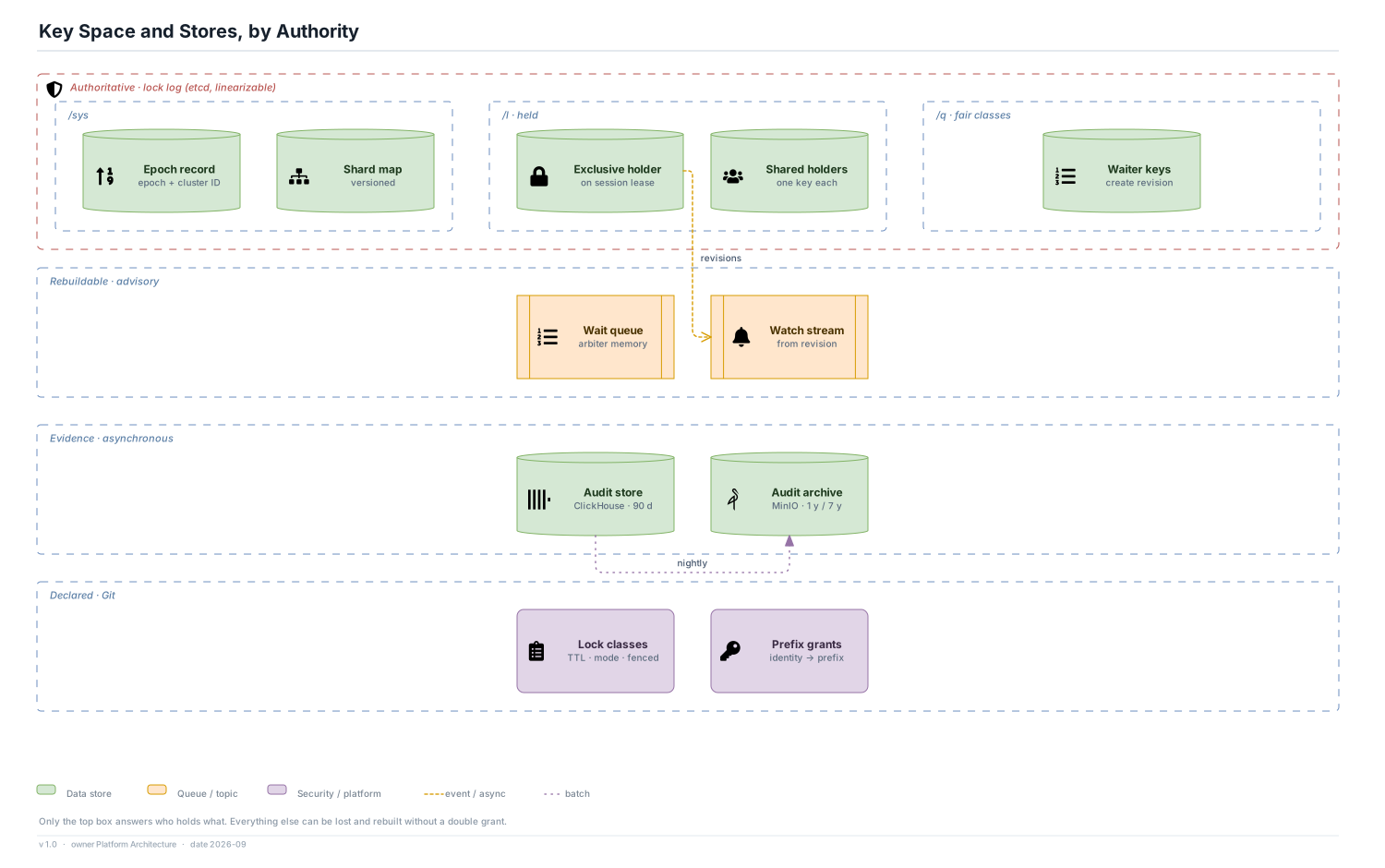
- The etcd key space is split into /sys for the epoch record and shard map, /l for held locks and /q for waiter keys on fair classes. RBAC is by prefix: the tailer reads everything and writes nothing.
- An exclusive holder is one key attached to the session's etcd lease. When the lease goes, the key goes in the same committed revocation, so a crashed holder cannot leave a key behind.
- Shared holders are one key each under the lock's prefix. An exclusive grant compares the whole range empty in the same transaction, so no shared holder can slip in between.
What can be lost without harm
- The arbiter's wait queue: waiters retry and order is re-established. Declared best-effort.
- The watch stream: a waiter polls. A missed event delays a grant and cannot produce one.
- The audit store: rebuilt from archive plus a tailer replay. Investigation degrades; safety does not.
Assumptions
- Live lock state stays under 2 GB. At 512 bytes a record, 250,000 held leases are about 128 MB, which leaves room for revision history between compactions.