Distributed Lock Service · View 20 of 26 · 6 · Operations
Decisions
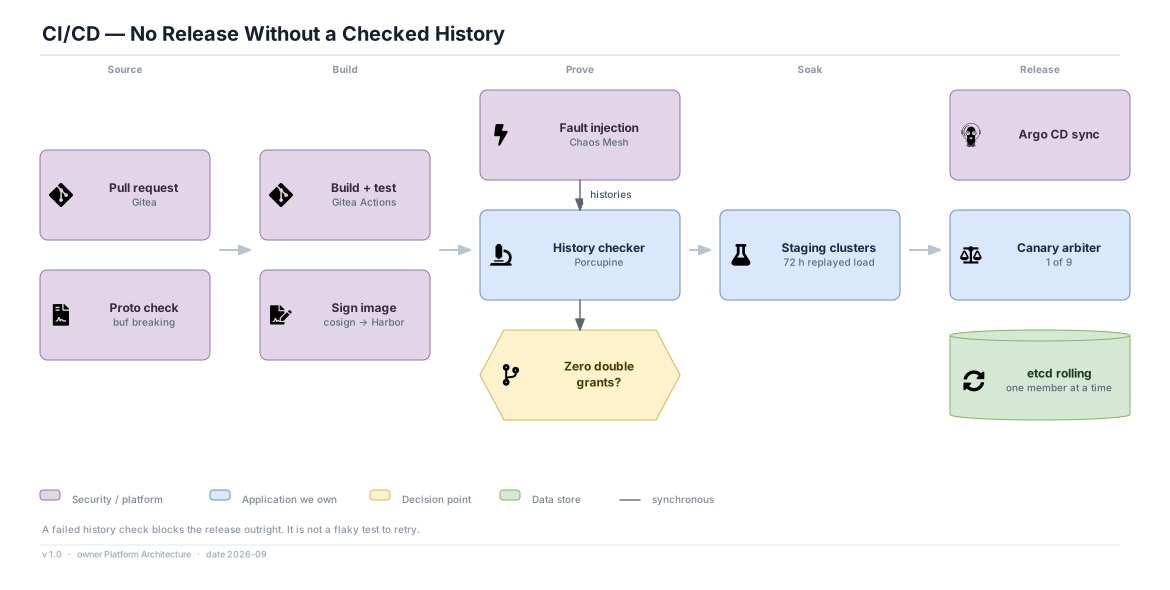
- The release gate runs the real arbiter and a real etcd cluster under Chaos Mesh: partitions, member kills, clock steps, disk latency and process pauses. Every client operation is recorded with its start and end time.
- Porcupine checks each recorded history against a sequential model of the lock. One history with two overlapping exclusive grants fails the pipeline, and the history is attached to the failure.
- The same suite runs on every etcd version bump. The upgrade of the store is treated as a change to the lock semantics, because it is.
Rollout
- Arbiter: one canary replica of nine for 24 hours, watched on grant latency and on any token regression detected by the reference resource.
- etcd: one member at a time, followers first, leader last with a forced transfer, and a full health check between members.
Supply chain
- Images are built in Gitea Actions, signed with cosign and pushed to Harbor. Admission control rejects unsigned images in the lock-system namespace.