Distributed Lock Service · View 05 of 26 · 2 · People and journeys
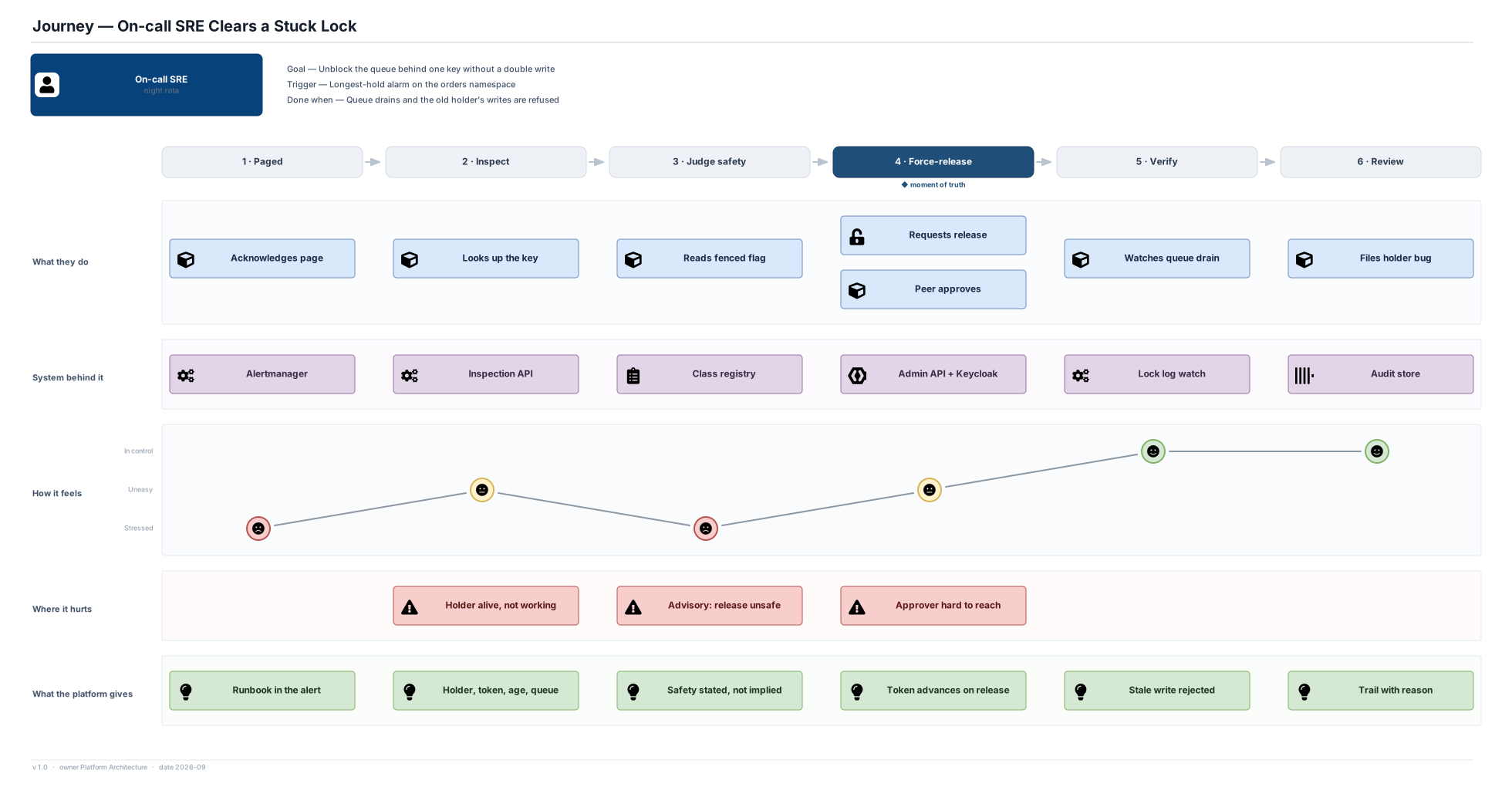
The trough, and the answer to it
- The worst moment is judging safety. A force-release on an advisory class can let two writers in, and a tired engineer under pressure will release anyway unless the tool says so plainly.
- The console shows the class's fenced flag before the second approval is requested and records it with the release. The operator is told the truth at the point of decision rather than in the post-incident review.
Decisions it forces
- The inspection API returns holder identity, session, grant revision, token, remaining TTL and queue depth for one key. The page links straight to it, pre-filled.
- Force-release is a committed deletion whose revision becomes the floor for the next token. It also revokes the holder's session if the operator chooses, so a leaking process's library fences on its next keepalive.
- The alert is the longest hold per namespace, not the error rate. A leaked lock produces no errors; it produces a queue.
Assumptions
- A second approver on the on-call rota is reachable within ten minutes. Where that fails, the escalation is a named incident commander, never a single-person override.