Distributed Lock Service · View 23 of 26 · 6 · Operations
Decisions
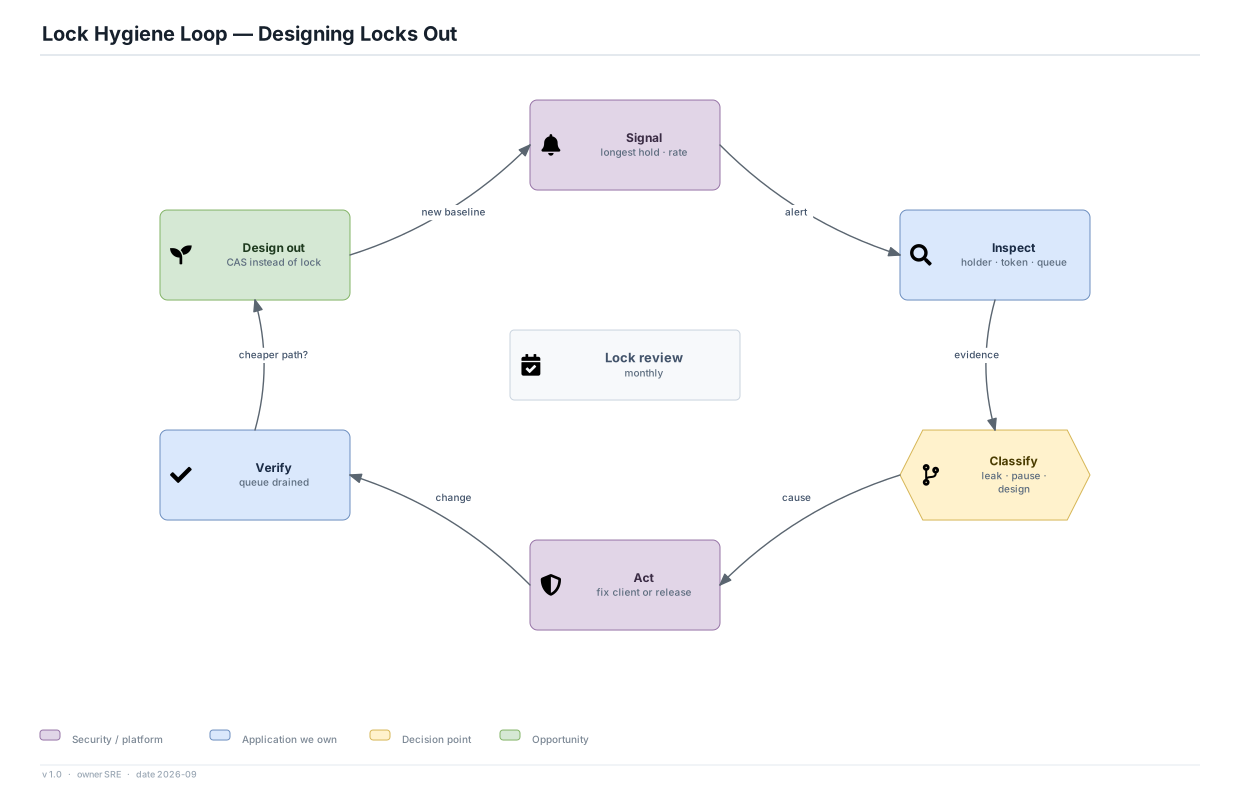
- Each namespace owner receives a monthly report: acquisitions, contention ratio, hold-time distribution, expiry without release, renewal cost and the class list with fenced status.
- A class whose contention ratio stays near zero is flagged for removal. A lock nobody contends for is a consensus round trip bought for nothing.
- An acquisition rate that tracks the owning service's record-write rate is flagged as a lock per record. The fix is batching or a conditional write, and the platform says so rather than adding a shard.
Why it is a loop
- The platform's cheapest capacity is the locks it persuades teams to delete. Without the loop, every inefficiency becomes a scaling requirement for the platform team.
Assumptions
- Contention and cost figures are computed in ClickHouse from the audit trail. No additional instrumentation is needed on the grant path.