Distributed Lock Service  ·  View 03 of 26  ·  2 · People and journeys

Actors and Their Core Journeys

The people and workloads that depend on a grant, and what each of them is actually trying to get done.

Editable source SVG draw.io All views
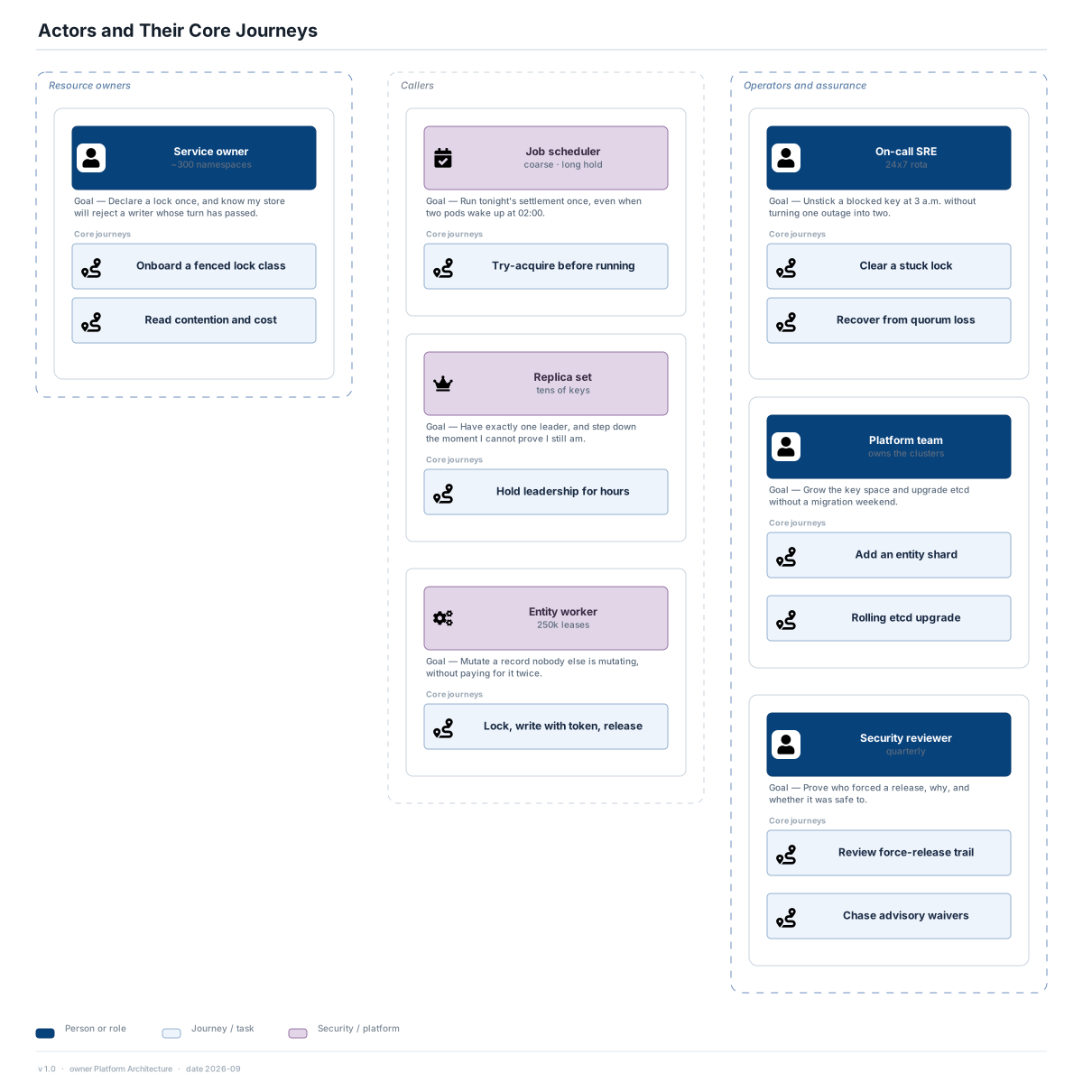
Resource owners Service owner ~300 namespaces Goal — Declare a lock once, and know my store will reject a writer whose turn has passed. Core journeys Onboard a fenced lock class Read contention and cost Callers Job scheduler coarse · long hold Goal — Run tonight's settlement once, even when two pods wake up at 02:00. Core journeys Try-acquire before running Replica set tens of keys Goal — Have exactly one leader, and step down the moment I cannot prove I still am. Core journeys Hold leadership for hours Entity worker 250k leases Goal — Mutate a record nobody else is mutating, without paying for it twice. Core journeys Lock, write with token, release Operators and assurance On-call SRE 24x7 rota Goal — Unstick a blocked key at 3 a.m. without turning one outage into two. Core journeys Clear a stuck lock Recover from quorum loss Platform team owns the clusters Goal — Grow the key space and upgrade etcd without a migration weekend. Core journeys Add an entity shard Rolling etcd upgrade Security reviewer quarterly Goal — Prove who forced a release, why, and whether it was safe to. Core journeys Review force-release trail Chase advisory waivers Actors and Their Core Journeys Person or role Journey / task Security / platform v 1.0 · owner Platform Architecture · date 2026-09

What this view settles

  • The primary customer is the service owner, not the caller. Callers consume a protocol; the owner decides whether their resource is fenced, and that decision is the one that makes the service safe or not.
  • Replica sets and entity workers want the same primitive with opposite shapes: tens of keys held for hours against hundreds of thousands held for seconds. That tension is resolved structurally on view 09.
  • The on-call SRE is an actor with a journey of their own. A lock service that cannot be inspected and safely unstuck at 3 a.m. gets bypassed by the second incident.

Assumptions

  • Security reviews force-release records quarterly and the advisory-lock register at the same cadence.
  • Service owners are engineers who can change their store's write path. Where they cannot, the advisory waiver on view 04 applies.

Deliberately absent

  • End customers of the guarded services. They never see a lock, only its absence when a duplicate posting happens.