Distributed Lock Service · View 19 of 26 · 6 · Operations
Decisions
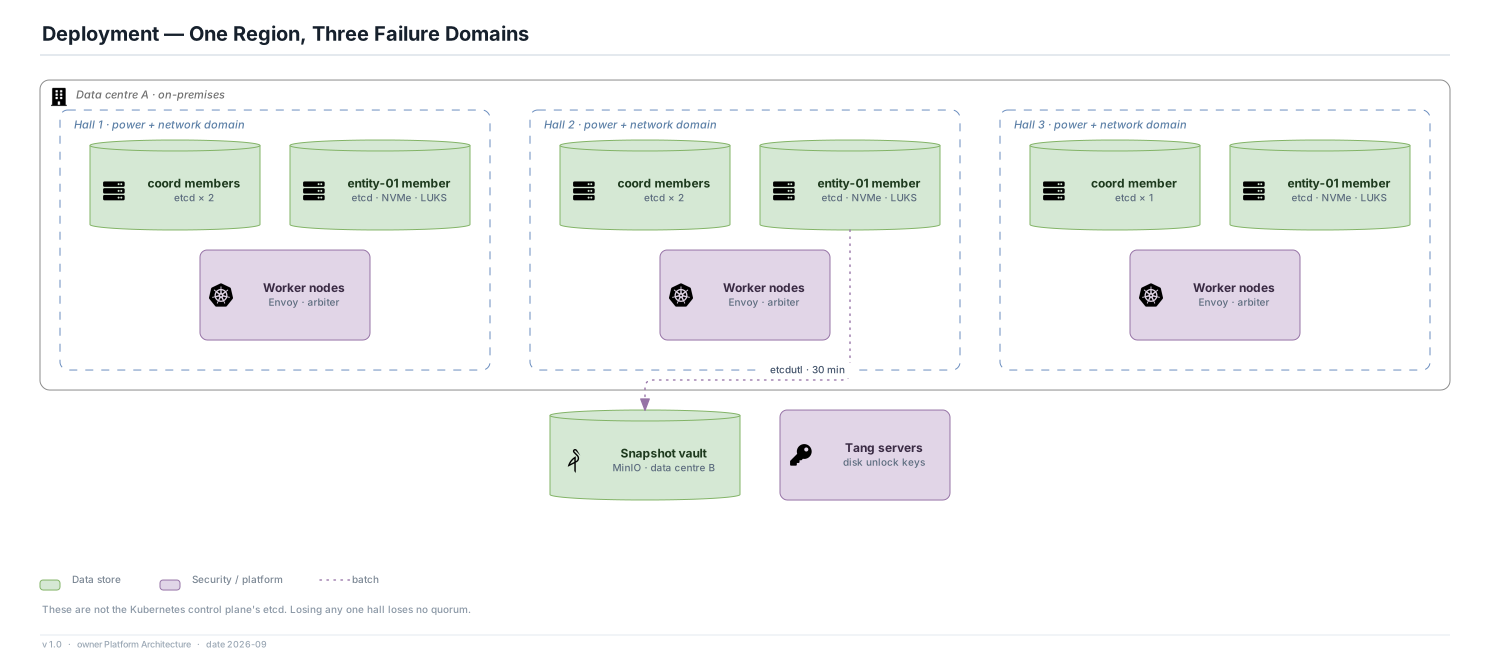
- Three halls, each its own power and top-of-rack domain. The entity cluster puts one member in each; the coord cluster splits 2, 2, 1. Losing any one hall leaves both with a majority.
- etcd disks are LUKS-encrypted and unlock automatically through Clevis against Tang servers on a separate network. A stolen disk is unreadable; a rebooted node needs no human with a passphrase.
- Snapshots are taken every 30 minutes and shipped to MinIO in a second data centre. They exist for the loss of a majority, not for routine recovery, which Raft already handles.
Assumptions
- Inter-hall round trip under 1 ms. If the halls are really separate buildings with 3 to 5 ms between them, the latency budget on view 14 still holds, but it should be measured, not assumed.
- Kubernetes 1.30 or later on the operator's own distribution. The design uses nothing beyond StatefulSets, taints, local persistent volumes and CRDs.
Risks
- Shared hall infrastructure nobody has mapped, such as one core switch pair serving all three. Failure-domain claims are verified with a hall-down game day before go-live.