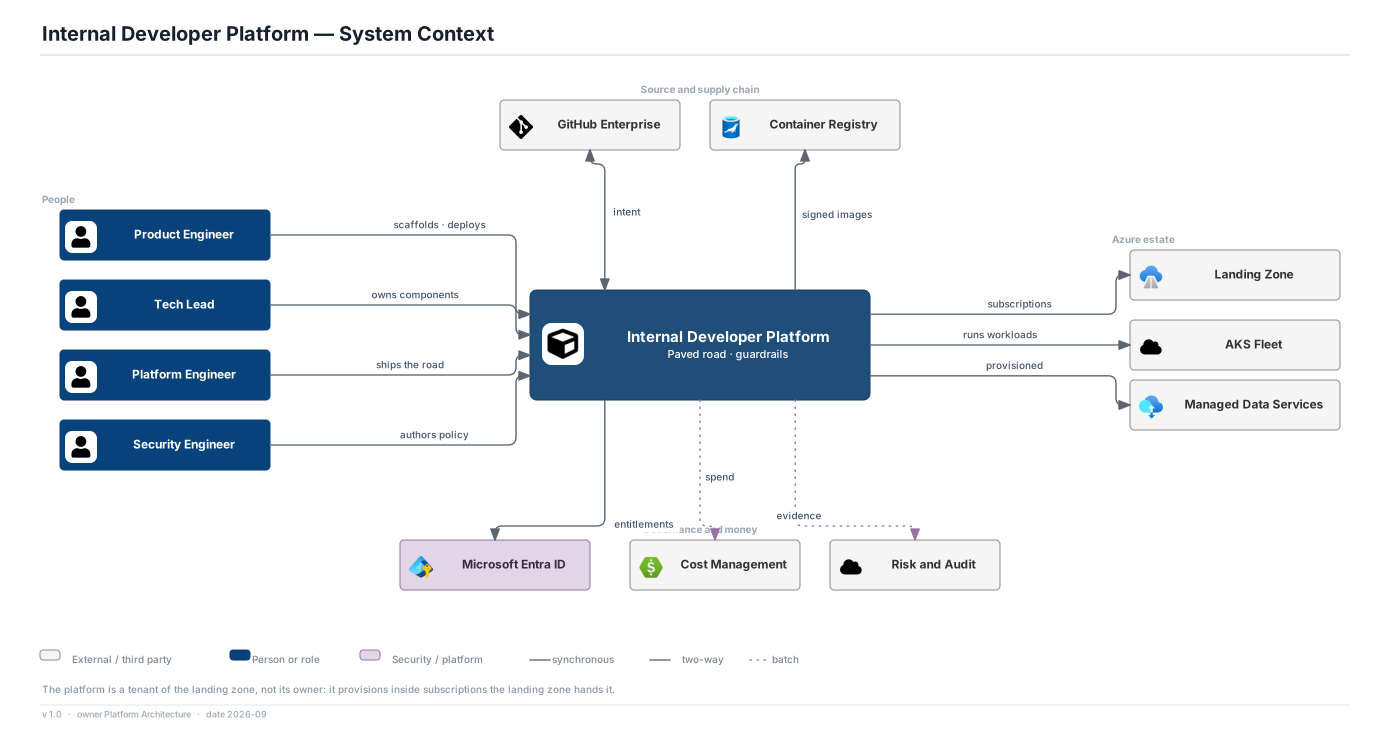
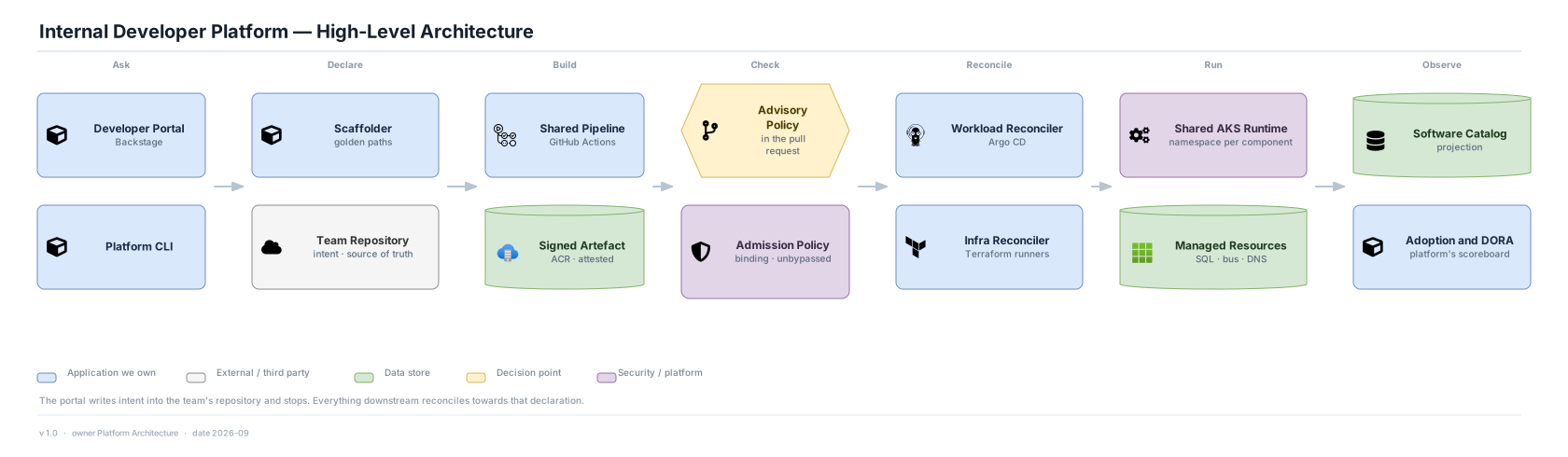
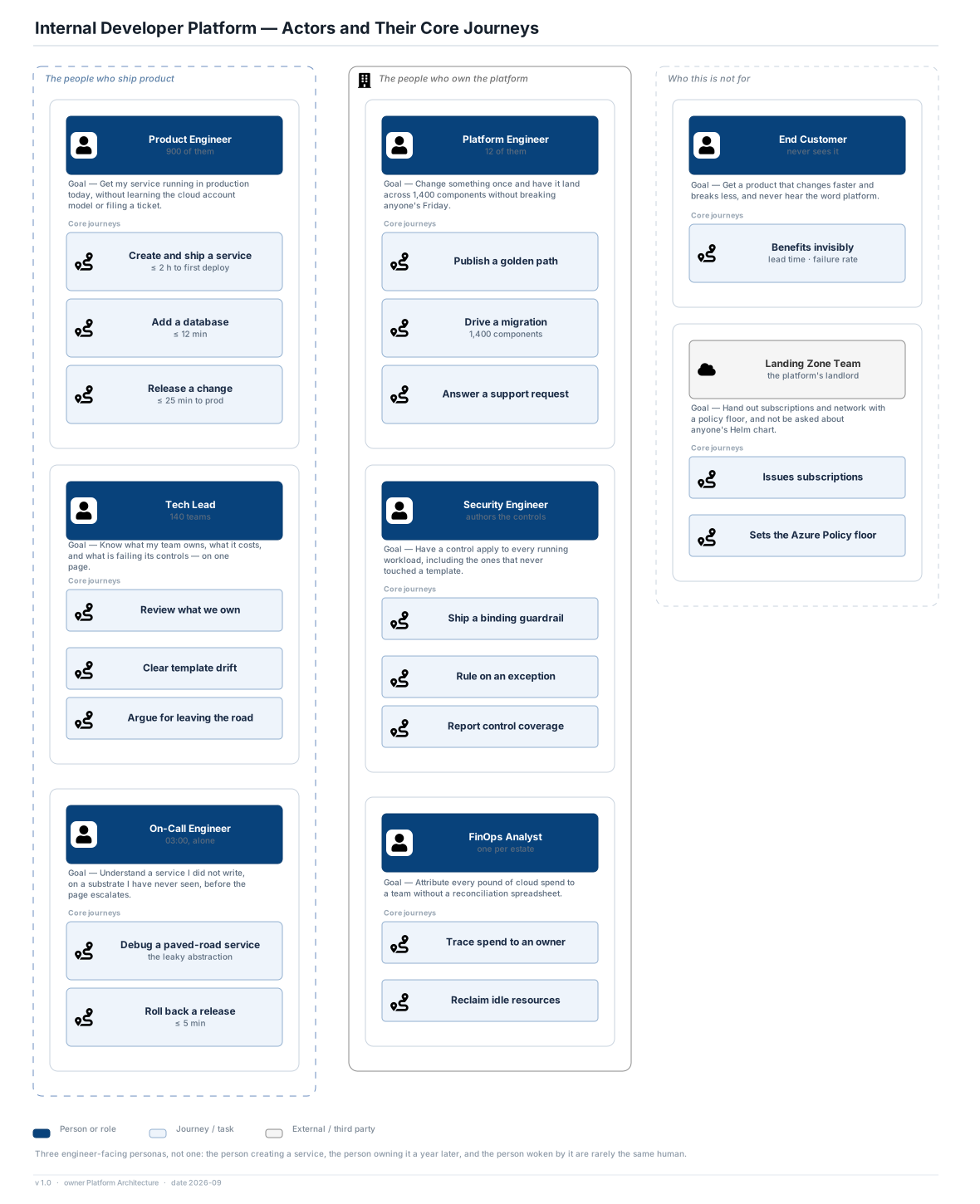
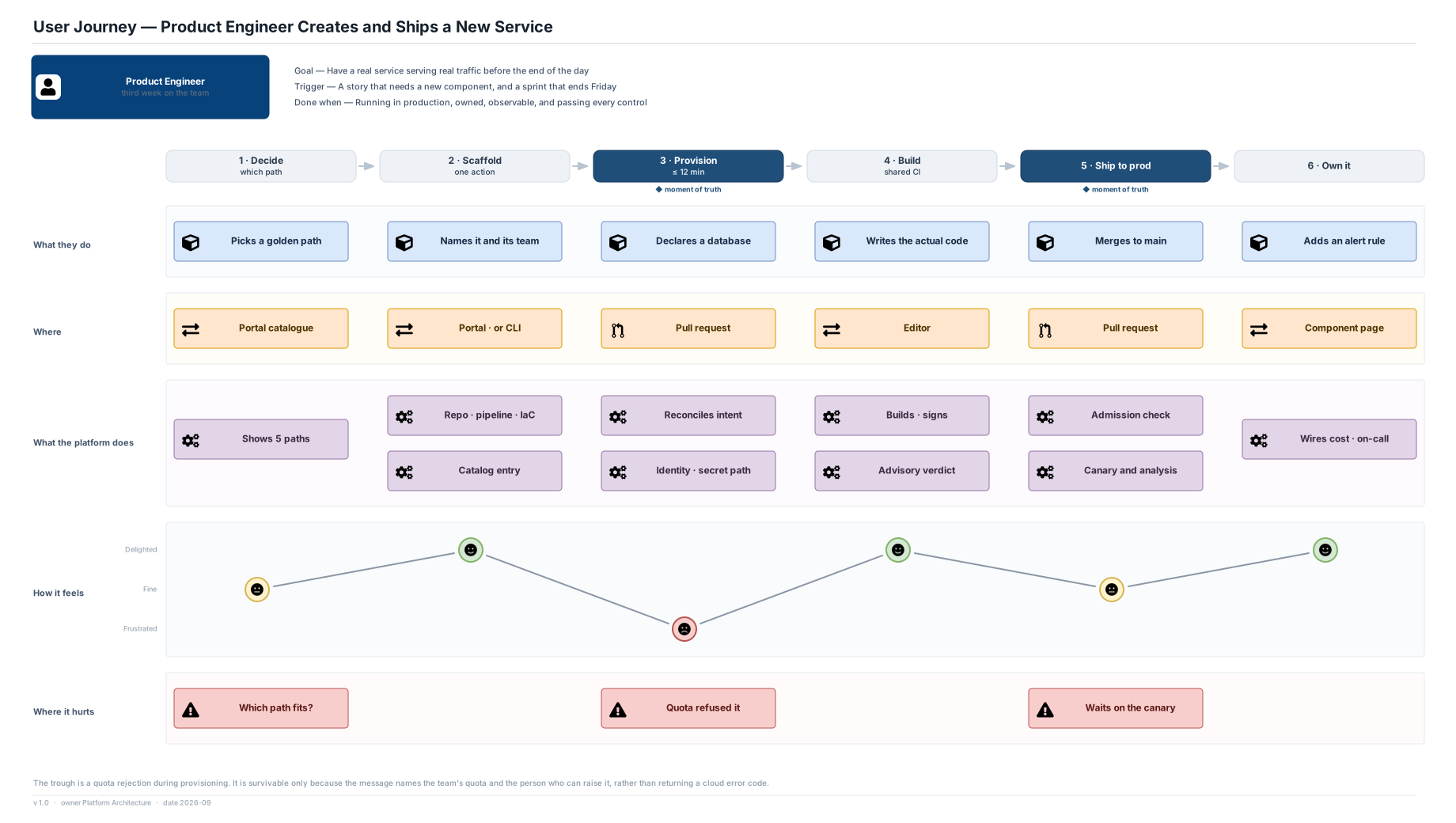
Internal Developer Platform · Solution Architecture v1.0 · Microsoft Azure · Platform Architecture · 2026-09 · 21 views · 16 architecture decision records
The argument these decisions serve is summarised in the Architecture One-Pager.
Sixteen decisions make up this architecture. Everything else across the twenty-one views is convention, sizing or consequence. Each record states the forcing question, the context that makes it hard, what was decided, how it is realised on Azure, the options weighed, what the choice buys and costs, the conditions that would flip it, why it should still be right in ten years, and the lesson that transfers beyond this platform.
Status of this document. This is a design, not a report on a running system. The rates, latencies, volumes, retentions and targets are the requirement's stated assumptions for a mid-size engineering organisation — 900 engineers, 140 teams, 1,400 components, 5,200 deploys a week, a platform team of twelve — invented to be defensible and arguable rather than absent. They are to be replaced by measured telemetry before build, and four in particular are the first numbers real data should overturn: the 19-working-day baseline the whole business case rests on, the 16% fork ratio that predicts migration cost, the ≥ 70% adoption target at month 12, and the assumption that twelve platform engineers can serve nine hundred.
How to read a record
- Question: The forcing question: why a decision was needed at all.
- Context: The requirement, the scale and the constraint that make it hard.
- Decision: What this architecture does, stated so it can be checked.
- How it is realised on Google Cloud: The concrete mechanism: which service or package, configured how, in which project.
- Options weighed: Chosen, rejected, deferred, or right elsewhere, with the reason for each.
- Consequences: What the choice buys and what it costs, both kept visible.
- Choose differently when: The conditions that would flip the decision for your system.
- Why it holds up over time: What keeps the decision right as scale, staff and technology change.
- Lesson: The principle that transfers beyond this platform.
Decision map
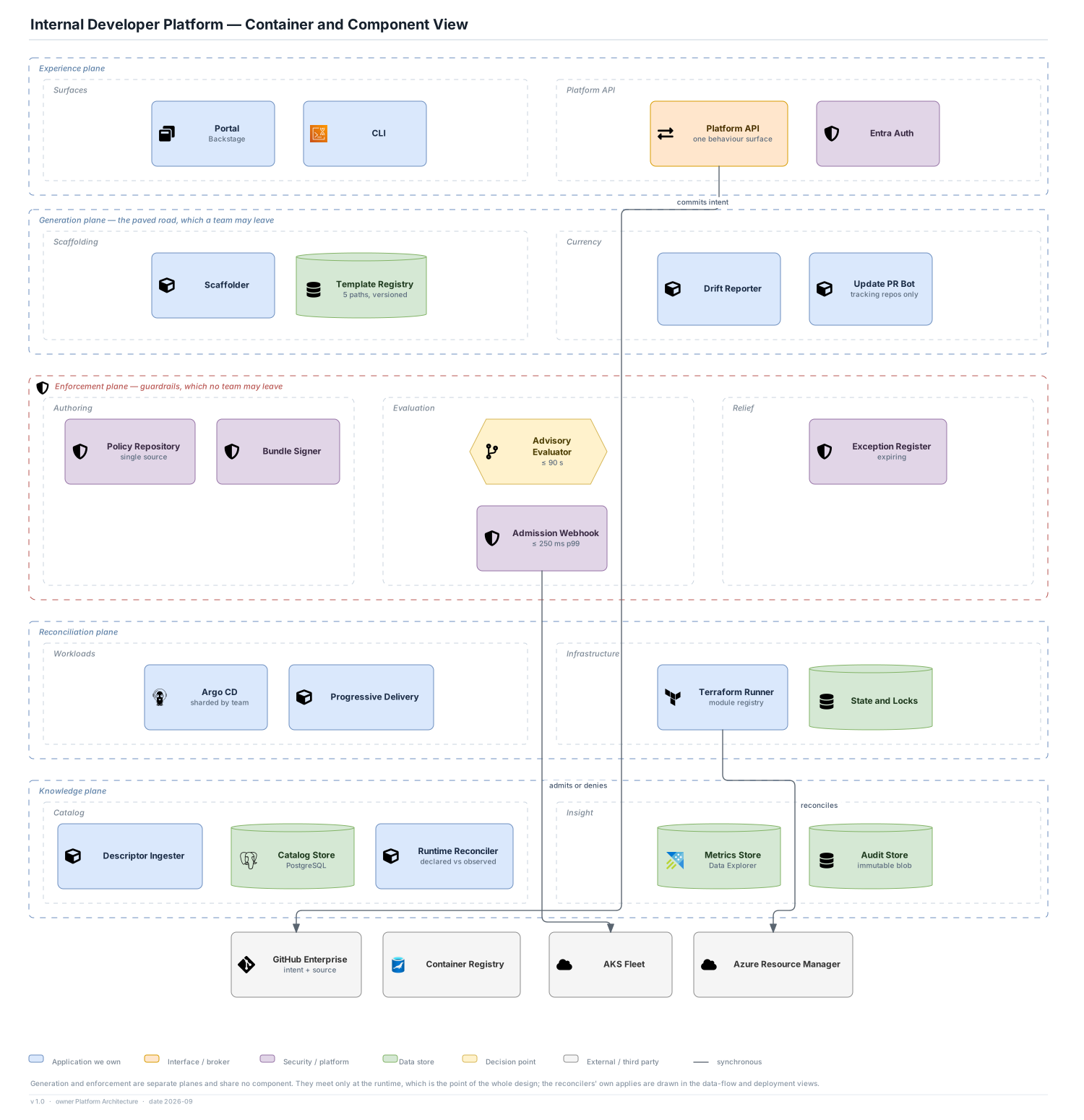
The two planes: Why generation and enforcement are separate machinery, and where each one binds.
- ADR-05 · Guardrails are enforced at the runtime, never inside the templates that generate components
- ADR-06 · One policy source, two evaluation points; fail closed on new admissions and open on running workloads
Intent and reconciliation: Where truth about what should exist lives, and how the world is moved towards it.
- ADR-01 · Intent lives in the team's repository; the portal writes it and owns nothing
- ADR-02 · Provision by reconciling declared intent, not by calling the cloud from the portal
- ADR-04 · Quota, budget and data classification are checked at admission, and a rejection is written for the requester
Knowledge and attribution: What the platform knows about the estate, and how every running thing keeps an owner.
- ADR-09 · The catalog is a projection, reconciled against the runtime in both directions
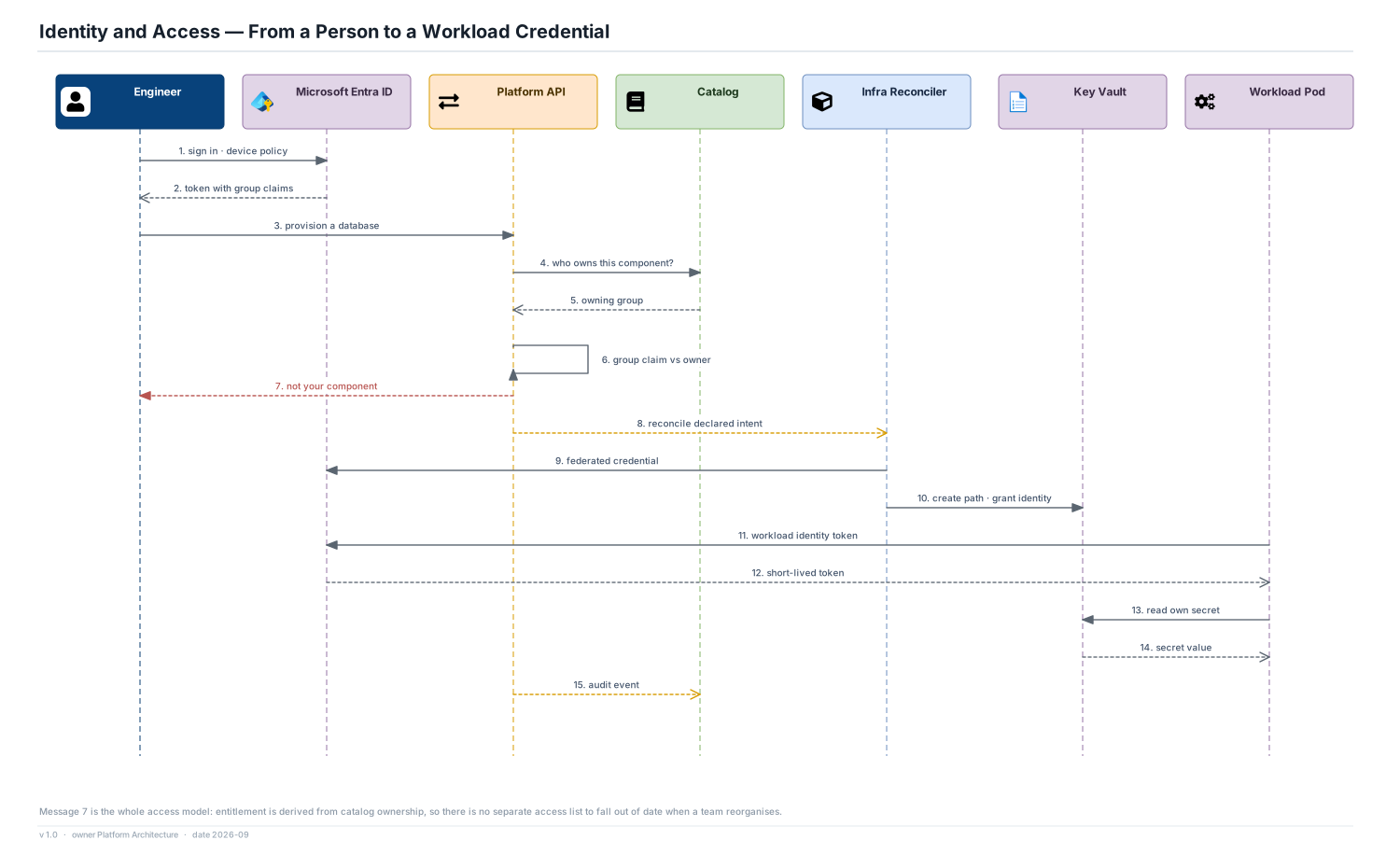
- ADR-10 · Ownership resolves to a live identity group, and entitlement derives from it
- ADR-11 · Owner, cost centre, tier and classification are applied at creation as enforced properties
- ADR-16 · Storage is classified by what a loss would cost, and only one band carries RPO 0
Identity, secrets and the control plane: Who may do what, and the fact that the platform is the most privileged thing in the estate.
- ADR-08 · Exceptions are named, approved by someone else, expiring and published
- ADR-15 · Workload identity everywhere, and the control plane is held to the controls it enforces
The runtime and the fleet: The tenancy boundary, and recovery that does not depend on the machinery that broke.
- ADR-13 · Rollback does not depend on the pipeline that produced the deploy
- ADR-14 · Namespace per component in shared clusters, with staged fleet upgrades and a canary component per path
Platform as a product: The decisions that only make sense if teams are allowed to say no.
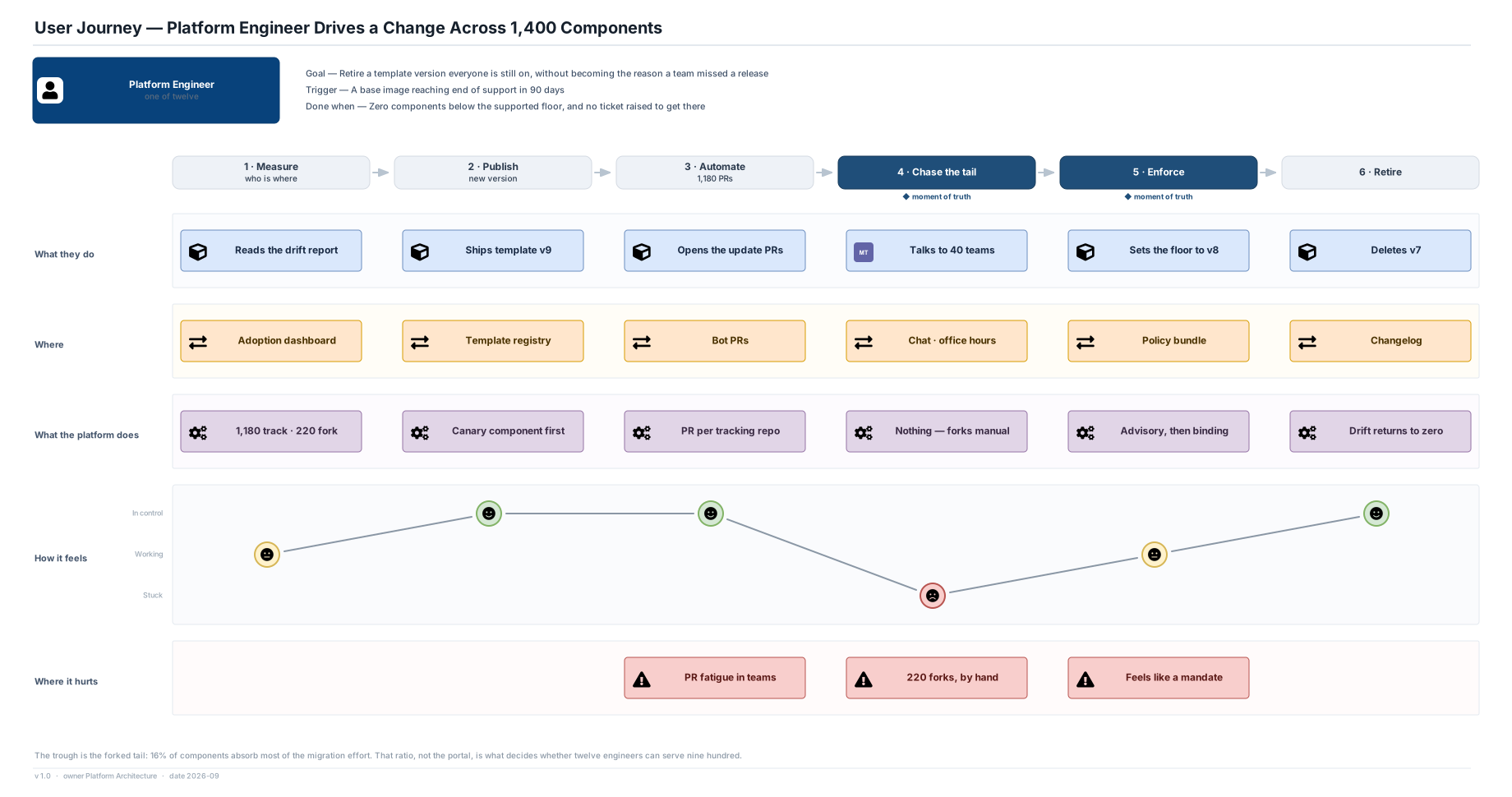
- ADR-03 · Components track their golden-path template by default, and forking is a recorded, supported choice
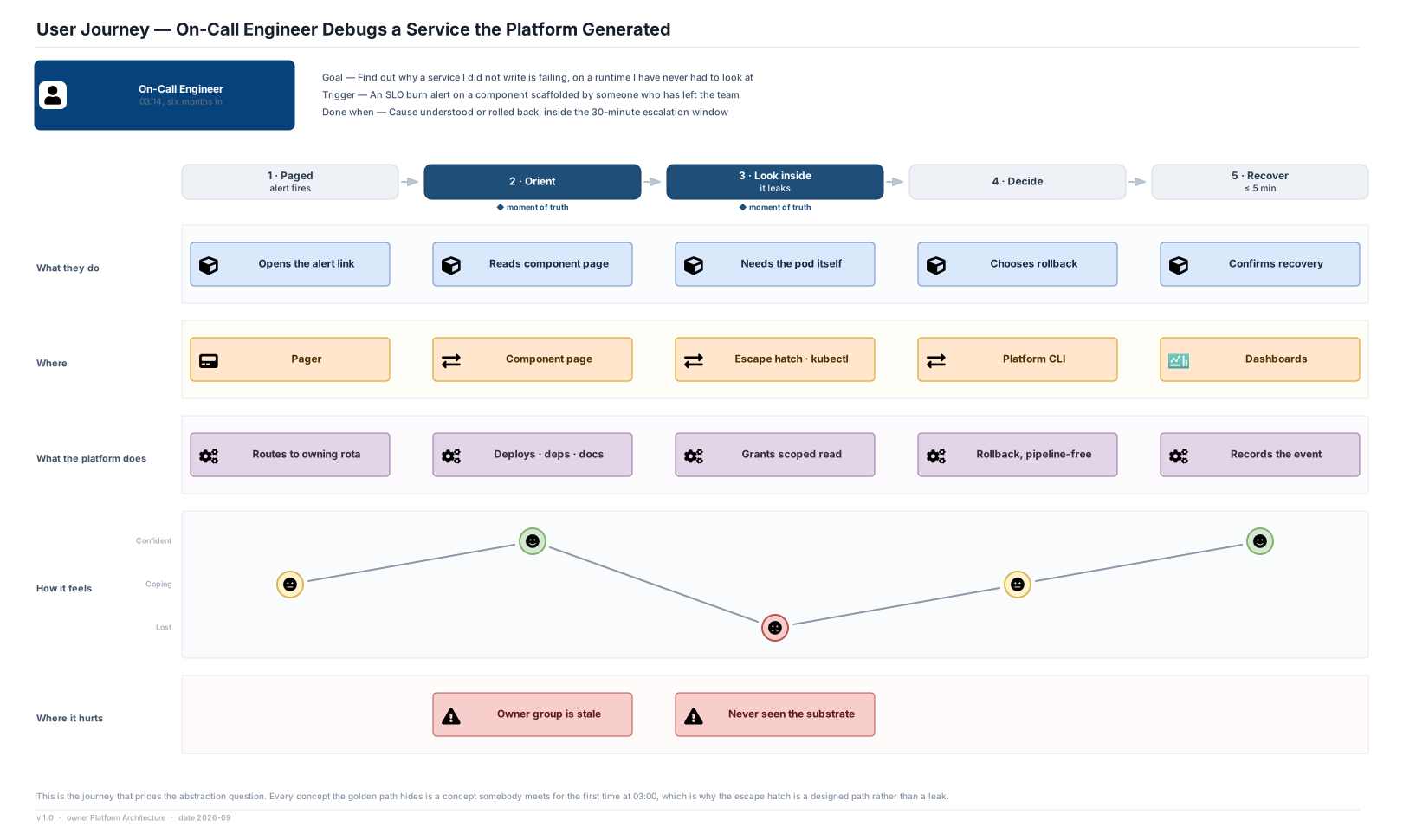
- ADR-07 · A thin abstraction with strong defaults, and an escape hatch that is a designed path
- ADR-12 · The API is primary, and no platform component sits in the critical path of running production
Technology by capability
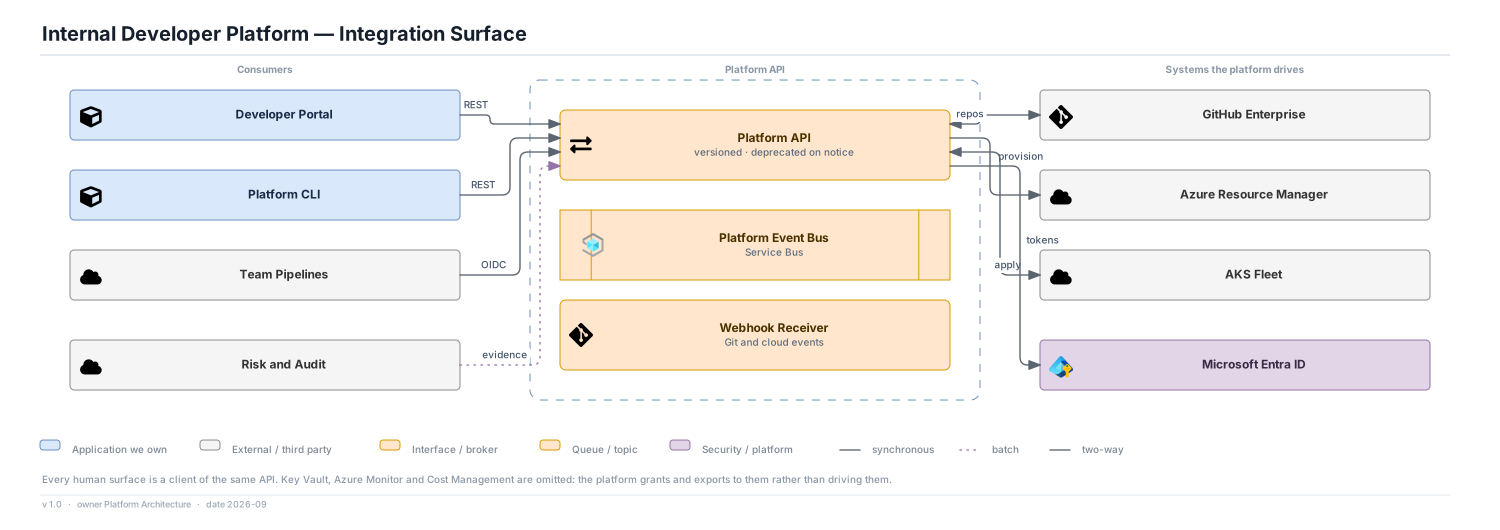
The platform is built on Microsoft Azure with open-source platform components running on it. Azure was chosen for rotation — the four use cases before this one ran on Google Cloud and AWS — and because an internal developer platform's two hardest questions, who is entitled to provision what and where the isolation boundary sits, map onto Entra entitlements and the management-group hierarchy rather than having to be invented on top of a flat account model. Everything in the requirement document outside its first section is vendor-neutral, and the table below is where the cloud is actually chosen.
| Capability |
Choice |
Origin |
Credible alternative |
Why this one |
Record |
| Developer portal |
Backstage, self-hosted on the control-plane AKS cluster |
Open source |
A bespoke portal, or a commercial IDP product |
The portal is a client of the platform API (ADR-12), so its replaceability matters more than its features. Backstage supplies the catalog model and plugin surface without owning any truth. |
ADR-12 |
| Intent and source of truth |
GitHub Enterprise repositories owned by product teams |
Existing |
A platform-owned configuration database |
Review, history, blame and revert for infrastructure then use the tooling every engineer already has, and the platform's own stores become rebuildable projections. |
ADR-01 |
| Infrastructure reconciliation |
Terraform modules from an internal registry, run by a pool on AKS with workload identity, state in Azure Storage with locking |
Open source on Azure |
Crossplane compositions reconciled in-cluster; Bicep with deployment stacks |
A mature module ecosystem and an explicit plan step the platform can gate on, against a state object that can be backed up and locked. Crossplane remains the natural successor if resource kinds become more platform-specific than cloud-specific. |
ADR-02 |
| Workload reconciliation |
Argo CD, sharded by team, one instance per cluster |
Open source |
Flux; a push-based deploy step in the pipeline |
Pull-based reconciliation keeps the deploy path alive when the pipeline is not, and makes drift in the cluster a detected event rather than an assumption. |
ADR-13 |
| Policy authoring and evaluation |
Policy-as-code compiled to a signed OCI bundle in ACR, evaluated by admitting webhooks in every cluster and by the pipeline evaluator |
Open source on Azure |
Azure Policy for Kubernetes alone; a hosted policy service called at admission |
One artefact drives both evaluation points, and a locally cached bundle removes a central service from the critical path of every admission. Azure Policy remains the landing zone's floor beneath it. |
ADR-06 |
| Build plane |
GitHub Actions with ephemeral self-hosted runners on AKS, reusable workflows consumed by reference |
Existing + Azure |
Azure Pipelines; per-team runners |
Keeping the pipeline a referenced artefact rather than a copied file is what makes a fix shippable once; ephemeral runners keep build identity scoped to one component. |
ADR-03 |
| Artefact registry and supply chain |
Azure Container Registry, geo-replicated, with signing and provenance attestations |
Azure |
A self-hosted registry; a third-party artefact platform |
The registry is also where the policy bundle lives, so one trust story and one replication story cover both the images and the controls that judge them. |
ADR-16 |
| Runtime |
Shared AKS clusters, namespace per component, split by environment and subscription |
Azure |
Cluster per team; Azure Container Apps for the stateless golden path |
A twelve-person platform team cannot operate 140 clusters. The namespace boundary is cheap and the cluster upgrade is not, which is the trade stated openly in ADR-14. |
ADR-14 |
| Identity and entitlement |
Microsoft Entra ID groups, Conditional Access, and workload identity federation |
Azure |
A platform-local role model synchronised from the directory |
Entitlement is derived from catalog ownership resolved against live groups, so there is no second access list to fall out of date when a team reorganises. |
ADR-10 |
| Secrets |
Azure Key Vault, paths created by the platform and bound to workload identities |
Azure |
A self-hosted secret manager; sealed secrets in the repository |
The platform grants access to a path and never reads or holds secret material, which keeps plaintext out of the catalog, the portal and every pipeline log. |
ADR-15 |
| Catalog store |
Azure Database for PostgreSQL Flexible Server, zone redundant |
Azure |
A graph database; the portal's own storage |
The catalog is a projection with a four-hour RTO (ADR-09); a well-understood relational store with recursive queries covers 9,000 relations without adding an engine to operate. |
ADR-09 |
| Metrics and insight |
Azure Data Explorer for DORA, adoption, drift and cost facts |
Azure |
Log Analytics alone; a warehouse |
The questions are time-series and high-cardinality — per team, per path, per component, over three years — and they are asked interactively in reviews. |
ADR-12 |
| Telemetry |
OpenTelemetry collectors into Azure Monitor, Managed Prometheus and Managed Grafana |
Azure + open source |
A self-hosted observability stack |
The golden path wires a component's observability at scaffold time; the value is in the wiring being automatic, not in owning the backend. |
ADR-11 |
| Audit evidence |
Append-only blob storage with immutability policy and legal hold, separate from operational stores |
Azure |
Audit rows in the catalog database |
The platform's own operators are in scope as a threat; the audit store is the one place they cannot write, which is only true if it is not a table they administer. |
ADR-16 |
| Cost attribution |
Azure Cost Management daily exports, joined to catalog ownership |
Azure |
A third-party FinOps platform |
Attribution is applied at creation as tags (ADR-11), so the export needs no reconciliation step — the join is already correct when the data arrives. |
ADR-11 |
The decisions, and the alternatives that lost
The two planes
Why generation and enforcement are separate machinery, and where each one binds.
ADR-05 · Guardrails are enforced at the runtime, never inside the templates that generate components
Status: Accepted · Shown on views: 07, 08, 15, 18
Is a control something a golden path produces, or something the runtime insists on?
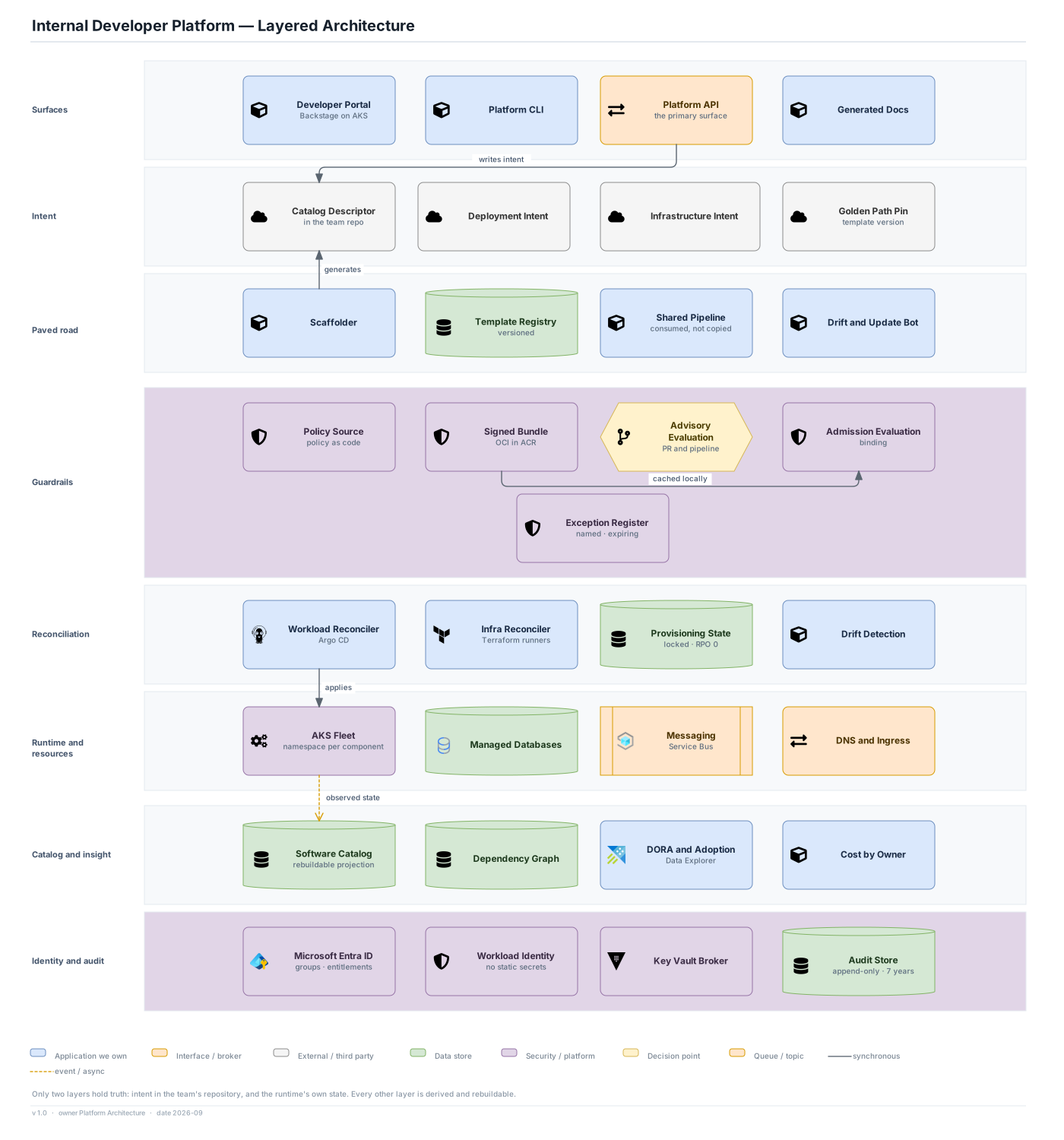
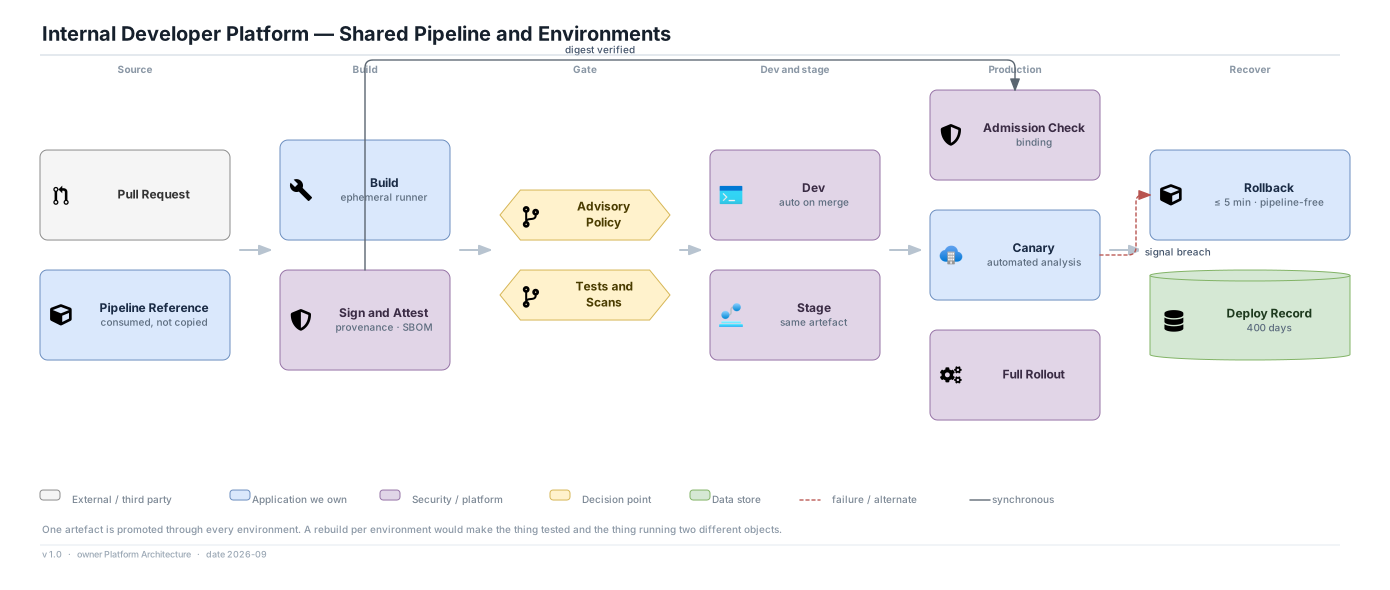
Context. The natural build puts the controls in the template: the pipeline that scans the image, the manifest with the right security context, the module with the right network rules. One artefact, one review, one place to change things — and on day one every component is generated from it and every component is compliant. The failure arrives about nine months later. A team forks the template to do something reasonable it does not support. Another deploys a vendor Helm chart that was never scaffolded. A third pins an old version because the new one broke their build. None of these is misbehaviour; each is the normal cost of a platform real teams use. But each silently removes the controls along with the template, and the platform cannot know, because the only evidence a control was ever in force was that a template produced it. The estate's compliance figure is now a statement about how components were created, not how they are running.
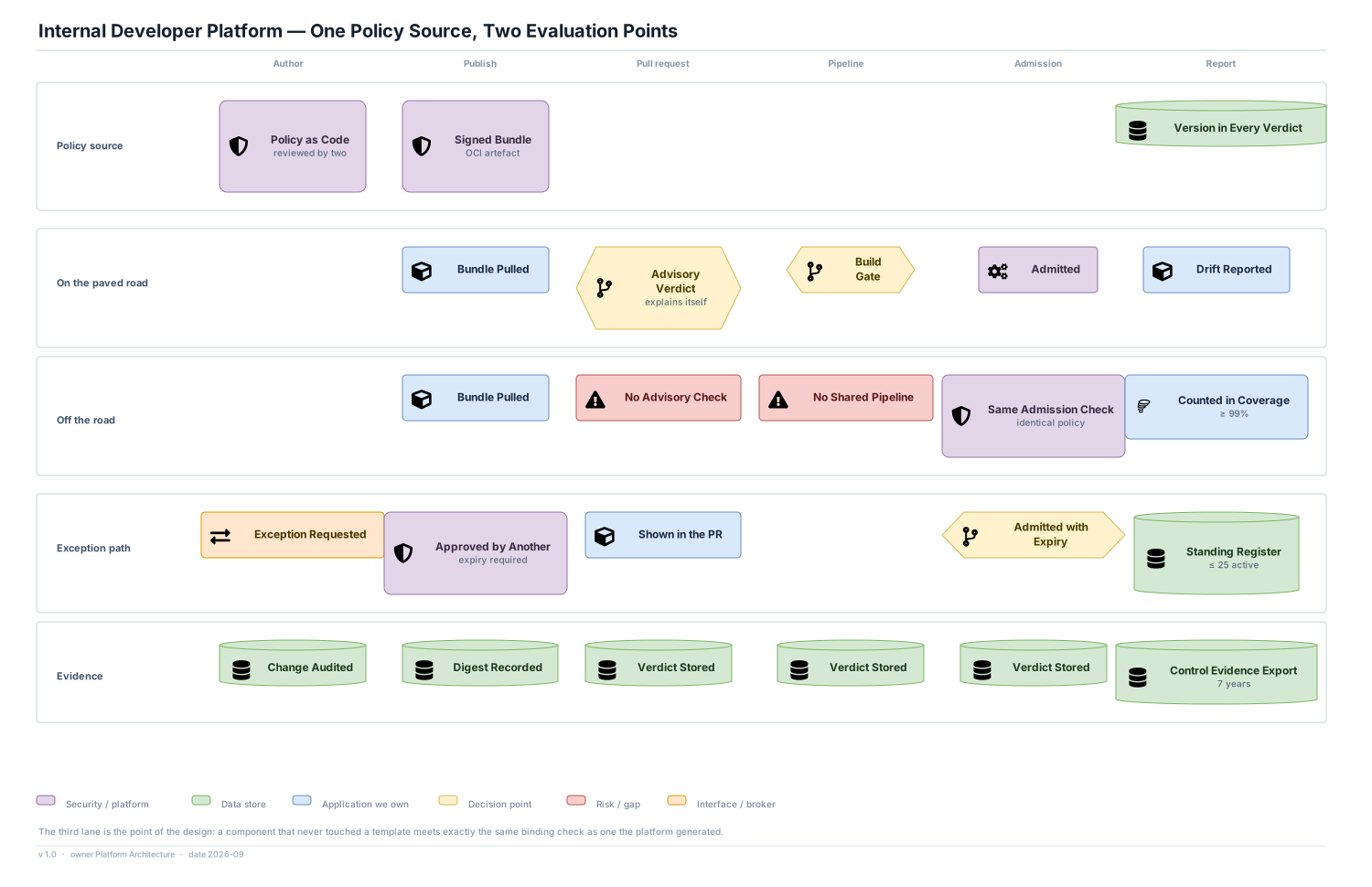
Decision. Enforcement is a property of the runtime. Guardrails are authored as policy-as-code, versioned and signed independently of templates, and evaluated at admission into the cluster. They apply identically to a component the platform scaffolded and to one that never touched a golden path. No template, fork, portal action or pipeline change can remove a binding control.
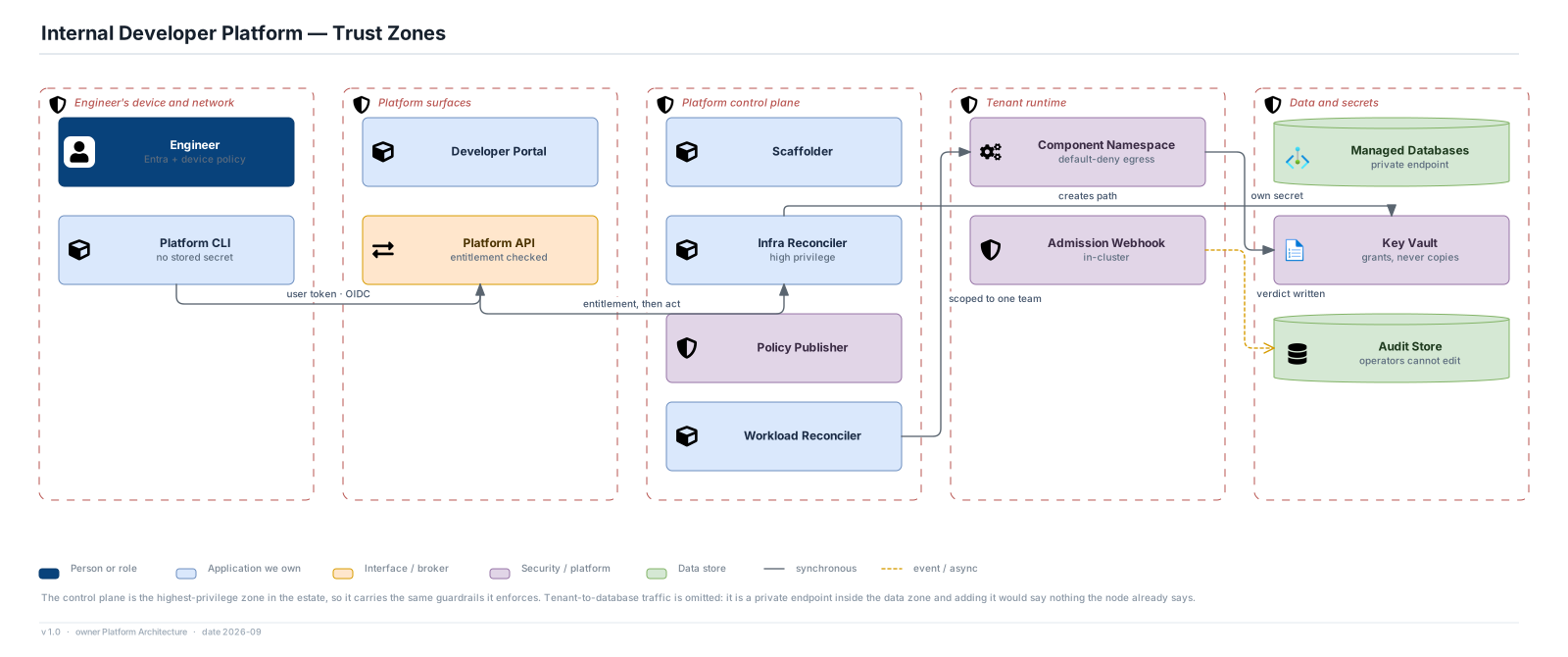
How it is realised on Google Cloud. Policy in its own reviewed repository, built into a signed OCI bundle in ACR, pulled and cached by admission webhooks running in every cluster. The minimum binding set: workload identity present and no static cloud credentials; image from a trusted registry with a valid attestation and no unmitigated critical vulnerability; resource requests and limits declared; owner and cost tags present; no unauthenticated ingress for an internal component; storage region appropriate to the declared data class.
| Option |
Verdict |
Reasoning |
| Enforce at the runtime, independently of generation |
Chosen |
Two artefacts to maintain instead of one, and a compliance figure that describes reality rather than provenance. |
| Enforce through templates |
Rejected |
Simplest on day one and silently wrong by month nine. A fork deletes the control and nothing reports it. |
| Enforce in the shared pipeline only |
Rejected |
Better, and bypassed by any deploy path that does not use the pipeline — which is exactly the population that needs the control. |
What it buys
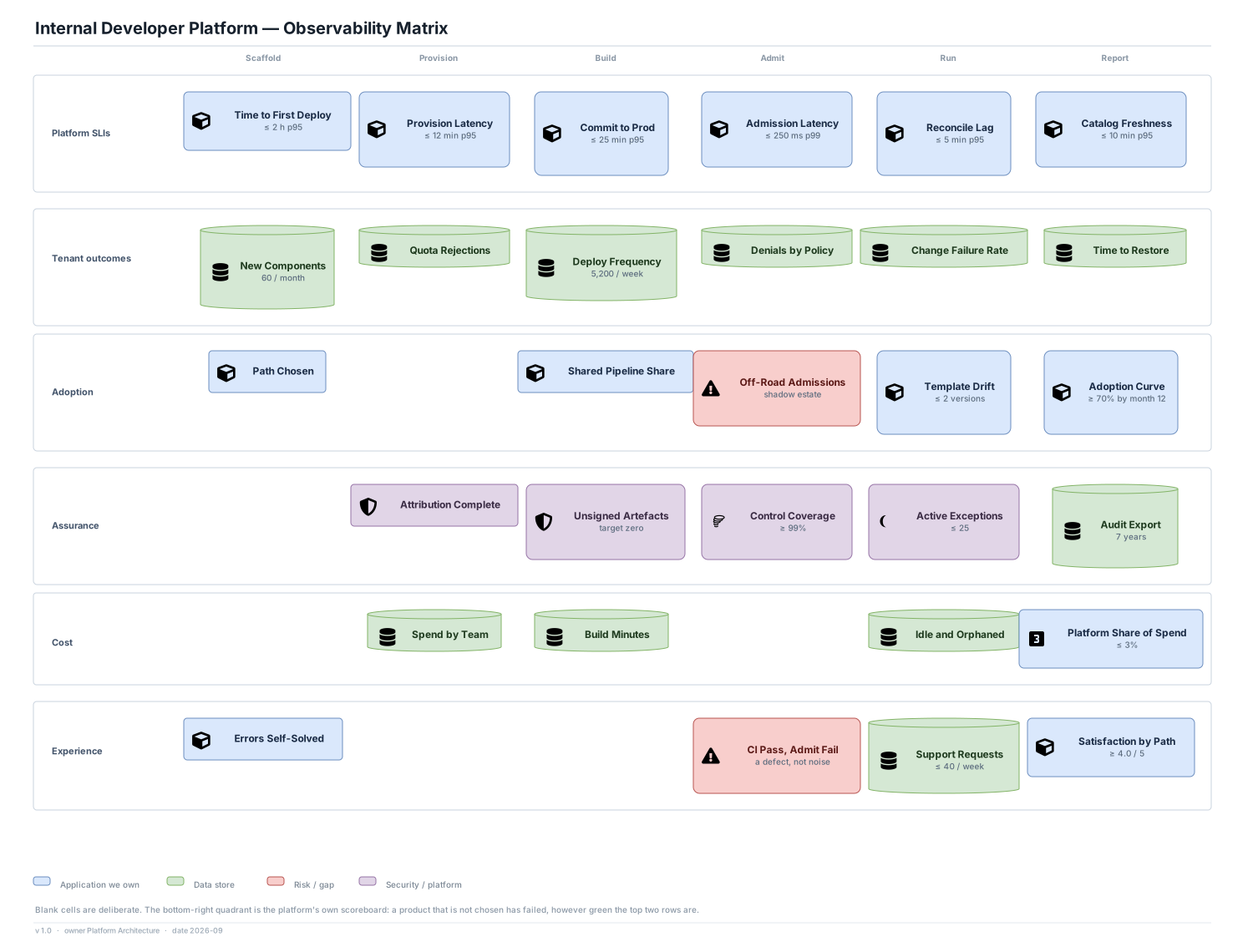
- Coverage is measurable against the running estate: ≥ 99% of production workloads, off-road ones included.
- The golden path is freed to be judged purely on whether it is good, which is what makes the adoption number meaningful (ADR-12).
- A control change ships without touching 1,400 repositories.
What it costs
- Policy and templates must be kept coherent by discipline rather than by being the same file.
- The runtime becomes a harder dependency: a broken policy bundle can stop every deploy in the fleet (ADR-06).
- Standing pressure to soften a policy for the loudest team, answered by the exception register rather than by a quiet edit (ADR-08).
Choose differently when. In an organisation where every deploy provably passes one pipeline and no other path exists, pipeline enforcement is equivalent and cheaper. If a future runtime offered no admission interception point at all, enforcement would have to move to the provisioning boundary — and the platform would have to say honestly that it no longer covers what it used to.
Why it holds up over time. This is a statement about where evidence of a control comes from, not about Kubernetes. Any substrate with an admission decision can carry it; any substrate without one forces the question to be answered again, honestly.
Lesson. A control you can only demonstrate by pointing at how something was created is not a control. Enforce where the thing runs, because that is the only place that is still true a year later.
ADR-06 · One policy source, two evaluation points; fail closed on new admissions and open on running workloads
Status: Accepted · Shown on views: 02, 13, 15, 18
If the unbypassable check happens at admission, what is the point of checking in the pull request — and what happens when the evaluator is unavailable?
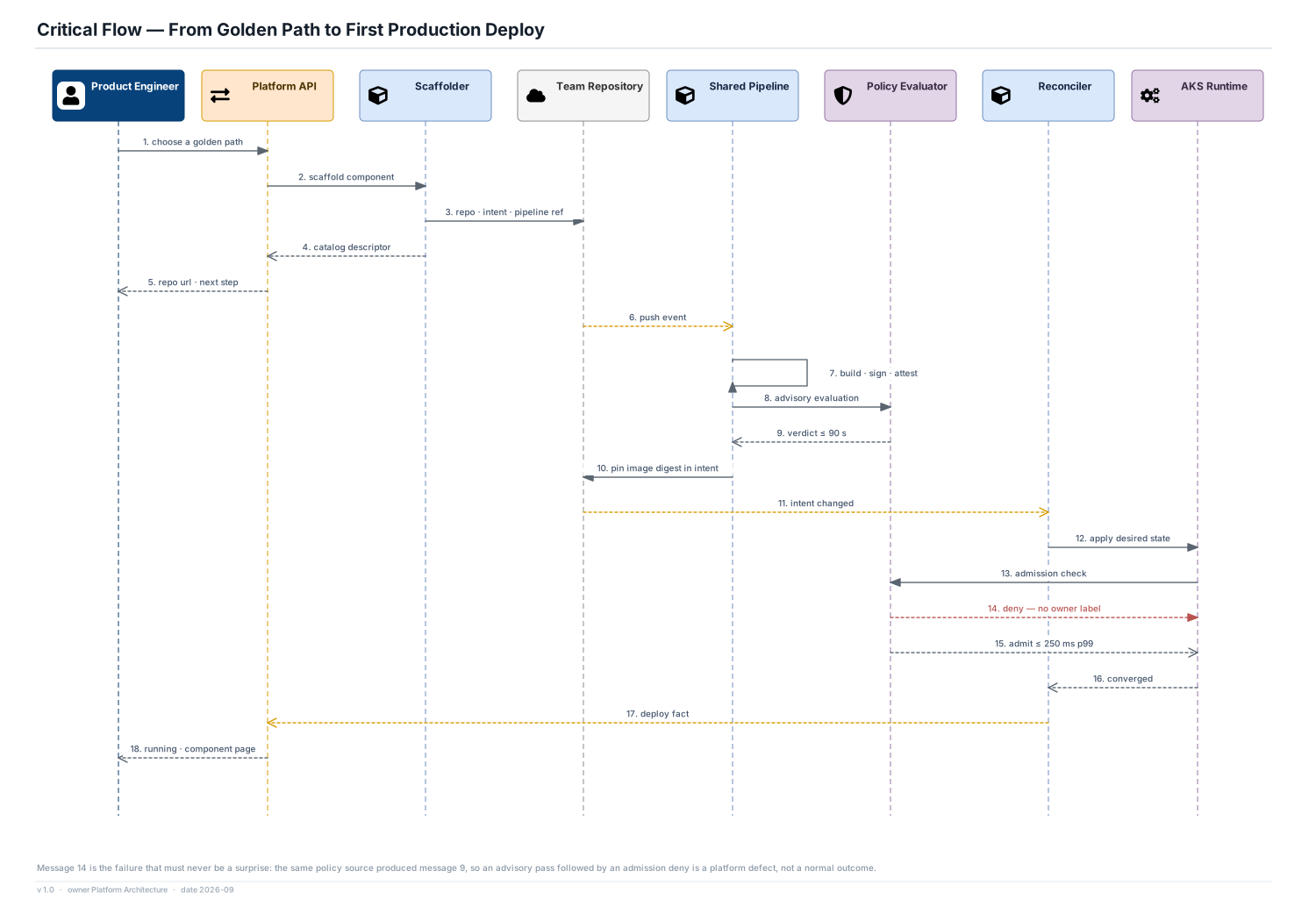
Context. Admission is the right place to be binding and the worst place to be informative: the verdict arrives on a Friday afternoon, after the build, in a message written for a platform engineer. Checking in the pull request is fast, teachable and trivially bypassed. Doing both is obviously right and introduces the failure that destroys trust faster than having no pull-request check at all — a control that passes CI and fails at admission. The availability question is the same decision viewed from the other side: a policy evaluator that fails closed on everything can evict a healthy production estate, and one that fails open admits unevaluated change.
Decision. Both evaluation points are driven from one signed policy bundle. Advisory evaluation in the pull request and pipeline exists to explain and to be useful; binding evaluation at admission exists to be unbypassable. A divergence between the two is defined as a platform defect and instrumented as such. When the evaluator cannot reach a current bundle it uses the last known good one; when it cannot evaluate at all it fails closed for new and changed admissions and open for already-running workloads.
How it is realised on Google Cloud. Signed bundle in ACR, pulled and cached locally by three webhook replicas per cluster and by the pipeline evaluator, so evaluation never requires a call to a central service on the deploy path. Admission budget ≤ 250 ms p99. The CI-pass-then-admission-fail rate is a first-class metric in view 18.
| Option |
Verdict |
Reasoning |
| One source, advisory plus binding, asymmetric failure mode |
Chosen |
Fast feedback and an unbypassable floor, at the price of a divergence class that must be watched rather than assumed away. |
| Binding only |
Rejected |
Unbypassable and hostile. Engineers meet every control for the first time at the worst moment, and route around the platform to avoid it. |
| Separate policy definitions for CI and admission |
Rejected |
Two truths about one control. They diverge within a quarter and nobody can say which is authoritative. |
| Fail closed on everything, including running workloads |
Rejected |
Turns a platform outage into a production outage, which violates the rule that the platform is never on the critical path of running production (ADR-12). |
What it buys
- Engineers meet a control in the pull request, where it can teach, and the floor still holds at admission.
- A cached local bundle means a control-plane outage degrades authoring, not enforcement.
- The asymmetric failure mode is explicit, so nobody has to guess what happens during an incident.
What it costs
- The admission webhook is now in the path of every workload admission across the fleet, with the availability obligation that implies (≥ 99.95%).
- A bad policy bundle is a fleet-wide incident; publishing is staged and reversible for that reason.
- Keeping advisory and binding verdicts identical is continuous work, not a property that holds by itself.
Choose differently when. If divergence between the two points proved impossible to eliminate — different inputs available at different stages, say — the honest response is to narrow the advisory set to the checks that can be evaluated identically, rather than keep a check that lies. If admission latency could not be held under budget, evaluation would have to move to a pre-admission controller with a reconciliation sweep, accepting a window of unevaluated state.
Why it holds up over time. Local evaluation from a signed, distributed artefact is how policy scales anywhere, because it removes a network call from the critical path and removes a central service from the blast radius. That outlives any particular engine.
Lesson. Two checks are only better than one if they can never disagree. The moment they can, the friendly one stops being believed and the strict one becomes the only one anybody reads.
Intent and reconciliation
Where truth about what should exist lives, and how the world is moved towards it.
ADR-01 · Intent lives in the team's repository; the portal writes it and owns nothing
Status: Accepted · Shown on views: 02, 07, 10, 11
When an engineer asks the platform for something, where does the record of what they asked for live?
Context. The obvious design stores the request in the platform's own database: the portal is a form, the database is the system of record, and the platform reconciles the world towards its own rows. It is simple, it gives synchronous feedback, and it quietly makes the platform the owner of every team's configuration. The consequences arrive later. A team cannot review a change to their own infrastructure in the same place they review their code. A platform outage becomes an outage of the ability to describe anything. Restoring the platform's database restores somebody else's intent from a backup they never saw. And the one artefact that should be readable, diffable and blameable by the team who owns it is inside a system they cannot query.
Decision. The catalog descriptor, the deployment intent and the infrastructure intent are files in the component's own repository. The platform's surfaces — portal, CLI, API — write those files, through a commit or a pull request, and then stop. The platform's own stores hold projections, provisioning state and evidence, never the declaration of what should exist.
How it is realised on Google Cloud. A scaffolded repository contains catalog-info.yaml, a deployment manifest directory reconciled by Argo CD, and a Terraform intent file consumed by the infrastructure reconciler. The platform API commits to those paths using a GitHub App installation scoped to the component's repository. Portal actions that change infrastructure produce a pull request, not a write.
| Option |
Verdict |
Reasoning |
| Intent in the team's repository, platform writes and reconciles |
Chosen |
The team can read, review, diff and revert everything about their own component in one place, and the platform can be rebuilt without asking anyone what they had. |
| Intent in the platform's database, repository holds only code |
Rejected |
Makes the platform the owner of 140 teams' configuration and its backup the authority on their infrastructure. Also turns every audit question into a platform query. |
| Both, synchronised |
Rejected |
Two sources of truth and a reconciliation loop between them. The interesting question becomes which side wins, and the honest answer is that it depends on the bug. |
What it buys
- Review, history, blame and revert for infrastructure use the tooling every engineer already knows.
- The platform's catalog becomes a rebuildable projection (ADR-09), which is what lets it carry a four-hour RTO instead of a zero-loss obligation.
- An audit answer — what was this component allowed to be, on that date — is a Git history question rather than a platform database restore.
What it costs
- Every platform action is asynchronous from the engineer's point of view: submitted, converging, converged.
- The platform depends on the availability of the source control system for authoring, and must degrade clearly when it is unavailable.
- Bulk changes across 1,400 repositories become 1,400 pull requests, which is the migration cost ADR-03 has to carry.
Choose differently when. If the organisation moved to a monorepo with a single reviewed configuration tree, the repository boundary would stop being the team boundary and the decision would need restating — the principle survives, the file layout does not. If source control were unavailable often enough to block authoring, a durable write-ahead queue in front of the commit would be the first concession, not a move of truth.
Why it holds up over time. Nothing in this decision names Git, GitHub or Terraform. It says that the description of a system belongs to the team that owns the system, and that the platform is a mechanism rather than an owner. That survives a change of source control, of cloud, and of the platform team.
Lesson. Whoever holds the source of truth owns the thing. If a platform holds the description of every team's system, it has quietly taken ownership of all of them, and it will be asked to act like an owner on the worst day.
ADR-02 · Provision by reconciling declared intent, not by calling the cloud from the portal
Status: Accepted · Shown on views: 10, 14, 16
Does a provisioning request execute an imperative sequence of cloud API calls, or declare a desired state that a controller converges on?
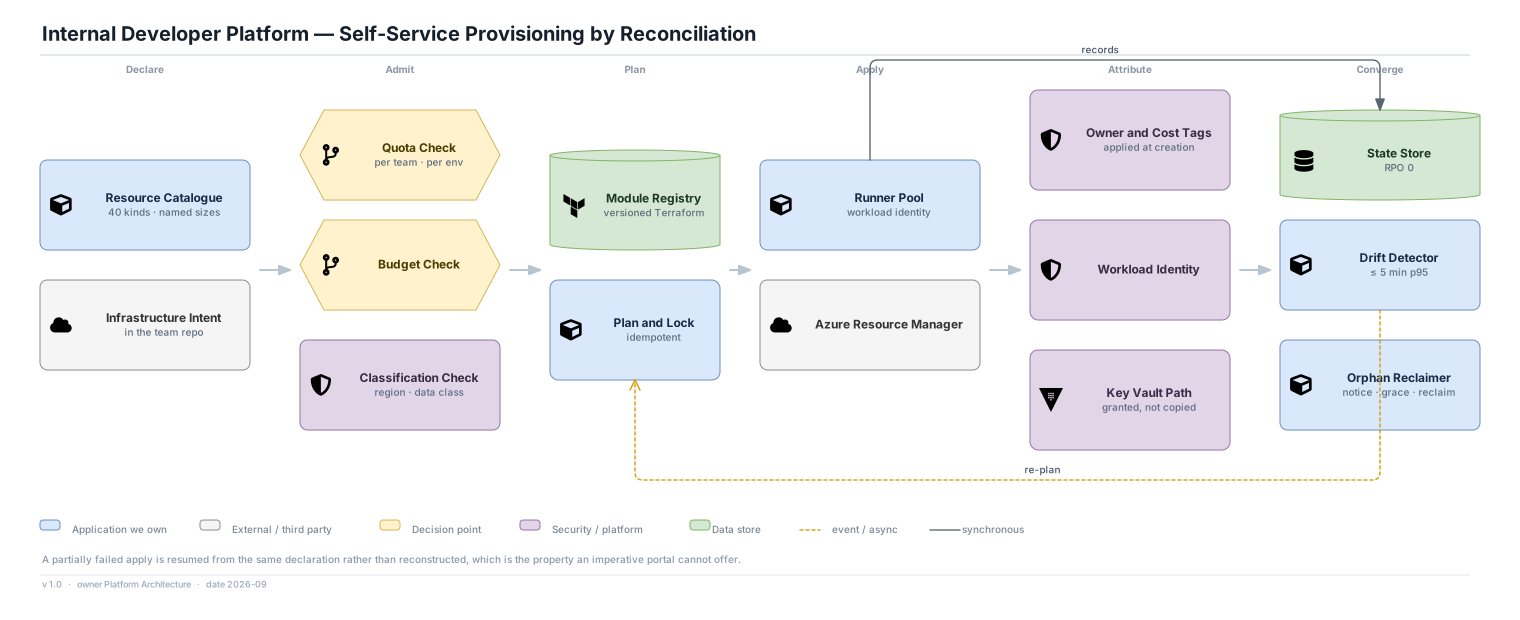
Context. An imperative portal is faster to build and immediately satisfying: press the button, watch the resources appear, get an error you can read. It fails in three specific ways at scale. A run that dies halfway leaves a half-built resource set and no record of which half, so somebody reconstructs state by hand. A change made in the cloud console is invisible, because the portal has no opinion about what should exist — only about what it did. And a retry is dangerous rather than boring, because the operation was never idempotent.
Decision. Provisioning requests are written as declarative intent (ADR-01) and reconciled continuously by controllers that hold state and locks. Every apply is idempotent and resumable; drift between declared and actual is detected, reported to the owning team, and either reverted or recorded as an exception.
How it is realised on Google Cloud. Terraform modules from a versioned internal registry, executed by a runner pool on AKS with workload identity, against state in an Azure Storage account with locking. Drift detection re-plans on a schedule and on resource-graph change events, with a target reconciliation lag of ≤ 5 minutes p95.
| Option |
Verdict |
Reasoning |
| Declarative intent, continuous reconciliation |
Chosen |
Partial failures resume, console edits are caught, retries are safe, and the desired state is reviewable. |
| Imperative calls from the portal, with a job record |
Rejected |
Fast and satisfying until the first mid-run failure, after which the platform team becomes a state-reconstruction service. |
| Ticket a specialist, who does it carefully |
Rejected |
The 19-day baseline. Correct, auditable, and the reason this platform exists. |
What it buys
- A partially failed provision is resumed from the same declaration rather than reconstructed.
- Out-of-band changes become detectable events instead of permanent invisible divergence.
- The same mechanism serves creation, change and de-provisioning, so there is one path to operate rather than three.
What it costs
- Latency: an engineer sees 'converging' rather than 'created', and the 12-minute p95 target has to be defended.
- A stuck reconciliation is harder for a non-specialist to debug than a failed API call, so the platform must explain convergence state in the engineer's terms.
- State becomes the most dangerous object in the estate, which is why it carries RPO 0 and an exercised restore (ADR-16).
Choose differently when. For a genuinely trivial resource kind with no dependents — a DNS record, say — an imperative path is defensible and the indirection buys nothing. If the estate were small enough that drift never happened and a human could reconstruct any failure in ten minutes, this machinery would be overhead.
Why it holds up over time. Reconciliation towards a declaration is the same idea whether the controller is Terraform, Crossplane, an operator or something not yet written, and whether the target is Azure or not. The decision constrains the shape of the system, not its tools.
Lesson. The difference between a portal and a platform is what happens on the failure. A portal tells you the call failed; a platform already knows what should exist and keeps trying.
ADR-04 · Quota, budget and data classification are checked at admission, and a rejection is written for the requester
Status: Accepted · Shown on views: 04, 14
When a request cannot be satisfied, when does the requester find out, and in whose language?
Context. Cloud limits are real and arrive as provider errors halfway through an apply: a subscription quota, a regional capacity limit, a policy assignment the landing zone set. An engineer who meets one of these mid-provision has a half-built resource set and an error message written for a cloud operator. That moment is the trough of the journey in view 04, and it is where a self-service platform loses people back to tickets — not because the answer was no, but because the answer was unintelligible.
Decision. Quota, budget and data-classification checks run at admission, before any resource is created. A rejection names the constraint in the team's terms — which quota, how much is in use, who can raise it — and the request is never partially executed. Classification determines permitted regions and storage, and is checked against the declared data class rather than inferred.
How it is realised on Google Cloud. Admission checks run in the pull-request evaluation and again in the reconciler before plan. Quota state is tracked per team per environment; subscription headroom is monitored continuously so that a provider limit is anticipated rather than discovered.
| Option |
Verdict |
Reasoning |
| Check at admission, reject with an actionable message |
Chosen |
Costs a quota-tracking system the platform has to keep accurate, and buys the survivability of the worst moment in the primary journey. |
| Attempt and surface the provider error |
Rejected |
Cheap to build. Converts a self-service platform into a ticket generator at exactly the moment the engineer has committed. |
| Pre-provision generous quota and hope |
Rejected |
Works until it does not, and hides the cost signal that the budget check exists to provide. |
What it buys
- No partially created resource sets from a foreseeable limit.
- Budget enforcement happens before spend rather than in a monthly report.
- An engineer can resolve their own rejection, which is what the ≥ 60% self-resolution target in view 18 measures.
What it costs
- The platform must model quota accurately enough to be trusted, and a wrong rejection is worse than none.
- Tracking headroom across subscriptions is ongoing work that grows with the estate.
Choose differently when. If provider quota errors became rare and cheap to recover from, attempt-and-report would be defensible. If the estate were small enough that one subscription served everything, headroom tracking would be a dashboard rather than a control.
Why it holds up over time. Every platform that hands out constrained resources eventually learns that the refusal is part of the product. That is independent of cloud, quota model and era.
Lesson. Design the rejection as carefully as the success path. Users forgive a no; they do not forgive a no they cannot act on.
Knowledge and attribution
What the platform knows about the estate, and how every running thing keeps an owner.
ADR-09 · The catalog is a projection, reconciled against the runtime in both directions
Status: Accepted · Shown on views: 02, 10, 11, 12
Is the platform's picture of the estate built from what teams declared, or from what is actually running?
Context. A catalog built from declarations is intentional, reviewable and always somewhat wrong, because reality drifts. One discovered from the runtime is always accurate about the present and cannot express ownership, intent, or anything not yet deployed. Holding both forces a rule about who wins when they disagree, and that rule is an architectural decision rather than a data-quality preference: it decides whether an undeclared running workload is an error or simply a fact.
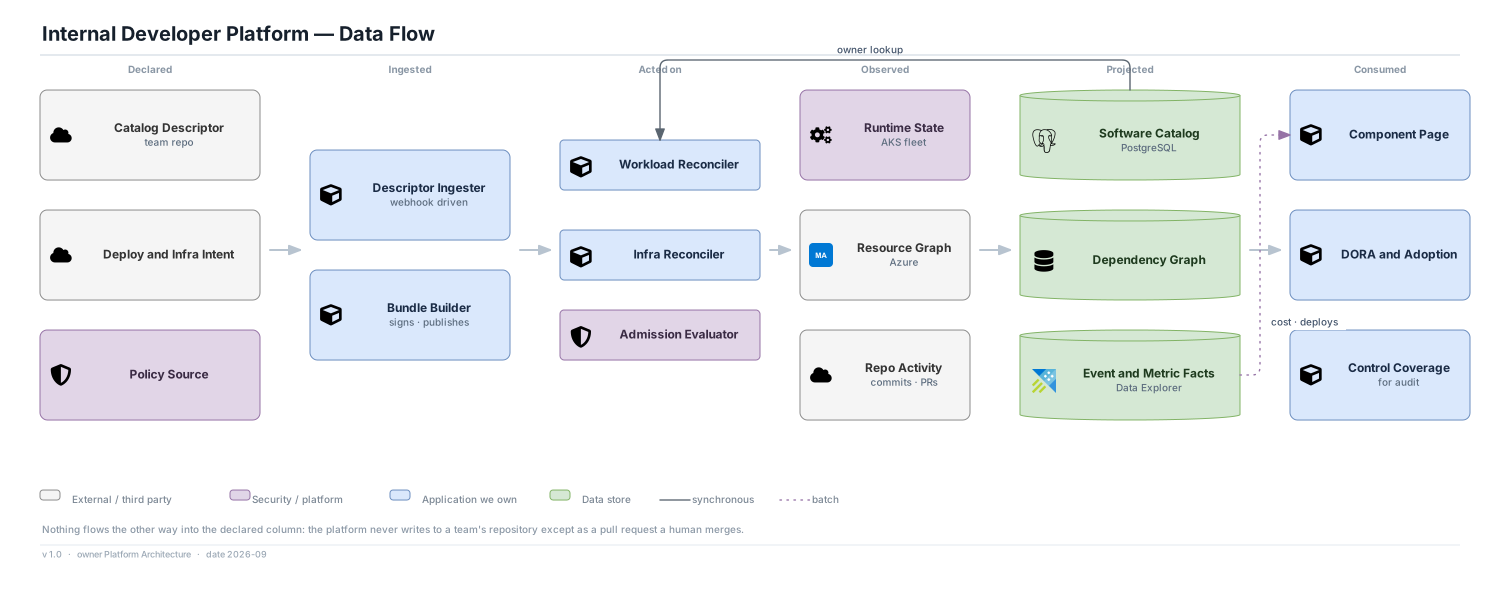
Decision. The catalog is a projection over declared intent and observed runtime state, rebuildable from both. Divergence is reported in both directions — a declared component with nothing running, and a running workload with no catalog entry — and neither is silently resolved. Declaration wins for ownership and intent; observation wins for what exists now.
How it is realised on Google Cloud. Descriptor ingestion is webhook-driven with a periodic full reconcile as the backstop. A runtime reconciler reads cluster state and the Azure resource graph. Catalog freshness target ≤ 10 minutes p95; RPO 15 minutes, RTO 4 hours, because it can be rebuilt.
| Option |
Verdict |
Reasoning |
| Projection over both, divergence reported |
Chosen |
Costs a reconciliation loop and a divergence backlog somebody has to work. Buys a catalog that is honest about being wrong. |
| Declaration only |
Rejected |
Cannot see the shadow estate, which is the metric the platform is judged on. |
| Discovery only |
Rejected |
Accurate and ownerless. Cannot answer the question the catalog exists to answer. |
What it buys
- Off-road components appear in the estate picture, which is what makes ≥ 99% control coverage a measurable claim.
- The catalog's rebuildability lets it sit in the projection tier of the storage model with an RTO rather than RPO 0.
- Catalog accuracy becomes an SLO with a number, not an aspiration.
What it costs
- A standing divergence backlog that will never be empty and must not be allowed to become noise.
- Owner lookup during reconciliation is the one place the catalog sits in a critical path; it is cached and degrades to last-known-good.
Choose differently when. If ownership could be inferred reliably from runtime metadata alone — enforced at creation and never editable afterwards — discovery-only would become viable and the declaration path could shrink to intent. That is close to what ADR-11 aims at, and this decision would deserve revisiting once attribution is provably complete.
Why it holds up over time. Declared versus observed is a permanent tension in any inventory system. Naming the rule for who wins, per field rather than per system, is what keeps it from being relitigated every time the two disagree.
Lesson. An inventory that can only be right is an inventory that lies. Build the one that can say where it disagrees with reality.
ADR-10 · Ownership resolves to a live identity group, and entitlement derives from it
Status: Accepted · Shown on views: 12, 19, 21
How does the platform know who may act on a component, and what happens when that answer goes stale?
Context. The usual design keeps an access list beside the component: who can deploy, who can provision, who can read the secrets. It is correct on the day it is written and decays from then on, because teams reorganise and people move and nobody remembers the platform's list. Meanwhile the organisation already maintains an accurate, audited answer to the same question in its identity provider, updated by joiner-mover-leaver processes that exist whether the platform uses them or not.
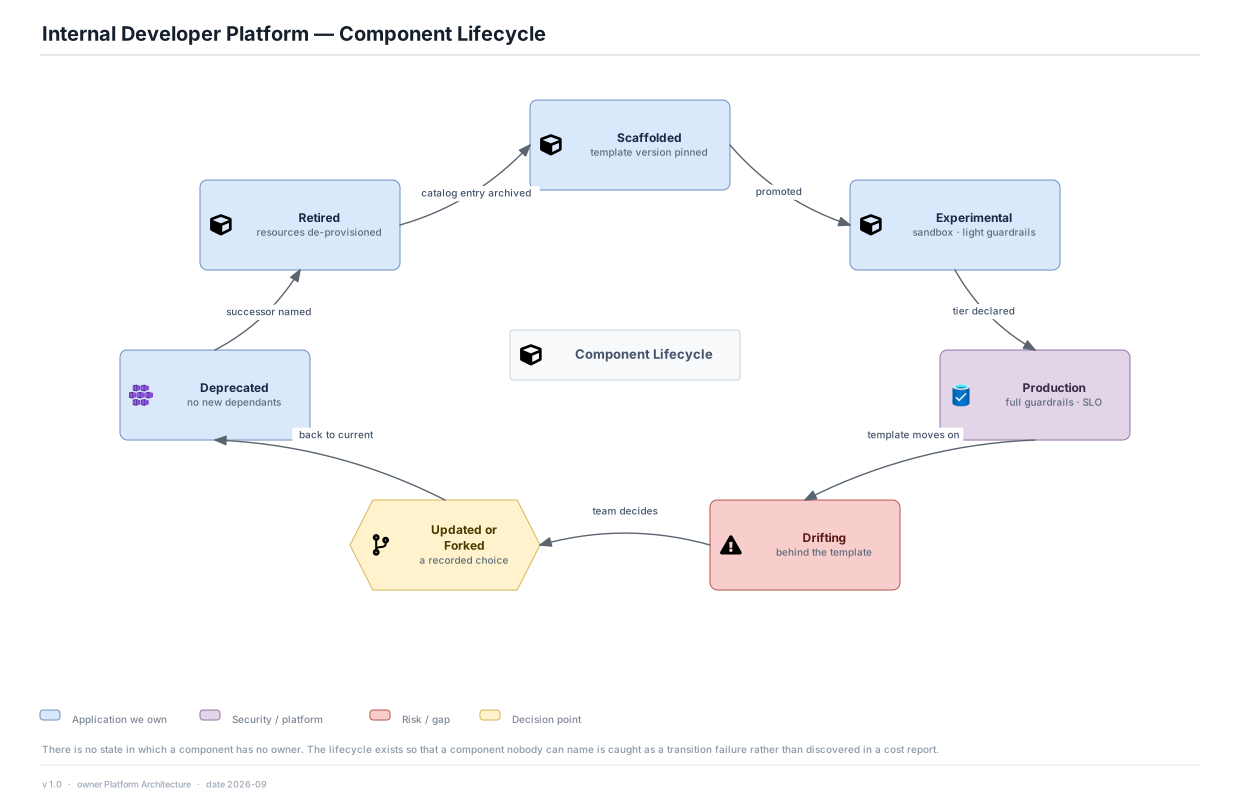
Decision. A component's owning team resolves to an identity group with live membership. Entitlement to deploy, provision, read secrets and grant access is derived from that ownership rather than from a separate list. A component whose owning group is empty or deleted is an incident: it is quarantined, reported and reclaimed on a declared schedule rather than left running unattributed.
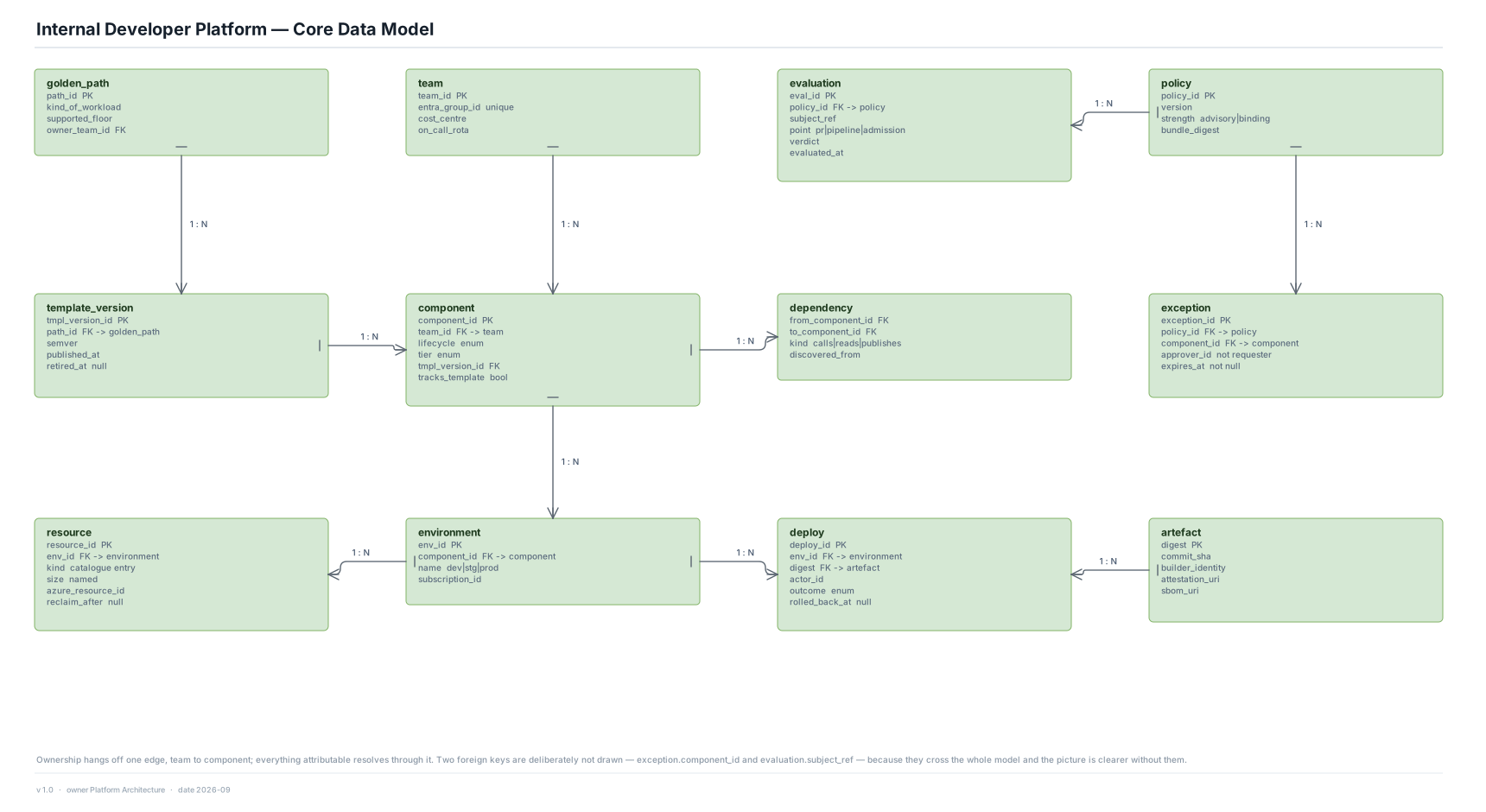
How it is realised on Google Cloud. team.entra_group_id is unique and required; the platform API resolves the caller's group claims against catalog ownership on every request. Orphan detection runs continuously. Bulk re-attribution is supported for reorganisations, and ownership history is retained.
| Option |
Verdict |
Reasoning |
| Derive entitlement from catalog ownership against live groups |
Chosen |
One place to be wrong instead of two, and the place that is already maintained. |
| A platform-local access list per component |
Rejected |
Accurate on creation day. A permanent, silently decaying second source of truth thereafter. |
| Cloud-native role assignments per resource |
Rejected |
Correct at the resource layer and unusable at the component layer, where the question is actually asked. |
What it buys
- A reorganisation moves entitlements with the components, in one operation, with history.
- There is no separate access review for the platform: reviewing group membership reviews platform access.
- Orphaned components are caught as a transition failure rather than discovered in a cost report.
What it costs
- A wrong owner in the catalog is now an access-control fault, not a metadata fault, which raises the stakes on descriptor quality.
- The platform inherits the identity provider's latency and availability on the authorisation path, so group claims are cached with a short lifetime.
- Quarantining an orphan is an unpopular act that must be preceded by notice and a grace period.
Choose differently when. In an organisation whose identity groups do not reflect engineering teams — where the directory models cost centres or legal entities instead — deriving entitlement from it would be worse than a maintained list. The precondition is explicit, and it is an assumption rather than a fact.
Why it holds up over time. Deriving authorisation from a single, independently maintained ownership fact is a pattern that survives any identity technology. The failure it prevents — a second list nobody updates — is as old as access control.
Lesson. Every access list you maintain is a list you will be wrong about. Derive authority from a fact somebody else is already obliged to keep true.
ADR-11 · Owner, cost centre, tier and classification are applied at creation as enforced properties
Status: Accepted · Shown on views: 14, 18, 19
When does a resource acquire the metadata that makes it attributable?
Context. Attribution added afterwards is never complete. A tagging campaign reaches the resources somebody remembered, an untagged resource has no owner to ask, and the gap grows faster than the campaign closes it. The FinOps reconciliation spreadsheet exists because attribution was optional at the moment of creation. The same is true of data classification, which decides permitted regions and storage, and of tier, which decides which guardrails and which SLO expectations apply.
Decision. Owner, cost centre, lifecycle state, tier and data classification are applied to every provisioned resource and every deployed workload at creation, as enforced properties rather than conventions. A workload without them is not admitted; a resource without them is not created. Cost is shown on the component page at the point of change, not only in a monthly report.
How it is realised on Google Cloud. Tags applied by the provisioning modules and required by binding admission policy, sourced from the catalog descriptor. Cost Management daily exports join directly to catalog ownership with no reconciliation step, because the join key was correct when the data was produced.
| Option |
Verdict |
Reasoning |
| Enforced at creation |
Chosen |
Makes an unattributable resource impossible to create rather than expensive to find later. |
| Periodic tagging campaigns and reports |
Rejected |
Permanently behind, and the untagged residue is exactly the population nobody can identify. |
| Infer ownership from usage patterns |
Rejected |
Plausible, wrong occasionally, and wrong in a way that assigns somebody else's bill. |
What it buys
- Cost attribution needs no reconciliation exercise, and idle-resource reclamation has an owner to notify.
- Data classification is available to policy at admission, so region and storage rules can be enforced rather than audited.
- The tier drives which guardrails apply, which is what makes an experimental sandbox defensible.
What it costs
- Every provisioning path must carry the metadata, including paths added later — a standing discipline on the platform team.
- A team that genuinely does not yet know its cost centre is blocked at creation, which needs a sane default rather than an exception.
Choose differently when. If the cloud provider offered reliable ownership inference from its own control-plane records, the enforcement could relax to verification. It does not, and inferred ownership is the specific failure mode this decision exists to prevent.
Why it holds up over time. Attribution at the point of creation is the only form of attribution that stays complete, on any platform and in any era. Retrofitting it has never worked anywhere.
Lesson. Metadata that is optional at creation is metadata you do not have. Make the thing impossible to create without it, or plan to spend years asking.
ADR-16 · Storage is classified by what a loss would cost, and only one band carries RPO 0
Status: Accepted · Shown on views: 11, 17, 20
Which of the platform's stores must never lose data, and which are allowed to be rebuilt?
Context. The default answer — back everything up, aim for zero loss everywhere — is expensive, and worse, it hides which stores actually matter. A platform holds several very different kinds of data: declarations it does not own, state it cannot reconstruct, projections it can rebuild in an afternoon, and working data whose loss nobody would notice. Treating them alike means the genuinely irreplaceable object gets the same attention as a pipeline log.
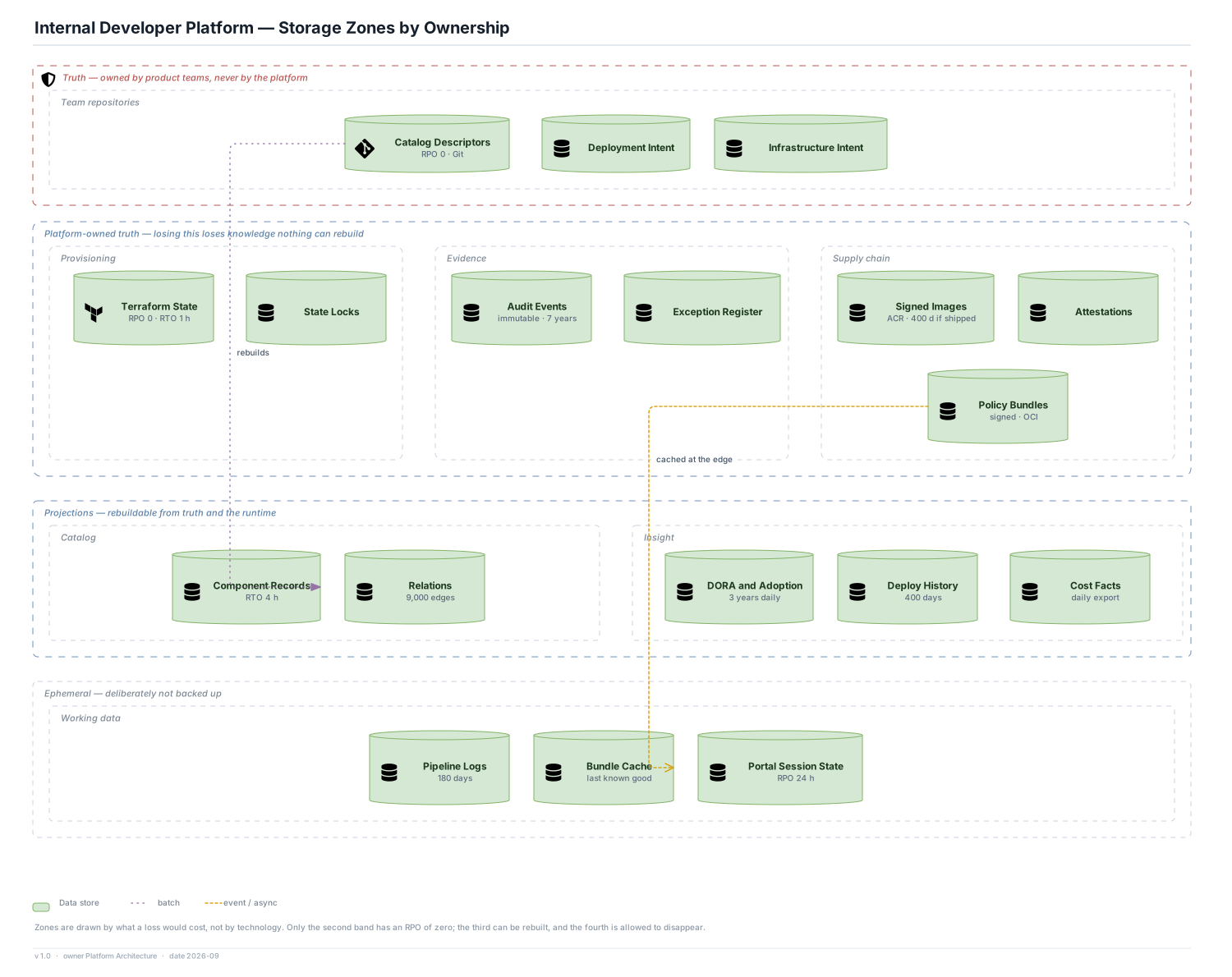
Decision. Four bands. Truth owned by teams lives in their repositories and is not the platform's to protect. Platform-owned truth — provisioning state, audit evidence, signed artefacts and policy bundles — carries RPO 0 with an exercised restore. Projections — catalog, dependency graph, insight stores — carry an RTO and are rebuildable from truth and the runtime. Working data is explicitly not backed up, and saying so is what stops it acquiring a policy nobody needs. One artefact, signed and attested, is promoted unchanged through every environment, so what was tested is what runs.
How it is realised on Google Cloud. Terraform state: RPO 0, RTO ≤ 1 hour, versioned and locked. Audit: RPO 0, immutable with legal hold, unwritable by platform operators. Catalog: RPO 15 minutes, RTO 4 hours. Portal: RPO 24 hours. Full control-plane rebuild from source and backup exercised at least twice a year.
| Option |
Verdict |
Reasoning |
| Four bands by cost of loss, with an exercised restore for the RPO 0 band |
Chosen |
Concentrates protection where reconstruction is impossible, and makes the rest legibly cheap. |
| Uniform backup and RPO 0 everywhere |
Rejected |
Expensive, and obscures which object is the one that must never be lost. |
| Back up the databases, treat everything else as disposable |
Rejected |
Loses Terraform state and audit evidence, which are the two things a database backup does not cover. |
What it buys
- The dangerous object is named: provisioning state, whose loss means the platform no longer knows what it created.
- The catalog's rebuildability is a designed property that keeps a large store out of the zero-loss tier.
- A restore that is exercised twice a year is a restore that works.
What it costs
- Rebuild paths for the projection tier must actually be maintained and tested, or the RTO is fiction.
- Immutable audit storage with legal hold is a cost that grows for seven years and cannot be trimmed retrospectively.
Choose differently when. If the catalog acquired data that exists nowhere else — a manually curated field, a human annotation — it would leave the projection tier that day. The classification has to be re-examined whenever a store gains a write that nothing else can reproduce.
Why it holds up over time. Classifying storage by reconstructability rather than by technology is a method, not a configuration. It applies unchanged to whatever stores the platform uses in ten years.
Lesson. Ask of every store: if this vanished tonight, what could we rebuild it from? The ones with no answer are the only ones that need zero-loss protection — and they are usually not the ones with the dashboards.
Identity, secrets and the control plane
Who may do what, and the fact that the platform is the most privileged thing in the estate.
ADR-08 · Exceptions are named, approved by someone else, expiring and published
Status: Accepted · Shown on views: 08, 15, 20
What happens when a binding guardrail blocks something the organisation has decided to do anyway?
Context. Relief always exists. If the architecture does not provide it, it appears as a quiet policy edit for the loudest team, as a permanently disabled check, or as a team routing around the platform entirely. Each of those is worse than an exception, and each is invisible. The question is therefore not whether to allow exceptions but what an exception has to cost in visibility.
Decision. A binding guardrail may be excepted for a named component, by an approver who is not the requester, with a stated reason and a mandatory expiry. Every active exception appears on a standing register that is reported alongside coverage. Expiry and a distinct approver are schema constraints, not process guidance. Authoring a policy, approving an exception to it, and deploying are three separate entitlements.
How it is realised on Google Cloud. exception carries approver_id (constrained to differ from the requester) and a non-null expires_at. Active exceptions are surfaced in the pull request of the component they cover, on the component page, and in the coverage report. Target: ≤ 25 active exceptions, each expiring inside 90 days.
| Option |
Verdict |
Reasoning |
| Named, approved by another, expiring, published |
Chosen |
Makes relief legitimate and visible, and makes the accumulation of relief a metric rather than a discovery. |
| No exceptions — the control is the control |
Rejected |
Sounds strong. Produces quiet policy edits and shadow deployments, which is the same relief with none of the evidence. |
| Permanent exceptions by request |
Rejected |
An exception with no expiry is a policy change made by whoever asked, recorded in the wrong place. |
What it buys
- The exception register becomes an honest measure of where policy and reality disagree.
- A control waived more often than it blocks is visible as a policy defect rather than a security success.
- Auditors get a complete answer: the control, its coverage, and every documented departure with an owner.
What it costs
- Expiry means recurring renewal work for genuinely long-lived exceptions, which teams experience as friction.
- A separate approver requires enough people with the entitlement that approval is not itself a queue.
Choose differently when. For a small number of controls — a hard regulatory floor, for example — no exception path is correct, and the architecture supports declaring a policy unexceptable. The general mechanism is still needed for everything else.
Why it holds up over time. Every enforcement system that lasts grows an exception path. Designing it deliberately, with expiry and attribution, is what separates a control that is trusted from one that is quietly disabled.
Lesson. If your control has no legitimate relief valve, you do not have a strong control — you have an unmeasured one, and someone has already routed around it.
ADR-15 · Workload identity everywhere, and the control plane is held to the controls it enforces
Status: Accepted · Shown on views: 20, 21
What credentials exist in this system, and who guards the thing that guards everything?
Context. The platform can provision, deploy and grant across the entire estate. It is, by construction, the highest-privilege system in the organisation, and it is usually the one exempted from its own controls because its team wrote them. Meanwhile static credentials accumulate wherever a pipeline needs to reach a cloud: in a secret store, in a variable, in a repository, in somebody's notes.
Decision. No long-lived static credential exists on any platform path. Workloads, pipeline runs and platform components authenticate by federated workload identity; a pipeline run's privileges are scoped to the component it is building. Secrets are brokered, never held: the platform creates a Key Vault path and binds an identity to it, and never reads secret material. The platform's own components are production systems under the same guardrails, the same change review and the same audit as tenants, and the entitlements to author policy, approve an exception and deploy are held separately.
How it is realised on Google Cloud. Entra workload identity federation for runners and workloads; ephemeral runners so build identity cannot outlive the build. Control-plane components deploy through the same reconciler and pass the same admission policy. Every privileged action — exception granted, policy changed, template published, ownership reassigned — is written to the append-only audit store.
| Option |
Verdict |
Reasoning |
| Federated workload identity, brokered secrets, platform under its own controls |
Chosen |
Costs the platform team the friction it imposes on others, which is also the mechanism that keeps the friction honest. |
| A platform service principal with broad rights |
Rejected |
One credential that can do anything to anything, and a rotation everybody is afraid of. |
| Platform components exempted from admission policy |
Rejected |
Exempts the highest-privilege workloads in the estate from the only enforcement point that covers everything. |
What it buys
- Nothing to rotate, leak or discover in a repository.
- Compromising one component's build cannot deploy another team's component.
- The platform team experiences its own controls, which is the fastest feedback loop on whether they are reasonable.
What it costs
- Federation setup is per-workload work the platform must automate or it becomes the bottleneck it was built to remove.
- Holding the control plane to its own policy occasionally blocks the platform team during an incident, and the exception path (ADR-08) is the answer rather than a bypass.
Choose differently when. A legacy system that cannot federate needs a static credential with a short lifetime and a named owner; the architecture should carry that as an explicit, expiring exception rather than pretend the rule is universal.
Why it holds up over time. Short-lived, workload-scoped identity replaced static secrets everywhere it became available, and will not be reversed. Holding the control plane to its own rules is older still.
Lesson. The system that enforces the rules is the most valuable target in the estate. Exempting it from its own controls is how you find out.
The runtime and the fleet
The tenancy boundary, and recovery that does not depend on the machinery that broke.
ADR-13 · Rollback does not depend on the pipeline that produced the deploy
Status: Accepted · Shown on views: 06, 17
What is the recovery path when the thing that deployed the change is itself the problem?
Context. The convenient rollback is a pipeline run: re-deploy the previous version through the same machinery. It works for the common case and fails at the worst one, because the population of incidents where rollback is needed overlaps heavily with the population where the build plane, the registry pull, or the pipeline's own credentials are implicated. An engineer at 03:00 then has two problems, and the second one has a queue.
Decision. Rollback is a single, always-available operation that reverts the workload reconciler to the previously converged state, using an artefact already present, without requiring a build, a pipeline run or a registry round trip to succeed. Progressive delivery triggers it automatically on a declared signal breach, and a human can invoke it directly from the CLI.
How it is realised on Google Cloud. Argo CD holds the previous desired state; images for the previous revision are already pulled on the nodes or present in the geo-replicated registry. Target ≤ 5 minutes p99 from initiation to serving the previous version. Automated rollback fires on canary analysis breach without waiting for a human.
| Option |
Verdict |
Reasoning |
| Reconciler-level revert, independent of the pipeline |
Chosen |
One more path to keep working and test, and it is the one that has to work on the worst day. |
| Re-run the pipeline with the previous commit |
Rejected |
Couples recovery to the machinery most likely to be involved in the failure, and adds build time to an incident. |
| Forward-fix only |
Rejected |
Defensible for some organisations. Not for one where the person on call did not write the change. |
What it buys
- Recovery time is bounded by reconciliation, not by build time.
- The on-call journey in view 06 has an action that works without understanding the failure first.
- Automated rollback on a canary breach becomes credible, because the mechanism is simple enough to trust unattended.
What it costs
- The previous artefact must remain available, which constrains registry retention and node image garbage collection.
- A rollback that reverts intent can conflict with a fix already in flight, so the operation records itself in intent rather than mutating the cluster behind the reconciler's back.
Choose differently when. For a workload with irreversible data migrations, rollback is not a recovery strategy and the golden path for it must say so explicitly rather than offering a button that lies. That is a property of the path, not of the mechanism.
Why it holds up over time. Recovery machinery that shares fate with the failure is a recurring mistake rather than a technology-specific one. Independence of the recovery path outlives every deployment tool.
Lesson. Test your recovery path against the assumption that the thing you normally use is broken. That is the only case where it matters.
ADR-14 · Namespace per component in shared clusters, with staged fleet upgrades and a canary component per path
Status: Accepted · Shown on views: 16, 18
Where does the tenancy boundary sit, and who absorbs the cost of the answer?
Context. Cluster per team is strongly isolated and multiplies fleet operations, upgrade toil and idle capacity by 140 against a twelve-person platform team. Shared clusters are cheap to operate and make every noisy neighbour, every cluster-scoped resource and every upgrade a shared-fate event. The honest question is not which is safer in principle but which failure the organisation can actually staff.
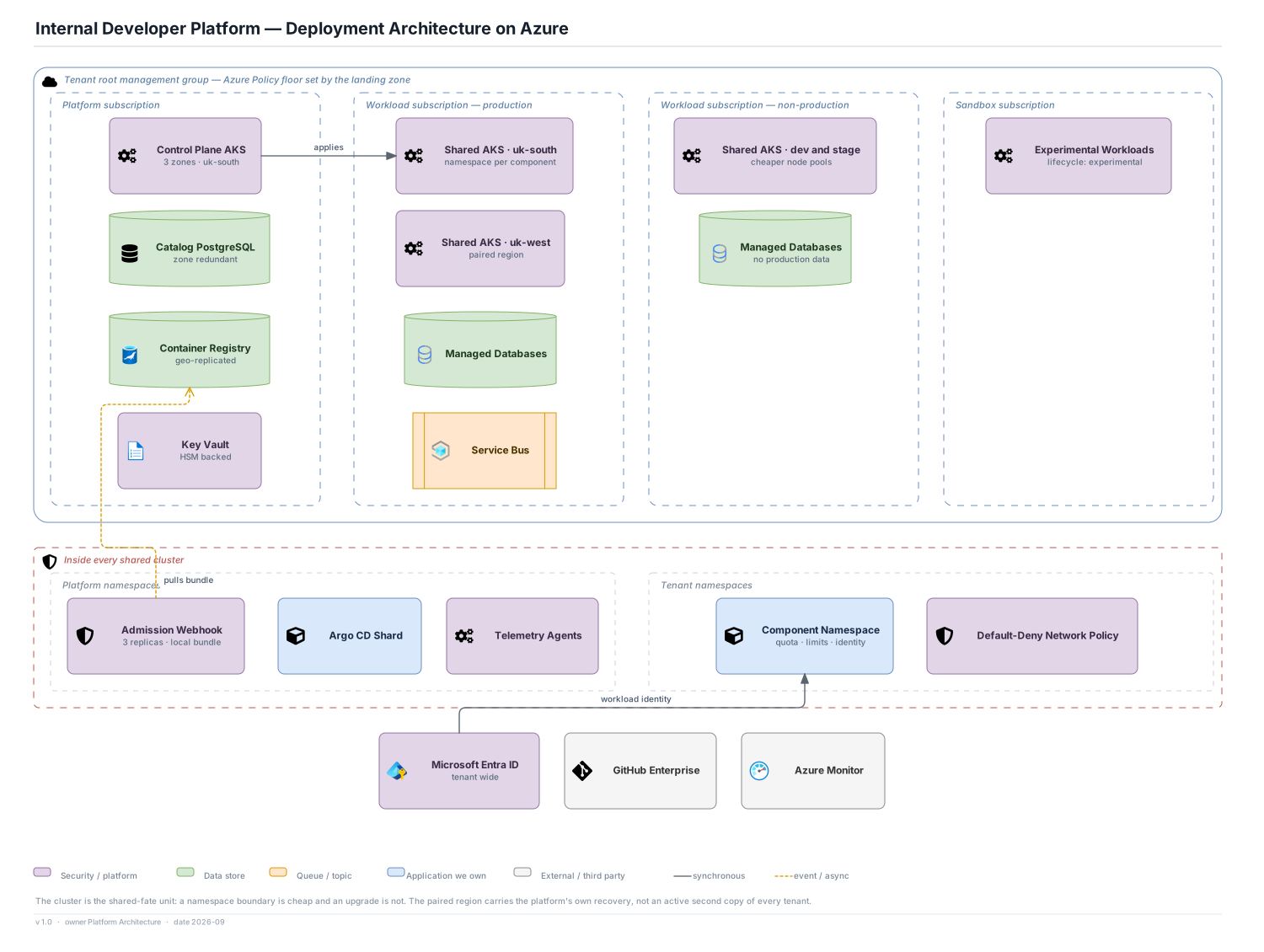
Decision. Namespace per component in shared clusters, separated by environment and by subscription rather than by team, with experimental workloads in a sandbox subscription. Isolation inside a cluster is enforced rather than conventional: required requests and limits, per-namespace quota, default-deny network policy, workload identity per component. Upgrades roll through the fleet in stages with automated tenant smoke checks and abort-and-hold on failure, and each golden path has a canary component that walks the whole path continuously.
How it is realised on Google Cloud. Production and non-production in separate workload subscriptions; uk-south primary with uk-west paired for the platform's own recovery. Three admission webhook replicas per cluster with a locally cached bundle so enforcement survives a control-plane outage.
| Option |
Verdict |
Reasoning |
| Shared clusters, namespace per component, enforced isolation |
Chosen |
Operable by twelve people. Accepts shared fate on upgrades and answers it with staging rather than with more clusters. |
| Cluster per team |
Rejected |
Strong isolation the organisation cannot staff. 140 upgrade campaigns and 140 sets of idle capacity. |
| Cluster per data classification or tier |
Deferred |
The right answer if a workload appears whose isolation requirement the namespace boundary genuinely cannot meet. Designed for, not built. |
What it buys
- A fleet small enough that upgrades are a planned operation rather than a permanent campaign.
- Idle capacity is shared, which is most of the platform's cost advantage.
- Enforced limits and default-deny networking make the namespace boundary a control rather than a convention.
What it costs
- Cluster upgrades are shared-fate events and must be staged, smoke-checked and abortable.
- A cluster-scoped resource conflict between tenants is possible and has to be policed by policy.
- The highest-isolation workload in the estate sets the ceiling; if one arrives that the namespace cannot hold, the boundary has to move.
Choose differently when. A regulated workload with a hard physical or tenancy separation requirement flips this immediately for that workload — hence the deferred option rather than a rejected one. A platform team of 40 rather than 12 would also change the arithmetic.
Why it holds up over time. The boundary question — isolation against operability — recurs on every substrate. What this decision fixes is that the answer is chosen by what can be staffed, and that the alternative is designed for rather than argued away.
Lesson. Isolation you cannot operate is not isolation. Pick the boundary your team can actually maintain, and write down what would move it.
The decisions that only make sense if teams are allowed to say no.
ADR-03 · Components track their golden-path template by default, and forking is a recorded, supported choice
Status: Accepted · Shown on views: 05, 07, 12, 19
After scaffolding, does the generated code belong to the team, to the platform, or to both?
Context. Scaffold-and-forget is the simplest contract and the most expensive one. Within a year the estate holds 1,400 divergent copies of a pipeline, and a security fix in the template reaches none of them. The opposite — the platform owning generated code in the team's repository — makes updates shippable and makes every product repository contain code its owners may not change, which is the fastest way to make a platform resented. The real variable is not who owns the file but whether the platform can tell the difference, and whether the team made the choice deliberately.
Decision. Every scaffolded component declares whether it tracks its template or has forked from it. Tracking components receive automated update pull requests; forked components do not, and their departure is recorded with a stated reason. Drift is measured per component, published to the owning team, and a supported floor is enforced with a published deprecation window. The shared pipeline is consumed by reference rather than copied, so the most change-prone artefact is not part of the fork surface at all.
How it is realised on Google Cloud. template_version and tracks_template are columns on the component record, populated from the repository descriptor. The update bot opens one pull request per tracking repository. The pipeline is a referenced reusable workflow; forking it is possible and is exactly the act that shows up in the drift report.
| Option |
Verdict |
Reasoning |
| Track by default, fork as a recorded choice, pipeline by reference |
Chosen |
Keeps the migration lever for the common case and keeps the exit open, at the cost of pull-request noise in product repositories. |
| Fork always — the code is yours the moment it is generated |
Rejected |
Maximum autonomy, and a platform that can never ship anything to its estate again. The end-of-support migration in view 05 becomes 1,400 conversations. |
| Platform-managed files teams may not edit |
Rejected |
Works until the first legitimate exception, which arrives in week three. Then it is either an exception process or a lie. |
What it buys
- A template fix reaches most of the estate as automation rather than as a campaign.
- The fork ratio becomes a measured number that predicts migration cost — the single most useful planning figure the platform has.
- Leaving the paved road is legitimate and visible, which keeps adoption honest (ADR-12).
What it costs
- Automated pull requests into product repositories need organisational consent and careful batching, or they become noise teams filter out.
- The forked tail absorbs disproportionate platform-team effort — an assumed 16% of components in view 05.
- Two supported template versions at a time is the practical ceiling for a twelve-person team; more is a commitment that will be broken.
Choose differently when. If the organisation adopted a mandate — every component must be on a current template — tracking could be assumed and the fork machinery would be waste. If automated pull requests proved culturally unacceptable, the fallback is a stronger by-reference boundary: move more of the template into consumed artefacts and generate less.
Why it holds up over time. The distinction between generated-and-owned and consumed-by-reference is older than any of this tooling and will outlive it. What changes is where the line sits, and the architecture is built so that line can move without redesign.
Lesson. Generated code is a fork with good manners. Plan for the divergence at the moment you generate it, because the alternative is discovering the divergence when you need it not to exist.
ADR-07 · A thin abstraction with strong defaults, and an escape hatch that is a designed path
Status: Accepted · Shown on views: 03, 06, 16
How much of the underlying runtime should the golden path hide from the engineer who uses it?
Context. The highest abstraction gives the best first day: declare a service, get a service, never learn what a pod is. It leaks at the first incident, which is exactly when the person holding the pager has the least capacity to learn a substrate the platform has spent a year hiding. A thin abstraction costs every engineer the learning and traps nobody. The choice also decides whether the platform can change the substrate later without its tenants noticing — and who is expected to do the migration when it does.
Decision. The golden path presents a thin abstraction with strong, cost-aware defaults: the underlying runtime remains visible and addressable, and the platform supplies the configuration rather than concealing the model. Read access to the substrate for a component's owners is an entitlement-scoped, audited path, not an exception granted during an incident. What the platform hides is toil, not the model.
How it is realised on Google Cloud. Manifests are real and readable in the team's repository. The CLI grants scoped cluster read access derived from catalog ownership, with every access audited. The component page links directly to the runtime objects rather than paraphrasing them.
| Option |
Verdict |
Reasoning |
| Thin abstraction, strong defaults, designed escape hatch |
Chosen |
Costs learning on day one and pays it back at 03:00. Also keeps the platform honest about what it is actually doing. |
| High abstraction that hides the runtime entirely |
Rejected |
Best first day, worst incident. And the escape hatch gets built anyway — as an undocumented one, during an outage. |
| No abstraction, just documentation and examples |
Rejected |
Maximum honesty, no leverage. This is the state the platform was created to improve on. |
What it buys
- The on-call journey in view 06 is survivable without a platform engineer.
- Escape-hatch use is measurable, and a spike in it names the abstraction that is failing.
- Teams can reason about cost and behaviour because they can see what actually runs.
What it costs
- Every engineer carries more concepts than the highest-abstraction alternative would require.
- Substrate migrations are visible to tenants and must be negotiated rather than performed silently.
- The cognitive-load budget has to be stated and defended, because each golden path will want to add one more concept.
Choose differently when. With a junior-heavy engineering population, a dedicated platform on-call carrying tenant incidents, or a substrate the platform genuinely intends to replace, a higher abstraction becomes the better trade — and the escape hatch becomes the platform team's tool rather than the tenant's. This is the decision most likely to be revisited, and the requirement leaves it explicitly open.
Why it holds up over time. The tension between leverage and comprehensibility does not age. What changes is where the line sits; keeping the substrate addressable means the line can be moved later in either direction without a rewrite.
Lesson. An abstraction is a promise about the good days and a debt on the bad ones. Price it at 03:00, not at the demo.
Status: Accepted · Shown on views: 09, 16, 18
What may fail when the platform fails?
Context. A platform that is loved on good days and catastrophic on bad ones does not survive its first outage. The temptation is to make the portal the centre: it holds the session, it brokers the deploy, it proxies the runtime. Every one of those choices puts a convenience component into a path that must stay up when the platform is down. Separately, a capability that exists only in the portal cannot be scripted by the teams that most need it, cannot be tested, and cannot be replaced when the portal is.
Decision. The platform API is the primary surface; the portal and the CLI are clients of it, and a capability reachable only through one of them is a defect. No platform component is a dependency of serving production traffic: deploys, rollbacks and reconciliation continue when the portal is unavailable, and running workloads are never evicted because the platform cannot evaluate them (ADR-06). The platform publishes its own SLOs and error budget to its tenants.
How it is realised on Google Cloud. Portal and catalog read path ≥ 99.5% monthly; admission evaluation ≥ 99.95%; the portal carries RPO 24 hours because it holds no truth. The API is versioned with a published deprecation window, since its consumers include 140 teams' pipelines.
| Option |
Verdict |
Reasoning |
| API primary, portal non-critical |
Chosen |
Costs discipline — every feature must be expressible in the API first — and buys an outage that costs the ability to change rather than the ability to serve. |
| Portal as the centre, API as an afterthought |
Rejected |
Faster to demonstrate. Makes a convenience component a production dependency for 1,400 services. |
| CLI-first with no portal |
Rejected |
Fine for the platform team, poor for discovery. The portal is how someone finds the path in the first place. |
What it buys
- A portal outage is an inconvenience with a known blast radius, and can be stated as such in advance.
- Every capability is scriptable, which is what lets teams automate around the platform rather than through it.
- The platform can replace its own portal without renegotiating with its tenants.
What it costs
- Two clients to keep at parity, and a standing temptation to add portal-only behaviour under deadline.
- A versioned API with a deprecation window is a commitment that constrains the platform's own pace of change.
Choose differently when. If the platform ever needed to sit in a request path — a runtime configuration lookup, say — that component would have to be designed to the availability of the thing it serves, and this decision would be restated for it rather than quietly broken.
Why it holds up over time. Keeping the control plane out of the data path is one of the few architectural rules that has never stopped being right. It survives every technology change because it is a statement about blast radius.
Lesson. Decide in advance what your outage is allowed to cost. If the answer includes other people's production traffic, you have built a dependency rather than a platform.
Every package used, in one table
Eleven terms that carry specific meaning in this package. Several are used loosely in the wider platform-engineering literature; here they are the names of decisions.
| Package |
What it is |
What it does here |
Considered instead |
| Golden path |
An opinionated, end-to-end route from empty repository to production for one named kind of workload. |
A product a team may decline. Its adoption number is meaningful precisely because declining is allowed. |
A mandated standard, which guarantees coverage and destroys the feedback signal that says whether the path is any good. |
| Paved road |
The generation plane — templates, the scaffolder, the shared pipeline, the update bot. |
Everything the platform offers that a fork can remove. |
Conflating it with the guardrails, which is the failure this architecture exists to avoid. |
| Guardrail |
A control evaluated at admission into the runtime, from a signed policy bundle. |
Applies to every workload regardless of how it was created. Cannot be declined, only excepted with attribution and an expiry. |
A check inside a template, which is deleted by the fork that removes the template. |
| Intent |
The declaration in a team's repository of what should exist: catalog descriptor, deployment manifests, infrastructure declaration. |
The system of record. The platform reconciles towards it and never holds an authoritative copy. |
A row in the platform's database, which makes the platform the owner of every team's configuration. |
| Projection |
Anything the platform derives from intent plus observed runtime state — principally the catalog and the insight stores. |
Rebuildable, which is what lets it carry an RTO instead of a zero-loss obligation. |
Treating the catalog as truth, after which a catalog outage becomes an estate outage. |
| Template drift |
The distance between a component and the current version of the template that generated it. |
A measured, published per-component figure, and the input that makes a migration plannable. |
Not measuring it, and discovering the divergence when a security fix needs to reach the estate. |
| Shadow estate |
Production components deployed outside the platform's paths. |
The platform's own competitive metric. Guardrails still cover it; the paved road does not. |
Treating it as non-compliance, which hides the product failure it actually reports. |
| Advisory evaluation |
A policy verdict produced in the pull request and pipeline, from the same bundle as the binding one. |
Exists to explain and to be fast (≤ 90 s). Carries no authority of its own. |
A separate ruleset for CI, which diverges from the binding one within a quarter. |
| Binding evaluation |
The admission-time verdict, evaluated locally from a cached signed bundle within 250 ms p99. |
The only unbypassable point, and therefore the only place coverage can honestly be claimed. |
Trusting the pipeline, which covers only the population that already uses the pipeline. |
| Exception |
A named, expiring, separately approved departure from a binding guardrail for one component. |
The legitimate relief valve, published on a standing register so accumulation is visible. |
A quiet policy edit for the loudest team, which is the same relief with none of the evidence. |
| Cognitive load |
The number of systems, concepts and credentials an engineer must hold to ship on a golden path. |
A stated, defended budget. Each concept a path adds is a withdrawal the platform must justify. |
An aspiration in a vision document, which loses every argument against one more useful feature. |