Internal Developer Platform · View 15 of 21 · Runtime
The lane that carries the argument
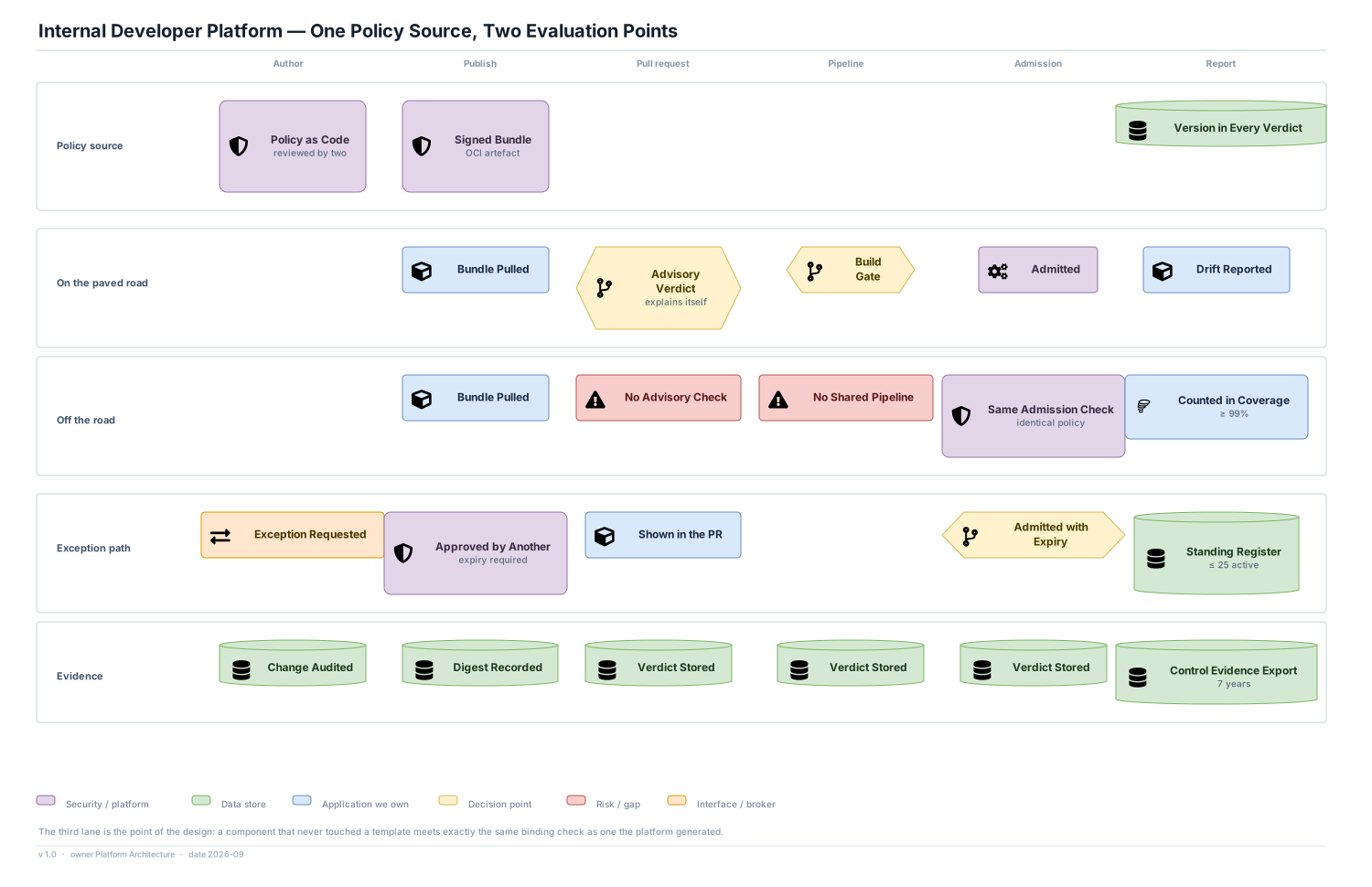
- The off-road lane is the point of the whole design: no advisory check, no shared pipeline, and exactly the same binding admission check (ADR-05).
- Advisory evaluation exists to be useful, binding evaluation exists to be unbypassable, and they are driven from one signed bundle so they cannot diverge (ADR-06).
- The exception lane is drawn because relief always exists in practice; making it named, approved by another person and expiring is what stops it being a quiet policy edit (ADR-08).
Targets
- Binding guardrail coverage ≥ 99% of production workloads including off-road ones; active exceptions ≤ 25, each expiring inside 90 days (stated assumptions).
- Every verdict stored with its policy version, which is what makes the coverage figure auditable.
Risks
- Fail-closed on new admissions and fail-open on running workloads is a deliberate asymmetry: an unevaluated change must not land, and a running service must never be evicted because the platform cannot think (ADR-06).
- If advisory and binding ever diverge, engineers stop trusting the pull-request verdict — and then the platform has two checks and one useful one.