Internal Developer Platform · View 02 of 21 · Context and scope
Decisions
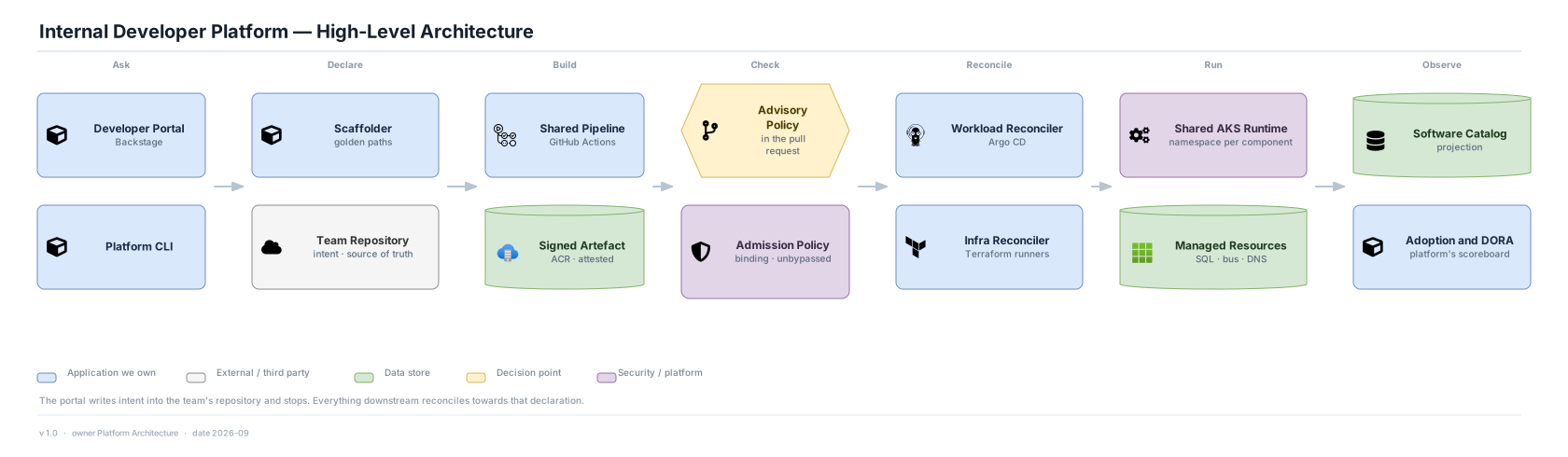
- The surfaces write intent and stop. No surface calls Azure Resource Manager directly, which is what makes a partial failure resumable rather than a state-reconstruction exercise (ADR-02).
- Checking appears twice and deliberately: advisory in the pull request, binding at admission, both from one policy source (ADR-05, ADR-06).
- The catalog sits at the end of the chain, not the start, because it is a projection of what was declared and what is running (ADR-09).
Reads as
- Left to right is the engineer's own sequence, not a layering. Nothing in the chain is optional except the paved road itself.
- An off-road component joins at the Check stage and is subject to everything from there rightwards.
Omitted
- The feedback loop from Observe back to Declare — it is the update pull request and the drift report, drawn in views 15 and 19.
- Rollback, which runs outside this chain by design so that a broken pipeline cannot block recovery (view 17).