Observability Platform · View 08 of 25 · Structure
The decision
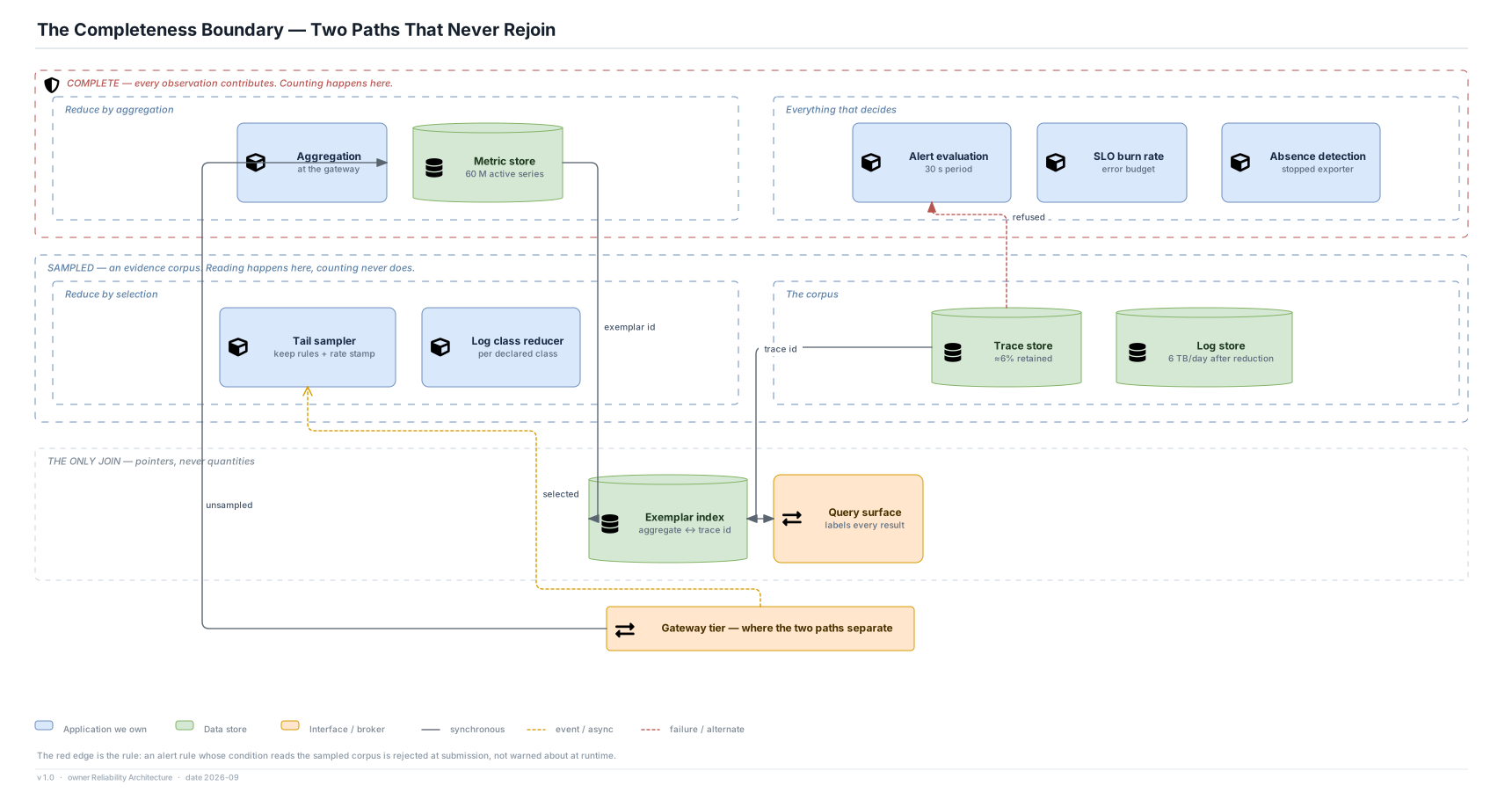
- Aggregates are complete; instances are sampled. The metric path is reduced by aggregation, in which every observation contributes before anything is discarded. The trace and log paths are reduced by selection and are deliberately incomplete.
- The two paths split at the gateway, are stored separately, and are joined only through the exemplar index, which carries pointers and never quantities.
What follows from it
- Alert evaluation can be independent of the query tier, because it only ever reads the complete path (view 10).
- A 6% retained span rate is a reasonable default rather than a 94% blind spot, because nothing is counted from the corpus (view 16).
- Cardinality must be admitted at the gateway, because an unbounded label on the one path that cannot shed is an unbounded cost (view 22).
The alternative, honestly
- One wide-event corpus, sampled once, with every metric derived from it, is a real architecture with real proponents and is materially better at answering unanticipated questions.
- It requires either accepting that every count is an estimate, or retaining enough unsampled that the cost advantage disappears. At 25 M samples/s against 2.5 M offered spans/s this design takes the other side — see ADR-01.