Observability Platform · View 09 of 25 · Structure
Decisions
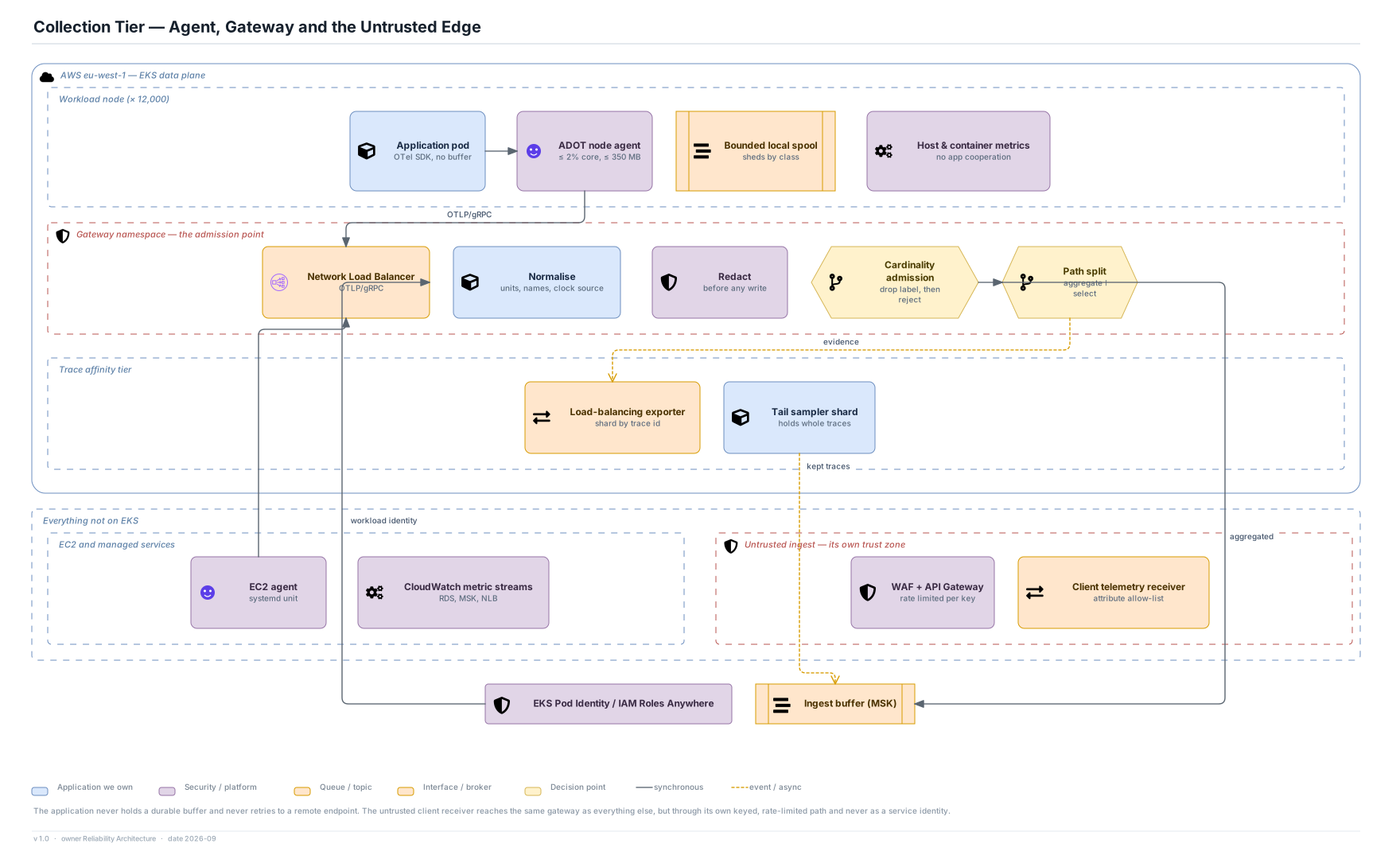
- The application never holds a durable buffer and never retries to a remote endpoint. The node agent's bounded spool is the only queue in front of the gateway, and it sheds by class rather than growing.
- Resource identity is applied by the collection tier from scheduling metadata and from the credential the workload proved — never trusted from the payload (view 24).
- Tail sampling needs trace affinity, so the gateway exports through a consistent hash on trace id before the sampler sees anything.
Numbers
- Node agent ≤ 2% of one core and ≤ 350 MB RSS at steady state; in-process exporter ≤ 1% and ≤ 60 MB. The agent sheds its own telemetry before exceeding these and reports having done so.
- Gateway admission enforces 250,000 active series per service by default, 2 M by expiring exception, and a 100-value ceiling per label.
Risks
- The gateway is now doing normalisation, redaction, admission, aggregation and path splitting. It is the busiest component in the platform and the one whose failure is hardest to degrade gracefully.
- The untrusted client path shares the gateway. Its rate limits and attribute allow-list are the only thing between a hostile client and the platform's ingest budget.