Observability Platform  ·  View 07 of 25  ·  Structure

Layered Architecture

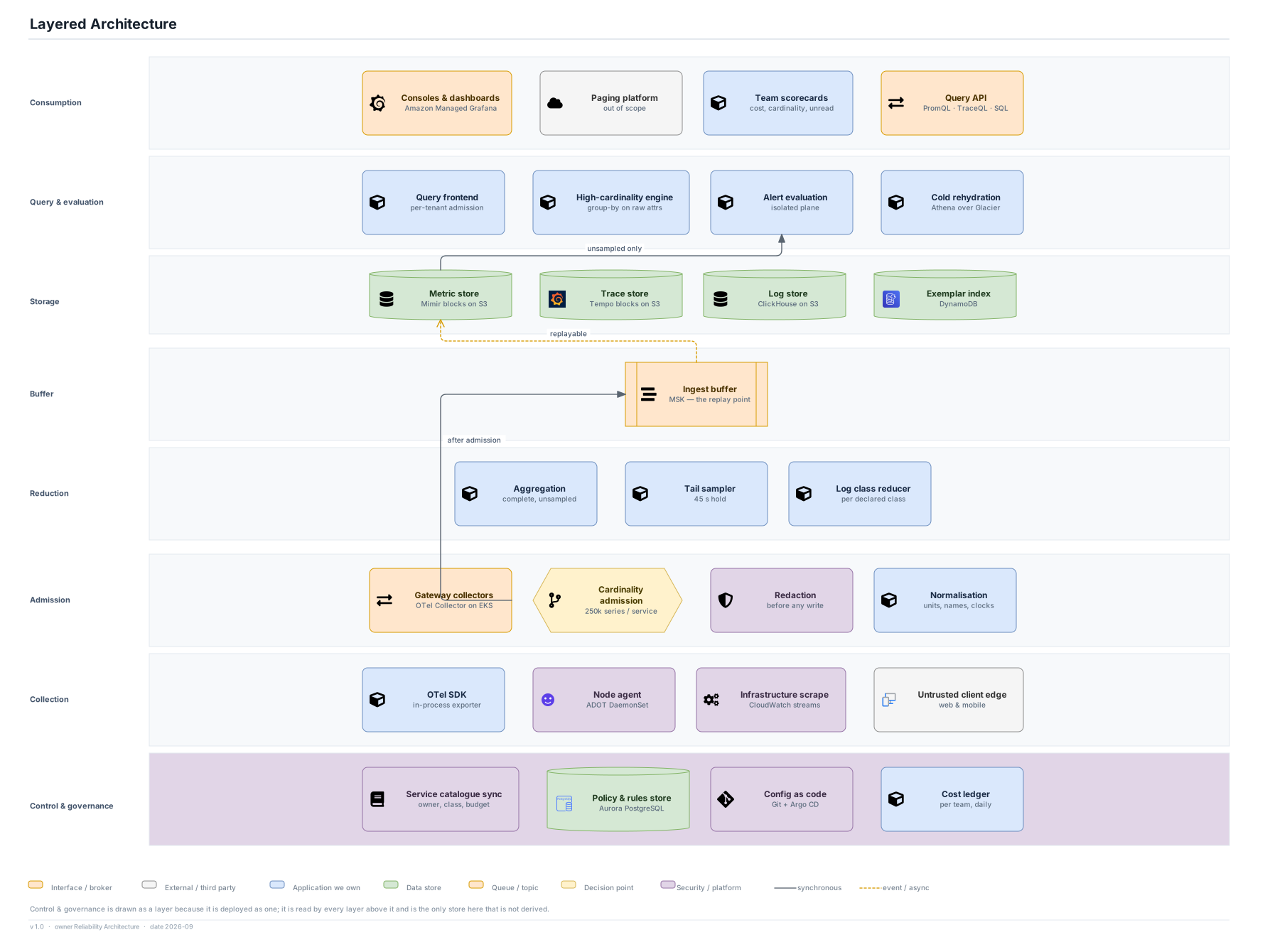
Eight layers, read bottom to top — and the one drawn as a layer because it is deployed as one.

Editable source SVG draw.io All views
Consumption Consoles & dashboards Amazon Managed Grafana Paging platform out of scope Team scorecards cost, cardinality, unread Query API PromQL · TraceQL · SQL Query & evaluation Query frontend per-tenant admission High-cardinality engine group-by on raw attrs Alert evaluation isolated plane Cold rehydration Athena over Glacier Storage Metric store Mimir blocks on S3 Trace store Tempo blocks on S3 Log store ClickHouse on S3 Exemplar index DynamoDB Buffer Ingest buffer MSK — the replay point Reduction Aggregation complete, unsampled Tail sampler 45 s hold Log class reducer per declared class Admission Gateway collectors OTel Collector on EKS Cardinality admission 250k series / service Redaction before any write Normalisation units, names, clocks Collection OTel SDK in-process exporter Node agent ADOT DaemonSet Infrastructure scrape CloudWatch streams Untrusted client edge web & mobile Control & governance Service catalogue sync owner, class, budget Policy & rules store Aurora PostgreSQL Config as code Git + Argo CD Cost ledger per team, daily after admission replayable unsampled only Layered Architecture Interface / broker External / third party Application we own Data store Queue / topic Decision point Security / platform synchronous event / async Control & governance is drawn as a layer because it is deployed as one; it is read by every layer above it and is the only store here that is not derived. v 1.0 · owner Reliability Architecture · date 2026-09

Decisions

  • Admission is its own layer, above collection and below reduction, because putting it anywhere else changes what the platform can promise: enforce in the SDK and you cannot update it, enforce in the store and it fails as an outage.
  • Control & governance is a layer rather than a sidebar. It holds the only state in the platform that cannot be rebuilt, and every layer above it reads from it.

Reading it

  • Three edges are drawn and the rest are omitted on purpose: gateway to buffer, buffer to store, and store to alert evaluation. Those three carry the availability argument; the others would only restate the layer order.

Risks

  • Seven layers of transformation between an emitting process and a queryable result is seven places a record can be dropped. View 21 exists because that chain is only trustworthy if each link is measured.