Observability Platform · View 02 of 25 · Context and scope
Decisions
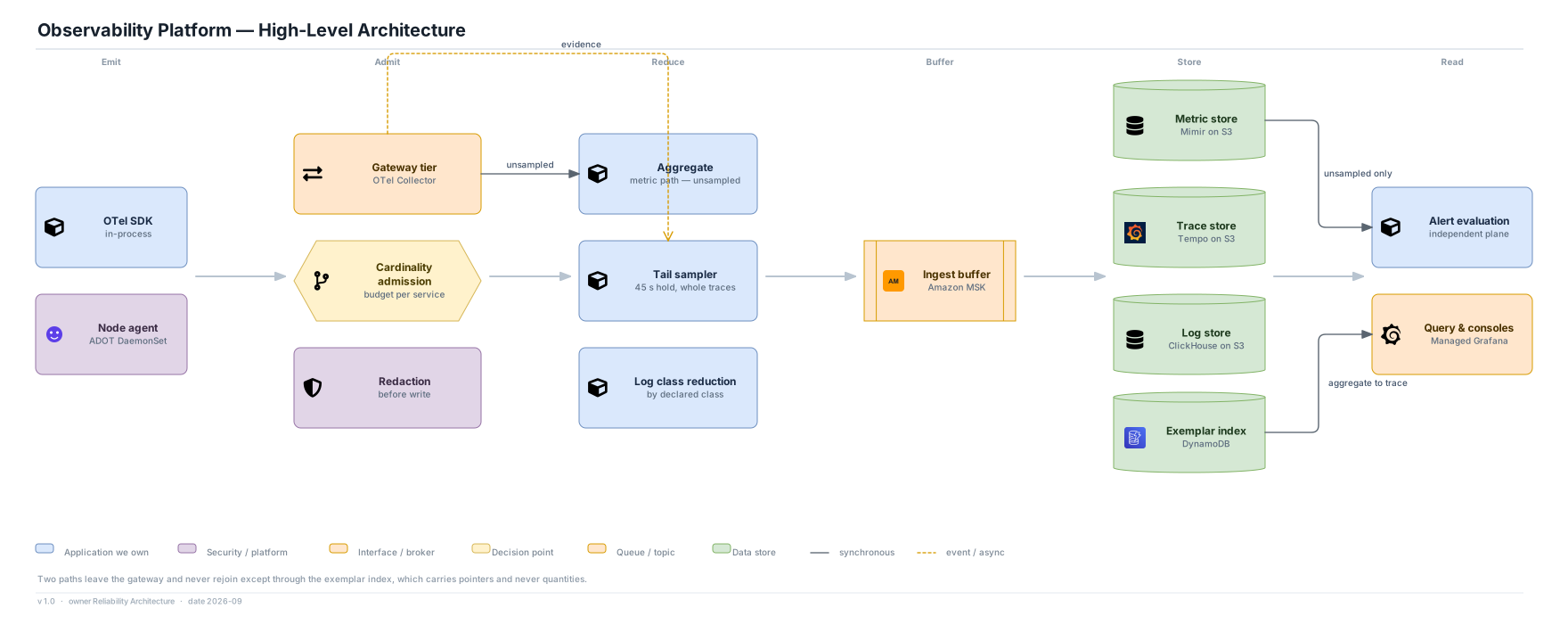
- Admission comes before reduction. Cardinality and redaction are enforced where data enters, not where it lands, so a bad label is a rejection at the gateway rather than a store failure at 3 a.m.
- One durable buffer sits between admission and every writer, which makes each store independently replayable and removes their recovery objectives from the platform's RPO story.
- Object storage is the retention substrate for all three signals, so retention is a storage-class decision and query capacity scales without moving data.
Stack, and why
- OpenTelemetry Collector for collection and admission, Amazon MSK as the buffer, Mimir, Tempo and ClickHouse over S3 for storage, DynamoDB for the exemplar index, Amazon Managed Grafana for consoles.
- AWS was chosen because it is the least-delivered stack in this practice; observability belongs to no particular cloud, so the topic is free to rotate. The requirement stays vendor-neutral outside section 1 of ask.md.
Deliberately omitted
- Per-signal writer counts, shard topology and the control plane are all left to views 09, 10 and 19. This view carries the shape of the pipeline and the location of the split, and nothing else.