Usage Metering & Billing Pipeline · View 20 of 22 · Assurance
Decisions
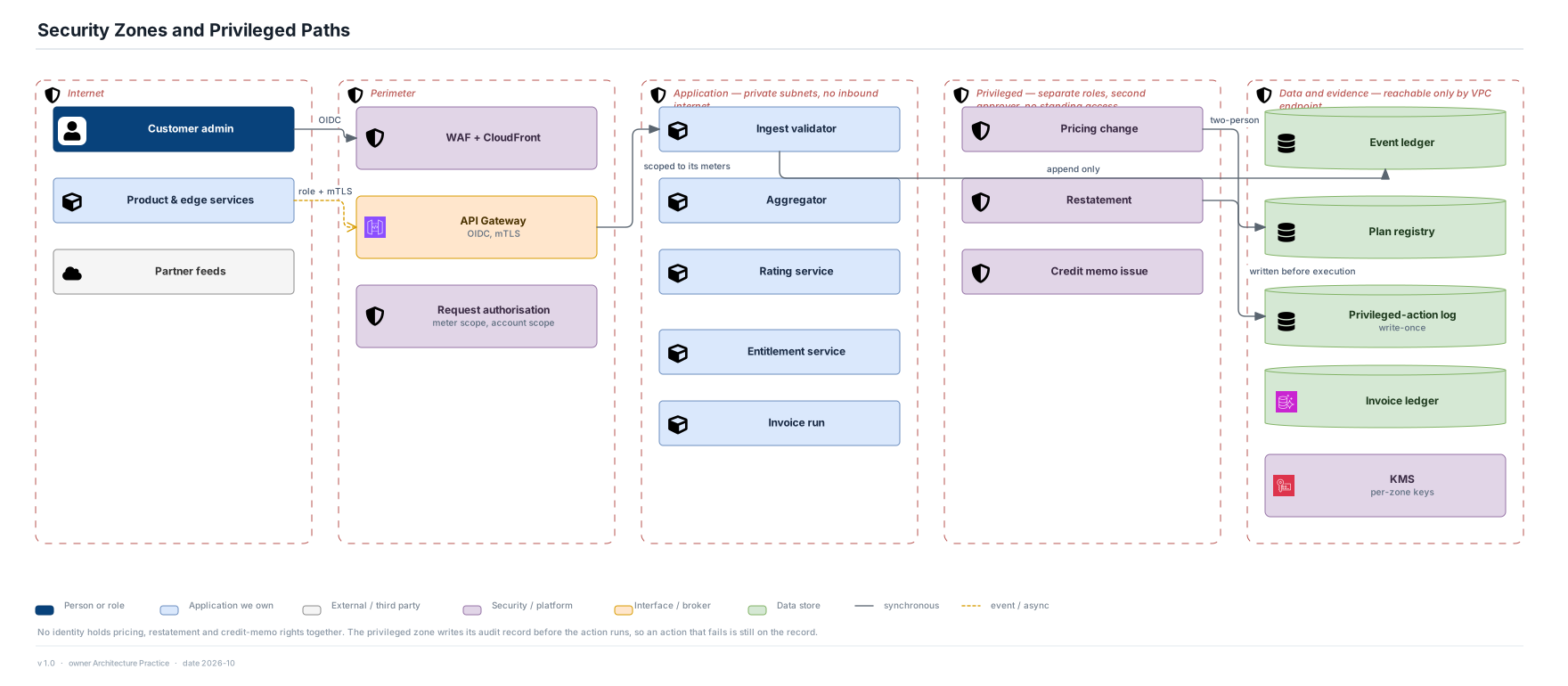
- No identity holds pricing change, restatement and credit-memo rights together, and none of the three can be exercised without a second approver. These are the three ways to lose a lot of money quickly, and they are the reason the privileged zone exists at all.
- Producers authenticate as workload identities authorised to specific meters, so a compromised service cannot fabricate usage on another meter — the blast radius of a service compromise is that service's own meters.
- The privileged zone writes its audit record before the action runs, into a store the platform's own operators cannot delete from. The operators are an in-scope threat.
- Account-scoped authorisation on every read path is verified by an automated test on every change to a read path, because a cross-tenant usage leak is a breach, not a bug.
Assumptions
- No standing access to the privileged zone; rights are assumed for a bounded session and recorded (stated assumption).
- Per-zone KMS keys, so a key compromise does not span the record and the financial ledger.
Risks
- The dimension map may carry customer identifiers, which makes an event store subject to deletion requests that the statutory retention of the financial record resists. The design splits them; the policy still has to be written.
- Write-once retention is not reversible. A retention misconfiguration is permanent by design.