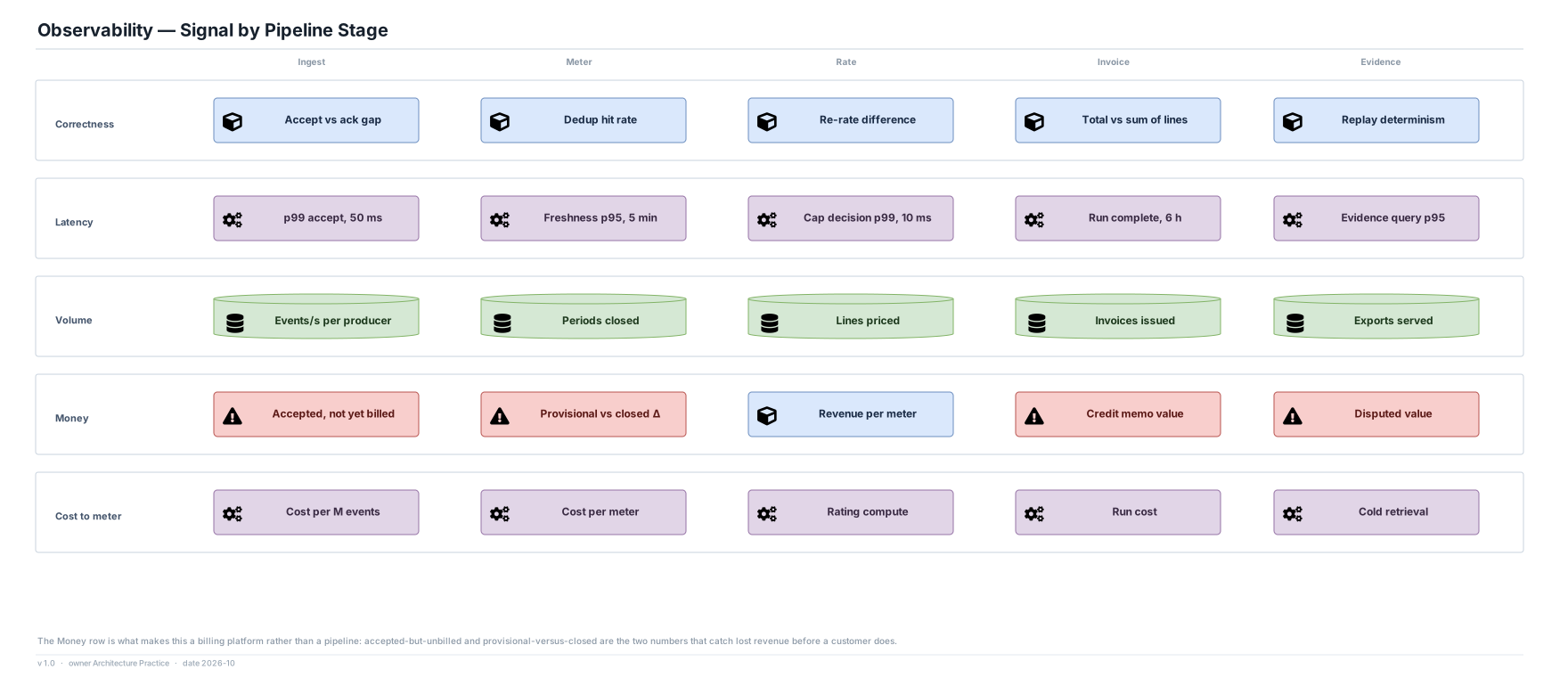
Usage Metering & Billing Pipeline · View 18 of 22 · Operations
Decisions
- The Money row is what distinguishes this from an event pipeline. Accepted-but-unbilled and provisional-versus-closed delta are the two numbers that catch lost revenue before a customer does, and neither is a conventional service metric.
- Correctness is a first-class signal row: dedup hit rate, re-rate difference, invoice total versus the sum of its lines, and replay determinism. Each one tests an assumption the architecture rests on.
- Cost is measured per meter, so a high-cardinality dimension that costs more to meter than it earns can be found and removed rather than argued about.
Targets
- Accuracy: at most 1 in 10^6 accepted events lost or double-counted after reconciliation (stated assumption).
- Pipeline cost below 0.5% of metered revenue, reported monthly (stated assumption).
- Freshness p95 5 minutes; cap decision p99 10 ms; run complete in 6 hours (stated assumptions).
Risks
- Replay determinism cannot be sampled cheaply; a scheduled replay of a known account is the only honest test, and it costs compute every day it runs.
- Four of these twenty-five signals require a comparison against an independent source. Without the Phase 3 reconciliation against the serving path's own counters, the platform is partly checking its own homework.