Storage Tiering Service · View 21 of 31 · 5 · Runtime
Decisions
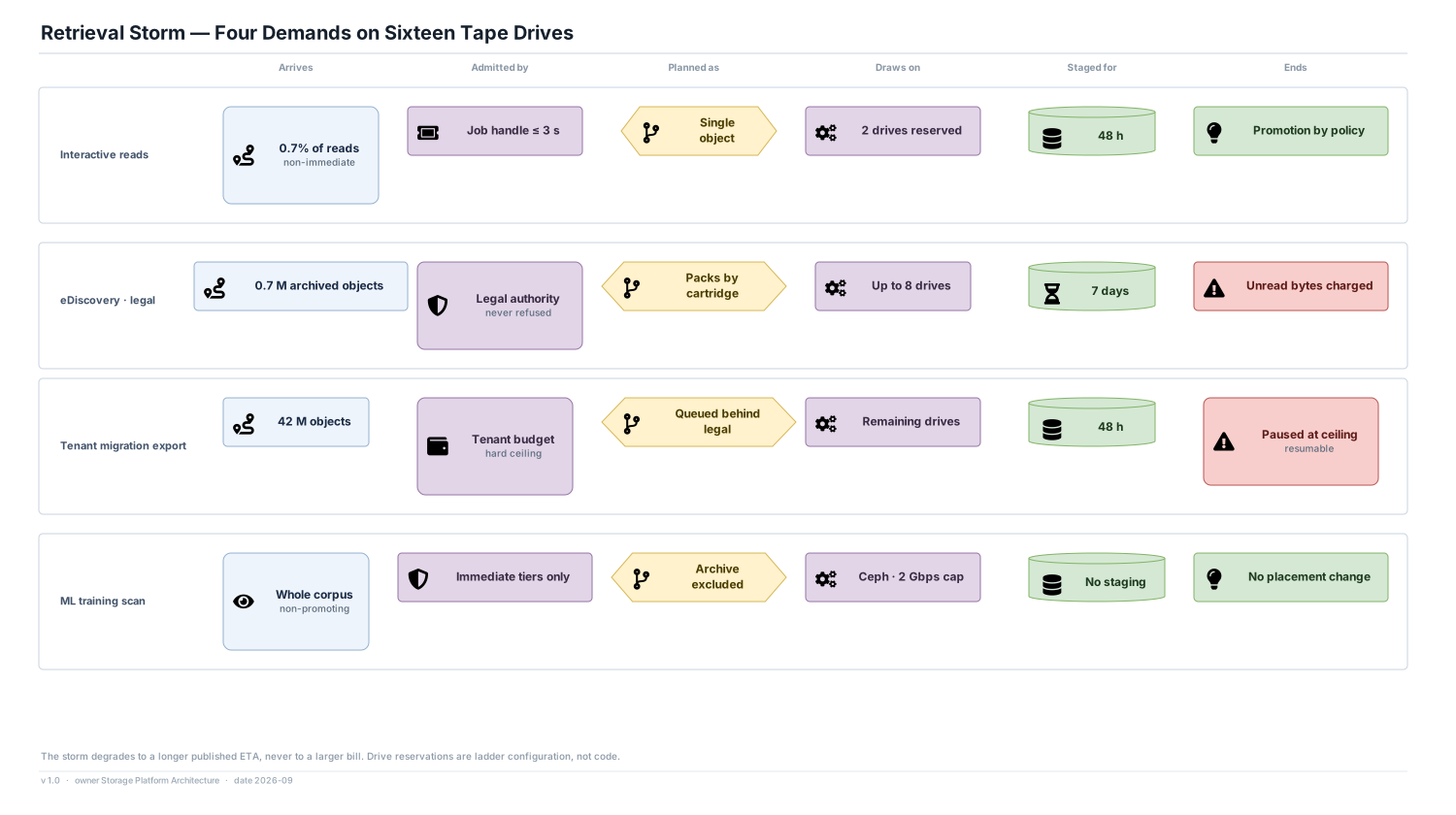
- Drives are reserved by demand class: two always kept for interactive recalls, up to eight for legal authority, the rest shared. An eDiscovery sweep cannot starve a user who opened an archived file.
- The ML training scan is admitted to immediate tiers only and capped at 2 Gbps. Tape is excluded unless a job is explicitly authorised, because training on archived data is a decision, not a side effect.
- A tenant export that hits its budget ceiling pauses with its staged bytes kept for their TTL. The platform does not throw away retrievals it has already paid for to enforce a budget.
Numbers
- Bulk recall planning for up to 50 million objects in one job. Queue depth and the current estimate per tier are published every minute.
- Two libraries with eight LTO-10 drives each; about 8 PB of archive bytes, two copies, roughly 550 cartridges.
The principle
- A storm degrades to a longer published estimate. It never degrades to an unbounded bill or a hung request.