Storage Tiering Service · View 22 of 31 · 6 · Operations
Decisions
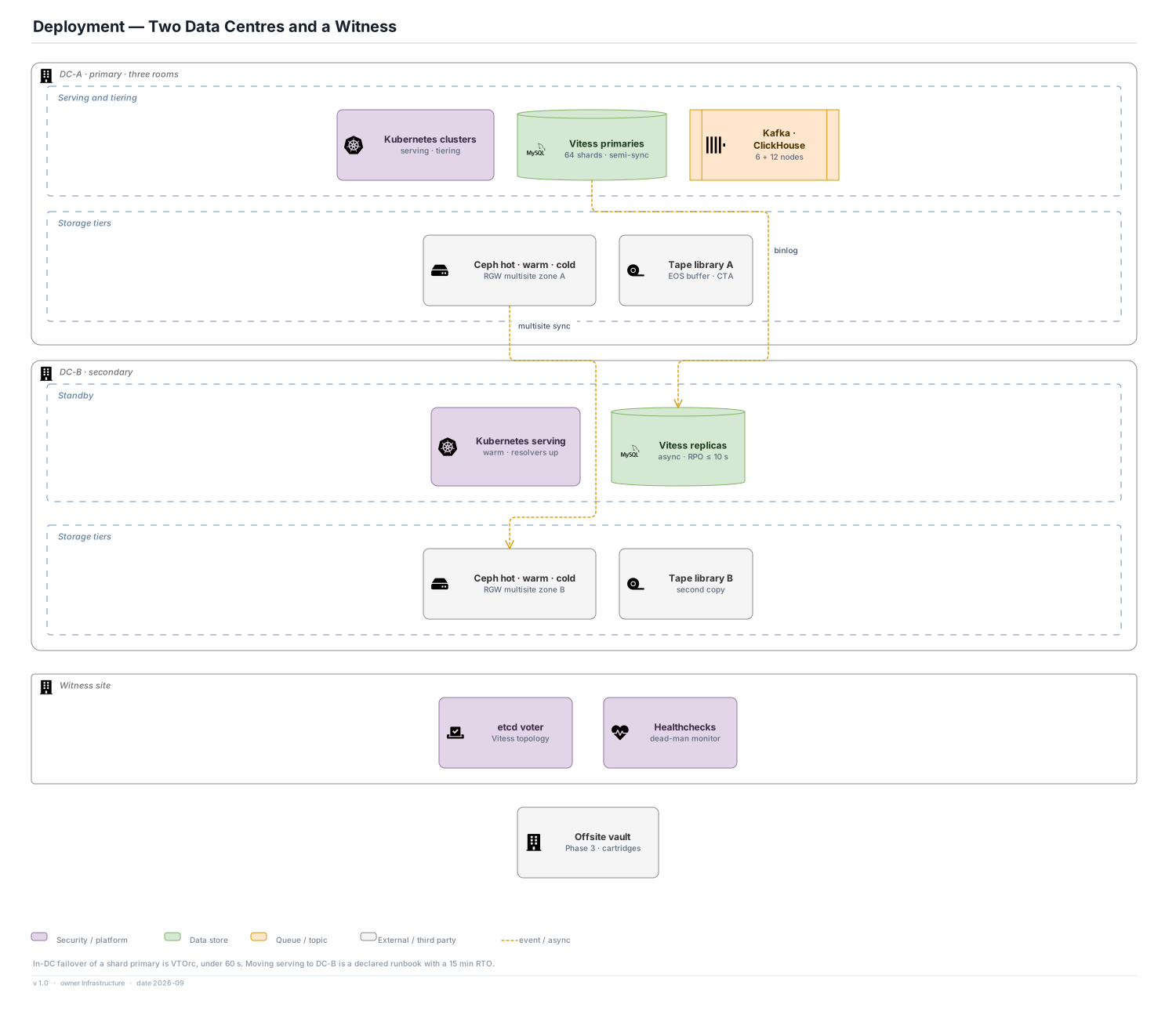
- Rooms in DC-A play the role of zones: shard primaries and their two semi-sync replicas are in different rooms, so a room loss is an automatic VTOrc failover rather than a site event.
- DC-B runs resolvers warm against async replicas and a second Ceph zone. Promoting DC-B is a rehearsed runbook, not an automatic action, because a split-brain catalogue is worse than 15 minutes of failed reads.
- The witness site holds the third etcd voter for Vitess topology and the dead-man monitor, so neither depends on the data centre it is watching.
Numbers
- Logical bytes by tier at the planning mix: about 12 PB hot, 8 PB warm, 12 PB cold, 8 PB archive. Tier sizing and hardware belong to the storage team; the service consumes them.
- In-DC catalogue RPO 0, RTO 60 s. Cross-site RPO 10 s, RTO 15 min.
Risk
- Ceph multisite replication is asynchronous. The release gate's check for the destination replica in DC-B is what makes a site loss unable to delete the last copy, so that check is tested in the proof phase by killing DC-A mid-release.