Storage Tiering Service · View 20 of 31 · 5 · Runtime
Decisions
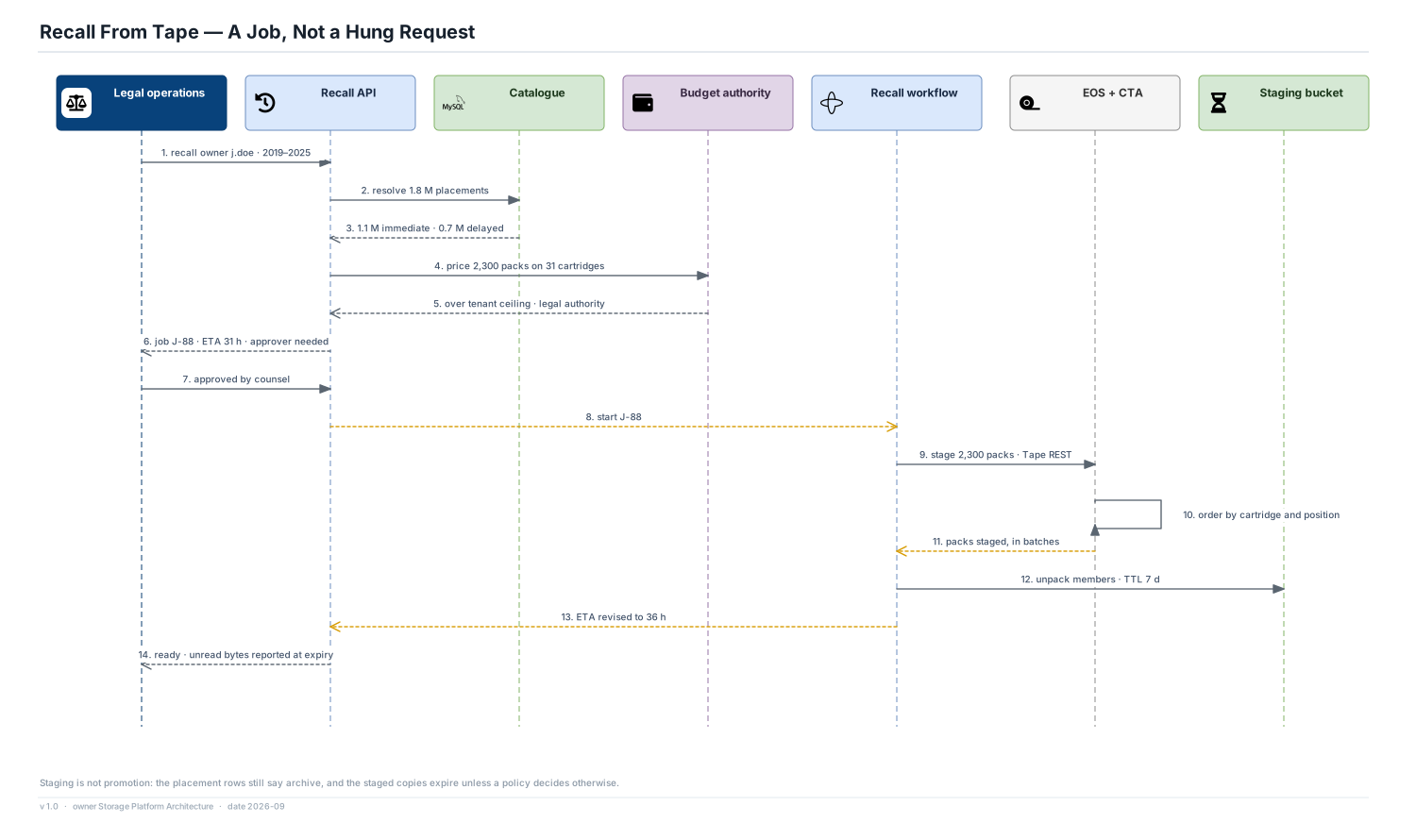
- Recall is priced before it is authorised. The workflow resolves placements, groups them into packs and cartridges, and shows the requester the cost and the estimate before any drive moves.
- The recall workflow runs in Temporal because a job can outlive worker restarts, budget pauses and a 12-hour tape queue. The state that has already cost money is exactly the state that must not be lost.
- Rehydration is not promotion. Staged copies live in a TTL bucket and expire; the placement still says archive unless a promotion policy decides otherwise (ADR-26).
Numbers
- Archive rehydration p50 4 min, p99 45 min for a single object; 12-hour ceiling declared to callers. Staging TTL 48 hours by default, extendable per job to 7 days.
- Unread rehydrations target at most 3% of rehydrated bytes. Every staged-but-unread byte is charged to the job's authority.
Risk
- The design relies on EOS and CTA exposing staging through the WLCG Tape REST API at this request volume. The proof phase tests 2,000 concurrent stage requests; the fallback is CTA's native frontend.