Storage Tiering Service · View 17 of 31 · 5 · Runtime
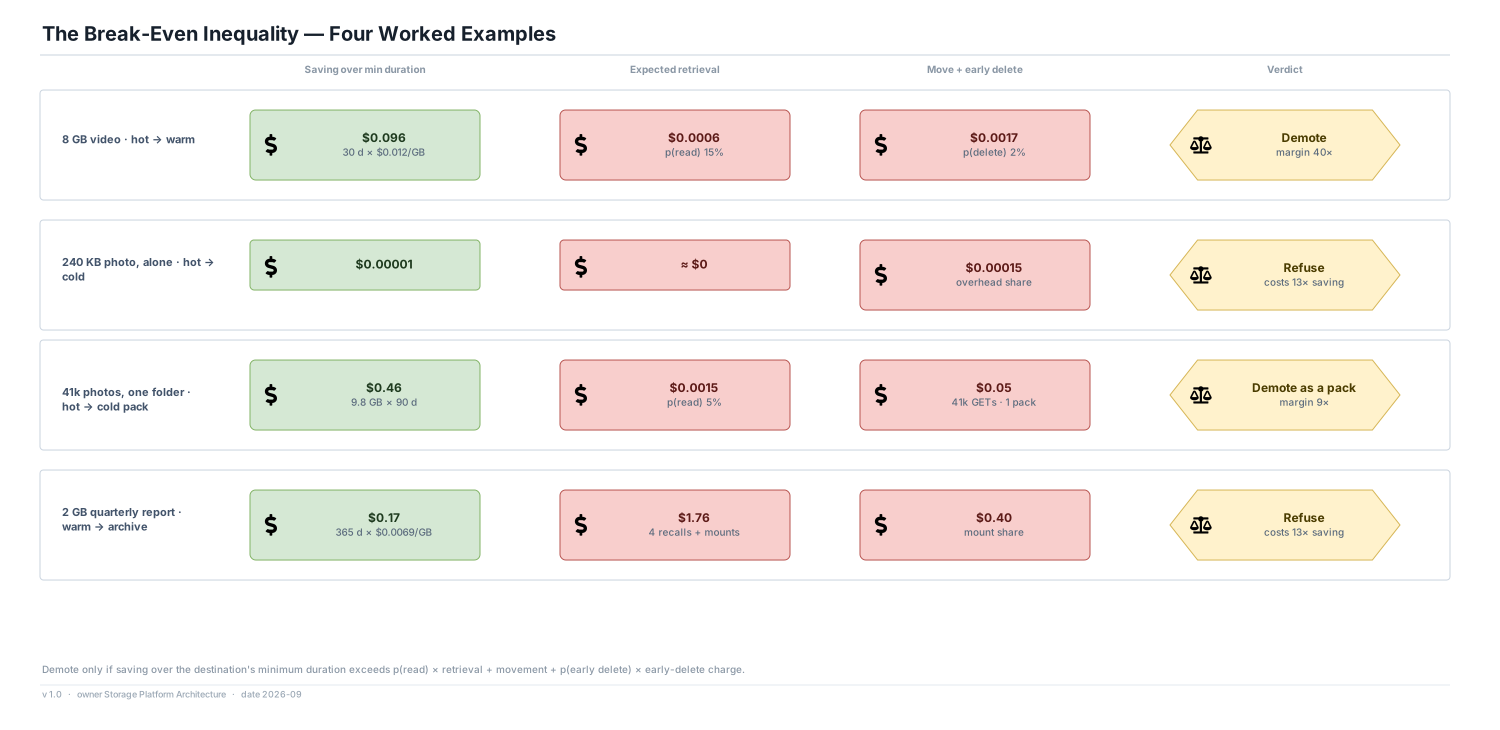
How to read it
- The horizon is the destination's minimum duration, because that is the shortest time the platform is committed to paying for. Saving is priced over that horizon and nothing longer.
- Expected retrieval uses the probability of a read by a promoting class over the horizon, estimated from the object's class and history. Non-promoting reads are costed separately and never raise it.
- The early-delete term matters more than it looks. The requirement's own figures imply that most ingested bytes are deleted within a year (210 TB a day in, 38 TB a day of net growth), so for young objects p(delete) is often the largest input.
What the examples teach
- The lone 240 KB photo is refused on overhead, not on retrieval. The same photo inside a folder cohort demotes with a 9× margin.
- The quarterly report is refused because recalls from tape cost more than a year of storage saves. Its window (view 16) would have stopped it earlier; the inequality stops it anyway.
Assumptions
- Prices are ladder version 1 (view 09). Read and delete probabilities are illustrative. Real values come from the aggregates and are recorded in each decision.