Storage Tiering Service · View 16 of 31 · 5 · Runtime
Decisions
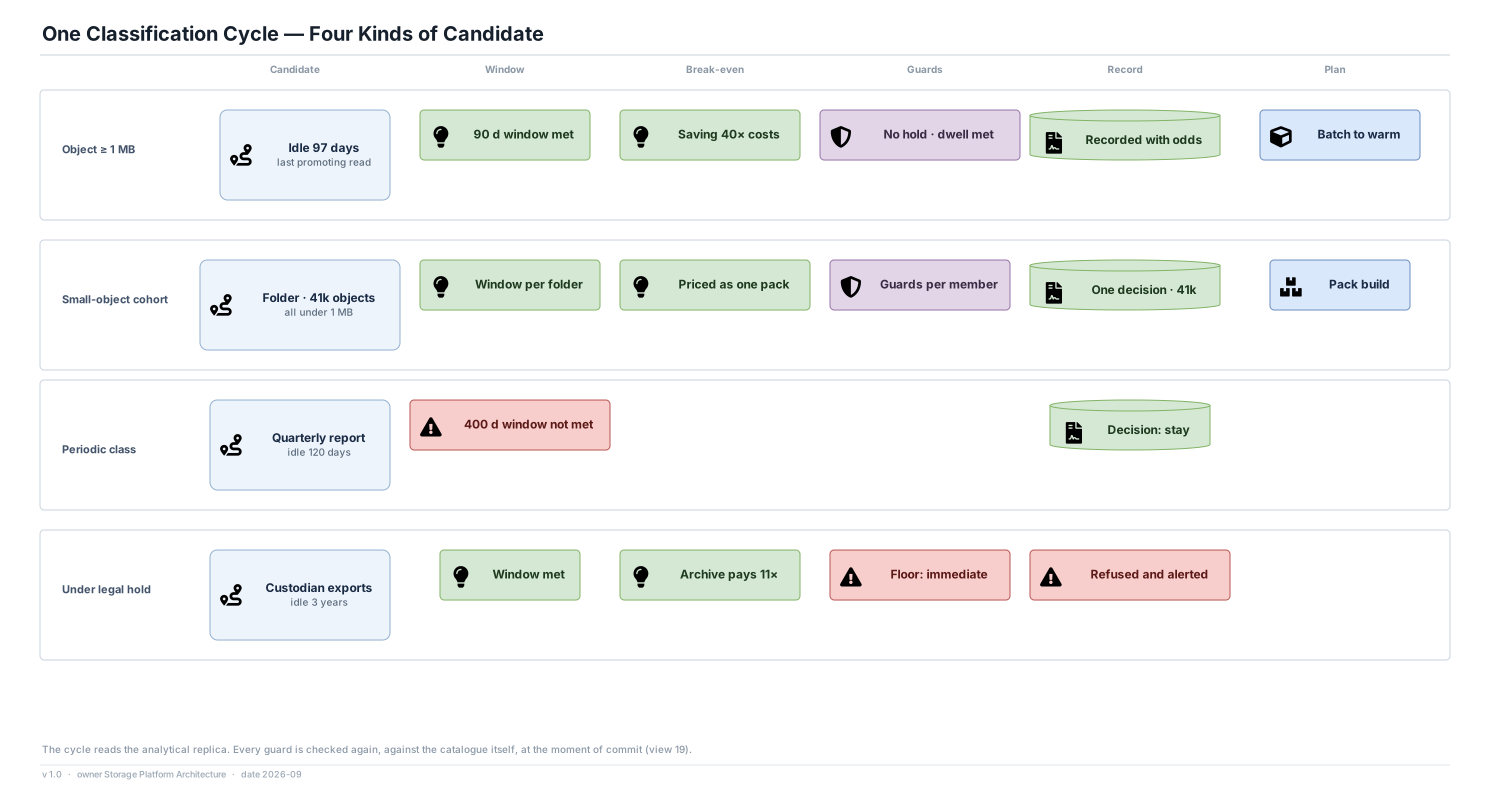
- The observation window is declared per object class: 90 days by default, 400 days for classes declared periodic. An object is not evaluated until its window has elapsed, so a quarterly report is never mistaken for a cold one.
- Objects under 1 MB are candidates only as folder cohorts and are priced as the pack they would become. The per-object overhead makes them unprofitable to move one at a time (ADR-17).
- A refusal is a decision too. It is recorded with its inputs, and a refusal caused by a hold is counted and alerted, because a hold nobody knows is blocking a large saving is information the legal team should have.
Numbers
- A full cycle over 9.2 billion placements in at most 6 hours, run as ClickHouse SQL over the catalogue replica and the aggregates, with the break-even arithmetic in Go on the candidate set.
- The cycle's cost is published per run, so running it twice as often is a decision with a price attached.
What it deliberately does not read
- The live catalogue. Guards are evaluated here for planning and then evaluated again, authoritatively, inside the commit transaction (view 19).