Storage Tiering Service · View 18 of 31 · 5 · Runtime
Decisions
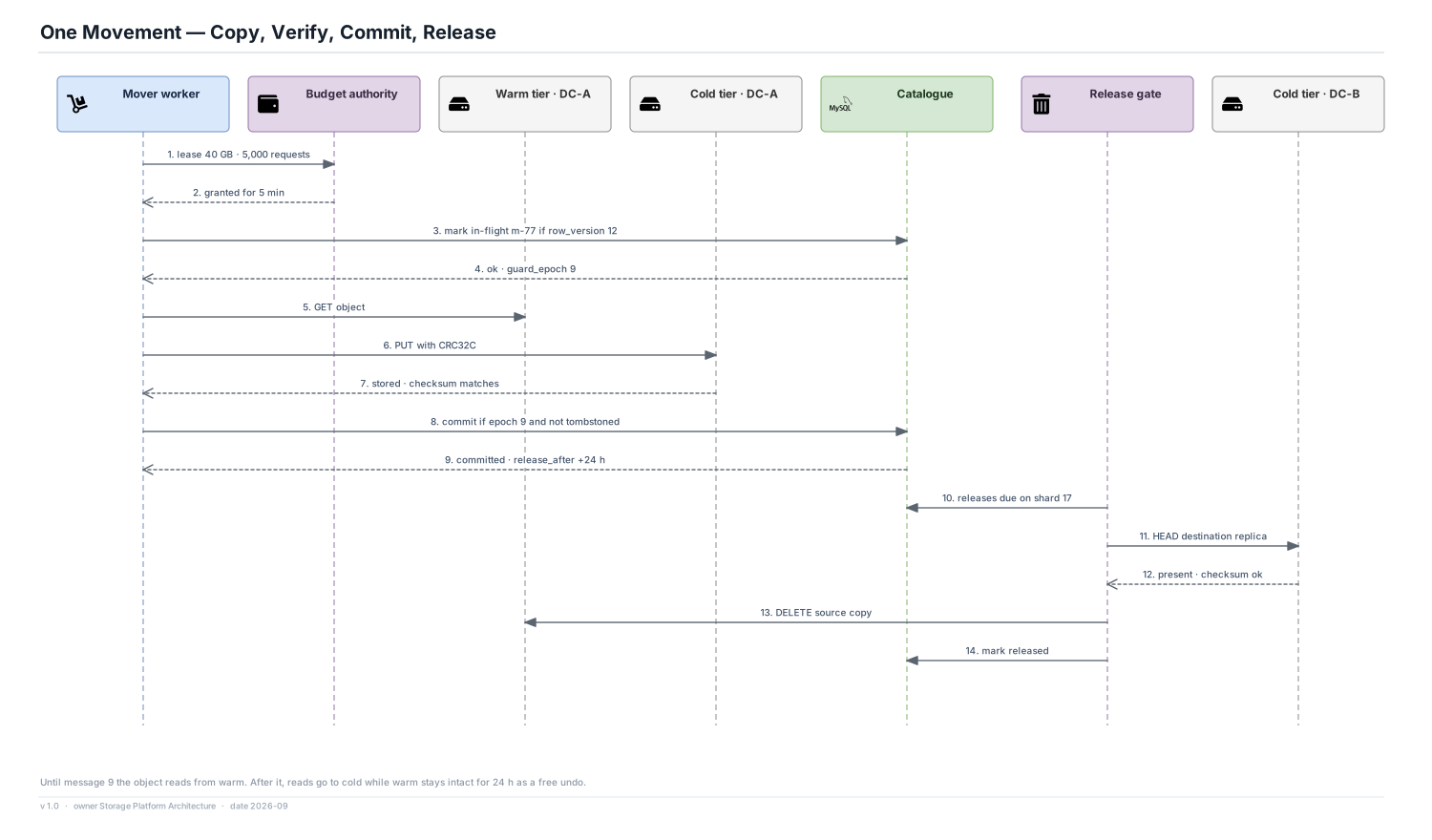
- The movement row in the catalogue is the state machine. A worker that dies at any step leaves a row saying exactly how far it got, and the next worker resumes or abandons from there (ADR-23).
- The commit is a compare-and-set: it succeeds only if the tenant's guard epoch is unchanged and the object is not tombstoned. The destination write alone changes nothing.
- Release is done by a different service under a different identity, 24 hours after commit, and only after the destination's replica in DC-B is confirmed. Otherwise a site loss in the replication gap could remove the only surviving copy.
Numbers
- Budget leases are for five minutes and name both bytes and requests. At this object-size distribution the request count, not the byte count, is what runs out first.
- Holding sources for 24 hours costs one extra day of storage for 900 TB: about $250 a day from warm, $600 from hot. It buys a free undo for every movement.
Risk
- The checksum is computed by the mover and validated by RGW on receipt. That depends on RGW honouring S3 additional checksums on the deployed Ceph release; if it does not, verification falls back to a read-back, which doubles read load on the destination.