Storage Tiering Service · View 15 of 31 · 4 · Data
Decisions
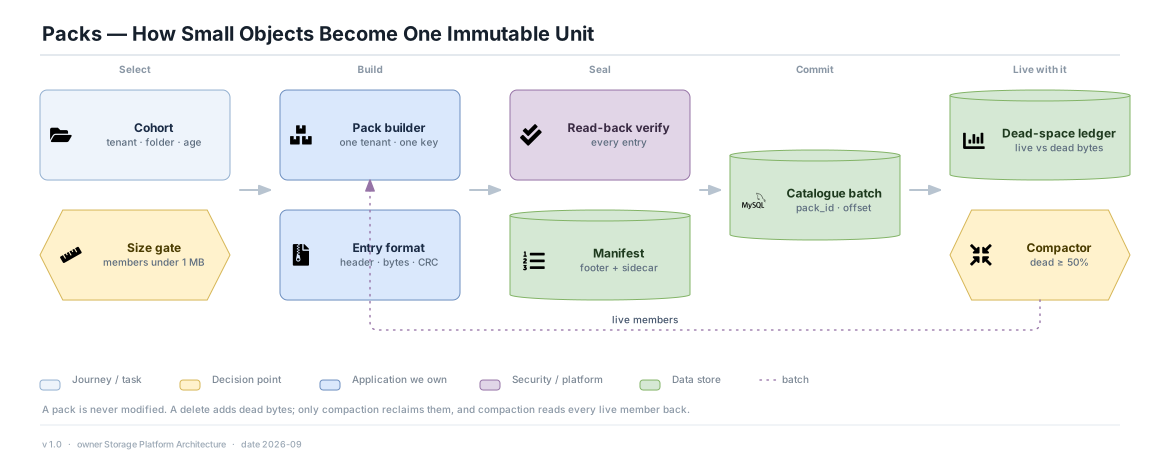
- One tenant and one encryption key per pack. Tenant offboarding, crypto-shredding and a read of one tenant's object never involve another tenant's bytes (ADR-08).
- Cohorts are cut by tenant, then folder, then upload time, so objects that arrived together and are opened together sit next to each other in the pack.
- Every entry carries its own header: tenant, object id, version, length, key id and CRC32C. The footer indexes the entries and a copy of it is stored as a sidecar manifest. A pack explains itself without the catalogue.
Numbers
- Packs seal at 2 GB or after 7 days open. Compaction runs when dead bytes pass 50% of a pack and its members' minimum durations have expired.
- Every sealed pack is read back in full and checked entry by entry before a single placement row is committed.
Risk
- Compaction is a full read of everything still live in a pack: the most expensive operation the platform performs. Dead-space thresholds are set so that most packs are deleted whole when their cohort expires, rather than compacted.