Storage Tiering Service · View 11 of 31 · 3 · Structure
Decisions
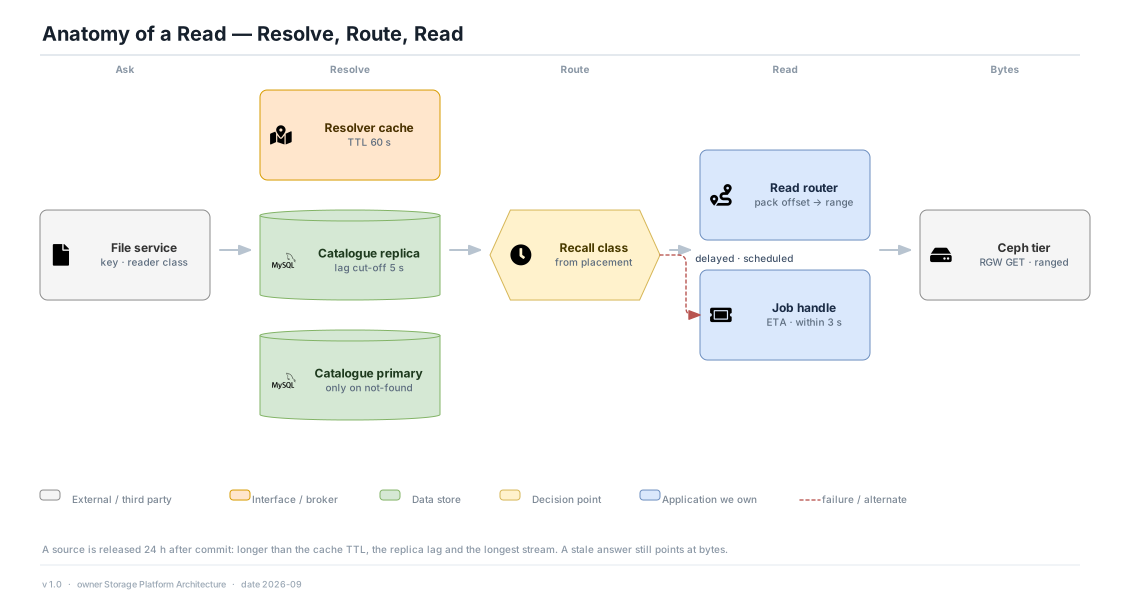
- Resolution tries a 60-second in-process cache, then a replica whose lag is under 5 seconds, then the primary only when the row is not found. Only brand-new uploads reach the primary.
- That order is safe because the source of a movement is not released until 24 hours after commit. Any answer that is 60 seconds, 5 seconds or even an hour stale still names a location that holds the bytes (ADR-03).
- Packed objects are read by range from the pack; the router turns a placement's pack offset and length into a ranged GET. A cold pack read never reconstructs the whole pack.
Numbers
- Resolution p50 2 ms, p99 8 ms. First byte p99 45 ms hot, 120 ms warm, 900 ms cold.
- About 0.7% of reads resolve to delayed or scheduled. They get a job handle within the 3-second synchronous ceiling and are never held open.
Risk
- A GET that returns 404 at a committed location is drift, not a miss. The router retries once with an uncached resolve and then fails loudly and reports it, because silently probing other tiers would put the tiering plane's job on the read path.