Storage Tiering Service · View 12 of 31 · 4 · Data
Decisions
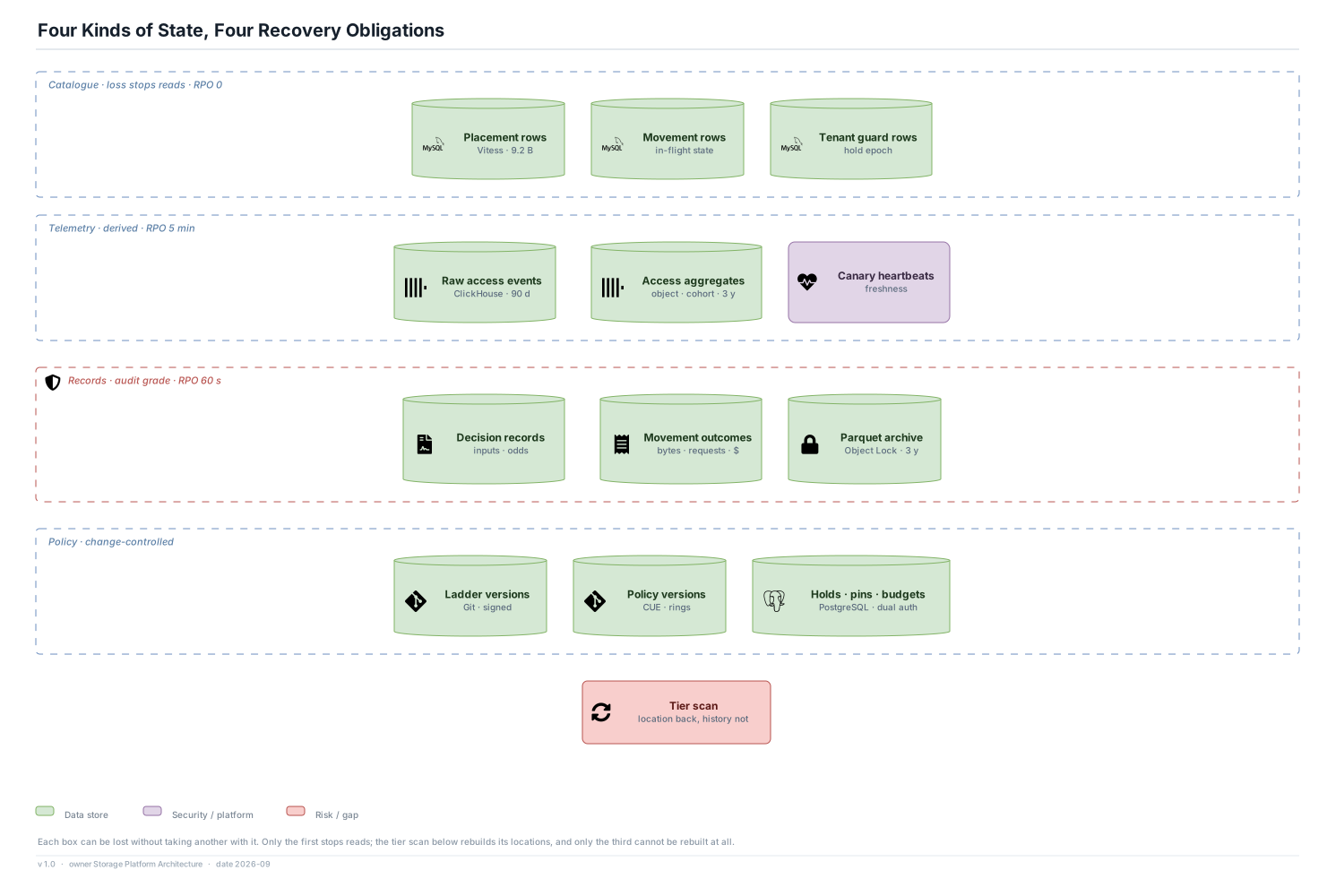
- The catalogue is the only store whose loss stops reads. It holds where, never why, which keeps rows small and failover simple.
- Telemetry is disposable beyond its aggregates. Losing an hour of events degrades a future decision; the classifier's freshness gate makes sure it cannot cause a wrong one (ADR-18).
- Decision and movement records are the platform's evidence, retained for three years in Object-Locked Parquet independently of the catalogue. They cannot be rebuilt from anything, which is why they are not stored next to the thing a rebuild replaces.
Recovery objectives
- Catalogue: RPO 0 and RTO 60 s in DC-A, RPO 10 s and RTO 15 min across sites, full rebuild by tier scan within 30 h.
- Records: RPO 60 s, RTO 4 h. Telemetry: RPO 5 min, RTO 4 h. Recall job state: RPO 30 s, RTO 10 min.
What a rebuild loses
- A catalogue rebuilt from storage knows where every object is, what it weighs and which pack holds it. It does not know why it moved, when it was last read or which policy put it there. Those come back from the records store, not from the scan.