Spot Capacity Orchestrator  ·  View 14 of 32  ·  4 · Data

Data Model

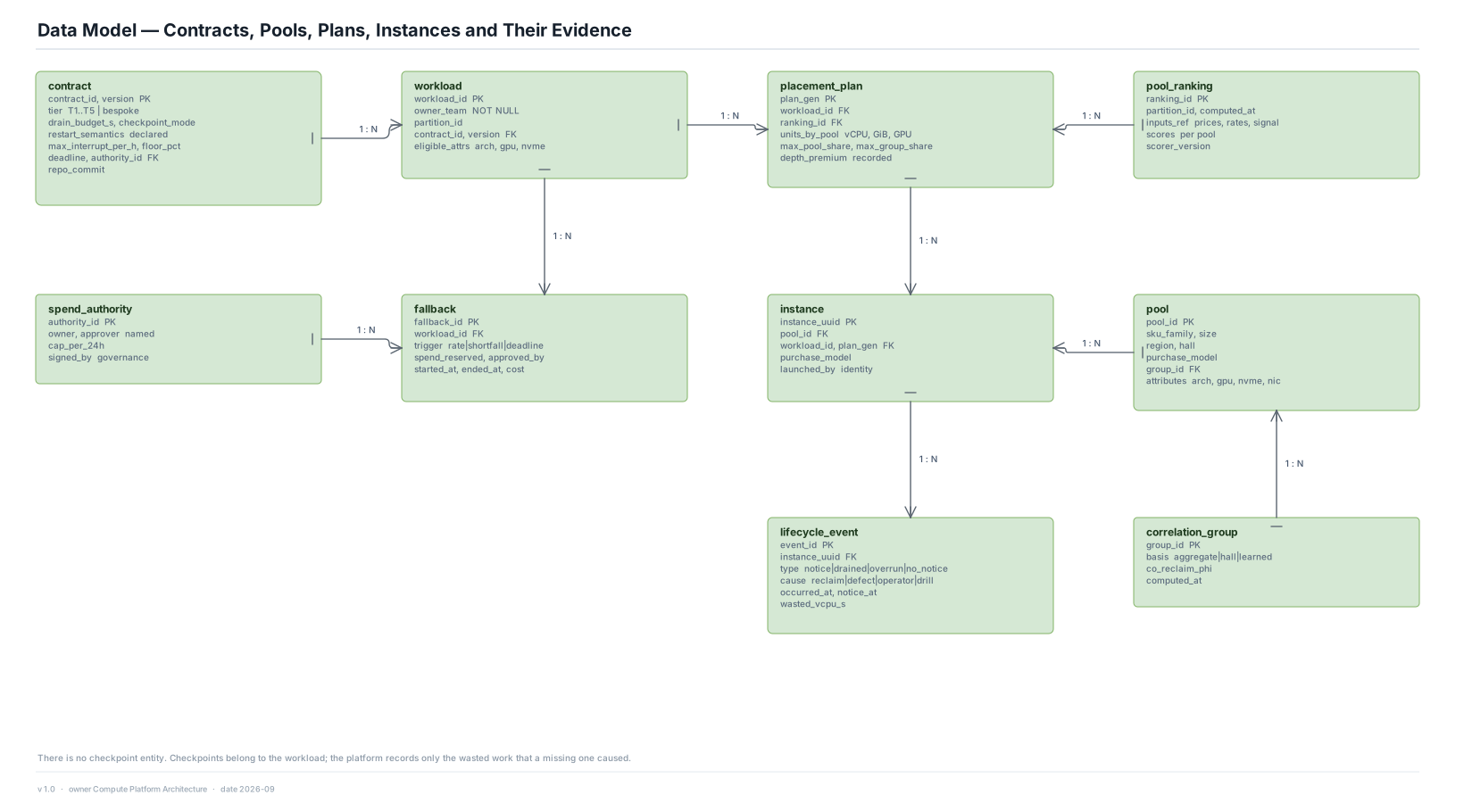
Contracts govern workloads; rankings and workloads produce plans; plans produce instances; instances produce the events every report is built from.

Editable source SVG draw.io All views
contract contract_id, version PK tier T1..T5 | bespoke drain_budget_s, checkpoint_mode restart_semantics declared max_interrupt_per_h, floor_pct deadline, authority_id FK repo_commit workload workload_id PK owner_team NOT NULL partition_id contract_id, version FK eligible_attrs arch, gpu, nvme placement_plan plan_gen PK workload_id FK ranking_id FK units_by_pool vCPU, GiB, GPU max_pool_share, max_group_share depth_premium recorded pool_ranking ranking_id PK partition_id, computed_at inputs_ref prices, rates, signal scores per pool scorer_version spend_authority authority_id PK owner, approver named cap_per_24h signed_by governance fallback fallback_id PK workload_id FK trigger rate|shortfall|deadline spend_reserved, approved_by started_at, ended_at, cost instance instance_uuid PK pool_id FK workload_id, plan_gen FK purchase_model launched_by identity pool pool_id PK sku_family, size region, hall purchase_model group_id FK attributes arch, gpu, nvme, nic lifecycle_event event_id PK instance_uuid FK type notice|drained|overrun|no_notice cause reclaim|defect|operator|drill occurred_at, notice_at wasted_vcpu_s correlation_group group_id PK basis aggregate|hall|learned co_reclaim_phi computed_at 1 : N 1 : N 1 : N 1 : N 1 : N 1 : N 1 : N 1 : N 1 : N Data Model — Contracts, Pools, Plans, Instances and Their Evidence There is no checkpoint entity. Checkpoints belong to the workload; the platform records only the wasted work that a missing one caused. v 1.0 · owner Compute Platform Architecture · date 2026-09

Decisions

  • A placement plan keeps the ranking it was computed from. Any instance can be traced to the plan generation, the ranking and the price, interruption and forward-capacity inputs that were current when it was chosen.
  • Every lifecycle event carries a cause: reclaim, defect, operator or drill. Reports never mix the platform's losses with the workload's own.
  • The depth premium, what choosing a deeper pool cost against the cheapest eligible one, is recorded per plan so that the capacity-depth preference is a reviewable decision rather than a hidden one.

Deliberate absences

  • No checkpoint entity and no workload credential. The orchestrator measures wasted work; it does not own the state that would have prevented it.

Volumes

  • About 4,000 lifecycle events a day, 30,000 on a bad day, 1.5 million a year: small. Ranking snapshots dominate: 140 pools × 3 regions × 288 runs a day ≈ 120,000 rows a day, kept 90 days in full and 13 months aggregated.