Spot Capacity Orchestrator · View 13 of 32 · 4 · Data
Recovery obligations
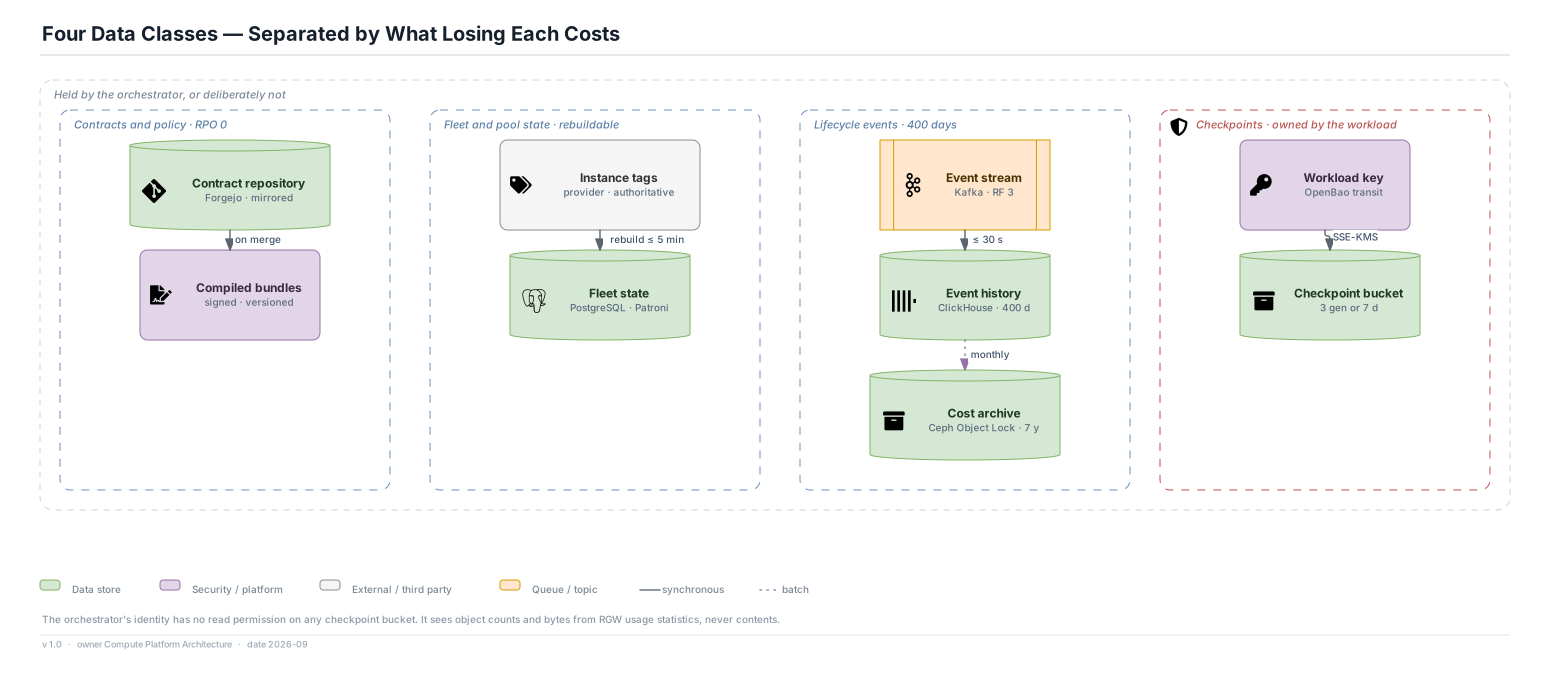
- Contracts: RPO 0, because Git is the system of record and is mirrored to a second region.
- Fleet and pool state: rebuilt from provider tags within 5 minutes with no operator input. PostgreSQL holds it for speed, not for truth.
- Lifecycle events: RPO ≤ 30 s for the stream, 400 days queryable, cost attribution kept 7 years in Object Lock for finance.
- Checkpoints: RPO 0 for committed generations, RTO ≤ 15 min, 3 generations or 7 days. Unavailability degrades to work returning to the queue, never to silent loss.
Why tags are authoritative
- Every instance carries sco:workload, sco:pool, sco:partition and sco:plan-gen. Losing the database therefore loses history and speed, never the knowledge of what the orchestrator owns, and a termination is only ever issued for an instance whose tags and database row agree.
What the platform cannot see
- Checkpoint contents. Each bucket is encrypted with the workload's own transit key and the orchestrator's identity has no read grant. It sees bytes and object counts from RGW usage statistics, which is all the ledger needs.