Service Mesh Platform  ·  View 26 of 31  ·  6 · Operations

Mesh Cost Budget

Where CPU, memory and telemetry spend goes at 40,000 proxies, the lever for each, and how it reaches the team that pays.

Editable source SVG draw.io All views
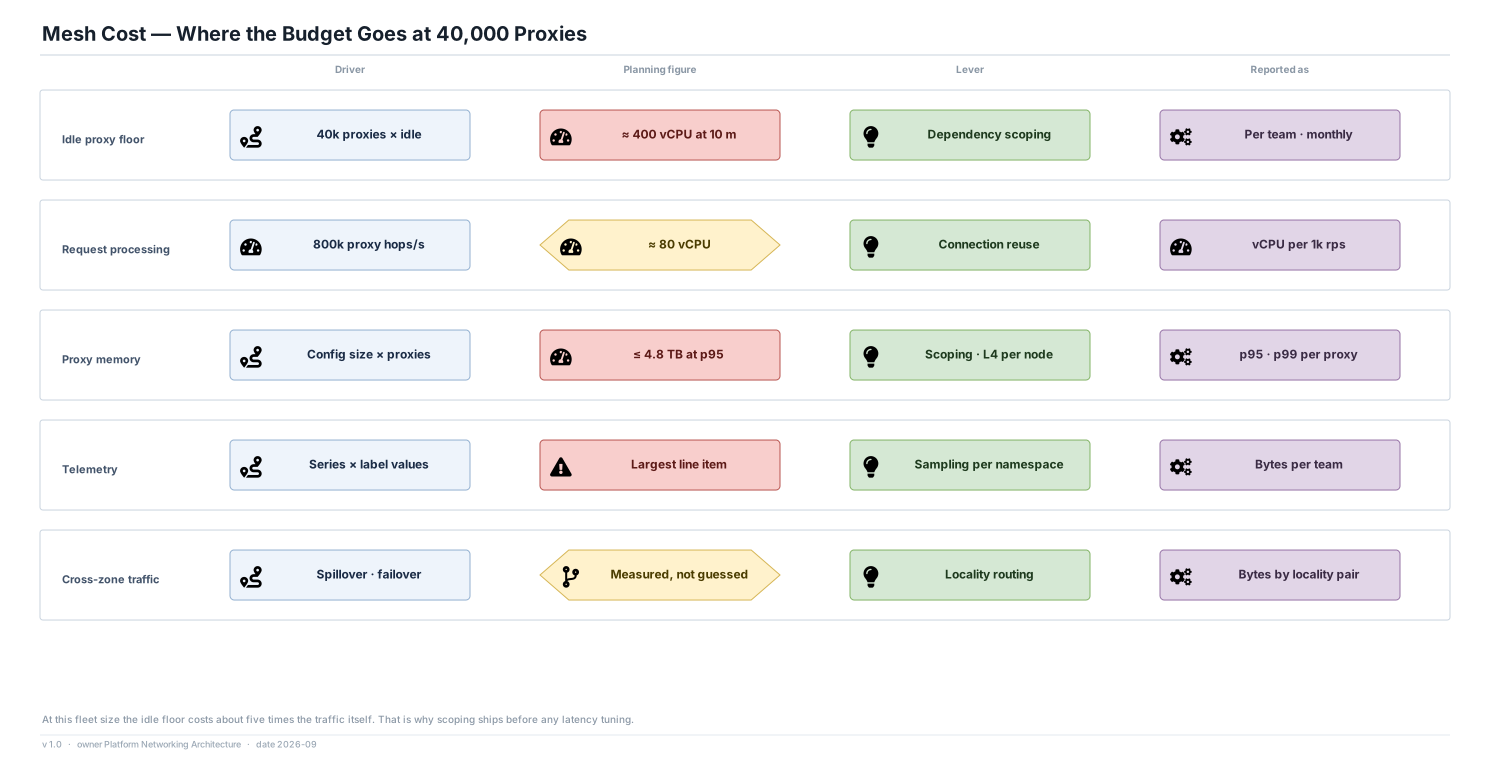
Driver Planning figure Lever Reported as Idle proxy floor 40k proxies × idle ≈ 400 vCPU at 10 m Dependency scoping Per team · monthly Request processing 800k proxy hops/s ≈ 80 vCPU Connection reuse vCPU per 1k rps Proxy memory Config size × proxies ≤ 4.8 TB at p95 Scoping · L4 per node p95 · p99 per proxy Telemetry Series × label values Largest line item Sampling per namespace Bytes per team Cross-zone traffic Spillover · failover Measured, not guessed Locality routing Bytes by locality pair Mesh Cost — Where the Budget Goes at 40,000 Proxies At this fleet size the idle floor costs about five times the traffic itself. That is why scoping ships before any latency tuning. v 1.0 · owner Platform Networking Architecture · date 2026-09

The arithmetic

  • 400,000 requests a second through two proxies each is 800,000 proxy hops a second. At 0.1 vCPU per 1,000 rps that is about 80 vCPU.
  • 40,000 idle proxies at roughly 10 millicores each (stats, health checks, config updates) is about 400 vCPU. The fixed floor costs about five times the traffic, which is why scoping and, later, a per-node L4 layer matter more than per-request tuning.
  • Memory at the p95 target of 120 MB is up to 4.8 TB across the fleet. Unscoped configuration grows with the mesh, not with the workload.

Budget

  • Mesh ≤ 8% of fleet CPU and ≤ 10% of fleet memory, reported monthly against actuals per team.

Assumptions

  • Idle per-proxy CPU is a planning estimate and the first number the proof phase replaces with a measurement.