Service Mesh Platform · View 27 of 31 · 6 · Operations
Sequencing decisions
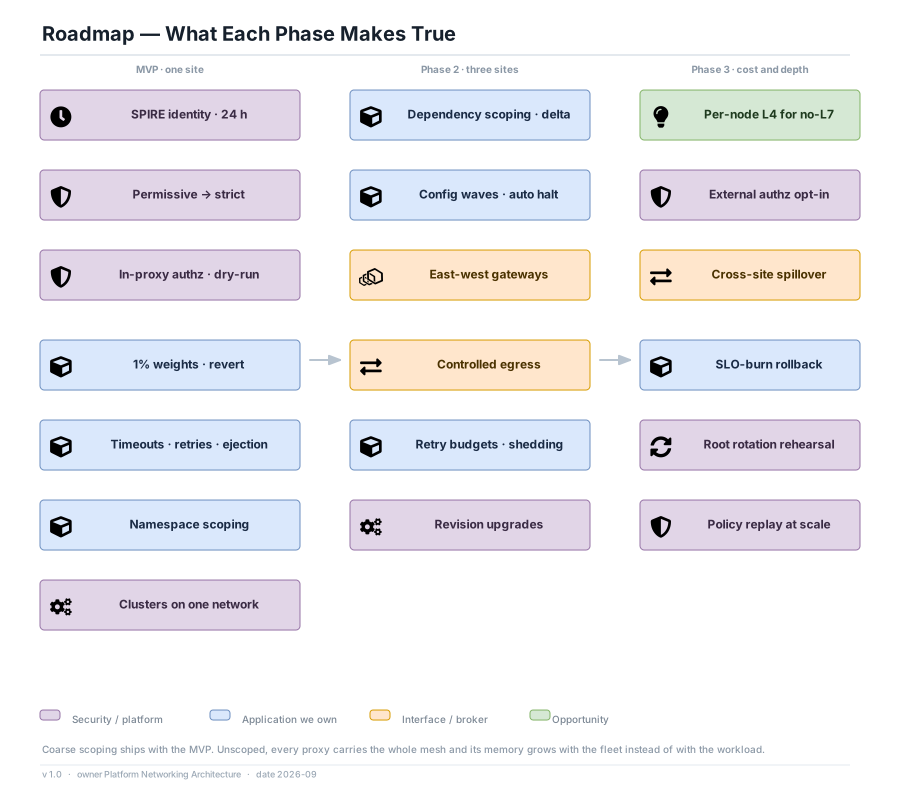
- Identity and permissive mTLS come first, because every later capability, from authorisation to cross-cluster trust, reads the peer identity.
- Coarse configuration scoping (own namespace plus declared namespaces) ships with the MVP. Dependency-level scoping stays in Phase 2 as the requirement sets it.
- The per-node L4 layer waits for Phase 3 and for measurements. It adds a second data-plane component and a node-sized blast radius, and it should buy a saving that has been measured, not estimated.
Exit criteria
- MVP: 12,000 proxies inside the resource budget, a 12-hour control-plane outage drill passed, strict mode on the first ten services.
- Phase 2: a cluster lost in a drill with no change elsewhere; a bad config caught by wave 0.
- Phase 3: a root rotation rehearsed end to end on staging.
Risks
- Retry budgets arrive in Phase 2 but timeouts arrive in the MVP. Until then, attempt counts are held at two to limit amplification.