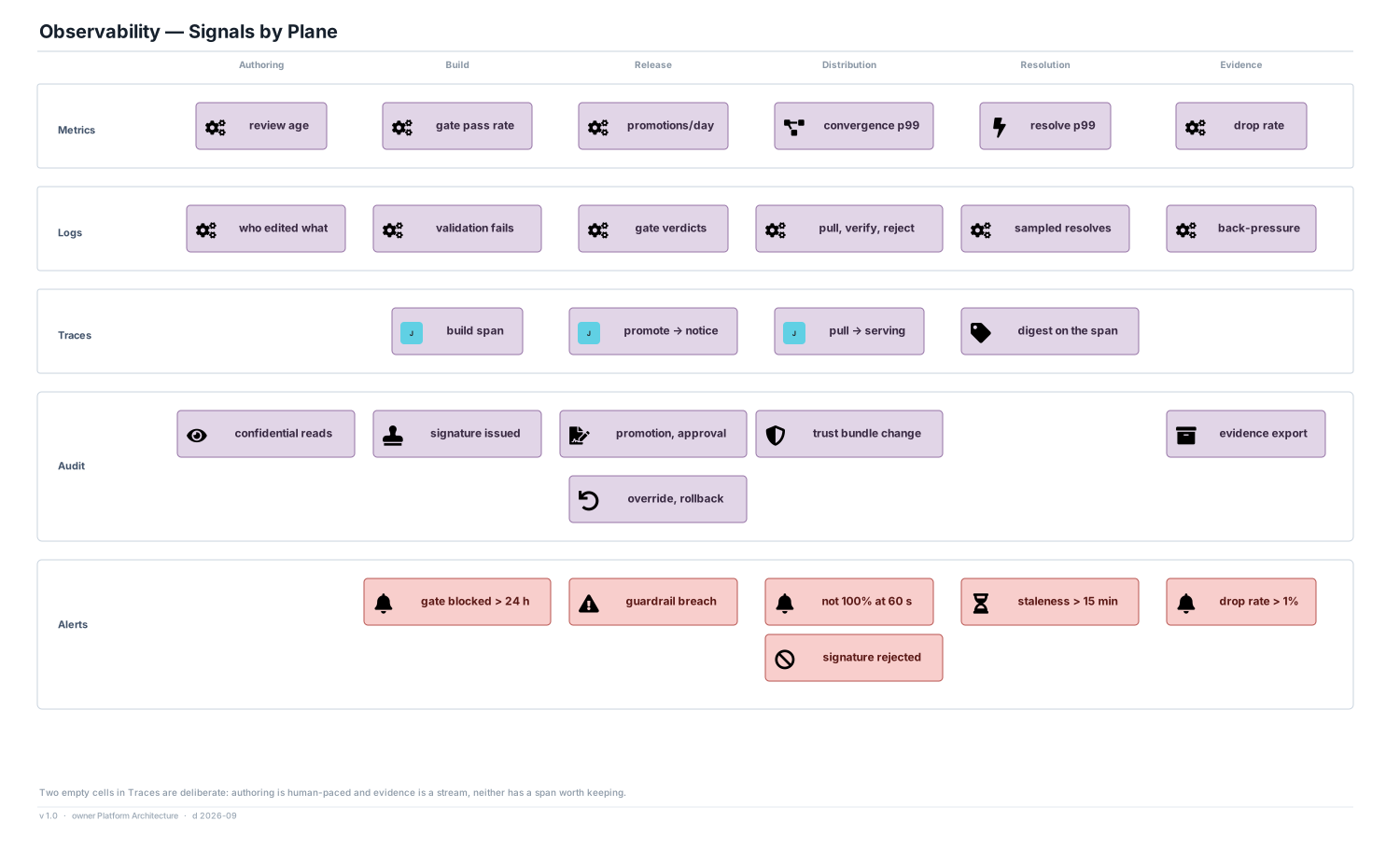
Convergence p99 and staleness age are the two numbers that say whether the propagation design is working. Everything else is ordinary platform telemetry.
Audit is a distinct family from Logs, with a different store and a different retention, because one is operational and droppable and the other is evidence and is not.
Every alert in the bottom row names a specific designed behaviour — 100% convergence at 60 s, signature rejection, 15-minute staleness — rather than a generic threshold on a resource.
The empty cells
Authoring has no trace: it is human-paced and a span across a review that takes two days measures nothing.
Evidence has no trace: it is a stream, and a per-event span at 500 M events/day would cost more than the events.
Resolution has no audit row, because auditing every resolution would mean writing 40,000 durable records a second to prove something the digest on the answer already proves.
Risks
A guardrail breach alert on a prompt-quality metric will be noisy, because the metric is noisy. Routing it to a human rather than to an automatic rollback is ADR-15, and it is a choice, not an oversight.
Staleness is per-resolver and the fleet is large; the alert has to fire on a population statistic, not on any single pod, or it becomes background.