Prompt & Configuration Registry · View 20 of 21 · Assurance
Decisions
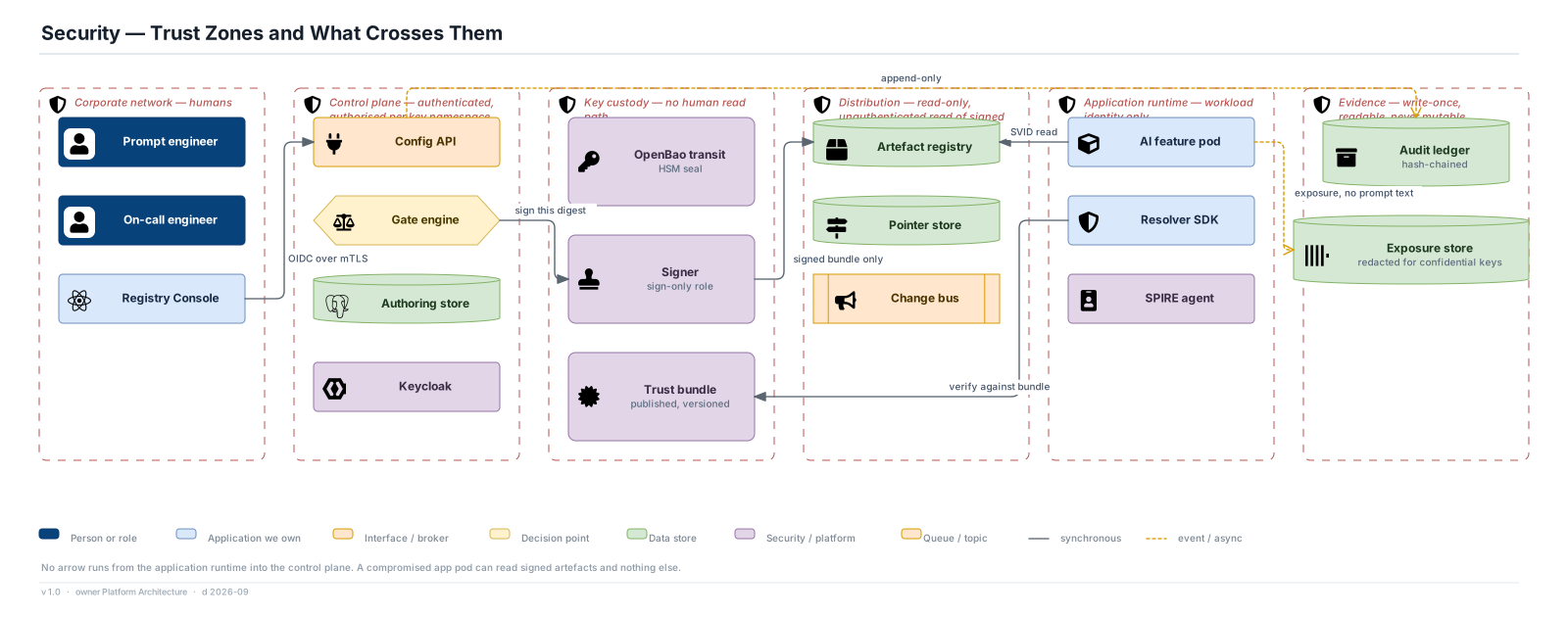
- A compromised application pod can read signed artefacts and nothing else. It has no credential for the authoring store, no write path to the pointer store, and no way to reach the signing key.
- Key custody is its own zone with no human read path: the signer holds a sign-only role against OpenBao, and the key never leaves it (ADR-12).
- Distribution serves signed content to any workload that can present a valid SVID. Confidentiality of the artefact is not the control; verifiability is.
Assumptions
- Prompt text is source code, not a secret, unless a key is marked confidential — in which case content is readable only by the owning group and is redacted from exposure telemetry.
- The build rejects a bundle whose content matches secret-shaped patterns; credentials are referenced by name and resolved at runtime from the secret store, never embedded.
Risks
- A prompt is an injection surface: someone with authoring rights on a key can change what a model is instructed to do across an entire product. This is why authoring and promotion are separate grants and why every promotion has a named second approver.
- The audit ledger is readable but not mutable by anyone including platform operators — a claim that depends entirely on Object Lock being correctly configured and on the retention policy being immutable. It should be tested, not assumed.