Prompt & Configuration Registry · View 18 of 21 · Operations
Why the loop closes
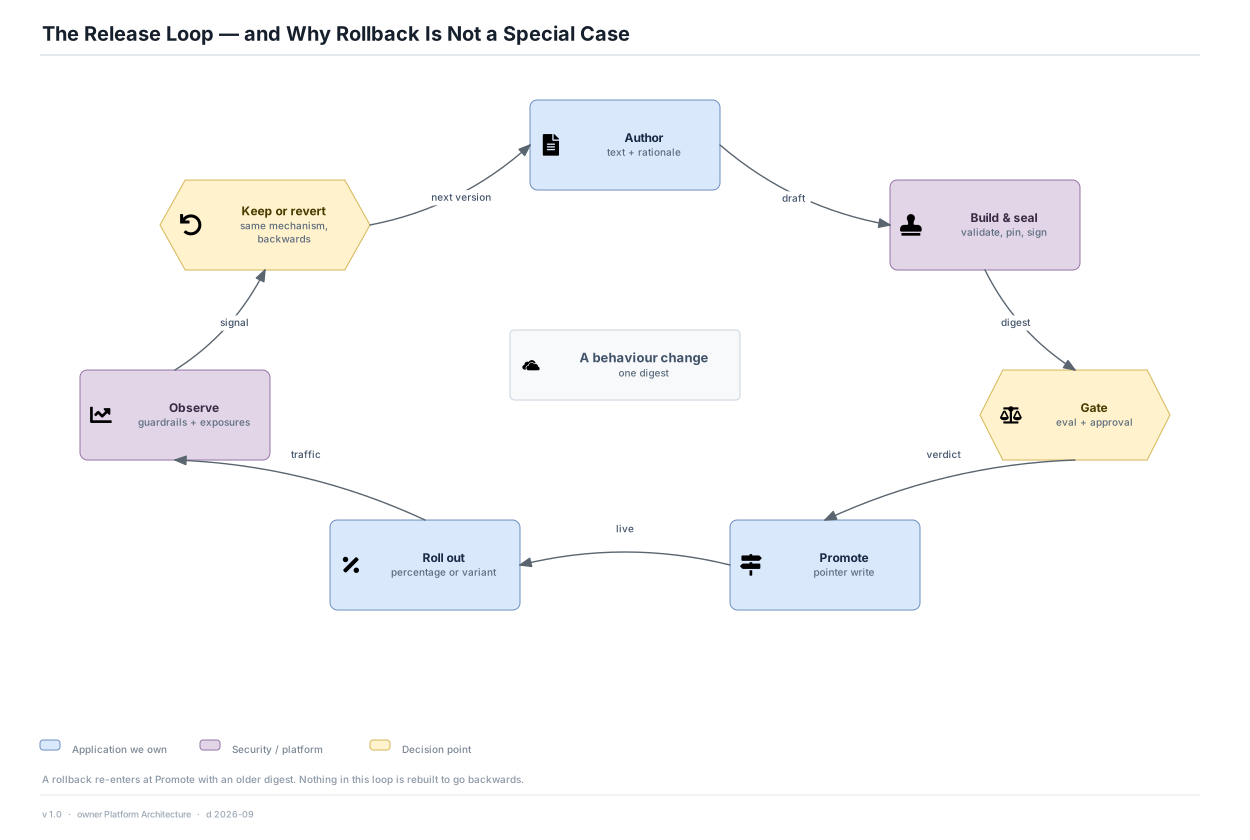
- Observe feeds Keep-or-revert, and revert re-enters at Promote with an older digest. Nothing is rebuilt to go backwards, which is why the reverse path is as fast and as safe as the forward one.
- The loop is drawn once for a behaviour change and once, unchanged, for a rollback. A design with a second emergency loop has an emergency path that is exercised once a quarter.
- Build & seal sits before Gate, not after: a gate verdict that is not about a sealed digest is a verdict about something that will not serve.
Assumptions
- Pointer moved within 2 s of confirmation; 99% of traffic on the rolled-back version within 30 s (stated assumptions).
- Guardrail signals arrive on a lag of minutes to hours, so Keep-or-revert is a human decision in the MVP (ADR-15).
What is not on the ring
- Authoring review is folded into Author; it is a gate on leaving that step, not a station on the ring.
- The kill switch is off-ring by design: it is an exit from the loop to a declared safe default, not a step within it.