Prompt & Configuration Registry · View 17 of 21 · Operations
Decisions
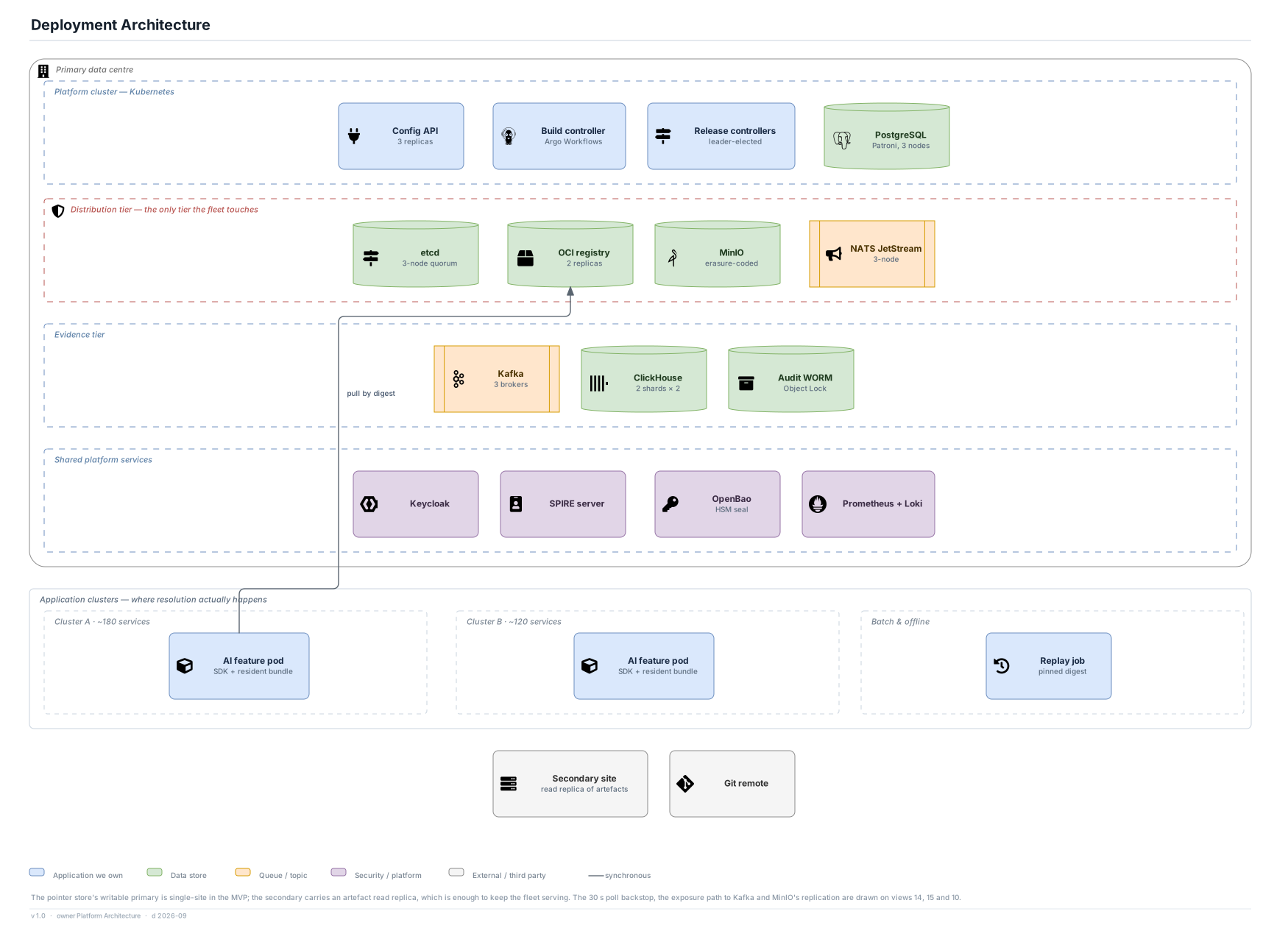
- The distribution tier is drawn as a trust boundary of its own because it is the only tier ~300 application pods are allowed to reach. Everything else in the platform cluster is reachable by operators and by nothing else.
- Resolution runs in the application clusters, inside pods this platform does not deploy. The registry has no presence there beyond a library and the bundle it holds.
- The secondary site carries an artefact read replica and no writable pointer store. That is enough to keep the fleet serving and not enough to promote — a deliberate asymmetry (ADR-17).
Assumptions
- Control-plane availability ≥ 99.9% monthly, resolution availability ≥ 99.99% measured at the calling service (stated assumptions). The second is not delivered by this diagram's redundancy; it is delivered by fail-static.
- etcd at 3 nodes, NATS at 3, Kafka at 3 brokers, ClickHouse 2 shards × 2 replicas — sized for 200 promotions/day and 500 M exposures/day, not for the resolution rate, which never reaches this cluster.
- RTO 15 minutes for the control plane; RTO 0 for resolution, because a control-plane outage is not a resolution event.
Risks
- Single-site writable pointer store means a site loss freezes the fleet on its current digests until the secondary is promoted by hand. Accepted for the MVP and named as Phase 3 work — frozen is a much better failure than wrong.
- The 30 s poll from every pod in two clusters is a steady read load on etcd that grows with the fleet. Past roughly 20,000 pods the poll has to move to the artefact store or to a fan-out tier.