Prompt & Configuration Registry · View 16 of 21 · Runtime
The rule this view enforces
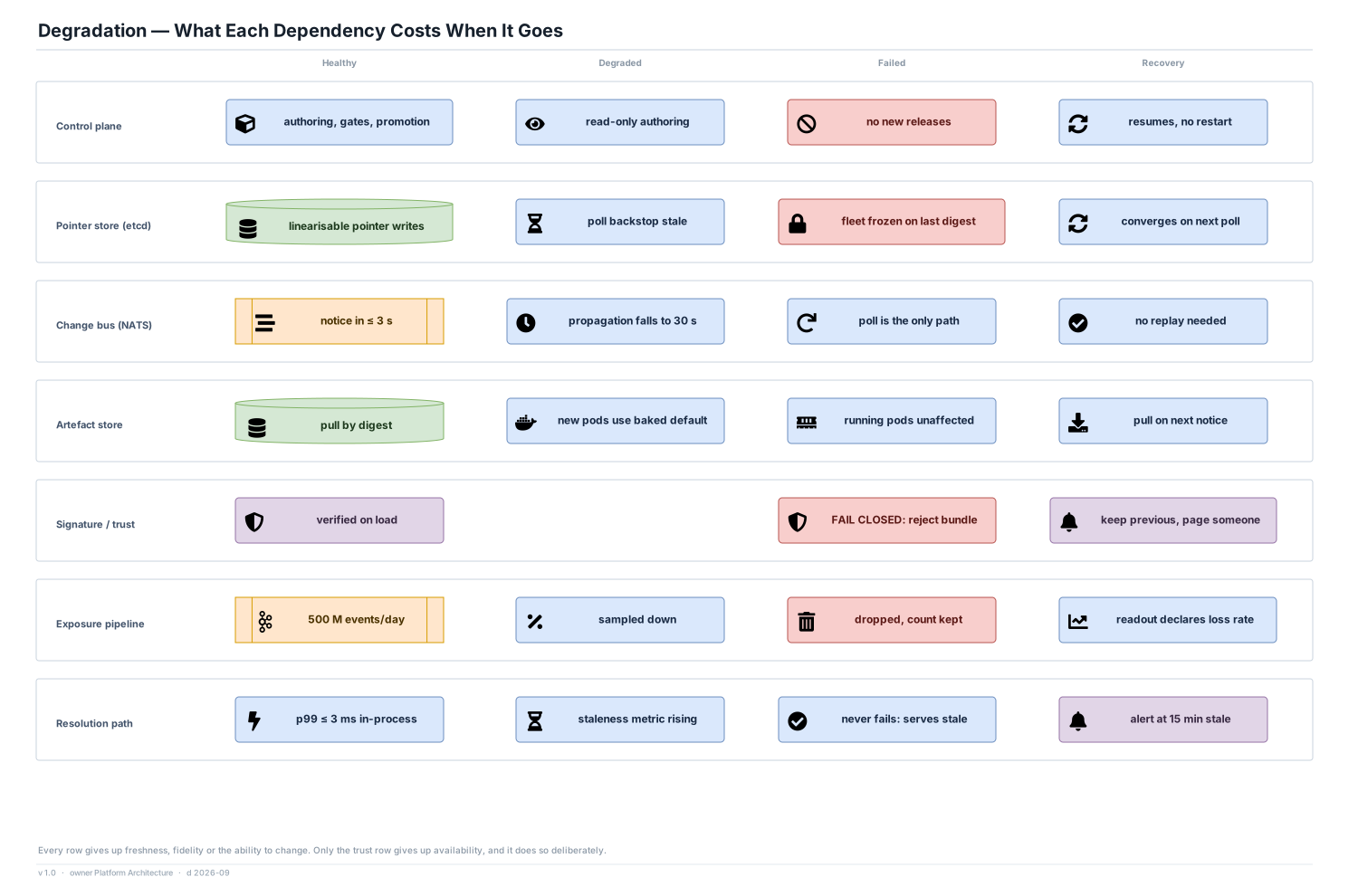
- Every row gives up freshness, fidelity or the ability to change. Only the trust row gives up availability, and it does so deliberately: an unverified bundle is refused however unavailable that makes things.
- The resolution row never reaches Failed. "Serves stale indefinitely" is the designed behaviour, and staleness is exported so that indefinite does not mean invisible.
- When a new dependency is proposed for the resolution path, the question this view asks is: which dimension will its outage cost? If the answer is availability, it does not belong there.
Assumptions
- A resolver may serve a bundle up to 24 h stale before it is marked degraded; an alert fires at 15 minutes of staleness (stated assumptions).
- Exposure loss is acceptable and counted. The audit ledger is not on this table because it has no degraded mode: it is written before the promotion is acknowledged.
Risks
- Indefinite fail-static is a real posture with a real cost: a key revoked for a safety reason keeps serving on a partitioned resolver until it reconnects. The 15-minute staleness alert is what bounds it in practice.
- A signing-key rotation mishandled turns the fail-closed row into a fleet-wide outage. Trust-bundle distribution must lead key rotation, with the old key trusted throughout the overlap (ADR-12).