Prompt & Configuration Registry · View 13 of 21 · Runtime
Decisions
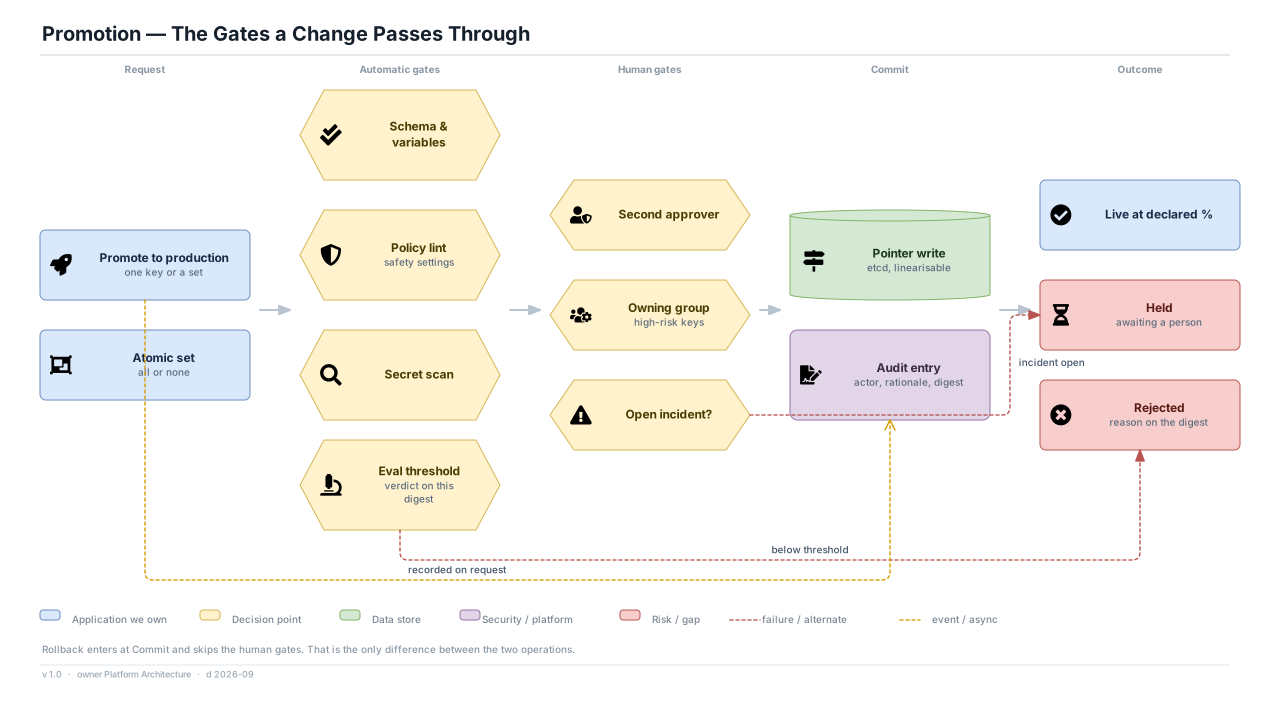
- Automatic gates run on the digest, not on the draft. A verdict is bound to the exact artefact that will serve, which is what makes the promotion record honest.
- Rollback enters at Commit and skips the human gates. That is the only difference between promotion and rollback, and it is deliberate (ADR-04).
- A promotion spanning several keys is atomic: three keys become visible as one transition or not at all, because a half-applied behaviour change is a behaviour nobody designed.
Assumptions
- ≈ 200 promotions/day at peak with 20 concurrent (stated assumption) — low enough that a linearisable pointer store is never the bottleneck.
- An open incident on a key blocks promotion by default. Overriding it is allowed, recorded, and named after the person who did it.
- Evaluation verdicts are available for a digest within ≈ 11 minutes, so the gate is a precondition on promotion rather than a step inside it.
Risks
- Gate fatigue. Seven gates on a 200-a-day flow is a strong incentive to mark keys low-risk so the human gates fall away. The risk classification therefore has to be owned outside the team that promotes.
- "Held" is the state most likely to be misread as "failed" and worked around. It is given its own outcome box for exactly that reason.