Prompt & Configuration Registry · View 14 of 21 · Runtime
The decision this view exists to defend
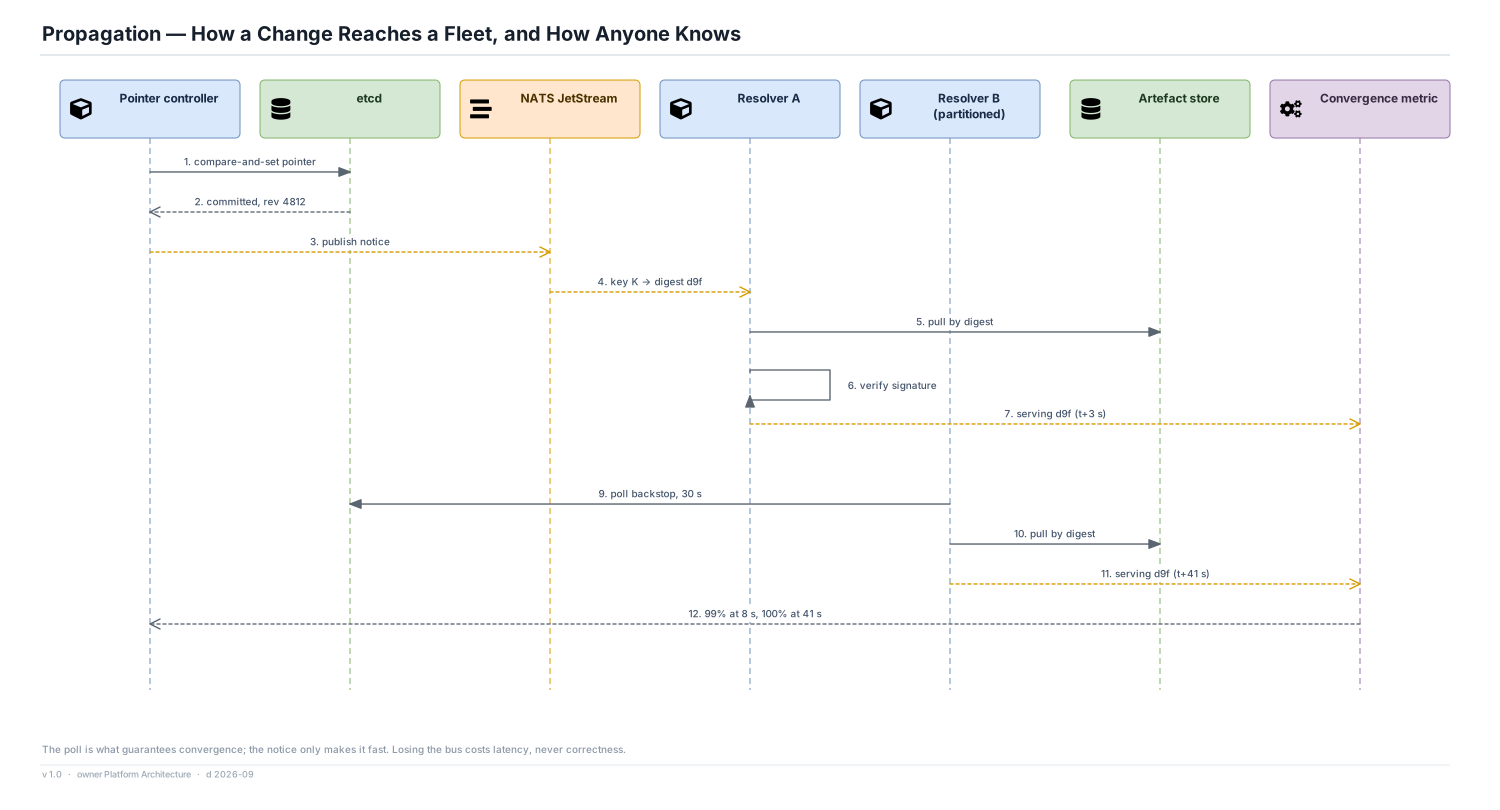
- The poll is what guarantees convergence; the notice only makes it fast. Losing the bus costs latency, never correctness (ADR-05).
- Resolver B is drawn partitioned on purpose. A propagation design that only shows the happy path has not been designed, it has been described.
- Convergence is a published number — 99% within 10 s, 100% within 60 s — because a propagation SLO nobody measures is a sentence in a document.
Assumptions
- Poll interval 30 s in production, tunable per environment; 100% convergence within 60 s follows from it with margin (stated assumption).
- Every resolver reports the digest it is serving, which is what makes coverage measurable rather than inferred from the bus's own delivery counts.
Risks
- Version skew is normal and is drawn as such, but it means two users can get different behaviour within the same minute. For an A/B test that is fine; for a safety fix it is a window, and the rollback SLO is what bounds it.
- A resolver that reports a digest it is not actually serving — because verification failed after reporting — would make the coverage metric lie. Report-after-verify is a conformance requirement on the SDK.