Prompt & Configuration Registry · View 12 of 21 · Runtime
What the absence proves
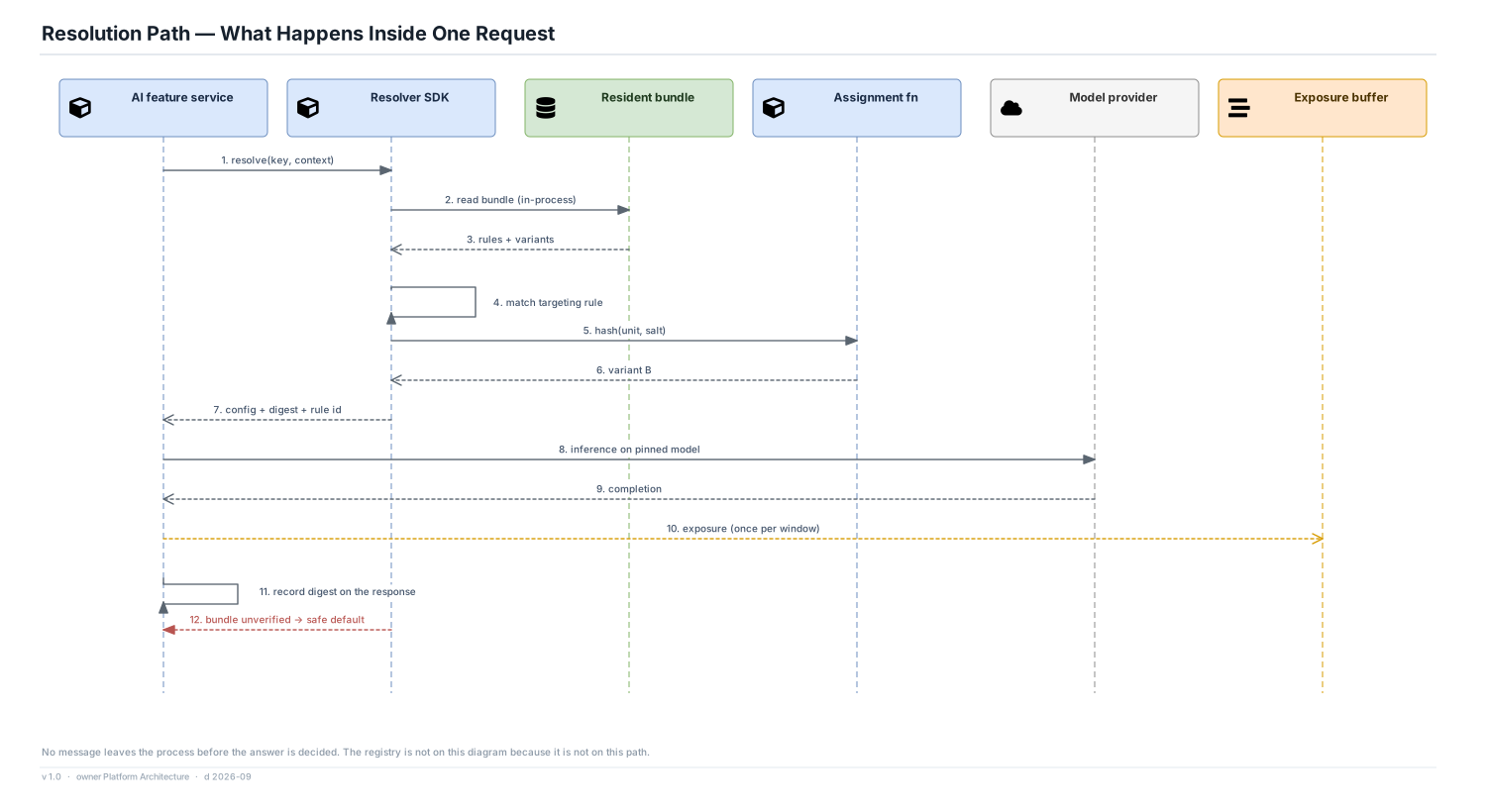
- No message leaves the process before the answer is decided. That is the whole of ADR-01 expressed as a sequence: p99 ≤ 3 ms is a consequence of the shape, not of tuning.
- The only outbound message is the exposure, and it is asynchronous, buffered and droppable — it can be lost without the answer changing.
- The error path returns the declared safe default rather than an exception. A configuration system that can throw is a configuration system that can take down a feature.
Assumptions
- Resolution p50 ≤ 0.2 ms, p99 ≤ 3 ms from the resident bundle (stated assumption). At 40,000 resolutions/second per region this is what keeps the registry invisible in the caller's latency budget.
- Exposure is emitted at most once per unit per decision window, not once per resolution — otherwise a chat turn loop multiplies the event volume by the conversation length.
Risks
- Targeting rules are evaluated over a context the caller assembles. A rule referencing an attribute the caller does not populate silently falls through to the default, which looks like correct behaviour.
- The pinned model may be deprecated by the provider while a digest is still serving. That surfaces as a provider error, not as a registry error, and the attribution has to be made explicit in the SDK's error taxonomy.